Kirjojen hintavertailu – 12 903 735 kirjaa ja 27 kauppaa

Kirjailija

Larry D. Roper

Kirjat ja teokset yhdessä paikassa: 3 kirjaa, julkaisuja vuosilta 2015–2018, suosituimpiin kuuluu Coordinating Student Affairs Divisional Assessment. Vertaile teosten hintoja ja tarkista saatavuus suomalaisista kirjakaupoista.

3 kirjaa

Kirjojen julkaisuvuodet: 2015–2018.

Research Methods and Applications for Student Affairs

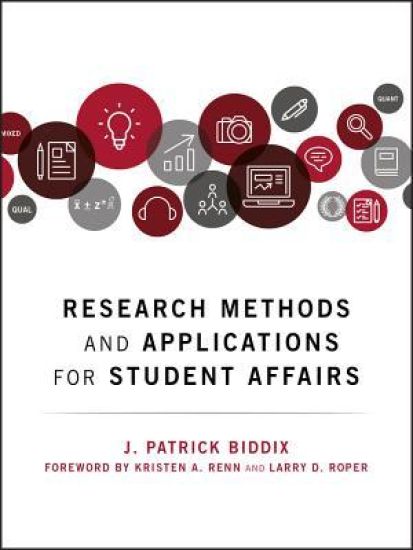
Research Methods and Applications for Student Affairs

J. Patrick Biddix; Kristen A. Renn; Larry D. Roper

Jossey-Bass Inc.,U.S.
2018
sidottu
A COMPREHENSIVE RESOURCE FOR UNDERSTANDING AND APPLYING RESEARCH METHODS Research Methods and Applications for Student Affairs offers students and professionals in the field an authoritative and accessible guide to help navigate research in student affairs. This comprehensive resource on research methods instruction clearly shows how to interpret the various forms of research, how to be critical as a research consumer, and how to use research to inform practice. Author J. Patrick Biddix—a noted scholar and expert in the field—presents a detailed overview of three qualitative-focused and four quantitative-focused research methods. The text reviews the basics of these qualitative and quantitative approaches and explores how to differentiate the major types of research as well as how to understand, read, evaluate, and apply results. Biddix also includes important information on using mixed methods approaches. The user-friendly text includes insights on key issues, as well as descriptions of the individual sections that comprise research studies. Also included is an overview of ethical considerations that apply specifically to student affairs. Research Methods and Applications for Student Affairs is an essential guide for enhancing research methods' skills, and offers direction for applying those skills in actual work situations.
Coordinating Student Affairs Divisional Assessment
An ACPA/NASPA Joint Publication The need for the new role of student affairs assessment coordinator has emerged in response to the increasing demand for outcomes information, the proliferation of data, and the recognition that coordinating this work within divisions is of paramount importance. For those taking on this role, this book constitutes a practical guide to leading and implementing an assessment program – whether doing so full- or part-time, as an individual or in a multi-person office, or whether reporting to or being in positional leadership. Recognizing that this function that is new to student affairs, and that those who take it on frequently find themselves in an in-between world, being both embedded with, but also distinct from, their divisional colleagues, this book first addresses the common challenges and issues related to defining and implementing the role and cultivating a culture of assessment. It then deals with the practicalities of creating systems and structures; developing assessment skills throughout the organization; and creating an integrated model for measuring progress towards strategic planning goals, and for informing decision-making and resource allocation. The book concludes with guidance on leading and maintaining ethical standards related to data collection, storage and sharing for the division, and on navigating the dynamic political environment that assessment professionals will encounter.
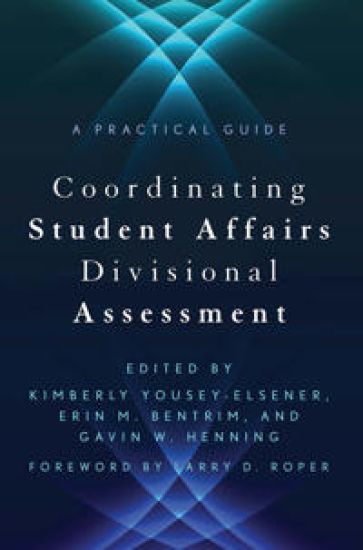
Coordinating Student Affairs Divisional Assessment
An ACPA/NASPA Joint Publication The need for the new role of student affairs assessment coordinator has emerged in response to the increasing demand for outcomes information, the proliferation of data, and the recognition that coordinating this work within divisions is of paramount importance. For those taking on this role, this book constitutes a practical guide to leading and implementing an assessment program – whether doing so full- or part-time, as an individual or in a multi-person office, or whether reporting to or being in positional leadership. Recognizing that this function that is new to student affairs, and that those who take it on frequently find themselves in an in-between world, being both embedded with, but also distinct from, their divisional colleagues, this book first addresses the common challenges and issues related to defining and implementing the role and cultivating a culture of assessment. It then deals with the practicalities of creating systems and structures; developing assessment skills throughout the organization; and creating an integrated model for measuring progress towards strategic planning goals, and for informing decision-making and resource allocation. The book concludes with guidance on leading and maintaining ethical standards related to data collection, storage and sharing for the division, and on navigating the dynamic political environment that assessment professionals will encounter.