
Kirjailija
Larry Parker
Kirjat ja teokset yhdessä paikassa: 8 kirjaa, julkaisuja vuosilta 2003–2025, suosituimpiin kuuluu Clean Air ACT. Vertaile teosten hintoja ja tarkista saatavuus suomalaisista kirjakaupoista.
8 kirjaa
Kirjojen julkaisuvuodet: 2003–2025.

Climate Change and the EU Emissions Trading Scheme (ETS)
Larry Parker
Hutson Street Press
2025
pokkari

Climate Change and the EU Emissions Trading Scheme (ETS)
Larry Parker
Hutson Street Press
2025
sidottu

Cross Training: 21 Day Challenge Devotional
Larry Parker
Createspace Independent Publishing Platform
2017
nidottu
Cross Training is an action packed way to approaching your relationship with Christ. This challenge devotion insipires you to challenge yourself in ways that you may not have even considered before, while at the same time bringing you closer to God. Cross Training allows you to explore key components of you view of the Gospel and test them against your personal life.

Greenhouse Gases
Jonathan L Ramseur; Larry Parker; Brent D Yacobucci
Nova Science Publishers Inc
2008
nidottu
Instituting policies to manage or reduce GHGs would likely impact different states differently. Understanding these differences may provide for a more informed debate regarding potential policy approaches. However, multiple factors play a role in determining impacts, including alternative design elements of a GHG emissions reduction program, the availability and relative cost of mitigation options, and the regulated entities' abilities to pass compliance costs on to consumers. Three primary variables drive a state's human-related greenhouse gas (GHG) emission levels: population, per capita income, and the GHG emissions intensity. GHG emissions intensity is a performance measure. In this book, GHG intensity is a measure of GHG emissions from sources within a state compared with a state's economic output (gross state product, GSP). The GHG emissions intensity driver stands apart as the main target for climate change mitigation policy, because public policy generally considers population and income growth to be socially positive. The intensity of carbon dioxide (CO2) emissions largely determines overall GHG intensity, because CO2 emissions account for 85% of the GHG emissions in the United States. As 98% of U. S. CO2 emissions are energy-related, the primary factors that shape CO2 emissions intensity are a state's energy intensity and the carbon content of its energy use. Energy intensity measures the amount of energy a state uses to generate its overall economic output (measured by its GSP). Several underlying factors may impact a state's energy intensity: a state's economic structure, personal transportation use in a state (measured in vehicle miles travelled per person), and public policies regarding energy efficiency. The carbon content of energy use in a state is determined by a state's portfolio of energy sources. States that utilise a high percentage of coal, for example, will have a relatively high carbon content of energy use, compared to states with a lower dependence on coal. An additional factor is whether a state is a net exporter or importer of electricity, because CO2 emissions are attributed to electricity-producing states, but the electricity is used (and counted) in the consuming state. Between 1990 and 2000, the United States reduced its GHG intensity by 1.6% annually. Assuming that population and per capita income continue to grow as expected, the United States would need to reduce its GHG intensity at the rate of 3% per year in order to halt the annual growth in GHG emissions. Therefore, achieving reductions (or negative growth) in GHG emissions would necessitate further declines in GHG intensity.
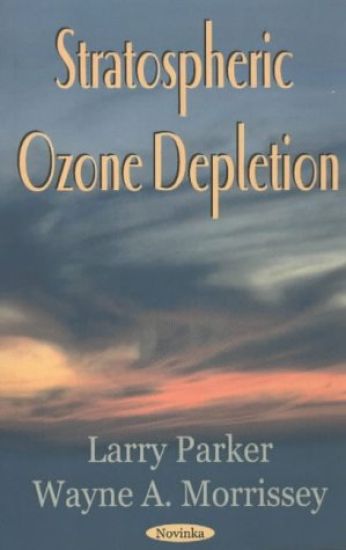
For two decades, scientists have been warning that chlorofluorocarbons (CFCs) and halons (bromine-containing fluorocarbons) may deplete the stratospheric ozone shield that screens out some of the Sun's harmful ultraviolet rays and thus regulates the amounts which reach the Earth's surface. CFCs have been used as refrigerants, solvents, foam blowing agents, and outside the United States, as aerosol propellants; Halons are used primarily as fire-fighting agents. Increased radiation could result in an increase in skin cancers, suppression of the human immune system, and decreased productivity of terrestrial and aquatic organisms, including some commercially important crops. This book deals with implementation, policy issues and phase out of methyl bromide. In September 1987, 47 countries (including the United States) agreed to the Montreal Protocol on Substances that Deplete the Ozone Layer, which first required controls on the world's consumption of ozone depleting substances. Over 160 countries have signed on to the Protocol, whose phasedown schedule for developed countries was accelerated twice and completely phased out Halon production at the end of 1994 and CFC production at the end of 1995. The Protocol's coverage has also been extended to include hydrochlorofluorocarbons and other chlorine- and bromine-containing substances such as some solvents and methyl bromide, a widely used soil fumigant.