Kirjojen hintavertailu – 12 903 724 kirjaa ja 27 kauppaa
Kirjailija
Larry Siedentop
Kirjat ja teokset yhdessä paikassa: 5 kirjaa, julkaisuja vuosilta 2002–2021, suosituimpiin kuuluu Nation, stat och imperium : tillhörighet i en globaliserad värld. Vertaile teosten hintoja ja tarkista saatavuus suomalaisista kirjakaupoista.
Philip Bobbitt; Gillian Clark; Christopher Coker; Carlos Escudé; Richard J. Evans; Jonathan Fenby; Jessica Frazier; David Goodhart; Freddy Gray; Steven Grosby; Janne Haaland Matláry; Tom Holland; Lawrence James; Jeremy Jennings; Josef Joffe; Rob Johnson; Robin Lane Fox; Charles S. Maier; Tim Marshall; Iain Martin; Simon Mayall; Lucy Riall; Larry Siedentop; Lars Trägårdh; Maurizio Viroli; Peter H. Wilson; Harvey Whitehouse; Martina Winkelhofer
Med det kalla krigets slut och globaliseringens segertåg trodde många att nationalism hörde till historien. Men det visade sig vara tvärtom. Idag ser vi hur nationalismen sprids över hela världen. Samtidigt växer sig populistiska och anti-demokratiska rörelser starka. Att höra hemma någonstans tycks bli allt viktigare i en tid av ekonomisk och social osäkerhet. I en globaliserad värld förknippas därför identitet, medborgarskap och tillhörighet med födelseort och en fast plats att bo på. Essäerna i denna antologi är baserade på Engelsbergsseminariet 2017 där olika former av identitet knutna till olika samhällsbildningar granskades. Hur uppstår en nation? Hur skapas enighet i ett imperium med en mångfald av folk? Huvudredaktör för denna illustrerade antologi är Kurt Almqvist.
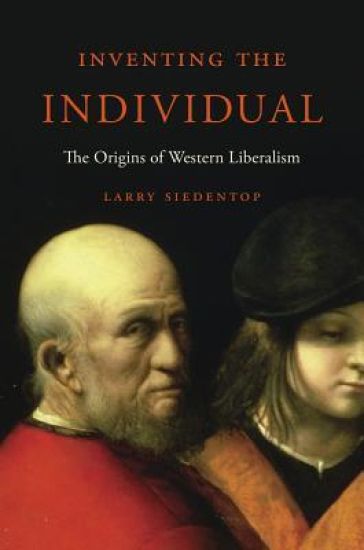
Here, in a grand narrative spanning 1,800 years of European history, a distinguished political philosopher firmly rejects Western liberalism's usual account of itself: its emergence in opposition to religion in the early modern era. Larry Siedentop argues instead that liberal thought is, in its underlying assumptions, the offspring of the Church. "It is a magnificent work of intellectual, psychological and spiritual history. It is hard to decide which is more remarkable: the breadth of learning displayed on almost every page, the infectious enthusiasm that suffuses the whole book, the riveting originality of the central argument or the emotional power and force with which it is deployed."--David Marquand, New Republic"Larry Siedentop has written a philosophical history in the spirit of Voltaire, Condorcet, Hegel, and Guizot... At a time when we on the left need to be stirred from our dogmatic slumbers, Inventing the Individual is a reminder of some core values that are pretty widely shared."--James Miller, The Nation"In this learned, subtle, enjoyable and digestible work [Siedentop] has offered back to us a proper version of ourselves. He has explained us to ourselves...[A] magisterial, timeless yet timely work."--Douglas Murray, The Spectator"Like the best books, Inventing the Individual both teaches you something new and makes you want to argue with it."--Kenan Malik, The Independent
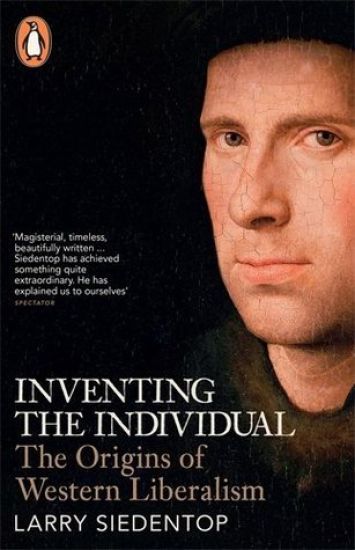
From Larry Siedentop, acclaimed author of Democracy in Europe, Inventing the Individual is a highly original rethinking of how our moral beliefs were formed and their impact on western society today'Magisterial, timeless, beautifully written ... Siedentop has achieved something quite extraordinary. He has explained us to ourselves' SpectatorThis ambitious and stimulating book describes how a moral revolution in the first centuries AD - the discovery of human freedom and its universal potential - led to a social revolution in the west. The invention of a new, equal social role, the individual, gradually displaced the claims of family, tribe and caste as the basis of social organisation. Larry Siedentop asks us to rethink the evolution of the ideas on which modern societies and government are built, and argues that the core of what is now our system of beliefs emerged much earlier than we think. The roots of liberalism - belief in individual liberty, in the fundamental moral equality of individuals, that equality should be the basis of a legal system and that only a representative form of government is fitting for such a society - all these, Siedentop argues, were pioneered by Christian thinkers of the Middle Ages, who drew on the moral revolution carried out by the early church. It was the arguments of canon lawyers, theologians and philosophers from the eleventh to the fourteenth century, rather than the Renaissance, that laid the foundation for liberal democracy. There are large parts of the world where other beliefs flourish - fundamentalist Islam, which denies the equality of women and is often ambiguous about individual rights and representative institutions; quasi-capitalist China, where a form of utilitarianism enshrines state interests even at the expense of justice and liberty. Such beliefs may foster populist forms of democracy. But they are not liberal. In the face of these challenges, Siedentop urges that understanding the origins of our own liberal ideas is more than ever an important part of knowing who we are. LARRY SIEDENTOP was appointed to the first post in intellectual history ever established in Britain, at Sussex University in the 1970's. From there he moved to Oxford, becoming Faculty Lecturer in Political Thought and a Fellow of Keble College. His writings include a study of Tocqueville, an edition of Guizot's History of Civilization in Europe, and Democracy in Europe, which has been translated into a dozen languages. Siedentop was made CBE in 2004. PRAISE FOR THE BOOK'One of the most stimulating books of political theory to have appeared in many years ... a refreshingly unorthodox account of the roots of modern liberalism in medieval Christian thinking' John Gray, Literary Review'A brave, brilliant and beautifully written defence of the western tradition' Paul Lay, History Today'An engrossing book of ideas ... illuminating, beautifully written and rigorously argued' Kenan Malik, Independent'A most impressive work of philosophical history' Robert Skidelsky
Taking inspiration from the heated discussions that preceded the birth of federal government in the United States, Larry Siedentop investigates what we can reasonably expect and what we have to fear from a united Europe. Despite the profound hostility between skeptics and proponents of a united Europe, the outlines of serious public debate have barely been sketched. While skeptics talk of national sovereignty and invoke the spirit of wartime resistance, Europhiles embrace the idealism of eurozones and sound economic management. Larry Siedentop examines whether representative government is feasible across the vast physical scale and human diversity of Europe. He explores the threat to local autonomy and individual freedom, and he anatomizes the widely different political cultures of Britain, France, and Germany. He balances throughout an understanding of the great theorists of supranational government, especially Montesquieu and De Tocqueville, with a deep, though critical, appreciation of contemporary Europe. Siedentop argues that it is only on a publicly discussed and commonly agreed upon constitution that one can hope to build a democratic Europe equal to the pressures it will have to withstand.