Kirjojen hintavertailu – 12 903 725 kirjaa ja 27 kauppaa

Kirjailija

Larry Wolff

Kirjat ja teokset yhdessä paikassa: 17 kirjaa, julkaisuja vuosilta 1995–2023, suosituimpiin kuuluu Woodrow Wilson and the Reimagining of Eastern Europe. Vertaile teosten hintoja ja tarkista saatavuus suomalaisista kirjakaupoista.

17 kirjaa

Kirjojen julkaisuvuodet: 1995–2023.

The Shadow of the Empress

The Shadow of the Empress

Larry Wolff

STANFORD UNIVERSITY PRESS
2023
pokkari

Halvin toimitettuna 26,90 €

A beguiling exploration of the last Habsburg monarchs' grip on Europe's historical and cultural imagination. In 1919 the last Habsburg rulers, Emperor Karl and Empress Zita, left Austria, going into exile. That same year, the fairy-tale opera Die Frau ohne Schatten (The Woman Without a Shadow), featuring a mythological emperor and empress, premiered at the Vienna Opera. Viennese poet Hugo von Hofmannsthal and German composer Richard Strauss created Die Frau ohne Schatten through the bitter years of World War I, imagining it would triumphantly appear after the victory of the German and Habsburg empires. Instead, the premiere came in the aftermath of catastrophic defeat. The Shadow of the Empress: Fairy-Tale Opera and the End of the Habsburg Monarchy explores how the changing circumstances of politics and society transformed their opera and its cultural meanings before, during, and after the First World War. Strauss and Hofmannsthal turned emperors and empresses into fantastic fairy-tale characters; meanwhile, following the collapse of the Habsburg monarchy after the war, their real-life counterparts, removed from political life in Europe, began to be regarded as anachronistic, semi-mythological figures. Reflecting on the seismic cultural shifts that rocked post-imperial Europe, Larry Wolff follows the story of Karl and Zita after the loss of their thrones. Karl died in 1922, but Zita lived through the rise of Nazism, World War II, and the Cold War. By her death in 1989, she had herself become a fairy-tale figure, a totem of imperial nostalgia. Wolff weaves together the story of the opera's composition and performance; the end of the Habsburg monarchy; and his own family's life in and exile from Central Europe, providing a rich new understanding of Europe's cataclysmic twentieth century, and our contemporary relationship to it.
The Shadow of the Empress

The Shadow of the Empress

Larry Wolff

STANFORD UNIVERSITY PRESS
2023
sidottu
A beguiling exploration of the last Habsburg monarchs' grip on Europe's historical and cultural imagination. In 1919 the last Habsburg rulers, Emperor Karl and Empress Zita, left Austria, going into exile. That same year, the fairy-tale opera Die Frau ohne Schatten (The Woman Without a Shadow), featuring a mythological emperor and empress, premiered at the Vienna Opera. Viennese poet Hugo von Hofmannsthal and German composer Richard Strauss created Die Frau ohne Schatten through the bitter years of World War I, imagining it would triumphantly appear after the victory of the German and Habsburg empires. Instead, the premiere came in the aftermath of catastrophic defeat. The Shadow of the Empress: Fairy-Tale Opera and the End of the Habsburg Monarchy explores how the changing circumstances of politics and society transformed their opera and its cultural meanings before, during, and after the First World War. Strauss and Hofmannsthal turned emperors and empresses into fantastic fairy-tale characters; meanwhile, following the collapse of the Habsburg monarchy after the war, their real-life counterparts, removed from political life in Europe, began to be regarded as anachronistic, semi-mythological figures. Reflecting on the seismic cultural shifts that rocked post-imperial Europe, Larry Wolff follows the story of Karl and Zita after the loss of their thrones. Karl died in 1922, but Zita lived through the rise of Nazism, World War II, and the Cold War. By her death in 1989, she had herself become a fairy-tale figure, a totem of imperial nostalgia. Wolff weaves together the story of the opera's composition and performance; the end of the Habsburg monarchy; and his own family's life in and exile from Central Europe, providing a rich new understanding of Europe's cataclysmic twentieth century, and our contemporary relationship to it.
Woodrow Wilson and the Reimagining of Eastern Europe

Woodrow Wilson and the Reimagining of Eastern Europe

Larry Wolff

Stanford University Press
2020
sidottu
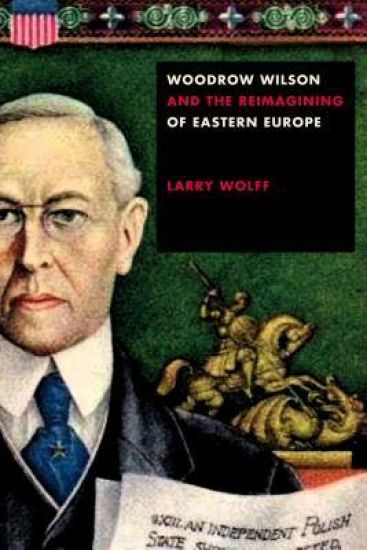
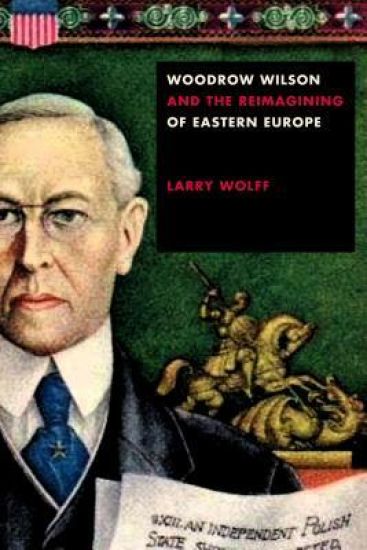
At the 1919 Paris Peace Conference, where the victorious Allied powers met to reenvision the map of Europe in the aftermath of World War I, President Woodrow Wilson's influence on the remapping of borders was profound. But it was his impact on the modern political structuring of Eastern Europe that would be perhaps his most enduring international legacy: neither Czechoslovakia nor Yugoslavia exist today, but their geopolitical presence persisted across the twentieth century from the end of World War I to the end of the Cold War. They were created in large part thanks to Wilson's advocacy, and in particular, his Fourteen Points speech of January 1918, which hinged in large part on the concept of national self-determination. But despite his deep involvement in the region's geopolitical transformation, President Wilson never set eyes on Eastern Europe, and never traveled to a single one of the eastern lands whose political destiny he so decisively influenced. Eastern Europe, invented in the age of Enlightenment by the travelers and philosophies of Western Europe, was reinvented on the map of the early twentieth century with the crucial intervention of an American president who deeply invested his political and emotional energies in lands that he would never visit. This book traces how Wilson's emerging definition of national self-determination and his practical application of the principle changed over time as negotiations at the Paris Peace Conference unfolded. Larry Wolff exposes the contradictions between Wilson's principles and their implementation in the peace settlement for Eastern Europe, and sheds light on how his decisions were influenced by both personal relationships and his growing awareness of the history of the Ottoman and Habsburg empires.
Woodrow Wilson and the Reimagining of Eastern Europe

Woodrow Wilson and the Reimagining of Eastern Europe

Larry Wolff

Stanford University Press
2020
pokkari
At the 1919 Paris Peace Conference, where the victorious Allied powers met to reenvision the map of Europe in the aftermath of World War I, President Woodrow Wilson's influence on the remapping of borders was profound. But it was his impact on the modern political structuring of Eastern Europe that would be perhaps his most enduring international legacy: neither Czechoslovakia nor Yugoslavia exist today, but their geopolitical presence persisted across the twentieth century from the end of World War I to the end of the Cold War. They were created in large part thanks to Wilson's advocacy, and in particular, his Fourteen Points speech of January 1918, which hinged in large part on the concept of national self-determination. But despite his deep involvement in the region's geopolitical transformation, President Wilson never set eyes on Eastern Europe, and never traveled to a single one of the eastern lands whose political destiny he so decisively influenced. Eastern Europe, invented in the age of Enlightenment by the travelers and philosophies of Western Europe, was reinvented on the map of the early twentieth century with the crucial intervention of an American president who deeply invested his political and emotional energies in lands that he would never visit. This book traces how Wilson's emerging definition of national self-determination and his practical application of the principle changed over time as negotiations at the Paris Peace Conference unfolded. Larry Wolff exposes the contradictions between Wilson's principles and their implementation in the peace settlement for Eastern Europe, and sheds light on how his decisions were influenced by both personal relationships and his growing awareness of the history of the Ottoman and Habsburg empires.
Disunion within the Union

Disunion within the Union

Larry Wolff

Harvard University Press
2020
nidottu
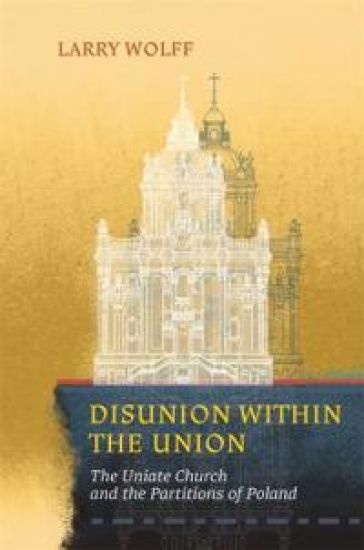
Between 1772 and 1795, Russia, Prussia, and Austria concluded agreements to annex and eradicate the Commonwealth of Poland-Lithuania. With the partitioning of Poland, the dioceses of the Uniate Church (later known as the Greek Catholic Church) were fractured by the borders of three regional hegemons. Larry Wolff's deeply engaging account of these events delves into the politics of the Episcopal elite, the Vatican, and the three rulers behind the partitions: Catherine II of Russia, Frederick II of Prussia, and Joseph II of Austria. Wolff uses correspondence with bishops in the Uniate Church and ministerial communiqués to reveal the nature of state policy as it unfolded. Disunion within the Union adopts methodologies from the history of popular culture pioneered by Natalie Zemon Davis (The Return of Martin Guerre) and Carlo Ginzburg (The Cheese and the Worms) to explore religious experience on a popular level, especially questions of confessional identity and practices of piety. This detailed study of the responses of common Uniate parishioners, as well as of their bishops and hierarchs, to the pressure of the partitions paints a vivid portrait of conflict, accommodation, and survival in a church subject to the grand designs of the late eighteenth century’s premier absolutist powers.
The Singing Turk

The Singing Turk

Larry Wolff

Stanford University Press
2018
pokkari
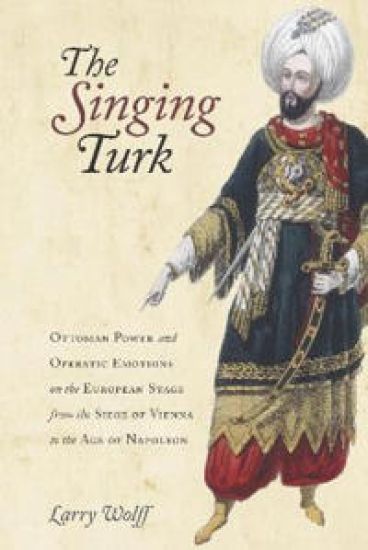
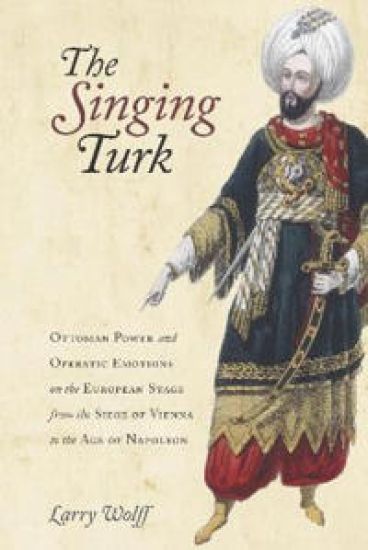
While European powers were at war with the Ottoman Empire for much of the eighteenth century, European opera houses were staging operas featuring singing sultans and pashas surrounded by their musical courts and harems. Mozart wrote The Abduction from the Seraglio. Rossini created a series of works, including The Italian Girl in Algiers. And these are only the best known of a vast repertory. This book explores how these representations of the Muslim Ottoman Empire, the great nemesis of Christian Europe, became so popular in the opera house and what they illustrate about European–Ottoman international relations. After Christian armies defeated the Ottomans at Vienna in 1683, the Turks no longer seemed as threatening. Europeans increasingly understood that Turkish issues were also European issues, and the political absolutism of the sultan in Istanbul was relevant for thinking about politics in Europe, from the reign of Louis XIV to the age of Napoleon. While Christian European composers and publics recognized that Muslim Turks were, to some degree, different from themselves, this difference was sometimes seen as a matter of exotic costume and setting. The singing Turks of the stage expressed strong political perspectives and human emotions that European audiences could recognize as their own.
Eight Stories

Eight Stories

Erich Maria Remarque; Larry Wolff

New York University Press
2018
pokkari

Halvin toimitettuna 21,80 €

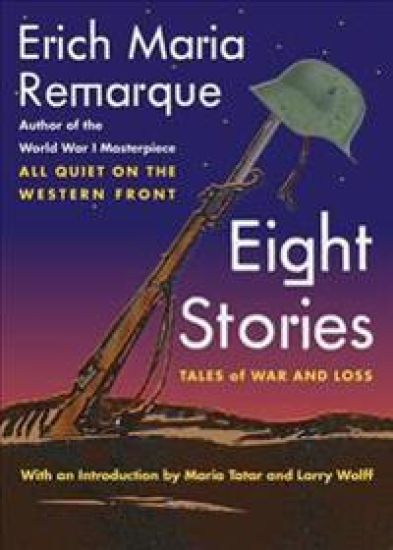
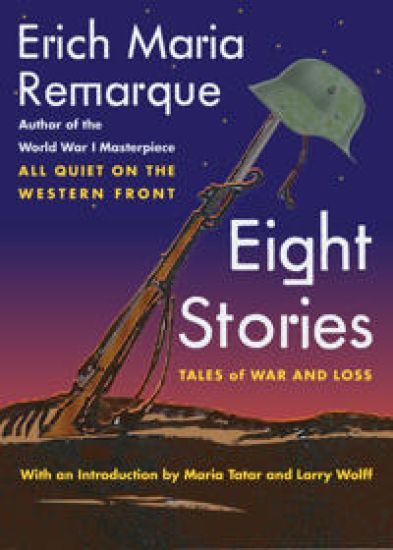
A compelling set of short stories from the author of World War I classic, All Quiet on the Western Front German-American novelist Erich Maria Remarque captured the emotional anguish of a generation in his World War I masterpiece, All Quiet on the Western Front, as well as in an impressive selection of novels, plays, and short stories. This exquisite collection revives Remarque's unforgettable voice, presenting a series of short stories that have long ago faded from public memory. From the haunting description of an abandoned battlefield to the pain of losing a loved one in the war to soldiers' struggles with what we now recognize as PTSD, the stories offer an unflinching glimpse into the physical, emotional, and even spiritual implications of World War I. In this collection, we follow the trials of naïve war widow Annette Stoll, reflect on the power of small acts of kindness toward a dying soldier, and join Johann Bartok, a weary prisoner of war, in his struggle to reunite with his wife. Although a century has passed since the end of the Great War, Remarque's writing offers a timeless reflection on the many costs of war. Eight Stories offers a beautiful tribute to the pain that war inflicts on soldiers and civilians alike, and resurrects the work of a master author whose legacy – like the war itself – will endure for generations to come.
Eight Stories

Eight Stories

Erich Maria Remarque; Larry Wolff

New York University Press
2018
sidottu
A compelling set of short stories from the author of World War I classic, All Quiet on the Western Front German-American novelist Erich Maria Remarque captured the emotional anguish of a generation in his World War I masterpiece, All Quiet on the Western Front, as well as in an impressive selection of novels, plays, and short stories. This exquisite collection revives Remarque's unforgettable voice, presenting a series of short stories that have long ago faded from public memory. From the haunting description of an abandoned battlefield to the pain of losing a loved one in the war to soldiers' struggles with what we now recognize as PTSD, the stories offer an unflinching glimpse into the physical, emotional, and even spiritual implications of World War I. In this collection, we follow the trials of naïve war widow Annette Stoll, reflect on the power of small acts of kindness toward a dying soldier, and join Johann Bartok, a weary prisoner of war, in his struggle to reunite with his wife. Although a century has passed since the end of the Great War, Remarque's writing offers a timeless reflection on the many costs of war. Eight Stories offers a beautiful tribute to the pain that war inflicts on soldiers and civilians alike, and resurrects the work of a master author whose legacy – like the war itself – will endure for generations to come.
The Singing Turk

The Singing Turk

Larry Wolff

Stanford University Press
2016
sidottu
While European powers were at war with the Ottoman Empire for much of the eighteenth century, European opera houses were staging operas featuring singing sultans and pashas surrounded by their musical courts and harems. Mozart wrote The Abduction from the Seraglio. Rossini created a series of works, including The Italian Girl in Algiers. And these are only the best known of a vast repertory. This book explores how these representations of the Muslim Ottoman Empire, the great nemesis of Christian Europe, became so popular in the opera house and what they illustrate about European–Ottoman international relations. After Christian armies defeated the Ottomans at Vienna in 1683, the Turks no longer seemed as threatening. Europeans increasingly understood that Turkish issues were also European issues, and the political absolutism of the sultan in Istanbul was relevant for thinking about politics in Europe, from the reign of Louis XIV to the age of Napoleon. While Christian European composers and publics recognized that Muslim Turks were, to some degree, different from themselves, this difference was sometimes seen as a matter of exotic costume and setting. The singing Turks of the stage expressed strong political perspectives and human emotions that European audiences could recognize as their own.
Paolina's Innocence

Paolina's Innocence

Larry Wolff

Stanford University Press
2012
sidottu
In the summer of 1785, in the city of Venice, a wealthy 60-year-old man was arrested and accused of a scandalous offense: having sexual relations with the 8-year-old daughter of an impoverished laundress. Although the sexual abuse of children was probably not uncommon in early modern Europe, it is largely undocumented, and the concept of "child abuse" did not yet exist. The case of Paolina Lozaro and Gaetano Franceschini came before Venice's unusual blasphemy tribunal, the Bestemmia, which heard testimony from an entire neighborhood—from the parish priest to the madam of the local brothel. Paolina's Innocence considers Franceschini's conduct in the context of the libertinism of Casanova and also employs other prominent contemporaries—Jean-Jacques Rousseau, Carlo Goldoni, Lorenzo Da Ponte, Cesare Beccaria, and the Marquis de Sade—as points of reference for understanding the case and broader issues of libertinism, sexual crime, childhood, and child abuse in the 18th century.
Paolina's Innocence

Paolina's Innocence

Larry Wolff

Stanford University Press
2012
pokkari
In the summer of 1785, in the city of Venice, a wealthy 60-year-old man was arrested and accused of a scandalous offense: having sexual relations with the 8-year-old daughter of an impoverished laundress. Although the sexual abuse of children was probably not uncommon in early modern Europe, it is largely undocumented, and the concept of "child abuse" did not yet exist. The case of Paolina Lozaro and Gaetano Franceschini came before Venice's unusual blasphemy tribunal, the Bestemmia, which heard testimony from an entire neighborhood—from the parish priest to the madam of the local brothel. Paolina's Innocence considers Franceschini's conduct in the context of the libertinism of Casanova and also employs other prominent contemporaries—Jean-Jacques Rousseau, Carlo Goldoni, Lorenzo Da Ponte, Cesare Beccaria, and the Marquis de Sade—as points of reference for understanding the case and broader issues of libertinism, sexual crime, childhood, and child abuse in the 18th century.
The Idea of Galicia

The Idea of Galicia

Larry Wolff

Stanford University Press
2012
pokkari
Galicia was created at the first partition of Poland in 1772 and disappeared in 1918. Yet, in slightly over a century, the idea of Galicia came to have meaning for both the peoples who lived there and the Habsburg government that ruled it. Indeed, its memory continues to exercise a powerful fascination for those who live in its former territories and for the descendants of those who emigrated out of Galicia. The idea of Galicia was largely produced by the cultures of two cities, Lviv and Cracow. Making use of travelers' accounts, newspaper reports, and literary works, Wolff engages such figures as Emperor Joseph II, Metternich, Leopold von Sacher-Masoch, Ivan Franko, Stanislaw Wyspianski, Tadeusz "Boy" Zelenski, Isaac Babel, Martin Buber, and Bruno Schulz. He shows the exceptional importance of provincial space as a site for the evolution of cultural meanings and identities, and analyzes the province as the framework for non-national and multi-national understandings of empire in European history.
The Idea of Galicia

The Idea of Galicia

Larry Wolff

Stanford University Press
2010
sidottu
Galicia was created at the first partition of Poland in 1772 and disappeared in 1918. Yet, in slightly over a century, the idea of Galicia came to have meaning for both the peoples who lived there and the Habsburg government that ruled it. Indeed, its memory continues to exercise a powerful fascination for those who live in its former territories and for the descendants of those who emigrated out of Galicia. The idea of Galicia was largely produced by the cultures of two cities, Lviv and Cracow. Making use of travelers' accounts, newspaper reports, and literary works, Wolff engages such figures as Emperor Joseph II, Metternich, Leopold von Sacher-Masoch, Ivan Franko, Stanislaw Wyspianski, Tadeusz "Boy" Zelenski, Isaac Babel, Martin Buber, and Bruno Schulz. He shows the exceptional importance of provincial space as a site for the evolution of cultural meanings and identities, and analyzes the province as the framework for non-national and multi-national understandings of empire in European history.
Churches and States – Studies on the History of Christianity in Ukraine

Churches and States – Studies on the History of Christianity in Ukraine

Halyna Hryn; Bohdan R. Bociurkiw; Bohdan Budurowycz; Teresa Chynczewska-Hen; Larry Wolff

Harvard Ukrainian Research Institute,U.S.
2009
nidottu
This book collects nine articles that originally appeared in the journal Harvard Ukrainian Studies and that arose from the Harvard Ukrainian Research Institute’s Millennium Project, an initiative launched in the 1980s to celebrate one thousand years of the Christianization of Kyivan Rus´. The articles cover a wide array of subjects: the ecclesiastical structure of the Christian Church in Rus´ in its earliest period (Andrzej Poppe); the conflict between Orthodoxy and the Uniate Church from 1569 to 1700 (Teresa Chynczewska-Hennel); an account of the Uniate Church and the partitions of Poland (Larry Wolff); the transformation of the Greek Catholic Church under the Austrian Empire (1848–1914) (John-Paul Himka); the Greek Catholic Church in the period between the two World Wars (Andrew Sorokowski); a rethinking of the relationship of Church and society in Galician Ukraine from 1914 to 1944 (Bohdan Budurowycz); and the Russian Orthodox Church in Ukraine during the interwar period (Bohdan Bociurkiw). The book concludes with a bio-bibliography of Bohdan Bociurkiw, a scholar who devoted his career to the study of Ukrainian Church history (Andrii Krawchuk). These essays provide new insights and a fresh perspective to the discipline.
The Boys and Their Baby

The Boys and Their Baby

Larry Wolff

St. Martin's Griffin
2003
nidottu
"The boys" are Adam and Huck, former college roommates. A decade out of college and just as long out of touch with each other, they are reunited when Adam arrives to share Huck's apartment on Russian Hill in San Francisco. "Their baby" is Christopher, Huck's entrancing almost-one-year-old son, whose mother is nowhere in evidence and, at first, much to Adam's befuddlement, mysteriously unmentioned. The story centers on Adam as he sets out to construct a life for himself in the unfamiliar city. He assumes his new job as an English teacher at a fancy private school, where one of his students develops an obsessive (and disturbing) interest in him. Adam coasts into simultaneous affairs with two women: one of them a striking, locally celebrated chanteuse, and the other a physics teacher with a distinctive footwear fetish. As the city and its denizens-women and men, gay and straight, young and old-make Adam welcome in various and telling ways...as he approaches a certain peace with his past (through letters to and from his riotously enraged ex-girlfriend and his hugely intimidating mother)...as living with the baby and the baby's father exerts a profound influence on Adam...as the story of the baby's missing mother dramatically unfolds...we watch Adam come to surprising terms with his life and himself. The Boys and Their Baby is a wonderfully entertaining novel of domestic and sexual manners, 1980s San Francisco-style, marking the debut of splendidly gifted novelist Larry Wolff.
Venice and the Slavs

Venice and the Slavs

Larry Wolff

Stanford University Press
2002
pokkari
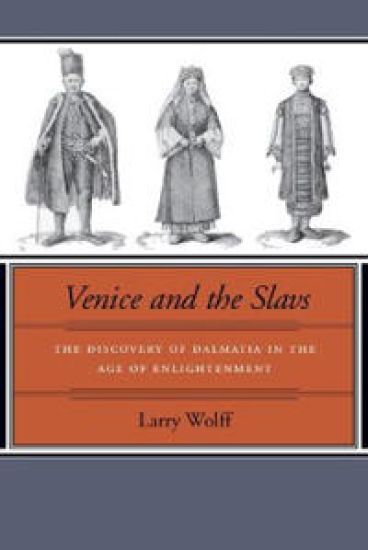
This book studies the nature of Venetian rule over the Slavs of Dalmatia during the eighteenth century, focusing on the cultural elaboration of an ideology of empire that was based on a civilizing mission toward the Slavs. The book argues that the Enlightenment within the "Adriatic Empire" of Venice was deeply concerned with exploring the economic and social dimensions of backwardness in Dalmatia, in accordance with the evolving distinction between "Western Europe" and "Eastern Europe" across the continent. It further argues that the primitivism attributed to Dalmatians by the Venetian Enlightenment was fundamental to the European intellectual discovery of the Slavs. The book begins by discussing Venetian literary perspectives on Dalmatia, notably the drama of Carlo Goldoni and the memoirs of Carlo Gozzi. It then studies the work that brought the subject of Dalmatia to the attention of the European Enlightenment: the travel account of the Paduan philosopher Alberto Fortis, which was translated from Italian into English, French, and German. The next two chapters focus on the Dalmatian inland mountain people called the Morlacchi, famous as "savages" throughout Europe in the eighteenth century. The Morlacchi are considered first as a concern of Venetian administration and then in relation to the problem of the "noble savage," anthropologically studied and poetically celebrated. The book then describes the meeting of these administrative and philosophical discourses concerning Dalmatia during the final decades of the Venetian Republic. It concludes by assessing the legacy of the Venetian Enlightenment for later perspectives on Dalmatia and the South Slavs from Napoleonic Illyria to twentieth-century Yugoslavia.
Child Abuse in Freud's Vienna

Child Abuse in Freud's Vienna

Larry Wolff

New York University Press
1995
pokkari
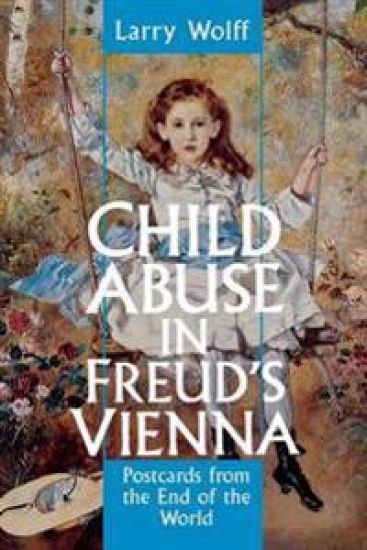
On the cusp of the twentieth century, in the most cosmopolitan city in the world, there a sensation that entranced the city's populace as nothing had before?a sensation that cast a great and disturbing shadow over the city, and then vanished, leaving no more trace than a shadow would. Child Abuse in Freud's Vienna is the story of that forgotten sensation in this fabled city. In the autumn of 1899, Vienna's attention was focused not on its extraordinary cultural life, but on child abuse?specifically, two cases of child murder and two of abuse. While Sigmund Freud was anxiously awaiting the publication of The Interpretation of Dreams, in which he first theorized about the Oedipal hostilities between parents and children, every day's headlines proclaimed the ugly reality of child abuse. Focusing on the four cases that dominated the pages of the newspapers, Larry Wolff's riveting narrative paints a picture of a great city enthralled by a spectacle it desperately wished to ignore.