Kirjojen hintavertailu – 12 859 818 kirjaa ja 27 kauppaa
Kirjailija
Lars Ahnland
Kirjat ja teokset yhdessä paikassa: 4 kirjaa, julkaisuja vuosilta 2020–2026, suosituimpiin kuuluu Vad är ekonomisk historia?. Vertaile teosten hintoja ja tarkista saatavuus suomalaisista kirjakaupoista.
Lena Andersson-Skog; Oskar Broberg; Rodney Edvinsson; Kerstin Enflo; Kristina Lilja; Lars Ahnland; Lars Fredrik Andersson; Erik Bengtsson; Martin Dribe; Susanna Fellman; Ellen Hillbom; Ann Ighe; Astrid Kander; Tobias Karlsson; Magnus Lindmark; Malin Nilsson; Jan Ottosson; Svante Prado; Paulina Rytkönen; Klas Rönnbäck; Maria Stanfors; Jonathan Svanlund; Anna Tegunimataka; Daniel Waldenström; Anders Ögren
Boken är ett unikt nationellt projekt genom dess representation av författare från samtliga svenska lärosäten som undervisar i ekonomisk historia på alla utbildningsnivåer. Bokens 25 författare är också aktiva forskare och bidragen bygger på en stor samlad erfarenhet av aktuell svensk och internationell forskning inom ämnet. Vad är ekonomisk historia? är en introducerande lärobok i ekonomisk historia som syftar till att väcka nyfikenhet för ämnet, samt visa på dess möjligheter som akademisk disciplin och tillämpad samhällsvetenskap. Boken visar hur ekonomisk-historiska perspektiv, teorier och metoder kan användas för att analysera olika utvecklingsförlopp med avgörande betydelse för samhällsutvecklingen då som nu. Genom att använda olika verktyg ur de historiska och ekonomiska verktygslådorna vänder och vrider forskare inom ekonomisk historia på begrepp som tillväxt, industrialisering, resursfördelning, kapital och arbete. På detta sätt bidrar ämnet till vår förståelse av mänsklighetens långa historia, samtidigt som det också bidrar med nya perspektiv på vår egen samtid. Vad är ekonomisk historia? består av 13 kapitel, de tre första kapitlen behandlar ämnets historia, teorier och metoder. De därpå följande kapitlen lyfter ett urval av de frågor som ekonomhistoriker arbetar med. Boken vänder sig främst till universitets- och högskolestudenter på grundläggande nivå och fungerar utmärkt som en introduktion till ämnet.
Lena Andersson-Skog; Oskar Broberg; Rodney Edvinsson; Kerstin Enflo; Kristina Lilja; Lars Ahnland; Lars Fredrik Andersson; Erik Bengtsson; Martin Dribe; Susanna Fellman; Ellen Hillbom; Ann Ighe; Astrid Kander; Tobias Karlsson; Magnus Lindmark; Malin Nilsson; Jan Ottosson; Svante Prado; Paulina Rytkönen; Klas Rönnbäck; Maria Stanfors; Jonathan Svanlund; Anna Tegunimataka; Daniel Waldenström; Anders Ögren
Analyzing long-cycle patterns during the twentieth century, this book presents novel findings on how core features of financialization are interconnected across advanced economies. It proposes that, since the late nineteenth century, international macroeconomic policy regimes have favored either capital or labor, giving rise to corresponding cycles of financialization and de-financialization: a liberal phase of financialization (1896–1929), a regulated phase of de-financialization (1946–1973), and a neoliberal phase of financialization (1983–2019). The book argues that these cycles can be explained through underconsumption theory in 13 advanced economies. During financialization, the study suggests inequality created a savings glut that stimulated liquidity for credit expansion, which in turn led to financial instability. Meanwhile, the lack of aggregate demand due to inequality depressed economic growth. By contrast, during the de-financialization of the regulated Bretton Woods era, credit formation did not lead to financial crises, and economic growth was high. Nevertheless, both the liberal and regulated phases succumbed to structural crises caused by internal frictions. These crises transformed not only the economy, but also the political landscape – and at times, even democracy itself. The question remains whether the neoliberal regime is also undergoing an existential crisis, and what lessons we can learn from history to avoid the pitfalls ahead. The book is primarily aimed at scholars and students of global political economy.
Rodney Edvinsson; Tor Jacobson; Daniel Waldenström; Klas Fregert; Lars Ahnland; Bo Franzén; Johan Söderberg; Lili-Annè Aldman; Emelie Carlsson; Klas Eriksson; Gustav Ingman
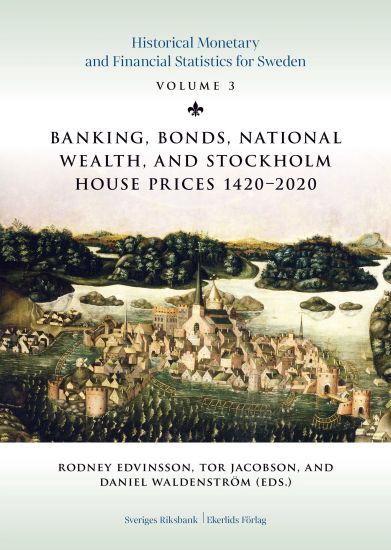
This book is the third volume published in the research project run by Sveriges Riksbank concerning Historical Monetary Statistics for Sweden. The current volume includes chapters on the evolution of Swedish banking, historical house prices for Stockholm, the Swedish bond market, and Sweden s national wealth. Sveriges Riksbank is one of the oldest central banks in the world, if not the oldest. In its infancy, in the 17th century, the Riksbank was also the only bank in Sweden. But many more banks, of varying orientation and organisation, emerged in the following centuries. In two chapters, covering an early period from 1770 to 1870 and a modern banking period from 1870 onwards, a broad description of the scope of the Swedish banking industry over time is provided. In four chapters, a new house price index is presented for Stockholm from the Middle Ages to the present. The index shows that the increase in real house prices in the last few decades is matched by similar-sized increases occurring in the 17th and 19th centuries. These two historic episodes were followed by periods of secular stagnation, or even decline. All three long upturns in house prices can be related to periods of strong urbanisation. Sharp downturns have occurred due to various macroeconomic shocks, for example wars or financial crises. During these downturns, nominal prices have tended to decline less than real prices. The Swedish bond market emerged almost two hundred years ago. During the 19th century, private-sector bond loans issued by mortgage institutions and corporations to foreign lenders dominated. In the 20th century, government borrowing has dominated the market and the role of domestic lenders has increased. The national wealth of Sweden has transformed over the past two centuries. Private agrarian estates were the dominant assets in the 19th century, but the 20th century saw the emergence of financial assets and liabilities and also public-sector net wealth.