Kirjojen hintavertailu – 12 903 725 kirjaa ja 27 kauppaa

Kirjailija

Lars Peter Laamann

Kirjat ja teokset yhdessä paikassa: 3 kirjaa, julkaisuja vuosilta 2006–2016, suosituimpiin kuuluu Christian Heretics in Late Imperial China. Vertaile teosten hintoja ja tarkista saatavuus suomalaisista kirjakaupoista.

3 kirjaa

Kirjojen julkaisuvuodet: 2006–2016.

Narcotic Culture

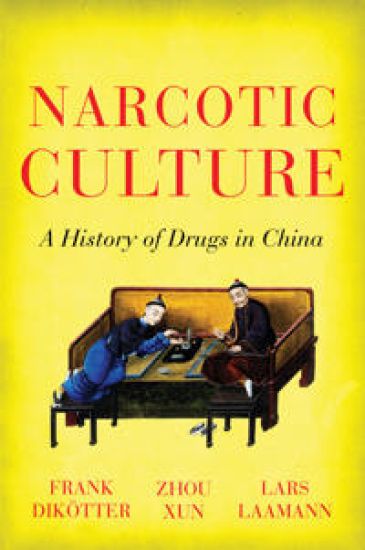
Narcotic Culture

Frank Dikotter; Zhou Xun; Lars Peter Laamann

C Hurst Co Publishers Ltd
2016
nidottu
To this day, the perception persists that China was a civilisation defeated by imperialist Britain's most desirable trade commodity, opium - a drug that turned the Chinese into cadaverous addicts in the iron grip of dependence. But, as this new edition of Narcotic Culture brilliantly shows, the real scandal in Chinese history was not the expansion of the drug trade by Britain in the early nineteenth century, but rather the failure of the British to grasp the consequences of prohibition. They reveal that opium actually had few harmful effects on either health or longevity; in fact, it was prepared and appreciated in highly complex rituals with inbuilt constraints preventing excessive use. Opium was even used as a medicinal panacea in China before the availability of aspirin and penicillin. But as a result of the British effort to eradicate opium, the Chinese turned from the relatively benign use of that drug to heroin, morphine, cocaine, and countless other psychoactive substances. The transition from a tolerated opium culture to a system of prohibition produced a 'cure' that was far worse than the disease. Delving into a history of drugs and their abuses, Narcotic Culture is part revisionist history of imperial and twentieth-century Britain and part sobering portrait of the dangers of prohibition.
Christian Heretics in Late Imperial China

Christian Heretics in Late Imperial China

Lars Peter Laamann

Routledge
2009
nidottu
Following the prohibition of missionary activity after 1724, China's Christians were effectively cut off from all foreign theological guidance. The ensuing isolation forced China's Christian communities to become self-reliant in perpetuating the basic principles of their faith. Left to their own devices, the missionary seed developed into a panoply of indigenous traditions, with Christian ancestry as the common denominator. Christianity thus underwent the same process of inculturation as previous religious traditions in China, such as Buddhism and Judaism. As the guardian of orthodox morality, the prosecuting state sought to exercise all-pervading control over popular thoughts and social functions. Filling the gap within the discourse of Christianity in China and also as part of the wider analysis of religion in late Imperial China, this study presents the campaigns against Christians during this period as part and parcel of the campaign against 'heresy' and 'heretical' movements in general.
Christian Heretics in Late Imperial China

Christian Heretics in Late Imperial China

Lars Peter Laamann

Routledge
2006
sidottu
Following the prohibition of missionary activity after 1724, China's Christians were effectively cut off from all foreign theological guidance. The ensuing isolation forced China's Christian communities to become self-reliant in perpetuating the basic principles of their faith. Left to their own devices, the missionary seed developed into a panoply of indigenous traditions, with Christian ancestry as the common denominator. Christianity thus underwent the same process of inculturation as previous religious traditions in China, such as Buddhism and Judaism. As the guardian of orthodox morality, the prosecuting state sought to exercise all-pervading control over popular thoughts and social functions. Filling the gap within the discourse of Christianity in China and also as part of the wider analysis of religion in late Imperial China, this study presents the campaigns against Christians during this period as part and parcel of the campaign against 'heresy' and 'heretical' movements in general.