
Kirjailija
Laszlo Zsolnai
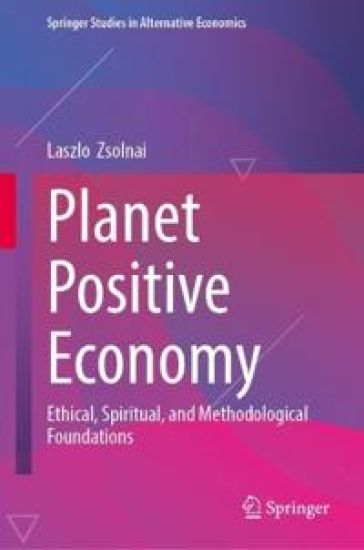
Kirjat ja teokset yhdessä paikassa: 7 kirjaa, julkaisuja vuosilta 2014–2026, suosituimpiin kuuluu Planet Positive Economy. Vertaile teosten hintoja ja tarkista saatavuus suomalaisista kirjakaupoista.
Nimi esiintyy myös muodoissa: László Zsolnai
7 kirjaa
Kirjojen julkaisuvuodet: 2014–2026.
This book explores the underlying causes of the pervasive dominance of ‘unethics’ in contemporary affairs in economics, business, and society. It is argued that the state of unethics is related to the overexpansion of market and market values in all spheres of social life and human activities. A correlate of this development is the emergence of an extremely individualistic, materialistic and narcissistic mind-set that dictates the decisions and behavior of people and organizations. The author argues that art can help to overcome the dominant market metaphysics of our age, as genuine art creates models of 'poetic dwelling,' which can generate non-linear, progressive change that opens up a larger playing field for ethics. Aesthetics and ethics go hand in hand. Ethical action is not just right for its own sake, but makes the world a richer, livable and more beautiful place. Ethics, Meaning, and Market Society will be of interest to students at an advanced level, academics, researchers and professionals. It addresses the topics with regard to ethics in economics, business, and society in a contemporary context.
Agency and Causal Explanation in Economics
László Zsolnai; Peter Róna
Saint Philip Street Press
2020
sidottu
This open access book provides an exploration of the consequences of the ontological differences between natural and social objects (sometimes described as objects of nature and objects of thought) in the workings of causal and agency relationships. One of its important and possibly original conclusions is that causal and agency relationships do not encompass all of the dependent relationships encountered in social life. The idea that social reality is contingent has been known (and largely undisputed) at least since Wittgenstein's "On Certainty", but social science, and most notably economics has continued to operate on the basis of causal and agency theories borrowed or adapted from the natural sciences. This volume contains essays that retain and justify the partial or qualified use of this approach and essays that totally reject any use of causal and agency theory built on determined facts (closed systems). The rejection is based on the possibly original claim that, whereas causation in the objects of the natural sciences reside in their properties, human action is a matter of intentionality. It engages with critical realist theory and re-examines the role of free will in theories of human action in general and economic theory in particular. This work was published by Saint Philip Street Press pursuant to a Creative Commons license permitting commercial use. All rights not granted by the work's license are retained by the author or authors.
Agency and Causal Explanation in Economics
László Zsolnai; Peter Róna
Saint Philip Street Press
2020
pokkari
This open access book provides an exploration of the consequences of the ontological differences between natural and social objects (sometimes described as objects of nature and objects of thought) in the workings of causal and agency relationships. One of its important and possibly original conclusions is that causal and agency relationships do not encompass all of the dependent relationships encountered in social life. The idea that social reality is contingent has been known (and largely undisputed) at least since Wittgenstein's "On Certainty", but social science, and most notably economics has continued to operate on the basis of causal and agency theories borrowed or adapted from the natural sciences. This volume contains essays that retain and justify the partial or qualified use of this approach and essays that totally reject any use of causal and agency theory built on determined facts (closed systems). The rejection is based on the possibly original claim that, whereas causation in the objects of the natural sciences reside in their properties, human action is a matter of intentionality. It engages with critical realist theory and re-examines the role of free will in theories of human action in general and economic theory in particular. This work was published by Saint Philip Street Press pursuant to a Creative Commons license permitting commercial use. All rights not granted by the work's license are retained by the author or authors.

This book explores the underlying causes of the pervasive dominance of ‘unethics’ in contemporary affairs in economics, business, and society. It is argued that the state of unethics is related to the overexpansion of market and market values in all spheres of social life and human activities. A correlate of this development is the emergence of an extremely individualistic, materialistic and narcissistic mind-set that dictates the decisions and behavior of people and organizations. The author argues that art can help to overcome the dominant market metaphysics of our age, as genuine art creates models of 'poetic dwelling,' which can generate non-linear, progressive change that opens up a larger playing field for ethics. Aesthetics and ethics go hand in hand. Ethical action is not just right for its own sake, but makes the world a richer, livable and more beautiful place. Ethics, Meaning, and Market Society will be of interest to students at an advanced level, academics, researchers and professionals. It addresses the topics with regard to ethics in economics, business, and society in a contemporary context.
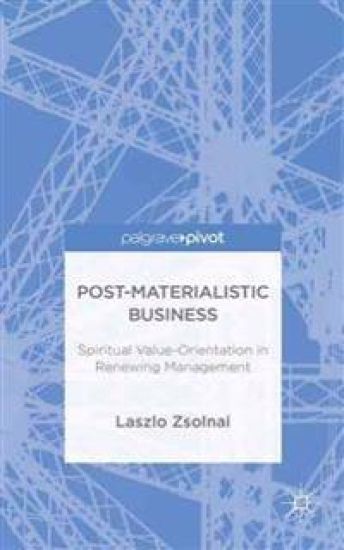
Post-Materialist Business presents a spiritual-based approach to business and management. It uses pluralistic view of spirituality and provides a number of inspiring cases of alternative organizations which go beyond the materialistic mindset of business and serve the common good of society, nature, and future generations.

This book addresses ethical and spiritual issues in economics. The central idea advanced in the book is that the extreme focus on the self by economic actors leads to the destruction of both material and non-material values. The assumptions of self-interest in behavior represent the core of mainstream economics today. From this perspective, the welfare of economic agents depends on their own consumption; their goal is to maximize their own welfare; and their choice is guided by the pursuit of their own goals. Throughout the book the author argues that self-interest-based actions and policies have a detrimental impact on nature, future generations, and society at large. If we want to survive and flourish in the material world we have to transcend the self and embrace wholeness. This value shift requires enormous changes in economics, politics and social life, but there may not be any other option in light of the current state of ecological degradation and human suffering.