Kirjojen hintavertailu – 12 903 724 kirjaa ja 27 kauppaa
Kirjailija
Latief Ahmad
Kirjat ja teokset yhdessä paikassa: 9 kirjaa, julkaisuja vuosilta 2017–2026, suosituimpiin kuuluu Vertical Farming. Vertaile teosten hintoja ja tarkista saatavuus suomalaisista kirjakaupoista.
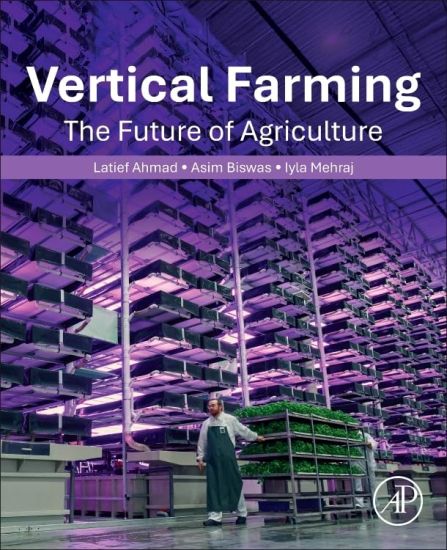
Vertical Farming: The Future of Agriculture covers innovative techniques like hydroponics and automation to lay out the fundamentals of vertical farming which marks a shift away from traditional farming methos. Vertical Farming is not just a theoretical exploration; it provides practical insights and actionable strategies that can be implemented to transform urban agriculture, making it more resilient and sustainable. It instructs on how vertical farming practices can meet the demands of an ever-growing urban population while mitigating the adverse effects of climate change on agriculture. This book tackles the concept and historical roots of vertical farming. It provides actionable, real-world strategies and insights to highlight the advantages of this innovative form of farming within populated urban areas experiencing food insecurity. Essential topics such as space optimization, reduced resource usage, consistent crop yield, and energy efficiency are covered in depth. The first few chapters introduce the foundational concepts and historical context of vertical farming. Following this, the book describes the technical equipment used in vertical farming systems and various hydroponic methods. Lastly, it covers practical applications, including crop selection, nursery raising, planting, care, management, and marketing. Vertical Farming is an essential resource for upper-level undergraduate students in agriculture, environmental science, urban planning, and related disciplines. It is also invaluable for researchers and professionals in sustainable agriculture, urban farming, environmental consulting, and food security. This edition contains data sets, an image bank, comprehensive case studies and worked examples as additional resources for students and instructors.
Water is the lifeline of agriculture, and its efficient management is crucial for sustainable food production in an era of climate uncertainty and resource scarcity. Farm Irrigation Management provides a comprehensive guide to the principles and practices that govern water use in agriculture, offering insights into the latest scientific advancements, innovative irrigation techniques, and climate-resilient strategies to optimize water utilization. This book explores the intricate relationship between soil, water, and plants, delving into critical topics such as soil-water-plant interactions, irrigation methods, drainage, and precision water management. With an emphasis on real-world applications, it equips readers with practical knowledge on land suitability for irrigation, water accounting and auditing, climate change adaptation strategies, and the design and operation of irrigation systems. The book also covers advanced topics such as fertigation, automation in irrigation, and the use of treated wastewater, making it a valuable resource for students, researchers, extension professionals, and policymakers. Key Features:A holistic approach to farm water management, integrating scientific, technical, and practical perspectives. In-depth coverage of soil water properties, plant response to water stress, and irrigation scheduling. A thorough exploration of irrigation techniques, including surface, subsurface, drip, and sprinkler irrigation. Discussions on climate change impacts, water conservation strategies, and groundwater management. Emphasis on sustainable and precision irrigation practices for improved water efficiency. Latest advancements in automation, remote sensing, and data-driven irrigation systems. What makes Farm Irrigation Management stand out is its ability to bridge the gap between scientific research and practical implementation, ensuring that readers not only understand key concepts but also gain hands-on knowledge to address real-world agricultural water challenges effectively. Designed for agricultural scientists, engineers, farmers, and water resource professionals, Farm Irrigation Management serves as an essential reference for optimizing agricultural water use while ensuring environmental sustainability and food security.
This book encompasses all aspects and perspectives of crop and climate science. It aims to serve as the authoritative resource for undergraduate students seeking answers and insights into the field of crop science and agro meteorology. The book covers a wide range of topics, starting from the foundational principles of crops and extending to various meteorological phenomena. It is built upon the latest research in crop science and agro-meteorology, providing clear and concise explanations without unnecessary filler content. The transitions between topics are smooth and coherent, ensuring optimal comprehension. The initial chapters focus on the fundamental principles of crop science, while the later sections delve into the concepts and practices of agro-meteorology. This book is specifically designed for advanced undergraduate students and beyond studying crops, meteorology, horticulture, forestry, fisheries, and related fields. Special care has been taken by authors to match the content with current scenario and advancement in the field of agriculture sciences.
The monograph focuses on agricultural meteorology and climate change and its impacts on different crops. Comprising of chapters from experts, the book discusses and provides first-hand information to the long term shifts in weather patterns and temperature impacting soil, water and crops. Each chapter focuses in detail on the impact of plant- water – soil nexus and climate change on agriculture and food security. Covering the basic concepts about the temperature, pressure and humidity correlation with the increased demands of food, the book explores in detail the impact of adverse climatic conditions like drought, floods, increasing levels of carbon dioxide emissions and other simultaneous effects like soil fertility depletion on the cropping systems and overall crop productivity. The book touches the challenges of climate change, adaptive methods, mitigation strategies, with careful explanation of governance, plans and policies required to provide guidelines to stake holdersso they can best prepare for the negative climate change impacts. While touching the agricultural challenges faced globally due to climate change, the book serves as a reference book for students, researchers and policy makers, involved in horticulture, agriculture and environmental sciences and climate change.
Agriculture 5.0: Artificial Intelligence, IoT & Machine Learning provides an interdisciplinary, integrative overview of latest development in the domain of smart farming. It shows how the traditional farming practices are being enhanced and modified by automation and introduction of modern scalable technological solutions that cut down on risks, enhance sustainability, and deliver predictive decisions to the grower, in order to make agriculture more productive. An elaborative approach has been used to highlight the applicability and adoption of key technologies and techniques such WSN, IoT, AI and ML in agronomic activities ranging from collection of information, analysing and drawing meaningful insights from the information which is more accurate, timely and reliable. It synthesizes interdisciplinary theory, concepts, definitions, models and findings involved in complex global sustainability problem-solving, making it an essential guide and reference. It includes real-world examples and applications making the book accessible to a broader interdisciplinary readership. This book clarifies hoe the birth of smart and intelligent agriculture is being nurtured and driven by the deployment of tiny sensors or AI/ML enabled UAV’s or low powered Internet of Things setups for the sensing, monitoring, collection, processing and storing of the information over the cloud platforms. This book is ideal for researchers, academics, post-graduate students and practitioners of agricultural universities, who want to embrace new agricultural technologies for Determination of site-specific crop requirements, future farming strategies related to controlling of chemical sprays, yield, price assessments with the help of AI/ML driven intelligent decision support systems and use of agri-robots for sowing and harvesting. The book will be covering and exploring the applications and some case studies of each technology, that have heavily made impact as grand successes. The main aim of the book is to give the readers immense insights into the impact and scope of WSN, IoT, AI and ML in the growth of intelligent digital farming and Agriculture revolution 5.0. The book also focuses on feasibility of precision farming and the problems faced during adoption of precision farming techniques, its potential in India and various policy measures taken all over the world. The reader can find a description of different decision support tools like crop simulation models, their types, and application in PA. Features: Detailed description of the latest tools and technologies available for the Agriculture 5.0. Elaborative information for different type of hardware, platforms and machine learning techniques for use in smart farming. Elucidates various types of predictive modeling techniques available for intelligent and accurate agricultural decision making from real time collected information for site specific precision farming. Information about different type of regulations and policies made by all over the world for the motivation farmers and innovators to invest and adopt the AI and ML enabled tools and farming systems for sustainable production.
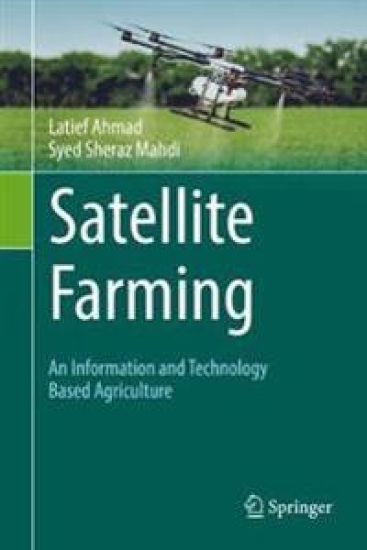
This book focuses on the recent advances in precision agriculture and satellite farming, detailing applications for sensing, data handling, modeling, and control. In addition, the book reviews its history - establishing the background on the various processes and applications – describes the current status, and offers insight into the future technology of satellite farming in India. Introducing processes and applications based on a global scale, the book reveals how precision agriculture can be used in large-scale agriculture, community agriculture, and diversified farming. It includes site-specific information from a variety of information sources for planning, planting, growing, and harvesting agricultural crops. It also presents a new concept based on the control system theory that can be used to formulate systematic methods for more effective precision crop production. Precision agriculture when properly integrated into the crop production process, can greatly improve overall production and sustainability.
The book is a practical manual which has been created to support the syllabus of agro-meteorology courses specifically designed for graduate and post-graduate students. The topics covered in the manual include working with meteorological instruments for measurement of various meteorological parameters like temperature, humidity, sunshine hours, precipitation, etc. Separate chapters have been included for computation of growing degree days, agro-climatic zones, crop modelling and agro-advisory services. The book will have great appeal to students of agriculture, horticulture, and forestry.