Kirjojen hintavertailu – 12 903 735 kirjaa ja 27 kauppaa

Kirjailija

Laura J. Shepherd

Kirjat ja teokset yhdessä paikassa: 11 kirjaa, julkaisuja vuosilta 2012–2025, suosituimpiin kuuluu Thinking World Politics Otherwise. Vertaile teosten hintoja ja tarkista saatavuus suomalaisista kirjakaupoista.

11 kirjaa

Kirjojen julkaisuvuodet: 2012–2025.

Thinking World Politics Otherwise

Thinking World Politics Otherwise

Rhys Crilley; Nivi Manchanda; Laura J. Shepherd; Cai Wilkinson; Caitlin Biddolph; Stefanie Fishel

Oxford University Press
2025
nidottu

Halvin toimitettuna 49,10 €

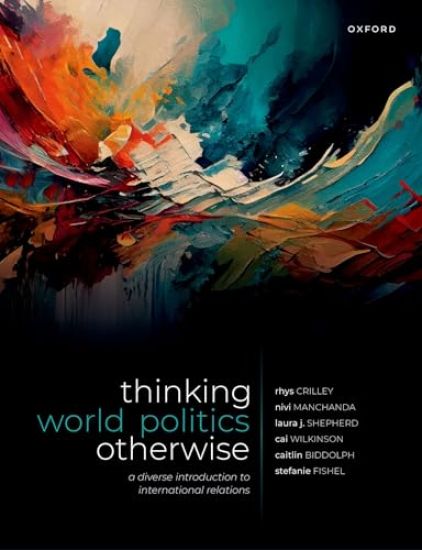
Thinking World Politics Otherwise is a different kind of textbook. It includes a variety of critical approaches and perspectives that seek to challenge and rethink orthodox understandings of International Relations. Moving away from traditional approaches based on theoretical and historical schools of thought, Thinking World Politics Otherwise brings together prominent voices in the field that recognize the importance of engaging with global politics from a range of perspectives and through a variety of cutting-edge approaches. It provides students with the opportunity to become familiar with a wide spectrum of approaches, issues, and cases that have been historically marginalized in the discipline. Key Features · Includes a variety of approaches that have been historically marginalized in the discipline. · Each section editor, as an expert in the approach represented in their section, provides an introduction to the section to give readers an overview of the approach. · Diverse topics and chapters, ranging from understanding how the everyday shapes our view of the world to a planetary examination of international mobility, provides students with a wide range of learning opportunities. · Also available as an e-book with functionality, navigation features, and links that offer extra learning support. Digital formats and resources Thinking World Politics Otherwise is available for students and institutions to purchase in a variety of formats and is supported by online resources. The e-book offers a mobile experience and convenient access along with self-test multiple choice questions, functionality tools, navigation features, and links that offer extra learning support: www.oxfordtextbooks.co.uk/ebooks The digital version, available on Politics Trove, is also accompanied by online resources. These include: For lecturers: - PowerPoint slides with a deck for each chapter to help build lecture materials
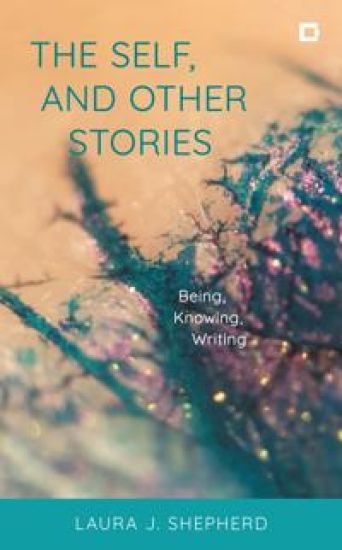
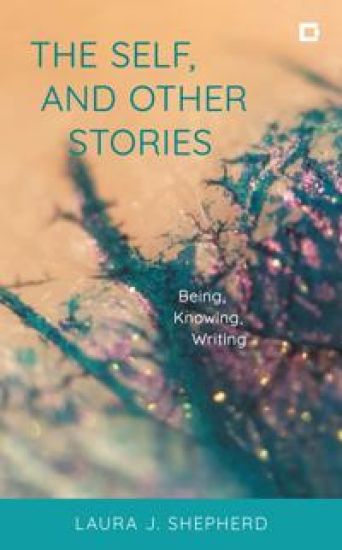
The Self, and Other Stories

The Self, and Other Stories

Laura J. Shepherd

BLOOMSBURY PUBLISHING PLC
2023
sidottu
The Self, and Other Stories is an autoethnographic reflection on the value in the act of writing, illuminating the life of the researcher—in particular the researcher as human. Shepherd explores the multitudes of the academic, feminist self through expanding vocabularies of how scholars, researchers, writers, teachers, and academics can make sense of their worlds. At the intersection of international relations theory and the personal, Shepherd presents seven reflexive essays on aspects of being and knowing as she has encountered them. The essays are grounded in and inspired by her experiences as a way of asking readers to imagine how knowledge production in the social sciences might look different if we could create and hold space for different ways of writing, being, and knowing. The disciplining practices which produce our limited modes of academic expression can be encountered otherwise. She calls on us to reflect on academic subjectification across the interconnected spaces we simultaneously inhabit and produce.
The Self, and Other Stories

The Self, and Other Stories

Laura J. Shepherd

BLOOMSBURY PUBLISHING PLC
2023
nidottu
The Self, and Other Stories is an autoethnographic reflection on the value in the act of writing, illuminating the life of the researcher—in particular the researcher as human. Shepherd explores the multitudes of the academic, feminist self through expanding vocabularies of how scholars, researchers, writers, teachers, and academics can make sense of their worlds. At the intersection of international relations theory and the personal, Shepherd presents seven reflexive essays on aspects of being and knowing as she has encountered them. The essays are grounded in and inspired by her experiences as a way of asking readers to imagine how knowledge production in the social sciences might look different if we could create and hold space for different ways of writing, being, and knowing. The disciplining practices which produce our limited modes of academic expression can be encountered otherwise. She calls on us to reflect on academic subjectification across the interconnected spaces we simultaneously inhabit and produce.
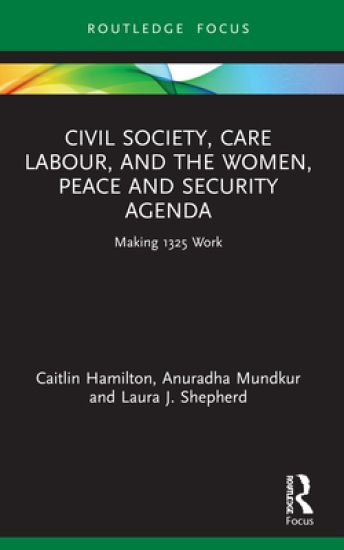
Civil Society, Care Labour, and the Women, Peace and Security Agenda

Civil Society, Care Labour, and the Women, Peace and Security Agenda

Caitlin Hamilton; Anuradha Mundkur; Laura J. Shepherd

TAYLOR FRANCIS LTD
2023
nidottu
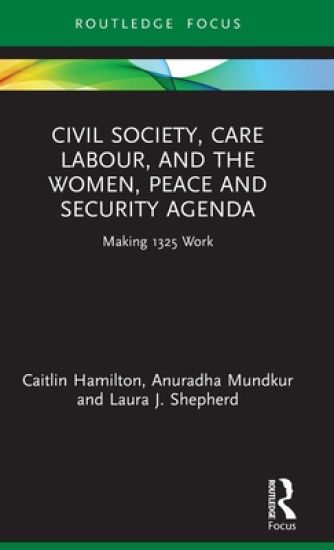
This book proposes that work on the Women, Peace and Security agenda undertaken by civil society actors can be interpreted as a form of care labour that nourishes and sustains the agenda – without which the agenda could not, in fact, succeed. The care labour of civil society is thus a condition of the Women, Peace and Security agenda’s success. United Nations Security Council resolution 1325 is the foundation of a diverse and pluralising policy framework known as the Women, Peace and Security agenda. Over the 20 years since the adoption of the foundational resolution, despite sustained resistance from some quarters and a general lack of adequate resourcing and political will, the agenda has continued to see many successes, and to achieve elements of political transformation large and small. This book explores how the supporting constituency of the agenda has ‘made 1325 work’. Based on new interviews with representatives of diverse civil society organisations working on WPS, the book offers a novel intervention into WPS scholarship, which has thus far paid relatively little attention to the labours of civil society actors working on WPS, particularly on an individual level. The authors consider the motivations, pressures and frustrations experienced by WPS civil society actors, as well as the goals and challenges. This book is based on original research and will be of interest to scholars, policymakers and practitioners working on WPS specifically, and those working in Political Science, International Relations, Development Studies, and on the global governance of peace and security. It will also be relevant for students in WPS-focused programs and of peace and security studies more broadly.
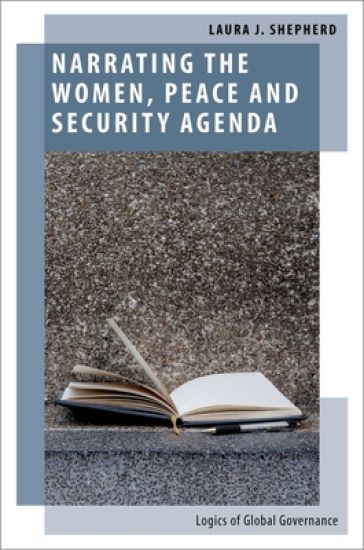
Narrating the Women, Peace and Security Agenda

Narrating the Women, Peace and Security Agenda

Laura J. Shepherd

Oxford University Press Inc
2021
nidottu
The "narrative turn" has recently influenced theories, methods, and research design within the field of international relations. Its goal is, in part, to show how stories about international events and issues emerge and develop, and how these stories influence the uptake and limitations of global policy "solutions" around the world. Through the lens of narrative, this book examines the Women, Peace and Security (WPS) agenda, adopted by the United Nations Security Council twenty years ago. The agenda seeks to increase the participation of women in conflict prevention efforts and to protect the rights of women during conflict and peacebuilding. Those involved in the creation of the WPS agenda, including its strategies, guidelines, and protocols, tend to assume that implementation is the most critical element of it. But what can the stories about the agenda's emergence tell us about its limits and possibilities? Laura J. Shepherd examines WPS as a policy agenda that has been realized in and through the stories that have been told about it, focusing on the world of WPS work at the United Nations Headquarters in New York. She argues that to understand the implementation of the agenda we need to also understand the narration of the agenda's beginnings, its ongoing unfolding, and its plural futures. These stories outline the agenda's priorities and delimit its possibilities--as well as communicate and constitute its triumphs and disasters. As the book shows, much energy and resources are expended in efforts to reduce or resolve the agenda to a singular, essential "thing"--with singular, essential meaning. There is no "true" WPS agenda that practitioners, activists, and policymakers can apprehend and use as their guide; there is only a messy and contested space for political interventions of different kinds. Shepherd shows that the narratives of the WPS agenda incorporate plural logics but that this plurality cannot--should not--be used as an alibi for limited engagement or strategic inaction. Those seeking to realize the WPS agenda might need to live with the irreconcilable, the irresolvable, and the ambiguous.
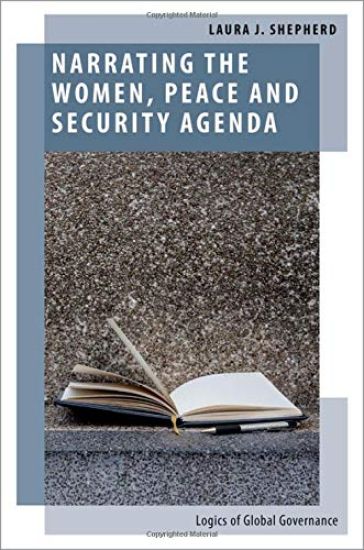
Narrating the Women, Peace and Security Agenda

Narrating the Women, Peace and Security Agenda

Laura J. Shepherd

Oxford University Press Inc
2021
sidottu
The "narrative turn" has recently influenced theories, methods, and research design within the field of international relations. Its goal is, in part, to show how stories about international events and issues emerge and develop, and how these stories influence the uptake and limitations of global policy "solutions" around the world. Through the lens of narrative, this book examines the Women, Peace and Security (WPS) agenda, adopted by the United Nations Security Council twenty years ago. The agenda seeks to increase the participation of women in conflict prevention efforts and to protect the rights of women during conflict and peacebuilding. Those involved in the creation of the WPS agenda, including its strategies, guidelines, and protocols, tend to assume that implementation is the most critical element of it. But what can the stories about the agenda's emergence tell us about its limits and possibilities? Laura J. Shepherd examines WPS as a policy agenda that has been realized in and through the stories that have been told about it, focusing on the world of WPS work at the United Nations Headquarters in New York. She argues that to understand the implementation of the agenda we need to also understand the narration of the agenda's beginnings, its ongoing unfolding, and its plural futures. These stories outline the agenda's priorities and delimit its possibilities--as well as communicate and constitute its triumphs and disasters. As the book shows, much energy and resources are expended in efforts to reduce or resolve the agenda to a singular, essential "thing"--with singular, essential meaning. There is no "true" WPS agenda that practitioners, activists, and policymakers can apprehend and use as their guide; there is only a messy and contested space for political interventions of different kinds. Shepherd shows that the narratives of the WPS agenda incorporate plural logics but that this plurality cannot--should not--be used as an alibi for limited engagement or strategic inaction. Those seeking to realize the WPS agenda might need to live with the irreconcilable, the irresolvable, and the ambiguous.
Civil Society, Care Labour, and the Women, Peace and Security Agenda

Civil Society, Care Labour, and the Women, Peace and Security Agenda

Caitlin Hamilton; Anuradha Mundkur; Laura J. Shepherd

Routledge
2021
sidottu
This book proposes that work on the Women, Peace and Security agenda undertaken by civil society actors can be interpreted as a form of care labour that nourishes and sustains the agenda – without which the agenda could not, in fact, succeed. The care labour of civil society is thus a condition of the Women, Peace and Security agenda’s success. United Nations Security Council resolution 1325 is the foundation of a diverse and pluralising policy framework known as the Women, Peace and Security agenda. Over the 20 years since the adoption of the foundational resolution, despite sustained resistance from some quarters and a general lack of adequate resourcing and political will, the agenda has continued to see many successes, and to achieve elements of political transformation large and small. This book explores how the supporting constituency of the agenda has ‘made 1325 work’. Based on new interviews with representatives of diverse civil society organisations working on WPS, the book offers a novel intervention into WPS scholarship, which has thus far paid relatively little attention to the labours of civil society actors working on WPS, particularly on an individual level. The authors consider the motivations, pressures and frustrations experienced by WPS civil society actors, as well as the goals and challenges. This book is based on original research and will be of interest to scholars, policymakers and practitioners working on WPS specifically, and those working in Political Science, International Relations, Development Studies, and on the global governance of peace and security. It will also be relevant for students in WPS-focused programs and of peace and security studies more broadly.
Gender, UN Peacebuilding, and the Politics of Space

Gender, UN Peacebuilding, and the Politics of Space

Laura J. Shepherd

Oxford University Press Inc
2019
nidottu
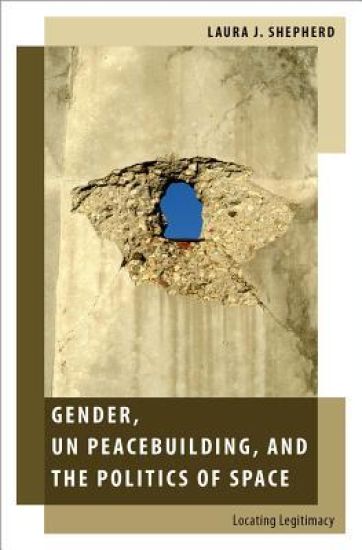
The United Nations Peacebuilding Commission (UNPBC) was established in December 2005 to develop outlines of best practice in post-conflict reconstruction, and to secure the political and material resources necessary to assist states in transition from conflict to peacetime. Currently, the organization is involved in reconstruction and peacebuilding activities in six countries. Yet, a 2010 review by permanent representatives to the United Nations found that the hopes of the UN peacebuilding architecture "despite committed and dedicated efforts...ha[d] yet to be realized." Two of these hopes relate to gender and power, specifically that peacebuilding efforts integrate a "gender perspective" and that the Commission consult with civil society, NGOs, and women's organizations. This book is the first to offer an extensive and dedicated analysis of the activities of the UN Peacebuilding Commission with regard to both gender politics, broadly conceived, and the gendered dynamics of civil society participation in peacebuilding activities. Laura J. Shepherd draws upon original fieldwork that she conducted at the UN to argue that the gendered and spatial politics of peacebuilding not only feminizes civil society organizations, but also perpetuates hierarchies that privilege the international over the domestic realms. The book argues that the dominant representations of women, gender, and civil society in UN peacebuilding discourse produce spatial hierarchies that paradoxically undermine the contemporary emphasis on "bottom-up" governance of peacebuilding activities.
Gender, UN Peacebuilding, and the Politics of Space

Gender, UN Peacebuilding, and the Politics of Space

Laura J. Shepherd

Oxford University Press Inc
2017
sidottu
The United Nations Peacebuilding Commission (UNPBC) was established in December 2005 to develop outlines of best practice in post-conflict reconstruction, and to secure the political and material resources necessary to assist states in transition from conflict to peacetime. Currently, the organization is involved in reconstruction and peacebuilding activities in six countries. Yet, a 2010 review by permanent representatives to the United Nations found that the hopes of the UN peacebuilding architecture "despite committed and dedicated efforts...ha[d] yet to be realized." Two of these "hopes" deal with gender issues, specifically that peacebuilding efforts integrate a "gender perspective" and that the Commission consult with civil society, NGOs, and women's organizations. This book is the first to offer an extensive and dedicated analysis of the activities of the UN Peacebuilding Commission with regard to both gender politics, broadly conceived, and the gendered dynamics of civil society participation in peacebuilding activities. Laura J. Shepherd draws upon original fieldwork that she conducted with the UNPBC to argue that the spatial politics of peacebuilding are not only gendered - such that they further marginalize and disadvantage indigenous populations in peacebuilding activities - but also perpetuate hierarchies that privilege the international over the domestic realms. Laying bare the logics of gender and space that organize UN peacebuilding discourse, the book asserts that the representations of women, gender, and civil society inform the meaning of UN peacebuilding in contemporary world politics.
Gender, Violence and Popular Culture

Gender, Violence and Popular Culture

Laura J. Shepherd

Routledge
2012
sidottu
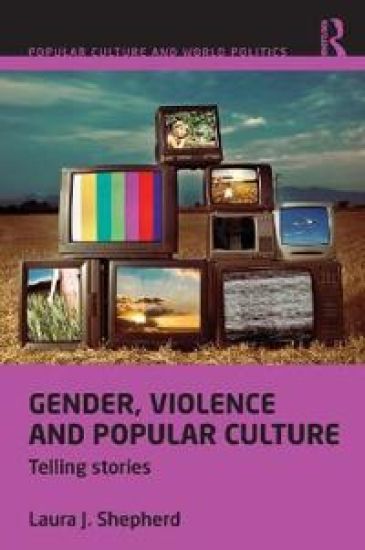
This book examines the intersection of gender and violence in popular culture. Drawing on the latest thinking in critical international relations, media and cultural studies and gender studies, it focuses in particular on a number of popular TV shows including Angel, Buffy the Vampire Slayer, Firefly, Generation Kill, The Corner and The West Wing. The book makes a unique theoretical contribution to the ‘narrative turn’ in International Relations by illustrating the ways in which popular culture and global politics are intertwined and how we make sense of our worlds through these two frames. Methodologically, the book enhances discourse-theoretical analysis in IR through its incorporation of methods from narratology and film studies. The book proposes an aesthetic ethicopolitical approach to global politics which challenges us to interrogate how it becomes possible that we think what we think, it challenges the truths that we hold to be self-evident and that which we take to be common sense. It demands that we think carefully, critically, uncomfortably, about our world(s) – even when we’re ‘only’ watching television.
Gender, Violence and Popular Culture

Gender, Violence and Popular Culture

Laura J. Shepherd

Routledge
2012
nidottu
This book examines the intersection of gender and violence in popular culture. Drawing on the latest thinking in critical international relations, media and cultural studies and gender studies, it focuses in particular on a number of popular TV shows including Angel, Buffy the Vampire Slayer, Firefly, Generation Kill, The Corner and The West Wing. The book makes a unique theoretical contribution to the ‘narrative turn’ in International Relations by illustrating the ways in which popular culture and global politics are intertwined and how we make sense of our worlds through these two frames. Methodologically, the book enhances discourse-theoretical analysis in IR through its incorporation of methods from narratology and film studies. The book proposes an aesthetic ethicopolitical approach to global politics which challenges us to interrogate how it becomes possible that we think what we think, it challenges the truths that we hold to be self-evident and that which we take to be common sense. It demands that we think carefully, critically, uncomfortably, about our world(s) – even when we’re ‘only’ watching television.