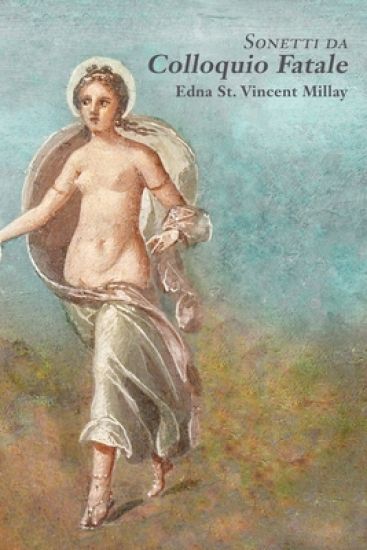
Sonnets from Fatal Interview/Sonetti da Colloquio Fatale
Edna St Vincent Millay; Laura Klinkon
Stesichorus Publications
2020
pokkari
Millay's Fatal Interview love affair began in 1928 while at the University of Chicago on a reading tour. She immediately fell in love and began a relationship with the recently graduated, yet critically acclaimed poet who introduced her, George Dillon. She was 36, married, and living at her country estate in Austerlitz, New York, while George was 22 and working as the associate editor of the important magazine Poetry in Chicago. The relationship was striking for several reasons other than immediacy, age, and marital status: Millay's husband, believing with her in the concept of "open marriage" condoned the relationship, and the book Fatal Interview that followed the affair to its end was published only three years after its start. Il rapporto amoroso esplicato nella sequenza Colloquio Fatale di Millay ebbe inizio nel 1928 all'universit di Chicago mentre lei faceva un giro di recitazioni. Si era innamorata di colpo, entrando in una relazione con Giorgio Dillon, un poeta appena laureato ma gi criticamente noto, che era incaricato a presentarla. Lei aveva 36 anni, era sposata, e abitava nella sua tenuta ad Austerlitz, New York, mentre Giorgio aveva 22 anni e lavorava come editore aggiunto della rivista Poetry di Chicago. Il rapporto amoroso si pu dire eccezionale per l'impetuosit , le differenze d'et , e i stati civili diversi della coppia, ma ancora di pi per la tolleranza dello sposo di Millay, che con lei atteneneva all'idea di "matrimonio aperto," e il libro Colloquio Fatale, che segu la relazione fino alla fine, fu pubblicato solo tre anni dal suo inizio. Even though the sonnet sequence is seen as a traditionally masculine genre due to its supposedly "sublime" or "heroic" characteristic, Millay's Fatal Interview sequence does, in fact, exhibit "heroic" qualities, often expressing courageous determination. Criticized in her time for being too sentimental, Shakespearian, or romantic to be a modern, Millay nevertheless was a diva of poetry during the Roaring Twenties, such that she could hardly be denied the Pulitzer Prize in 1923, conferred even prior to Fatal Interview (1931), which the translator of this collection sees as among Millay's more mature works. Anche se la sequenza di sonetti vista dalla tradizione come progetto maschile per il suo carattere "sublime" o "eroico," la sequenza Colloquio Fatale di Millay, esibisce, in fatti, delle qualita eroiche, spesso mostrando una determinazone ardita. Criticata ai suoi tempi per essere troppo sentimentale, o shakespeariana, o romantica e perci non moderna, Millay, nondimeno, era la diva dell'arte poetica dei "ruggenti" anni venti, tanto che non si poteva fare a meno di conferirle il Premio Pulitzer del 1923, che avvenne anche prima della pubblicazione di Colloquo Fatale (1931), e che, secondo la traduttrice di questa raccolta, conta fra i suoi pi maturi lavori.