

Kirjailija
Laura Randall
Kirjat ja teokset yhdessä paikassa: 16 kirjaa, julkaisuja vuosilta 1987–2027, suosituimpiin kuuluu Southern California Day Trips. Vertaile teosten hintoja ja tarkista saatavuus suomalaisista kirjakaupoista.
16 kirjaa
Kirjojen julkaisuvuodet: 1987–2027.
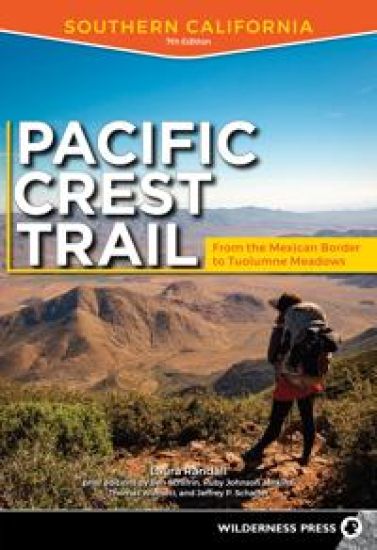
Your hiking and backpacking guide to the PCT First published in 1973, The Pacific Crest Trail, Vol. 1, California quickly established itself as the "PCT Bible"--the book trekkers could not do without. Now thoroughly updated and redesigned, Pacific Crest Trail: Southern California starts at the Mexican border and guides you to Yosemite's beautiful backcountry. Let our PCT gurus--Laura Randall, Ben Schiffrin, Jeffrey P. Schaffer, and Thomas Winnett--help you with everything you need to know about this section of the 2,650-mile trail, which traverses 24 national forests, 37 wilderness areas, and 7 national parks. Written by accomplished hikers who have logged over 5,000 trail miles, this book helps you locate the trail and side trips, find water sources, and access resupply routes. Featuring a complete map of the route, Pacific Crest Trail: Southern California provides rich descriptions of the trail, tips on planning your hike, and information on the region's natural history, geology, and ecology. You'll also get important details on camping, permits, and the best seasons to go. Plan a day hike, a weekend trip, or an ambitious thru-hike. Let's get going. The trail awaits!

Laura Randall brings readers the best of Philadelphia and the outlying Amish Country, one of America’s most historically and culturally rich regions. Travelers seeking fine dining, authentic cuisine, sightseeing, or a world-class arts scene will find this guide indispensable in making the best of their stay in the City of Brotherly Love. Recommendations for shopping, eating, lodging, and touring will excite visitors of all tastes. From natural areas and historic neighborhoods in and around Philadelphia to the Amish markets of Lancaster County, from historic battlefields at Valley Forge and Gettysburg to the antiques shops of Bucks County, and the leisure resorts and quiet nature trails of the Pocono Mountains, this guide (previously published as Explorer’s Guide Eastern Pennsylvania: Includes Philadelphia, Gettysburg, Amish Country & the Poconos) offers great guidance for a unique, fascinating destination.
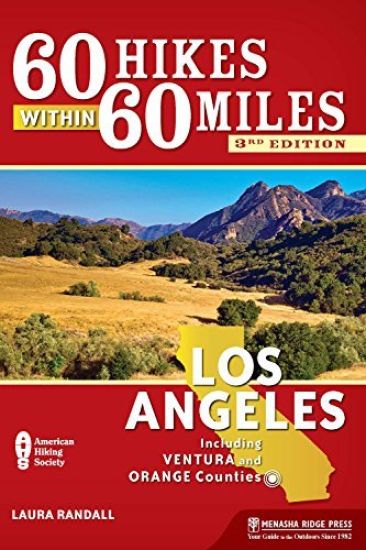
60 Hikes Within 60 Miles: Los Angeles shows readers how to quickly drive to and enjoy the best hikes from the San Gabriel Mountains to the Pacific Ocean. With time, health, and pin money at a premium, this handy guide helps Angelenos get back to nature without going out of town. From Palos Verdes on the coast to Santa Clarita to the north and the expansive San Gabriel Mountains, it details 60 hikes and walks within roughly an hour's drive of Los Angeles, encouraging even the most time-starved trekkers to get on the trails and get healthy. Extensive at-a-glance information makes it easy to choose the perfect hike based on length, difficulty, scenery, or on a specific factor such as hikes good for families, runners, or birding. Each trail profile includes maps, directions, driving times, nearby attractions, and other pertinent details. Having lived in just about every area of Los Angeles, author Laura Randall provides key in-the-know information about traffic patterns, the best times to hike, how to avoid expensive parking fees, and the best burrito joints near the trail-head.
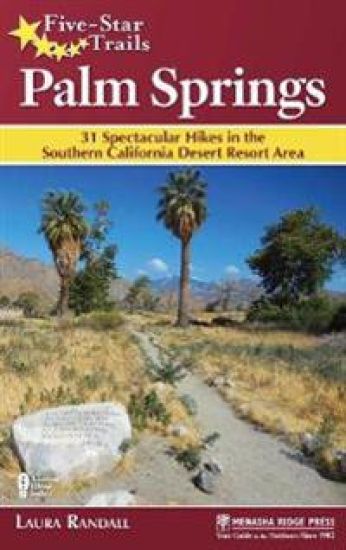
A popular outdoor destination for the 7 million residents of Los Angeles, Palm Springs offers stunning hiking opportunities. With Joshua Tree National Monument to the east, the San Bernardino National Forest to the north and south, and the storied Pacific Crest Trail passing nearby, hiking expert Laura Randall has chosen the best hikes that highlight the area. Five-Star Trails: Palm Springs features child-friendly hikes and urban hikes that are easily accessible from resorts. Laura also includes hikes for the new Whitewater Preserve, as well as updated trails in La Quinta and Palm Desert. Extensive at-a-glance information makes it easy to choose the perfect hike based on length, difficulty, and scenery. Each trail profile includes maps, directions, driving times, nearby attractions, and other pertinent details.
A popular outdoor destination for the 7 million residents of Los Angeles, Palm Springs offers stunning hiking opportunities. With Joshua Tree National Monument to the east, the San Bernardino National Forest to the north and south, and the storied Pacific Crest Trail passing nearby, hiking expert Laura Randall has chosen the best hikes that highlight the area. Five-Star Trails: Palm Springs features child-friendly hikes and urban hikes that are easily accessible from resorts. Laura also includes hikes for the new Whitewater Preserve, as well as updated trails in La Quinta and Palm Desert. Extensive at-a-glance information makes it easy to choose the perfect hike based on length, difficulty, and scenery. Each trail profile includes maps, directions, driving times, nearby attractions, and other pertinent details.

60 Hikes Within 60 Miles: Los Angeles shows readers how to quickly drive to and enjoy the best hikes from the San Gabriel Mountains to the Pacific Ocean. With time, health, and pin money at a premium, this handy guide helps Angelenos get back to nature without going out of town. From Palos Verdes on the coast to Santa Clarita to the north and the expansive San Gabriel Mountains, it details 60 hikes and walks within roughly an hour's drive of Los Angeles, encouraging even the most time-starved trekkers to get on the trails and get healthy. Extensive at-a-glance information makes it easy to choose the perfect hike based on length, difficulty, scenery, or on a specific factor such as hikes good for families, runners, or birding. Each trail profile includes maps, directions, driving times, nearby attractions, and other pertinent details. Having lived in just about every area of Los Angeles, author Laura Randall provides key in-the-know information about traffic patterns, the best times to hike, how to avoid expensive parking fees, and the best burrito joints near the trail-head.
From natural areas and historic areas in and around Philadelphia to the Amish markets of Lancaster County; from historic battlefields at Valley Forge and Gettysburg to the antiques shops of Bucks County and the leisure resorts and quiet nature trails of the Pocono Mountains, this guide offers great guidance for this fascinating region. Areas covered are all within easy driving distance of most East Coast states.
Mexico is reinventing itself. It is moving toward a more tolerant, global, market oriented, and democratic society. This new edition of "Changing Structure of Mexico" is a comprehensive and up-to-date presentation of Mexico's political, social, and economic issues. All chapters have been rewritten by noted Mexican scholars and practitioners to provide a lucid and informative introductory reader on Mexico. The book covers such topics as Mexico's foreign economic policy and NAFTA; maquiladoras; technology policy; and Asian competition; as well as domestic economics such as banking, tax reform, and oil/energy policy; the environment; population and migration policy; the changing structure of political parties; and values and changes affecting women.
Mexico is reinventing itself. It is moving toward a more tolerant, global, market oriented, and democratic society. This new edition of "Changing Structure of Mexico" is a comprehensive and up-to-date presentation of Mexico's political, social, and economic issues. All chapters have been rewritten by noted Mexican scholars and practitioners to provide a lucid and informative introductory reader on Mexico. The book covers such topics as Mexico's foreign economic policy and NAFTA; maquiladoras; technology policy; and Asian competition; as well as domestic economics such as banking, tax reform, and oil/energy policy; the environment; population and migration policy; the changing structure of political parties; and values and changes affecting women.

The link between economic development and education in Latin America is generally well-recognized. A literate and educated work force is the largest single factor in explaining economic growth. In this study, the editors and contributors survey the various elementary educational systems to investigate the reasons behind the failure of schools to retain students in elementary grades. A group of scholars looks at the current state of education in four countries: Mexico, Argentina, Brazil, and Chile, with a view to designing more effective programs for reducing the dropout and grade repetition rates. For each country studied, there is an overview of the school system, teacher training and attitudes, centralized and decentralized planning, curriculum development, and psychological and environmental issues that contribute to school dropout.
The link between economic development and education in Latin America is generally well-recognized. A literate and educated work force is the largest single factor in explaining economic growth. In this study, the editors and contributors survey the various elementary educational systems to investigate the reasons behind the failure of schools to retain students in elementary grades. A group of scholars looks at the current state of education in four countries: Mexico, Argentina, Brazil, and Chile, with a view to designing more effective programs for reducing the dropout and grade repetition rates. For each country studied, there is an overview of the school system, teacher training and attitudes, centralized and decentralized planning, curriculum development, and psychological and environmental issues that contribute to school dropout.
This work provides a survey and analysis of Mexico's agrarian reform, covering topics such as the agricultural provisions of NAFTA. The book also discusses the events in Chiapas that are crucial to Mexico's current political situation and the implications of reform for US-Mexican trade.
This work provides a survey and analysis of Mexico's agrarian reform, covering topics such as the agricultural provisions of NAFTA. The book also discusses the events in Chiapas that are crucial to Mexico's current political situation and the implications of reform for US-Mexican trade.

This work follows upon the author's previous volume, The Political Economy of Venezuelan Oil, and investigates the general workings of the Mexican oil industry in relationship to the economics and politics of Mexico. Specifically the author examines Mexico's state-run oil concern, PEMEX, and the costs and benefits of Mexican oil policy--for the nation as a whole and for special groups. Using in-depth interviews and extensive data from PEMEX and other sources, Randall explores issues such as PEMEX's relationships with workers and the oil union, with suppliers of capital goods and services, with the regions in which oil is produced, and with specific groups of oil consumers. Given the critical and negative publicity PEMEX has received over its lifetime, Randall also seeks to answer questions regarding the extent of corruption, overstaffing, and lax management within PEMEX, which she finds to be less than is often alleged. Students of energy and development economics will find Randall's study an important contribution to the literature of Latin American economic policy. In addition to examining the internal workings of PEMEX, Randall describes and analyzes measures taken to correct earlier abuses and to increase efficiency. She reveals the intricate relationships among Mexican oil production, OPEC, the United States, and other nations, and explores the contradictory aspects of Mexican economic and oil policies that inhibit the ability of the oil industry to reach official goals. Throughout, Randall traces the transformation of PEMEX from a nationalized industry that mainly produced crude oil for export to one that has expanded to include refined products and petrochemicals. As a result of this expansion, Randall demonstrates, PEMEX has had a major impact both on the market for labor and capital goods and on the regions in which it operates. Her conclusions regarding the current and future prospects for PEMEX have important implications for the study of economic and energy development throughout the Third World.

The Political Economy of Venezuelan Oil describes the historic role of multinationals in establishing the oil industry there and the resulting coordination of an integrated, nationalized industry. Randall posits that the nationalization of the Venezuelan oil industry was strikingly different from that in Brazil and Mexico. Besides giving a detailed description of the structure and management of this industry, she also provides a history of labor conditions and an analysis of the impact of the oil industry on Venezuela's overall economy.