Kirjojen hintavertailu – 12 859 828 kirjaa ja 27 kauppaa

Kirjailija

Lauren B. Edelman

Kirjat ja teokset yhdessä paikassa: 3 kirjaa, julkaisuja vuosilta 2016–2020, suosituimpiin kuuluu Law, Society, and Industrial Justice. Vertaile teosten hintoja ja tarkista saatavuus suomalaisista kirjakaupoista.

Nimi esiintyy myös muodoissa: Lauren B Edelman

3 kirjaa

Kirjojen julkaisuvuodet: 2016–2020.

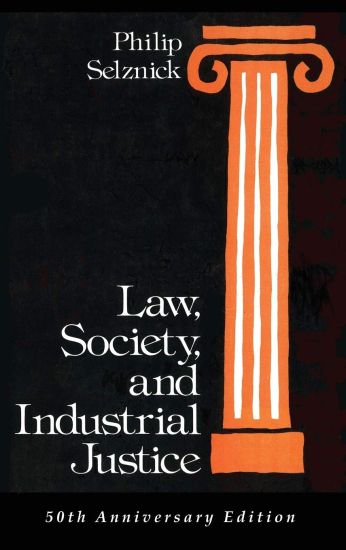
Law, Society, and Industrial Justice

Law, Society, and Industrial Justice

Philip Selznick; Lauren B Edelman

Quid Pro, LLC
2020
sidottu
Law, Society, and Industrial Justice is a foundational study of workplace justice, still engaging and referenced a half-century after its original publication. The 50th Anniversary Edition adds an extensive, substantive Foreword by Berkeley's Lauren Edelman. She writes that the book "remains important for how it conceptualizes law, for how it conceptualizes organizations, and for the theory Selznick offers regarding the moral evolution of organizations as they become 'institutions, ' or living entities infused with values." It is "a profound book for many reasons," as she critically examines. Norms and values still matter in organizational governance - even in what amounts to "private government" - as this classic work reminds us. - "Selznick's classic text invites the reader to understand the interplay of formal and informal structures that produce new organizational norms, which, at their best, would replace workplace arbitrariness with due process protections like those embodied in the Rule of Law. It is not just an extraordinary contribution to the fields of sociology and jurisprudence, it is the theoretically foundational precursor to entire subfields in sociology and law." -- Laura Beth Nielsen, Chair, Department of Sociology, Northwestern University; Research Professor, ABF -"Philip Selznick laid the foundation for one of law and society's most vibrant areas of inquiry: law and organizations. Although this book has often been underappreciated, its 50th anniversary is a good opportunity to reassess its significance. Indeed, the current #MeToo movement lends more urgency to Selznick's highly relevant ideas about conceptualizing organizations as legal orders, the importance of changing norms and values, the role of law within organizations, and organizations' influence on the law." -- Ashley T. Rubin, Sociology, University of Hawai'i at Manoa -"A contribution, brilliant and substantial, to the literature on private government." -- Winston M. Fisk, American Political Science Review
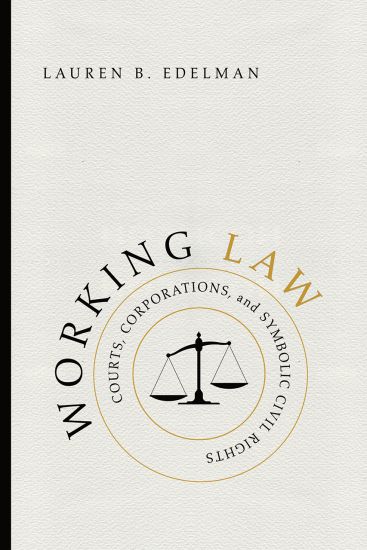
Working Law

Working Law

Lauren B. Edelman

University of Chicago Press
2016
sidottu
Since the passage of the Civil Rights Act, virtually all companies have antidiscrimination policies in place. Although these policies represent some progress, women and minorities remain underrepresented within the workplace as a whole and even more so when you look at high-level positions. They also tend to be less well paid. How is it that discrimination remains so prevalent in the American workplace despite the widespread adoption of policies designed to prevent it? One reason for the limited success of antidiscrimination policies, argues Lauren B. Edelman, is that the law regulating companies is broad and ambiguous, and managers therefore play a critical role in shaping what it means in daily practice. Often, what results are policies and procedures that are largely symbolic and fail to dispel long-standing patterns of discrimination. Even more troubling, these meanings of the law that evolve within companies tend to eventually make their way back into the legal domain, inconspicuously influencing lawyers for both plaintiffs and defendants and even judges. When courts look to the presence of antidiscrimination policies and personnel manuals to infer fair practices and to the presence of diversity training programs without examining whether these policies are effective in combating discrimination and achieving racial and gender diversity, they wind up condoning practices that deviate considerably from the legal ideals.
Working Law

Working Law

Lauren B. Edelman

University of Chicago Press
2016
nidottu
Since the passage of the Civil Rights Act, virtually all companies have antidiscrimination policies in place. Although these policies represent some progress, women and minorities remain underrepresented within the workplace as a whole and even more so when you look at high-level positions. They also tend to be less well paid. How is it that discrimination remains so prevalent in the American workplace despite the widespread adoption of policies designed to prevent it? One reason for the limited success of antidiscrimination policies, argues Lauren B. Edelman, is that the law regulating companies is broad and ambiguous, and managers therefore play a critical role in shaping what it means in daily practice. Often, what results are policies and procedures that are largely symbolic and fail to dispel long-standing patterns of discrimination. Even more troubling, these meanings of the law that evolve within companies tend to eventually make their way back into the legal domain, inconspicuously influencing lawyers for both plaintiffs and defendants and even judges. When courts look to the presence of antidiscrimination policies and personnel manuals to infer fair practices and to the presence of diversity training programs without examining whether these policies are effective in combating discrimination and achieving racial and gender diversity, they wind up condoning practices that deviate considerably from the legal ideals.