
Kirjojen hintavertailu – 12 903 735 kirjaa ja 27 kauppaa

Kirjailija

Laurence Fleming

Kirjat ja teokset yhdessä paikassa: 3 kirjaa, julkaisuja vuosilta 2015–2016, suosituimpiin kuuluu Last Children Of The Raj, Volume 2. Vertaile teosten hintoja ja tarkista saatavuus suomalaisista kirjakaupoista.

3 kirjaa

Kirjojen julkaisuvuodet: 2015–2016.

Last Children Of The Raj, Volume 2

Last Children Of The Raj, Volume 2

Mark Tully; Laurence Fleming

DEXTER HAVEN
2016
nidottu
These are the stories of the last generation of children raised in British India, in their own words. Over 280 contributions and 200 photographs from over 120 individuals make this a unique record of an extraordinary time and place. The experience of life in the Raj is now remote from British daily life, and yet only a few generations ago many British children lived this vibrant and colourful life. Here we see the normal trials and thrills of childhood, but in an extraordinary setting, and overlaid in many cases with the hardships of war, separation and then the sadness of leaving India permanently. These stories teem with fascinating details of the domestic, of travel over huge distances, of spectacular celebrations, but also deal with the segregation of the races and an awareness of the privileges of the ruling elite, all told with the authenticity of first-hand experience and the freshness of a child's eye. Mark Tully sets the scene to both volumes, writing with great poignancy of the influence on the "last children" of their upbringing, and the legacy of the Raj: "our parents lived as a separate race [but] they were Anglo-Indians, in that they were touched by India". This is a fascinating book for those who experienced the Raj, or who want to pass on to children or grandchildren a sense of that extraordinary life. It is also an invaluable primary source for scholars interested in the colonial experience, written by those who lived it.
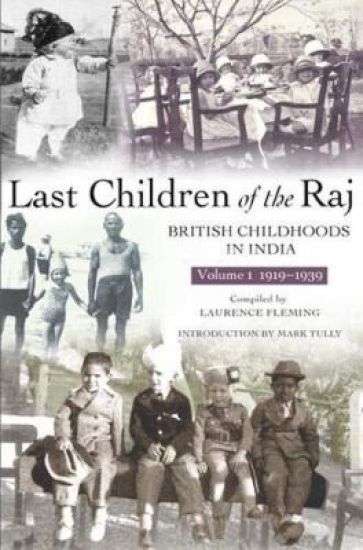
Last Children Of The Raj, Volume 1

Last Children Of The Raj, Volume 1

Mark Tully; Laurence Fleming

DEXTER HAVEN
2016
nidottu
These are the stories of the last generation of children raised in British India, in their own words. Over 280 contributions and 200 photographs from over 120 individuals make this a unique record of an extraordinary time and place. The experience of life in the Raj is now remote from British daily life, and yet only a few generations ago many British children lived this vibrant and colourful life.
The Entokil Man

The Entokil Man

Laurence Fleming

Dexter Haven
2015
sidottu
Harold Maxwell-Lefroy, the founder of Rentokil, was a maverick and a man of enormous drive and energy. From an early age he was fascinated with the insect world, and his thorough understanding of species' life cycles and habits, in its practical application, was to change the face of agriculture in several parts of the world. He was among the first really to apply the scientific method to dealing with insect pests, and the agriculture of the Caribbean and India still owes him an enormous debt. His book Indian Insect Pests is still in print, an invaluable resource to Indian agriculturalists. In the Caribbean he saved the sugar crop which had been ravaged by pests, and was then sent to India as the official entomologist. Here his energy and drive led to an education programme for Indian farmers that for the first time showed them that the devastating consequences of insect pests were avoidable, along with the destruction of livelihoods that had always been an occupational hazard. He became the first Professor of Entomology at Imperial College and developed patented anti-pest chemical treatments that led him to create Rentokil towards the end of his life - trademark rules barred him from calling it Entokil, as he had wanted to. He went on to save the roof of Westminster Hall from the death-watch-beetle infestation that would certainly have led to its collapse. But he was also an inveterate risk-taker, who drove without regard for his own safety, and applied the same principles to his scientific practice. He died at the young age of 48, overcome by the poisonous gases he was developing - without the proper breathing equipment. Rentokil is his most tangible legacy, but it all began with one man's single-minded dedication to the application of science.