Kirjojen hintavertailu – 12 903 735 kirjaa ja 27 kauppaa

Kirjailija

Laurence Lux-Sterritt

Kirjat ja teokset yhdessä paikassa: 6 kirjaa, julkaisuja vuosilta 2005–2017, suosituimpiin kuuluu English Benedictine Nuns in Exile in the Seventeenth Century. Vertaile teosten hintoja ja tarkista saatavuus suomalaisista kirjakaupoista.

6 kirjaa

Kirjojen julkaisuvuodet: 2005–2017.

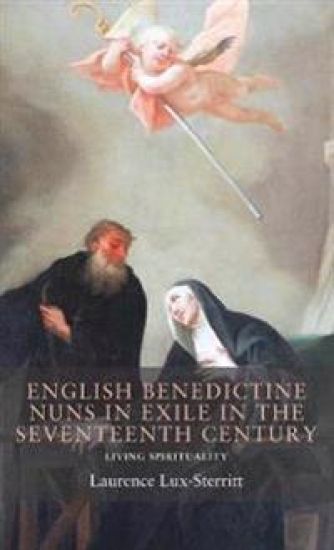
English Benedictine Nuns in Exile in the Seventeenth Century

English Benedictine Nuns in Exile in the Seventeenth Century

Laurence Lux-Sterritt

Manchester University Press
2017
sidottu
This study of English Benedictine nuns is based upon a wide variety of original manuscripts, including chronicles, death notices, clerical instructions, texts of spiritual guidance, but also the nuns' own collections of notes. It highlights the tensions between the contemplative ideal and the nuns' personal experiences, illustrating the tensions between theory and practice in the ideal of being dead to the world. It shows how Benedictine convents were both cut-off and enclosed yet very much in touch with the religious and political developments at home, but also proposes a different approach to the history of nuns, with a study of emotions and the senses in the cloister, delving into the textual analysis of the nuns' personal and communal documents to explore aspect of a lived spirituality, when the body which so often hindered the spirit, at times enabled spiritual experience.
English Convents in Exile, 1600–1800, Part I, vol 2

English Convents in Exile, 1600–1800, Part I, vol 2

Caroline Bowden; Laurence Lux-Sterritt; Nicky Hallett; Elizabeth Perry; Victoria Van Hyning

Routledge
2012
sidottu
Between 1600 and 1800 around 4,000 Catholic women left England for a life of exile in the convents of France, Flanders, Portugal and America. These closed communities offered religious contemplation and safety, but also provided an environment of concentrated female intellectualism. The nuns’ writings from this time form a unique resource.
English Convents in Exile, 1600–1800, Part I, vol 3

English Convents in Exile, 1600–1800, Part I, vol 3

Caroline Bowden; Laurence Lux-Sterritt; Nicky Hallett; Elizabeth Perry; Victoria Van Hyning

Routledge
2012
sidottu
Between 1600 and 1800 around 4,000 Catholic women left England for a life of exile in the convents of France, Flanders, Portugal and America. These closed communities offered religious contemplation and safety, but also provided an environment of concentrated female intellectualism. The nuns’ writings from this time form a unique resource.
English Convents in Exile, 1600–1800, Part I, vol 1

English Convents in Exile, 1600–1800, Part I, vol 1

Caroline Bowden; Laurence Lux-Sterritt; Nicky Hallett; Elizabeth Perry; Victoria Van Hyning

Routledge
2012
sidottu
Between 1600 and 1800 around 4,000 Catholic women left England for a life of exile in the convents of France, Flanders, Portugal and America. These closed communities offered religious contemplation and safety, but also provided an environment of concentrated female intellectualism. The nuns’ writings from this time form a unique resource.
Gender, Catholicism and Spirituality

Gender, Catholicism and Spirituality

Laurence Lux-Sterritt; Carmen Mangion

Red Globe Press
2010
nidottu
This timely collection of essays on British and European Catholic spiritualities explores how ideas of the sacred have influenced female relationships with piety and religious vocations over time. Each of the studies focuses on specific persons or groups within the varied contexts of England, France, Italy, the Netherlands and Spain, together spanning the medieval period through to the nineteenth century. Examining the interplay between women's religious roles and patriarchal norms, the volume highlights the relevance of gender and spirituality through a wide geographical and chronological spectrum. It is an essential resource for students of Gender History, Women's Studies and Religious Studies, introducing a wealth of new research and providing an approachable guide to current debates and methodologies. Contributions by: Nancy Jiwon Cho, Frances E. Dolan, Rina Lahav, Jenna Lay, Laurence Lux-Sterritt, Carmen M. Mangion, Querciolo Mazzonis, Marit Monteiro, Elizabeth Rhodes, Kate Stogdon, Anna Welch
Redefining Female Religious Life

Redefining Female Religious Life

Laurence Lux-Sterritt

Ashgate Publishing Limited
2005
sidottu
This short study offers a contribution to the flourishing debate on post-Reformation female piety. In an effort to avoid excessive polarization condemning conventual life as restrictive or hailing it as a privileged path towards spiritual perfection, it analyses the reasons which led early-modern women to found new congregations with active vocations. Were these novel communities born out of their founders' rejection of the conventual model? Through the comparative analysis of two congregations which became, in seventeenth-century France and England, the embodiment of women's efforts to become actively involved in the Catholic Reformation, this book offers a nuanced interpretation of female religious life and particularly of the relationship between cloistered tradition and aposotolic vocations. Despite the differences in their national political and religious backgrounds, both the French Ursulines and the Institute of English Ladies shared the same aim to revitalise the links between the Catholic faith and the people, reaching out of the cloister and into the world by educating girls who would later become wives and mothers. This study suggests that these pioneering Catholic women, though in breach of Tridentine decrees, did not turn their backs on contemplative piety: although both the French Ursulines and the English Ladies undertook work which had hitherto been the preserve religious men, they were motivated by their desire to help the Church rather than by a wish to liberate women from what eighteenth-century writers later perceived as the shackles of conventual obedience. It is argued that the founders of new, uncloistered congregations were embracing vocations which they construed as personals sacrifices; they followed the arduous path 'mixed life' in an act of self-abnegation and chose apostolic work as their early-modern reinterpretation of medieval asceticism.