Kirjojen hintavertailu – 12 859 829 kirjaa ja 27 kauppaa

Kirjailija

Laurence M. Geary

Kirjat ja teokset yhdessä paikassa: 4 kirjaa, julkaisuja vuosilta 2004–2023, suosituimpiin kuuluu Ireland, Australia and New Zealand. Vertaile teosten hintoja ja tarkista saatavuus suomalaisista kirjakaupoista.

Nimi esiintyy myös muodoissa: Laurence M Geary

4 kirjaa

Kirjojen julkaisuvuodet: 2004–2023.

The Land War in Ireland

The Land War in Ireland

Laurence M Geary

CORK UNIVERSITY PRESS
2023
sidottu
This book addresses perceived lacunae in the historiography of the Land War in late nineteenth-century Ireland, particularly deficiencies or omissions relating to the themes of the title: famine, humanitarianism, and the activities of agrarian secret societies, commonly referred to as Moonlighting. The famine that afflicted the country in 1879-80, one generation removed from the catastrophic Great Famine of the 1840s, prompted different social responses. The wealthier sectors of society, their consciousness and humanitarianism awakened, provided the bulk of the financial and administrative support for the famine-stricken peasantry. Others, drawn from the same broad social stratum as the latter, vented their anger and frustration on the government and the landlords, whom they blamed for the crisis. The concern of marginal men and women for the welfare of their less fortunate brethren was not so much the antithesis of altruism, as a different, more rudimentary way of expressing it. The volume's opening chapter introduces the famine that tormented Ireland's Atlantic seaboard counties in the late 1870s and early 1880s. The four chapters that follow develop the famine theme, concentrating on the role of civic and religious relief agencies, and the local and international humanitarian response to appeals for assistance. The 1879-80 famine kindled benevolence among the diasporic Irish and the charitable worldwide, but it also provoked a more primal reaction, and the book's two closing chapters are devoted to the activities of secret societies. The first features the incongruously named Royal Irish Republic, a neo-Fenian combination in north-west County Cork. The volume's concluding essay links history and literature, positing a connection between agrarian secret society activity during the Land War years and the Kerry playwright George Fitzmaurice's neglected 1914 drama The Moonlighter. This original and engaging work makes a significant contribution to our understanding of modern Irish history and literature.
Ireland, Australia and New Zealand

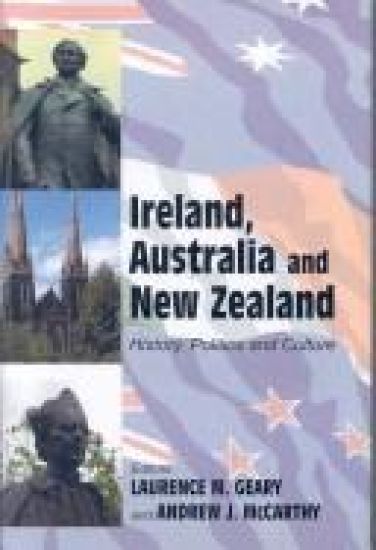
Ireland, Australia and New Zealand

Laurence M. Geary; Andrew McCarthy

Irish Academic Press Ltd
2008
sidottu
Provides a historical survey of the influence of the Irish on Van Diemen's Land/Tasmania from Bushrangers to Celtic Tiger. This book offers a range and diversity of explorations of Irish-Australian-New Zealand shared culture including: material culture; folk culture; music; dance; architecture; and written and oral cultural transmission.
Medicine and Charity in Ireland 1718-1851

Medicine and Charity in Ireland 1718-1851

Laurence M. Geary

University College Dublin Press
2004
sidottu
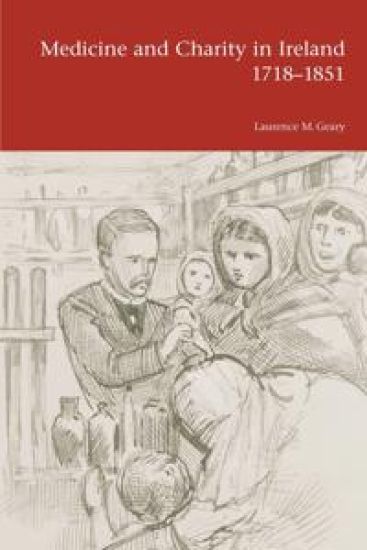
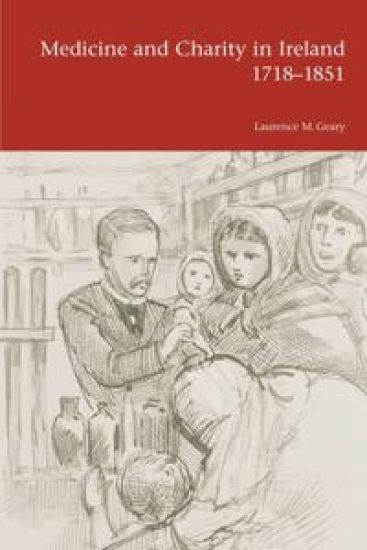
In this illuminating social history of medicine and charity in Ireland over almost 150 years from 1718 until just after the Great Famine, Laurence M. Geary shows how illness and poverty reacted upon each other. The poverty resulting from great population growth that continued until the arrival of potato blight in 1845 had a severe effect on the health of the country's population, and the Famine itself caused around one million deaths from starvation and disease. This was a period of great change in medical and charitable services. In the eighteenth century the sick had come to be regarded as the deserving poor, therefore having a better claim to public assistance than those whose poverty was the result of their own dissipation, idleness or vice. A network of charities evolved in Ireland to provide free medical aid to the sick poor. The first voluntary hospital in Dublin opened in 1718 and Geary traces the establishment and development of voluntary hospitals and county infirmaries throughout the country. These had a strong Anglican ethos and bias, but after Catholic emancipation in 1829 the nepotism, sectarianism and divisive politics that were rife in these organisations came under increasing scrutiny. Medical practitioners saw considerable progress in the development of a regulated profession. Geary describes developments in policy making and legislation, culminating in the 1851 Medical Charities Act, which he describes as part of a process that characterised the century and more under review in this book: the unrelenting pressure on philanthropy and private medical charity and the inexorable shift from voluntarism to an embryonic system of state medicine.
Medicine and Charity in Ireland 1718-1851

Medicine and Charity in Ireland 1718-1851

Laurence M. Geary

University College Dublin Press
2004
nidottu
In this illuminating social history of medicine and charity in Ireland over almost 150 years from 1718 until just after the Great Famine, Laurence M. Geary shows how illness and poverty reacted upon each other. The poverty resulting from great population growth that continued until the arrival of potato blight in 1845 had a severe effect on the health of the country's population, and the Famine itself caused around one million deaths from starvation and disease. This was a period of great change in medical and charitable services. In the eighteenth century the sick had come to be regarded as the deserving poor, therefore having a better claim to public assistance than those whose poverty was the result of their own dissipation, idleness or vice. A network of charities evolved in Ireland to provide free medical aid to the sick poor. The first voluntary hospital in Dublin opened in 1718 and Geary traces the establishment and development of voluntary hospitals and county infirmaries throughout the country. These had a strong Anglican ethos and bias, but after Catholic emancipation in 1829 the nepotism, sectarianism and divisive politics that were rife in these organisations came under increasing scrutiny. Medical practitioners saw considerable progress in the development of a regulated profession. Geary describes developments in policy making and legislation, culminating in the 1851 Medical Charities Act, which he describes as part of a process that characterised the century and more under review in this book: the unrelenting pressure on philanthropy and private medical charity and the inexorable shift from voluntarism to an embryonic system of state medicine.