Kirjojen hintavertailu – 12 903 725 kirjaa ja 27 kauppaa

Kirjailija

Laurence R. Helfer

Kirjat ja teokset yhdessä paikassa: 6 kirjaa, julkaisuja vuosilta 2011–2019, suosituimpiin kuuluu Transplanting International Courts. Vertaile teosten hintoja ja tarkista saatavuus suomalaisista kirjakaupoista.

6 kirjaa

Kirjojen julkaisuvuodet: 2011–2019.

Transplanting International Courts

Transplanting International Courts

Karen J. Alter; Laurence R. Helfer

Oxford University Press
2019
nidottu
Transplanting International Courts provides a deep, systematic investigation of the most active and successful transplant of the European Court of Justice. The Andean Tribunal is effective by any plausible definition of the term, but only in the domain of intellectual property law. Alter and Helfer explain how the Andean Tribunal established its legal authority within and beyond this intellectual property island, and how Andean judges have navigated moments of both transnational political consensus and political contestation over the goals and objectives of regional economic integration. By letting member states set the pace and scope of Andean integration, by condemning unequivocal violations of Andean rules, and by allowing for the coexistence of national legislation and supranational authority, the Tribunal has retained its fidelity to Andean law while building relationships with nationally-based administrative agencies, lawyers, and judges. Yet the Tribunal's circumspect and formalist approach means that, unlike in Europe, Community law is not an engine of integration. The Tribunal's strategy has also limited its influence within the Andean legal system. Transplanting International Courts also revists the authors' path-breaking scholarship on the effectiveness of international adjudication. Alter and Helfer argue that the European Court of Justice benefitted in underappreciated ways from the support of jurist advocacy movements that are absent or poorly organized in the Andes and elsewhere in the world. The Andean Tribunal's longevity despite these and other challenges offers guidance for international courts in other developing country contexts. Moreover, given that the Andean Community has weathered member state withdrawals and threats of exit, major economic and political crises, and the retrenchment of core policies such as the common external tariff, the Andean experience offers timely and important lessons for Europe's international courts.

The World Blind Union Guide to the Marrakesh Treaty

The World Blind Union Guide to the Marrakesh Treaty

Laurence R. Helfer; Molly K. Land; Ruth L. Okediji; Jerome H. Reichman

Oxford University Press Inc
2017
nidottu
"The Marrakesh Treaty to Facilitate Access to Published Works for Persons Who Are Blind, Visually Impaired, or Otherwise Print Disabled" is a watershed development in the fields of intellectual property and human rights. As the first international legal instrument to establish mandatory exceptions to copyright, the Marrakesh Treaty uses the legal and policy tools of copyright to advance human rights. The World Blind Union Guide to the Marrakesh Treaty offers a comprehensive framework for interpreting the Treaty in ways that enhance the ability of print-disabled individuals to create, read, and share books and cultural materials in accessible formats. The Guide also provides specific recommendations to government officials, policymakers, and disability rights organizations involved with implementing the Treaty's provisions in national law.
The World Blind Union Guide to the Marrakesh Treaty

The World Blind Union Guide to the Marrakesh Treaty

Laurence R. Helfer; Molly K. Land; Ruth L. Okediji; Jerome H. Reichman

Oxford University Press Inc
2017
sidottu
"The Marrakesh Treaty to Facilitate Access to Published Works for Persons Who Are Blind, Visually Impaired, or Otherwise Print Disabled" is a watershed development in the fields of intellectual property and human rights. As the first international legal instrument to establish mandatory exceptions to copyright, the Marrakesh Treaty uses the legal and policy tools of copyright to advance human rights. The World Blind Union Guide to the Marrakesh Treaty offers a comprehensive framework for interpreting the Treaty in ways that enhance the ability of print-disabled individuals to create, read, and share books and cultural materials in accessible formats. The Guide also provides specific recommendations to government officials, policymakers, and disability rights organizations involved with implementing the Treaty's provisions in national law.
Transplanting International Courts

Transplanting International Courts

Karen J. Alter; Laurence R. Helfer

Oxford University Press
2017
sidottu
Transplanting International Courts: The Law and Politics of the Andean Tribunal of Justice provides a deep, systematic investigation of the most active and successful transplant of the European Court of Justice. The Andean Tribunal is effective by any plausible definition of the term, but only in the domain of intellectual property law. Alter and Helfer explain how the Andean Tribunal established its legal authority within and beyond this intellectual property island, and how Andean judges have navigated moments of both transnational political consensus and political contestation over the goals and objectives of regional economic integration. By letting member states set the pace and scope of Andean integration, by condemning unequivocal violations of Andean rules, and by allowing for the coexistence of national legislation and supranational authority, the Tribunal has retained its fidelity to Andean law while building relationships with nationally-based administrative agencies, lawyers, and judges. Yet the Tribunals circumspect and formalist approach means that, unlike in Europe, community law is not an engine of integration. The Tribunals strategy has also limited its influence within the Andean legal system. The authors also revisit their own path-breaking scholarship on the effectiveness of international adjudication. Alter and Helfer argue that the European Court of Justice benefitted in underappreciated ways from the support of transnational jurist advocacy movements that are absent or poorly organized in the Andes and elsewhere in the world. The Andean Tribunals longevity despite these and other challenges offers guidance for international courts in other developing country contexts. Moreover, given that the Andean Community has weathered member state withdrawals and threats of exit, major economic and political crises, and the retrenchment of core policies such as the common external tariff, the Andean experience offers timely and important lessons for European international courts.
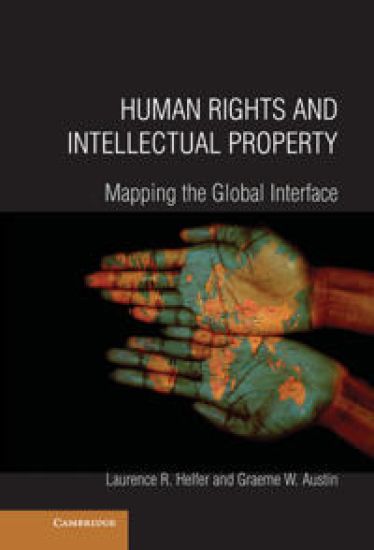
Human Rights and Intellectual Property

Human Rights and Intellectual Property

Laurence R. Helfer; Graeme W. Austin

Cambridge University Press
2011
sidottu
This book explores the interface between intellectual property and human rights law and policy. The relationship between these two fields has captured the attention of governments, policymakers, and activist communities in a diverse array of international and domestic political and judicial venues. These actors often raise human rights arguments as counterweights to the expansion of intellectual property in areas including freedom of expression, public health, education, privacy, agriculture, and the rights of indigenous peoples. At the same time, creators and owners of intellectual property are asserting a human rights justification for the expansion of legal protections. This book explores the legal, institutional, and political implications of these competing claims: by offering a framework for exploring the connections and divergences between these subjects; by identifying the pathways along which jurisprudence, policy, and political discourse are likely to evolve; and by serving as an educational resource for scholars, activists, and students.
Human Rights and Intellectual Property

Human Rights and Intellectual Property

Laurence R. Helfer; Graeme W. Austin

Cambridge University Press
2011
pokkari
This book explores the interface between intellectual property and human rights law and policy. The relationship between these two fields has captured the attention of governments, policymakers, and activist communities in a diverse array of international and domestic political and judicial venues. These actors often raise human rights arguments as counterweights to the expansion of intellectual property in areas including freedom of expression, public health, education, privacy, agriculture, and the rights of indigenous peoples. At the same time, creators and owners of intellectual property are asserting a human rights justification for the expansion of legal protections. This book explores the legal, institutional, and political implications of these competing claims: by offering a framework for exploring the connections and divergences between these subjects; by identifying the pathways along which jurisprudence, policy, and political discourse are likely to evolve; and by serving as an educational resource for scholars, activists, and students.