Kirjojen hintavertailu – 12 859 818 kirjaa ja 27 kauppaa
Kirjailija
Laurent Pernot
Kirjat ja teokset yhdessä paikassa: 8 kirjaa, julkaisuja vuosilta 2005–2023, suosituimpiin kuuluu Bibliographie Analytique de la Priere Grecque Et Romaine: Supplement a la Deuxieme Edition. Annees 2004-2008 (Notices N 839 A N 1088) Et Complement De. Vertaile teosten hintoja ja tarkista saatavuus suomalaisista kirjakaupoista.
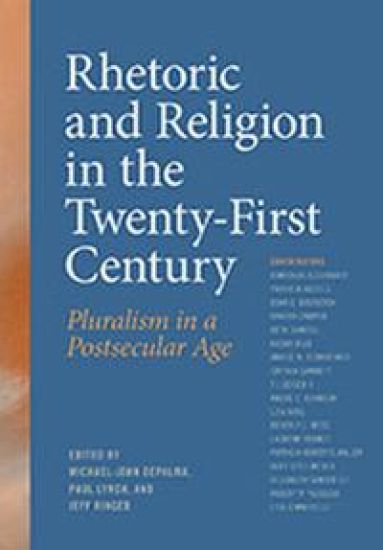
Jonathan Alexander; Patricia Bizzell; John Brereton; Martin Camper; Beth Daniell; Rasha Diab; Janice W. Fernheimer; Cynthia Gannett; TJ Geiger; Andre E. Johnson; Lisa King; Beverly Moss; Laurent Pernot; Patricia Roberts-Miller; Kurt Spellmeyer; Elizabeth Vander Lei; Robert P. Yagelski; Lisa Zimmerelli
Expanding the scope of religious rhetoric/B> Over the past twenty-five years, the intersection of rhetoric and religion has become one of the most dynamic areas of inquiry in rhetoric and writing studies. One of few volumes to include multiple traditions in one conversation, Rhetoric and Religion in the Twenty-First Century engages with religious discourses and issues that continue to shape public life in the United States. This collection of essays centralizes the study of religious persuasion and pluralism, considers religion’s place in U. S. society, and expands the study of rhetoric and religion in generative ways. The volume showcases a wide range of religious traditions and challenges the very concepts of rhetoric and religion. The book’s eight essays explore African American, Buddhist, Christian, Indigenous, Islamic, and Jewish rhetoric and discuss the intersection of religion with feminism, race, and queer rhetoric—along with offering reflections on how to approach religious traditions through research and teaching. In addition, the volume includes seven short interludes in which some of the field’s most accomplished scholars recount their experiences engaging with religious rhetorics and invite readers to engage these exigent lines of inquiry. By featuring these diverse religious perspectives, Rhetoric and Religion in the Twenty-First Century complicates the field’s emphasis on Western, Hellenistic, and Christian ideologies. The collection also offers teachers of writing and rhetoric a range of valuable approaches for preparing today’s students for public citizenship in our religiously diverse global context.

Subtexts are all around us. In conversation, business transactions, politics, literature, philosophy, and even love, the art of expressing more than what is explicitly said allows us to live and move in the world. But rarely do we reflect on this subterranean dimension of communication. In this book, renowned classicist and scholar of rhetoric Laurent Pernot explores the fascinating world of subtext. Of the two meanings present in any instance of double meaning, Pernot focuses on the meaning that is unstated—the meaning that counts. He analyzes subtext in all its multifarious forms, including allusion, allegory, insinuation, figured speech, irony, innuendo, esoteric teaching, reading between the lines, ambiguity, and beyond. Drawing on examples from figures as varied as Homer, Shakespeare, Molière, Proust, Foucault, and others, as well as from popular culture, Pernot shows how subtext can be identified and deciphered as well as how prevalent and essential it is in human life. With erudition and wit, Pernot explains and clarifies a device of language that we use and understand every day without even realizing it. The Subtle Subtext is a book for anyone who is interested in language, literature, hidden meanings, and the finer points of social relations.
Speeches of praise and blame constituted a form of oratory put to brilliant and creative use in the classical Greek period (fifth to fourth century BC) and the Roman imperial period (first to fourth century AD), and they have influenced public speakers through all the succeeding ages. Yet unlike the other classical genres of rhetoric, epideictic rhetoric remains something of a mystery. It was the least important genre at the start of Greek oratory, but its role grew exponentially in subsequent periods, even though epideictic orations were not meant to elicit any action on the part of the listener, as judicial and deliberative speeches attempted to do. So why did the ancients value the oratory of praise so highly? In Epideictic Rhetoric, Laurent Pernot offers an authoritative overview of the genre that surveys its history in ancient Greece and Rome, its technical aspects, and its social function. He begins by defining epideictic rhetoric and tracing its evolution from its first realizations in classical Greece to its eloquent triumph in the Greco-Roman world. No longer were speeches limited to tribunals, assemblies, and courts-they now involved ceremonies as well, which changed the political and social implications of public speaking. Pernot analyzes the techniques of praise, both as stipulated by theoreticians and as practiced by orators. He describes how epideictic rhetoric functioned to give shape to the representations and common beliefs of a group, render explicit and justify accepted values, and offer lessons on new values. Finally, Pernot incorporates current research about rhetoric into the analysis of praise.
All Cub fans know from heartbreak and curse-toting goats. Fewer know that, prior to moving to the north side in 1916, the team fielded powerhouse nines that regularly claimed the pennant. Before the Ivy offers a grandstand seat to a golden age: BEHOLD the 1871 team as it plays for the title in nine different borrowed uniforms after losing everything in the Great Chicago FireATTEND West Side Grounds at Polk and Wolcott with its barbershop quartetMARVEL as superstar Cap Anson hits .399, makes extra cash running a ballpark ice rink, and strikes out as an elected officialWONDER at experiments with square bats and corked balls, the scandal of Sunday games and pre-game booze-ups, the brazen spitters and park dimensions changed to foil Ty CobbRAZZ Charles Comiskey as he adopts a Cubs hand-me-down moniker for his team's nameTHRILL to the poetic double-play combo of Tinker, Evers, and Chance even as they throw tantrums at umpires and punches at each otherCHEER as Merkle's Boner and the Cubs' ensuing theatrics send the team to the 1908 World SeriesRich with Hall of Fame personalities and oddball stories, Before the Ivy opens a door to Chicago's own field of dreams and serves as every Cub fan's guide to a time when thoughts of "next year" filled rival teams with dread.
English summary: This supplement of the Bibliographie analytique de la priere grecque et romaine repertories books and articles published on the subject, in all languages, between 2004 and 2008. Each publication has been read and described in a notice which comprises a bibliographical description, an analytic summary, a list of key-words and a record of the ancient texts cited. To the 838 notices of the second edition, which covered the period 1898-2003, the supplement brings 250 new contributions. Moreover, the Thesaurus and the Index are cumulative: the 1088 notices are thus fully indexed. This new reference work presents a comprehensive panorama of the history of research on Greek and Roman prayer from the end of the 19th century to the beginning of the 21th. French description: Ce supplement de la Bibliographie analytique de la priere grecque et romaine repertorie les livres et articles publies sur le sujet, dans toutes les langues, entre 2004 et 2008. Chaque publication a ete lue et a fait l'objet d'une notice comportant: description bibliographique, resume analytique, liste de mots-cles et releve des textes anciens cites. Aux 838 notices de la seconde edition, qui couvrait la periode 1898-2003, le supplement ajoute 250 nouvelles publications. En outre, le Thesaurus et les Index sont cumulatifs: les 1 088 notices sont ainsi integralement repertoriees. Ce nouvel instrument de travail presente un panorama complet de l'histoire de la recherche sur la priere grecque et romaine depuis la fin du XIXe siecle jusqu'au debut du XXIe.
Originally published as La Rhetorique dans l'Antiquite (2000), this new English edition provides students with a valuable introduction to understanding the classical art of rhetoric and its place in ancient society and politics. Rhetoric formed an essential part of teaching and general culture. Today it gives indispensable keys to addressing current problems in literary theory, philosophy and aesthetics, communication, and political or legal debate. It bears a body of knowledge about reasoning and language, a vocabulary still in use, and transcends traditional barriers between disciplines and periods. Written by a leading scholar of classical rhetoric, Laurent Pernot, the book offers a full description of ancient rhetoric in the Greco-Roman period, from Homer and classical Athens, through the Hellenistic World, Roman Republic, and Roman Empire, up to the advent of Christianity, explaining the evolutions, illuminating the main themes, and stressing the key moments and figures. The book contains a thesaurus giving a list and explanation of all the technical terms, many of which are still in use in contemporary language.