

Kirjailija
Lauri Väkevä
Kirjat ja teokset yhdessä paikassa: 5 kirjaa, julkaisuja vuosilta 2013–2026, suosituimpiin kuuluu Säveltäjäksi kasvattaminen. Vertaile teosten hintoja ja tarkista saatavuus suomalaisista kirjakaupoista.
5 kirjaa
Kirjojen julkaisuvuodet: 2013–2026.

Voicing Responsible AI Pedagogy for Music and Visual Arts Education
Lauri Väkevä
Springer International Publishing AG
2026
Nidottu
This book critically examines the integration of generative artificial intelligence (Gen AI) in music education, exploring its transformative potential and associated risks. It underscores the necessity for innovative AI pedagogies across music and the arts, offering educators, researchers, and policymakers valuable insights for incorporating Gen AI into teaching while mitigating its hazards. By adopting a balanced critical perspective, the book aims to promote a dynamic, inclusive, and responsible educational approach that is responsive to the rapid advancements in adaptive technology. The book's argumentation is grounded in synthesizing Deweyan pragmatist and Baradian posthumanist philosophical perspectives. These perspectives collectively provide a framework for addressing the deployment of Gen AI in music education within a broader ethical context of global sustainability. The book is also informed by the author's many years as a scholar of music education.
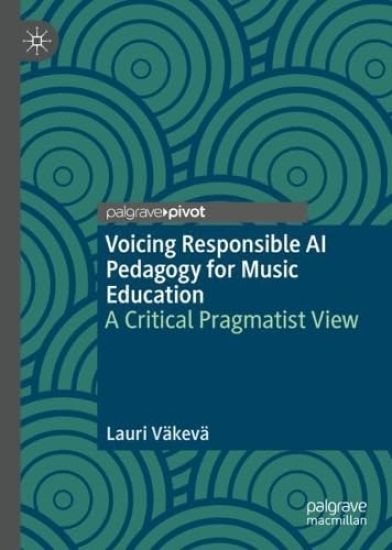
Voicing Responsible AI Pedagogy for Music and Visual Arts Education
Lauri Väkevä
Springer International Publishing AG
2025
sidottu
Halvin toimitettuna 55,40 €
This book critically examines the integration of generative artificial intelligence (Gen AI) in music education, exploring its transformative potential and associated risks. It underscores the necessity for innovative AI pedagogies across music and the arts, offering educators, researchers, and policymakers valuable insights for incorporating Gen AI into teaching while mitigating its hazards. By adopting a balanced critical perspective, the book aims to promote a dynamic, inclusive, and responsible educational approach that is responsive to the rapid advancements in adaptive technology. The book's argumentation is grounded in synthesizing Deweyan pragmatist and Baradian posthumanist philosophical perspectives. These perspectives collectively provide a framework for addressing the deployment of Gen AI in music education within a broader ethical context of global sustainability. The book is also informed by the author's many years as a scholar of music education.
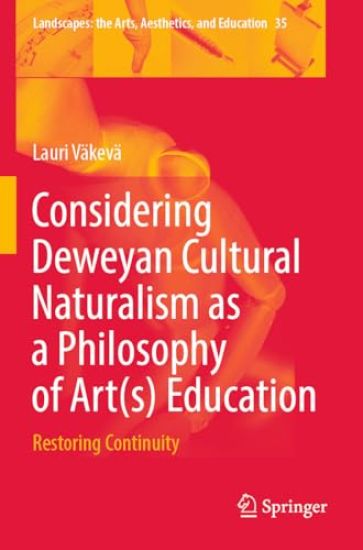
Considering Deweyan Cultural Naturalism as a Philosophy of Art(s) Education
Lauri Väkevä
Springer International Publishing AG
2024
nidottu
This book makes a case for cultural naturalism as a basis for a philosophy of art education. It argues for a holistic approach that avoids hard boundaries between artistic disciplines in the educational context, applying cultural naturalism to challenges that are topical for the whole art(s) education field, including challenges related to ecology, social justice, and technological transformation of culture. The book is written in the form of a conditional argument that considers the consequences of cultural naturalism for today’s philosophical problem-solving in art(s) education. It contains a systematic and historical analysis of cultural naturalism that support the philosophical reflection of educators and other scholars operative in this field. The result is a late modern reading of Deweyan cultural naturalism that highlights the continuance of key philosophical ideas from the modern to present discourses. The key topics discussed are of particular interest to present-day art(s) educators: ecological sustainability, social justice, and technological transformation of culture. In addition, this book provides an example of pragmatist argumentation, suggesting an alternative to analytical and post-philosophical approaches.
Considering Deweyan Cultural Naturalism as a Philosophy of Art(s) Education
Lauri Väkevä
Springer International Publishing AG
2023
sidottu
This book makes a case for cultural naturalism as a basis for a philosophy of art education. It argues for a holistic approach that avoids hard boundaries between artistic disciplines in the educational context, applying cultural naturalism to challenges that are topical for the whole art(s) education field, including challenges related to ecology, social justice, and technological transformation of culture. The book is written in the form of a conditional argument that considers the consequences of cultural naturalism for today’s philosophical problem-solving in art(s) education. It contains a systematic and historical analysis of cultural naturalism that support the philosophical reflection of educators and other scholars operative in this field. The result is a late modern reading of Deweyan cultural naturalism that highlights the continuance of key philosophical ideas from the modern to present discourses. The key topics discussed are of particular interest to present-day art(s) educators: ecological sustainability, social justice, and technological transformation of culture. In addition, this book provides an example of pragmatist argumentation, suggesting an alternative to analytical and post-philosophical approaches.