Kirjojen hintavertailu – 12 859 818 kirjaa ja 27 kauppaa

Kirjailija

Lawrence Block

Kirjat ja teokset yhdessä paikassa: 306 kirjaa, julkaisuja vuosilta 1994–2025, suosituimpiin kuuluu Have a NYC 3. Vertaile teosten hintoja ja tarkista saatavuus suomalaisista kirjakaupoista.

306 kirjaa

Kirjojen julkaisuvuodet: 1994–2025.

Threesome

Threesome

Jill Emerson; Lawrence Block

Createspace Independent Publishing Platform
2016
pokkari
Jill Emerson, whose first three works were gentle explorations of the lesbian experience, took a sharp turn toward candor in THIRTY, her first book for Berkley. As I've explained in the book description for that novel, around the time Berkley came calling (via my agent) I'd become disenchanted with the whole notion of fiction recounted by some disembodied third- or first-person narrator. It struck me as artificial, and my response was to pile artifice upon artifice and produce a novel in the guise of an actual document. In THIRTY, the novel pretended to be a diary. That worked fine, and the resultant narrative proved at once challenging and effortless to sustain. I enjoyed writing it, Berkley enjoyed publishing it-and they wanted something else. What they got in THREESOME was a novel pretending to be a novel. The premise, as you'll see, is that the book has been written by its three main characters, Harry and Rhoda and Priss, in the form of a lightly fictionalized chronicle of their own life as a menage a trois. They set about writing alternate chapters-and, reading one another's work as they go along, they learn things they hadn't known, and one thing leads to another, and-I think the phrase we want is tour de force, and how nice to be able to use it in the same book description as menage a trois. The book was also about as much fun as I've ever had while sitting at a typewriter. I've written before about THREESOME, but there's something I've never recounted, and I'm old enough now to just go ahead and do it. Back in the early 1970s I had come in from rural New Jersey to hole up in a New York hotel and work on a book-this one-and after one evening after the day's work was done I drifted down to the Village and wound up in an establishment called the Kettle of Fish, on Macdougal Street. (It has since relocated to Christopher Street.) They serve strong drink there, and that night God knows they served more than enough of it to me. When I left I took a few steps and found myself in conversation with some folks in a car, a large station wagon, and they turned out to be six adolescent girls from the Convent of the Sacred Heart in Noroton, Connecticut, a very classy Catholic prep school. Their favorite teacher was driving, and the next thing I knew I was in the back of the vehicle with them. I guess they thought I was interestingly exotic, a drunk Bohemian writer indigenous to Greenwich Village. I in turn thought they were adorable. The teacher (an affable chap, but God only knows what he was about, and I'm sure in due course the school must have let him go) drove us back to Connecticut, and the rest of the evening was lost in nacht und nebel, as it were. I passed out on somebody's couch, woke up the next morning, and wound up taking the train back to the city with two of the young ladies. We went to my hotel room, where we may have smoked an illegal herb, and, um, necked a little. One of them saw my typewriter and asked what I was working on. I said it was a novel about a sexual relationship of two women and a man. Thoughtful pause. "I had no idea," she said, "that you researched these things so thoroughly." They left and I never saw them again, and if the incident rings a muted bell, it's probably because I used it as the opening of another novel, RONALD RABBIT IS A DIRTY OLD MAN, which masquerades as the collected correspondence of its protagonist. And which I'll be republishing fairly soon, but in the meantime we have THREESOME. It's a personal favorite of mine; that's no reason why you should like it, but I hope you do.
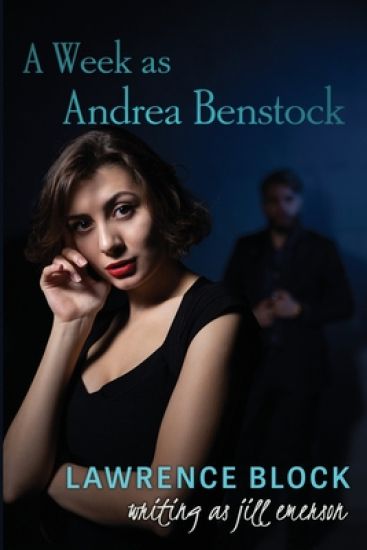
A Week as Andrea Benstock

A Week as Andrea Benstock

Jill Emerson; Lawrence Block

Createspace Independent Publishing Platform
2016
pokkari
I can trace the origin of A Week as Andrea Benstock to two distinct sources. The first inspired my attempting the book, while the second inspired its form. Let me consider the second first. In 1949, the Belgian author Georges Simenon published a novel called-well, who knows what he called it, but the English translation bore the title-Four Days in a Lifetime. I must have read it sometime in the late 1950s because what I recall of the experience is that I was in my parents' house on Starin Avenue at the time. Besides its title, all I remember of the book is its structure. It consisted of four parts, each taking place entirely within a single day of its protagonist's life. And those four days were all you needed. They gave you the full picture of the man's existence . . . or, at least, all Simenon felt like giving you. I thought it was brilliant, and the device-if not the plot or characters-stayed in my mind. If Simenon gave me the structure of Andrea Benstock, a woman named Peggy Roth pointed me at the book's subject matter and at the same time made me believe I was good enough to write it. Peggy was a highly-placed editor at Dell Publishing. My own editor there, Bill Grose, reported to her, and on one occasion in the early 1970s the three of us had lunch together. I'd written a batch of sex fact books for Dell, but at the time I don't believe Dell had published any of my fiction. I don't remember much about our lunch except that we all had a lot to drink. The conversation wandered all over the place, and at one point Peggy asked me who my favorite writer was. I replied (and would very likely still reply) that it was John O'Hara." Oh, you're a much better writer than he ever was," Peggy Roth said. Now that could only have been the martinis talking, and I'm sure I knew it at the time and surely know it now. She couldn't possibly have believed it, and if she did, well, she was wrong. But her words, even if I recognized them as outrageous and alcohol-driven, nevertheless allowed me to believe that I might try to play in that league. I'd never get a Golden Glove or hit for the circuit, but I might be able to sit on the bench. Maybe pitch batting practice, say. Then Peggy asked me about my background, and I said I'd grown up in a middle-class Jewish family in Buffalo, New York. "Then that's what you should write about," she said. I don't think it had ever occurred to me that anyone would want to read a novel with such a setting or that I would want to write one. But Peggy Roth, a perceptive and intelligent woman, thought that was what I should write. That didn't send me rushing to my desk, but it was something to think about. Eventually I found I had a book in mind. Like Simenon's novel, it would consist of scattered days in a life-not four but seven of them, the titular week in the protagonist's life. And they'd be strewn over a decade, beginning with her wedding, when she takes her husband's name and becomes Andrea Benstock. The days chosen wouldn't necessarily be the days on which major events in her life happened but would rather be representative days. And there'd be no elaborate recapitulation of what had transpired in the months and years between one day and the next; we'd get that information, but only insofar as it would be apt to come to her mind at each present moment. I don't keep journals, so I can't say just when I started work on the book or even when I finished it. It took a while. Because of its utterly episodic structure, it was easy to put it aside between sections and turn to something else, something with the promise of immediate income. I was married to my first wife when I began the book, and that marriage ended in the summer of 1973. I moved into a studio apartment on West 58th Street, and that same year Peggy Roth died far too young of pneumonia. When I finished the book, she was one of its two dedicatees; the other was my stepfather, Joe Rosenberg.
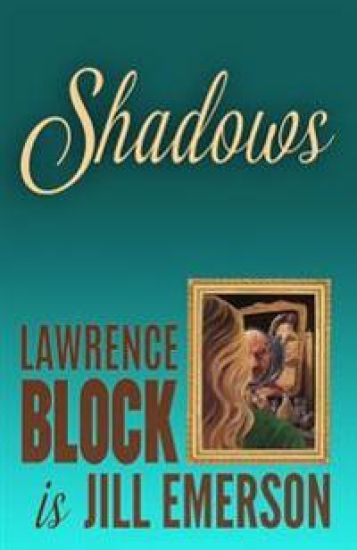
Shadows

Shadows

Jill Emerson; Lawrence Block

Createspace Independent Publishing Platform
2016
nidottu
One morning in the spring of 1958 I woke up in my room at the Hotel Alexandria with a paralyzing hangover (which was not unusual) and an idea for a book (which was). I sat in front of my typewriter, and within a few hours I had produced a chapter-by-chapter outline of a novel. I had all the characters sketched out and knew how they'd relate to one another, and how the rather elementary storyline would resolve itself. I even had a title: SHADOWS. At the time I was working as an editor at a shady literary agency, but I'd already arranged for my departure, as I'd be resuming college in the fall in Ohio. Sometime in May I gave up my room at the Alexandria and went home to Buffalo, where I turned that outline into a book. My agent sent it to Crest Books, then the country's premier publisher of lesbian fiction. They spent a couple of months reading it and thinking it over, during which time I wrote and sold several lesser books to Harry Shorten's Midwood Books. Then, a couple of months after I'd returned to Antioch and gone through a lot of sturm und drang that needn't concern us here, Crest accepted Shadows. They had some editorial suggestions, and the only one that bothered me was their insistence that I cut a chapter in which one character, Peggy, gets drunk after a love affair ends badly, and is raped on her way home. The editor thought it was extraneous, and for years it bothered me that I hadn't stood up for my auctorial rights. They changed my title to STRANGE ARE THE WAYS OF LOVE. They also changed my pen name. I'd known a lesbian novel ought to have a woman's name on it, and I picked Rhoda Moore. They decided on Leslie Evans instead, so it could be gender-neutral, and then switched it to Lesley Evans, which made it more specifically female. Welcome to publishing, young man. Or young woman, or whatever the hell you are... Okay. It's clear to me now, almost 60 years later, that the book ought to set sail under its original title, and since I'm republishing it myself, that's a decision I get to make. It's also clear to me that SHADOWS is in fact Jill Emerson's very first novel, as it's far more of a piece with WARM AND WILLING and ENOUGH OF SORROW than with anything else I've written. So that's how I'll publish it, right? As SHADOWS, dammit, by Jill Emerson-and while I'm at it, why not restore that missing chapter? So I started reading the book. I don't much like looking at my early work. Once, when a publisher was issuing a collection of my earliest magazine fiction, he asked if I'd reread the stories and write an introduction; "One or the other," was my reply. Reading SHADOWS was an experience, as there was so much I didn't remember. I'd put Jan in my first NYC apartment: 54 Barrow Street. I'd sent her to Caricatures, my favorite MacDougal Street coffeehouse. I remembered the lesbian bar, The Shadows; in real life it called itself Swing Rendezvous, and Jan wouldn't have had much trouble hooking up there. And the writing struck me as okay. "This kid can write," I said to myself, "and maybe someday he will." But here's the stunner. I was looking for the place where that Peggy chapter used to be, and what I found was...the chapter itself It had been hiding in plain sight for over half a century. All along I thought I'd let myself be talked out of it, and resented that editor while berating myself for knuckling under, and the damned chapter was right there. Go know. I'd been all set to recreate that chapter, matching my style to Jill's, and now I didn't have to. So I changed something else.. There are a couple of scenes in which Laura criticizes Peggy for her potty mouth, and it was hard to know why, as Peggy didn't say anything stronger than "pain in the ass" and "goddamned." Well, how could she, back in 1958? In print, that is to say? So I spiced up her speech a little and let her say the F word.
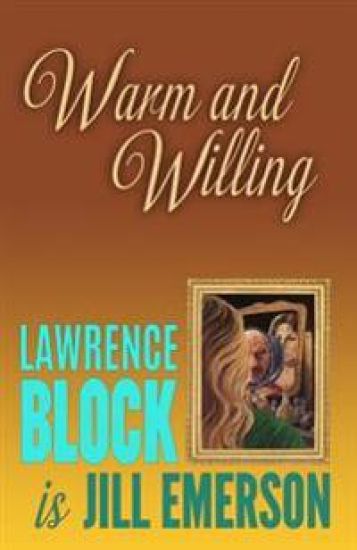
Warm and Willing

Warm and Willing

Jill Emerson; Lawrence Block

Createspace Independent Publishing Platform
2016
nidottu
Here's what someone wrote as the book description for an earlier edition of WARM AND WILLING: "An emotionally and sexually frustrated divorc e explores her mounting attraction to women. Rhoda's divorce has her thinking that romance is not for her. But maybe she just needs to look in a new direction. Megan is an attractive blonde who instantly sees what Rhoda's love life has been missing: a woman's touch. As Megan guides Rhoda into the sensuous - but hidden - world of women who love women, the two unlock a passion that may be too hot to contain. There are a lot of beautiful women in the Village, and Rhoda's just begun her adventure as a freewheeling lesbian." I guess that's fair. But these early books cry out for a stroll down Memory Lane, and there's a lot to remember about the beginnings of Jill Emerson. In 1958 I wrote my first book, a novel about a young woman's confusion about her sexual nature. It's recently been republished as SHADOWS, by Jill Emerson, but back then the publisher slapped a different title and pen name on it, because there was no Jill Emerson. Jill came out, as it were, six years later-by which time I'd acquired wife and children and had written close to a hundred books. Then in 1964 I broke with my agent and found myself stranded; my chief market was a closed shop, and I could no longer write for it. A brighter man than I would have been terrified, but I just figured things would work out. I decided I'd write a lesbian novel. That's what my first book had been, so it seemed a logical choice for a new beginning. Now I could have proposed such a book to Midwood Tower, Harry Shorten's operation, which was by no means a closed shop, and where they thought highly of me. But instead I chose to submit the book over the transom, under a pen name. Specifically, Jill Emerson. Now Jill already existed, because I'd enrolled her as a member of Daughters of Bilitis, a lesbian organization, so that she could subscribe to their magazine, The Ladder. I put her name on the manuscript of my new novel-I can't recall what I called it, but you can be damned sure it wasn't WARM AND WILLING-and wrote out a cover letter and mailed it off to John J. Plunkett, editor in chief at Midwood Tower. I'm not sure what I was trying to prove. But, astonishingly, I proved it. Mr. Plunkett sent a contract by return mail, and some day I'm going to publish our correspondence. He and Jill really hit it off nicely, and I think he may have had a slight crush on her. A hopeless one, of course, because Jill wasn't interested in anybody with a Y chromosome... Jill went on to write a second book for Midwood. I called it ENOUGH OF SORROW, taking the phrased from a Mary Carolyn Davies poem I've always liked, and I'll be damned if Midwood Tower didn't keep it. They stuck an award medallion on the cover, and included a quote-"A remarkably candid treatment of a particularly controversial theme..." The source of the quote is never revealed, and I can only assume it was either John J. Plunkett or another Midwood editor, Sandy Levine. Over the decades, I've come to regard Jill Emerson as rather more than a pen name. She would appear to be more an aspect of self. One way or another, donning her persona seems to liberate something within me, and to give me access to otherwise elusive parts of myself. But need we inquire all that closely? Probably not. This is, after all, just a book-a sensitive exploration of a young woman's sexual awakening.
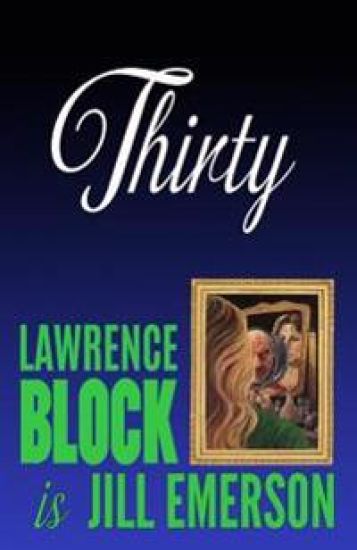
Thirty

Thirty

Jill Emerson; Lawrence Block

Createspace Independent Publishing Platform
2016
nidottu
THIRTY, as intensely erotic a book as I'd ever written, is what happened after I stopped writing erotica. Beginning with CARLA in 1958, I spent half a dozen years laboring in the vineyards of Midcentury Erotica, writing no end of books for Midwood, Nightstand, Beacon, et.al. It was a wonderful training ground, a comfortingly forgiving medium, and I've never regretted the timer I spent there, although for a time I wanted to disown the work I produced. (That changed with the passage of time, and now I've been eagerly reissuing much of that early work in my Collection of Classic Erotica. I like to tell myself this represents great progress in self-acceptance, but I have a hunch Ego and Avarice play a role here.)Never mind. I went on writing for Bill Hamling's Nightstand Books until a break with my agent deprived me of the market, andI can't regret that, either, because it's safe to say I'd stayed too long at the fair, and would have stayed longer still if given the chance. Instead, I took a job editing a numismatic magazine in Wisconsin and went on writing fiction in my free time. I placed some stories with Alfred Hitchcock's Mystery Magazine and THE GIRL WITH THE LONG GREEN HEART with Gold Medal, and then I wrote THE THIEF WHO COULDN'T SLEEP, which turned out to be the first of a series about a fellow named Evan Tanner. This was the first book in a voice that was uniquely mine, and the most satisfying work I'd ever done. I went on to write a total of seven books about Tanner (an eighth would follow after a 28-year interval) along with a couple of other crime novels, and then one day I got a call from my agent, Henry Morrison. Berkley Books wanted to launch a line of erotic novels, but on a different level from the old Midwood/Nightstand/Beacon ilk. It was 1968, censorship had essentially vanished, and American letters from top to bottom was embracing the sexual revolution and the new freedom. As Cole Porter might have put it, some authors who'd once been stuck with better words were now free to use four-letter words. Meanwhile, I was going through a period of discontent with the whole notion of fiction. I had nothing against the idea of making things up, but the artificiality of the novel suddenly rubbed me the wrong way. Narration, whether first person or third person, was a weird voice in one's ear. Who are you? Why are you telling me this? And why should I believe you? What appealed more were books that presented themselves as documents. Fictional diaries, fictional collections of letters, whatever. Yes, of course they were novels, we knew they were novels, but they took the form of actual documents. Thus THIRTY, which would take the form of a diary kept by a woman in her thirtieth year. I had just reached that age myself, and while I recognized it as a landmark, it seemed to me that turning thirty was rather a bigger deal for a woman than for a man, that it was very much a turning point. So I plunged in, and I strove throughout to write what Jan would have written in an actual diary, leaving things out, skipping days altogether, and letting characters come into and go out of her life, and events pile one on the other, the way they really do, with less pattern and logic than one typically demands of fiction. I just read the book prefatory to writing this book description, and I was surprised how much I liked it. (And how little of it I recalled.) I decided from the jump to put Jill Emerson's name on it, a name I'd shelved after WARM AND WILLING and ENOUGH OF SORROW. THIRTY is, to be sure, a creature of its time, as one knows when Jan whines about having to pay $375 a month for a Grove Street apartment. But I think the book holds up. In any event, Jill was back in business, and she'd go on to write two more books for Berkley's sexy new series, both of them pseudo-documents like THIRTY.
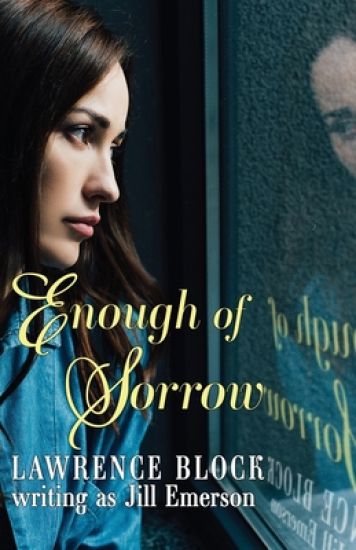
Enough of Sorrow

Enough of Sorrow

Jill Emerson; Lawrence Block

Createspace Independent Publishing Platform
2016
nidottu
Here's what someone wrote as the book description for an earlier edition of ENOUGH OF SORROW: "From master storyteller Lawrence Block comes one girl's journey toward self-discovery and sexual freedom.... Karen Winslow is starting over. But she's not sure how to move forward when her deepest secret haunts her and keeps her from enjoying her carefree youth. She's a sweet but troubled young thing, and not until she meets Rae, a confident young lesbian, does she realize what she's been missing. Meanwhile, she's also intrigued by a man and can't help but wonder if a normal life will put an end her sorrows for good." ENOUGH OF SORROW, I could add, is the third of mynovels as Jill Emerson, who seems to me to be rather more than a pen name. An aspect of self, perhaps. A distinct persona, if you will. My first novel, SHADOWS, originally bore a different pen name, but it's very much of a piece with Jill's work, and I don't think it's coincidental that I chose that theme and that persona for the first book I ever wrote, any more than I deem it coincidence that, when I split with my agent and had no place to sell my work, my first step toward recovery was an over-the-transom submission of WARM AND WILLING-another lesbian novel. I've written about that new beginning in the book description for WARM AND WILLING. After I turned it in, the editor at Midwood made it clear he'd like to publish more of Jill's work. (As far as he ever knew, the author was indeed a woman named Jill Emerson. I saw no reason to disabuse him of the notion, and in fact the game was half the fun.) And, thank God, it was a more innocent age, or at least a less cumbersome one. He sent me checks payable to Jill Emerson and I endorsed them in that name and cashed them through my bank account. It wouldn't be that simple nowadays. I don't know what I'd called WARM AND WILLING, but the title I slapped on the second book was ENOUGH OF SORROW, from the poem by Mary Carolyn Davies: I Sing of sorrowI sing of weepingI have no sorrowI only borrowFrom some tomorrowWhere it lies sleepingEnough of sorrowTo sing of weeping. A fine poet, Mary Carolyn Davies. Bernie Rhodenbarr's reading one of her verses in one of the books-I disremember which book, but the verse was "Smith, of the Third Oregon, Dies." I guess they liked Jill at Midwood. Their paperback sports an award sticker on the cover, proclaiming it the winer of some nonexistent contest. And, mirabile dictu, that didn't feel the need to change my title. I wonder why Jill never wrote more for them? Ah well. Let's be grateful for what we have.
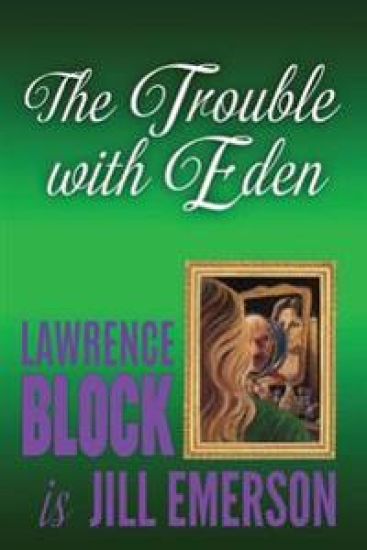
The Trouble With Eden

The Trouble With Eden

Jill Emerson; Lawrence Block

Createspace Independent Publishing Platform
2016
nidottu
In early 1969, I moved with my wife and daughters to an 18th century farmhouse on twelve rolling acres a mile east of the Delaware River. We kept a variety of animals and grew things in the garden, and this was as I'd expected. But there were two things I did not anticipate. One was that I would have to go away from there, all the way back to New York City, to get any work done. The other was that I'd open an art gallery. The art gallery was in New Hope, right across the river from Lambertville. New Hope had long had a reputation as an artists' colony and boasted a little theater and a batch of art galleries, along with bookstores and antique dealers and cute little shops to sell cute little things to tourists, most of whom were neither cute nor little. I found a store for rent and signed a year's lease. Nowadays it's hard to get me to go see a movie or buy a new shirt, but back then I'd embark on the wildest adventure on not much more than a whim. I knew nothing about business, but that was okay, because the gallery didn't do any. After a year, my lease was up and I was out of there. It was a learning experience, and what I learned was not to make that particular mistake again. And I did meet some interesting people, and hear some interesting stories. And, when it came time to write a big trashy commercial novel, I knew right where to set it. By this time I'd written three erotic novels for Berkley Books as Jill Emerson. Now I don't know who thought that Jill ought to write a big, juicy, trashy Peyton Place-type of book, but my agent brought the idea to me, and I thought Bucks Country would provide a good setting. The deal was an attractive one, with a hefty advance. Berkley was a division of Putnam, and the deal was hard/soft; the book would be first a Berkley hardcover, then a paperback. When we'd first moved to the country and I found I couldn't get any writing done there, I went into the city and wrote a book in a week. Soon after that Brian Garfield and I took a place together at 235 West End Avenue. We hosted a weekly poker game there, stayed over when one or the other of us had a late night in the city, and got some writing done. I believe Brian wrote most of Kolchak's Gold there. I wrote a batch of things, too, and one of them was The Trouble with Eden. Some of the characters were loosely based on people I'd known in and around New Hope. One was an actor who did in fact greatly resemble Benjamin Franklin. "Larry put me in a book," he told people. "But he's made me bisexual, for God's sake, and everybody knows I'm a plain and simple faggot. Do you think I could sue his publisher? Would I get anything? And would the publicity be good for the book? Because I wouldn't want to do it if it would get Larry in any kind of trouble . . ." Well, he didn't sue, which was just as well. Would the publicity of a lawsuit have helped? I don't think anything would have helped. Berkley never put any muscle into the book and didn't sell many copies. Reviewers overlooked it completely, with a single curious exception. A reviewer in Esquire launched into a lengthy discussion of a book he'd picked up a week earlier without great expectations. It looked like trash but turned out to be far more gripping and involving than he anticipated. Well-wrought characters, interesting plot developments-really pretty good. And then suddenly the review hung a U-turn, and its author said that further on the book turned out to be trash after all and, on balance, a big disappointment. I'll tell you, it was as though the reviewer read half the book, wrote half the review, ate a bad clam, finished the book, and went on to finish the review. I can't say I minded-it was, as they say at the Oscars, victory enough merely to be nominated-and I can't say I disagreed with its conclusion. But it was damn strange. Ah well. It's probably not a good book, but I have a warm spot for Eden. Like the curate's egg, I think parts of it are very good.
La notte e la musica

La notte e la musica

Lawrence Block

Createspace Independent Publishing Platform
2016
nidottu
"Adoro la serie di Matthew Scudder e adoro le storie brevi; e questa la collezione completa delle storie di Scudder. Una delle pi belle Alle prime luci dell'alba, vincitrice del premio Edgar Allan Poe."- Otto Penzler, Los Angeles Times, Ten Most Wanted Books of 2011"La storia che d il titolo alla raccolta un pezzo d'atmosfera, brillantemente raccontato, che piacer a quelli che hanno seguito Scudder nel suo viaggio lungo la vita. E' un raro momento di pura umanit nel mondo di Scudder e serve a fare capire che Scudder molto di pi di un investigatore privato, che la sua storia non si ferma quando non stiamo leggendo di lui."--Russel McLean, Crime Scene Scotland I 17 romanzi di Lawrence Block con Matthew Scudder hanno conquistato il cuore dei lettori di tutto il mondo - oltre a una sfilza di premi, tra cui l'Edgar Allan Poe, lo Shamus, il Philip Marlowe (Germania), e il Falcone Maltese (Giappone). Ed Matt Scudder il principale responsabile per i riconoscimenti che Block ha avuto nel corso della vita: Grand Master (dei Mystery Writers of America), The Eye (della Private Eye Writers of America), e il Cartier Diamond Dagger (della Crime Writers Association britannica). Ma Scudder apparso anche in racconti brevi, che sono tutti raccolti qua: da un paio di novellette della fine degli anni Settanta (Gi dalla finestra e Una candela per la barbona), e poi Alle prime luci dell'alba (premio Edgar), Il misericordioso angelo della morte (premio Shamus) fino ad arrivare a L'ultima notte al Grogan, una storia commovente ed elegiaca mai pubblicata prima. Sono stati i racconti brevi che hanno tenuta viva la serie in varie occasioni, quando la produzione dei romanzi si era interrotta, e che hanno portato Scudder verso nuove strade, mostrandoci una parte del suo mondo non ancora esplorata. Alcune di queste storie sono comparse in riviste come la Alfred Hitchcock's Magazine, la Ellery Queen's Magazine e Playboy. Il breve cameo che d il titolo alla raccolta, La notte e la musica, fu scritta per il programma di un festival jazz a New York City; un altro, Mick Ballou guarda lo schermo nero, era comparso solo come testo di un poster a tiratura limitata. E il racconto finale, che vede Matt e Elaine a un tavolo con Mick e Kristin Ballou in un locale ormai chiuso nella zona di Hell's Kitchen, fa la sua prima comparsa in questo volume. Vari racconti si riferiscono ad avvenimenti del passato, e in essi Scudder ricorda casi della sua vita precedente come poliziotto: prima come agente di pattuglia in coppia con il leggendario Vince Mahaffey, poi come investigatore della polizia di New York che conduce una doppia vita. Ne In cerca di David, Matt ed Elaine sono in vacanza a Firenze, dove si imbattono un uomo che Matt aveva arrestato decenni prima. Ora finalmente Matt conosce il motivo di quel brutale omicidio. Accanto alle undici storie e racconti brevi, La notte e la musica comprende un elenco dei diciassette romanzi in ordine cronologico, e una nota dell'Autore che spiega l'origine e i dettagli bibliografici di ognuna di esse. Dulcis in fundo, Brian Koppelman, famoso sceneggiatore e regista (Solitary Man, Ocean's Thirteen, Il giocatore), nonch grande fan di Scudder, ha contribuito con una introduzione
Los ladrones no pueden escoger

Los ladrones no pueden escoger

Lawrence Block

Createspace Independent Publishing Platform
2016
nidottu
A partir de su debut en 1977, Bernie Rhodenbarr se ha ganado la entusiasta admiraci n de un p blico internacional cada vez m s numeroso. Este caballero, con su coraz n ligero y sus dedos m s ligeros a n, cuyos talentos detectivescos lo sacan de los apuros en que lo meten sus habilidades de ladr n, se roba de paso los corazones y las mentes de los lectores. Los ladrones no pueden escoger es su primera aparici n.
Drei am Haken

Drei am Haken

Lawrence Block

Createspace Independent Publishing Platform
2016
nidottu
Der Spitzel und Kleingauner Jake Schnipser Jablon macht sich eine Menge neuer Feinde, als er die Laufbahn wechselt und von Informant auf Erpresser umsattelt. Fr her oder sp ter, vermutet er, wird einer seiner neuen Kunden handgreiflich werden, und wen wird das k mmern? Er sitzt an einem Tisch mit Matthew Scudder, schnipst einen Silberdollar an und l sst ihn auf dem Tisch kreiseln. Schlie lich ist das die Gewohnheit, die ihm seinen Spitznamen eingebracht hat. Dann heuert er Scudder an, einen Mord aufzukl ren, der sich noch nicht ereignet hat. Niemand ist sonderlich berrascht, als Schnipser mit eingeschlagenem Sch del im East River treibend gefunden wird. Noch schlimmer: Es k mmert niemanden - au er Matthew Scudder. Der Ex-Cop und Privatdetektiv ist kein pflichtversessener Racheengel. Aber er ist willig, Leib und Leben zu riskieren, um Schnipsers m rderisch-aggressive Kunden zur Rede zu stellen. Schlie lich ist ein Job ein Job - und Scudder wurde bezahlt, einen M rder zu finden. Bezahlt vom Opfer ... im Voraus. Drei am Haken ist die deutsche Neu bersetzung des zweiten Romans mit Lawrence Blocks charismatischster Figur, Matthew Scudder. Von Daseinsangst geplagt, hat Scudder Frau und Kinder verlassen und den Polizeidienst quittiert. Nun lebt er allein in einem Hotel im New Yorker Stadtteil Hell's Kitchen und ern hrt sich von Bourbon und Kaffee in der Kneipe von Jimmy Armstrong um die Ecke. Das Geld, das er zum Leben braucht, verdient er sich als Privatdetektiv ohne Lizenz, indem er, wie er es ausdr ckt, Freunden Gef lligkeiten erweist. Schnipser Jablon war nicht unbedingt ein Freund, und es ist zu sp t, ihm einen Gefallen zu erweisen. Aber Scudder war schon immer ein Mann, der tut, was getan werden muss ...
The Girl With the Deep Blue Eyes

The Girl With the Deep Blue Eyes

Lawrence Block

Titan Books Ltd
2016
pokkari
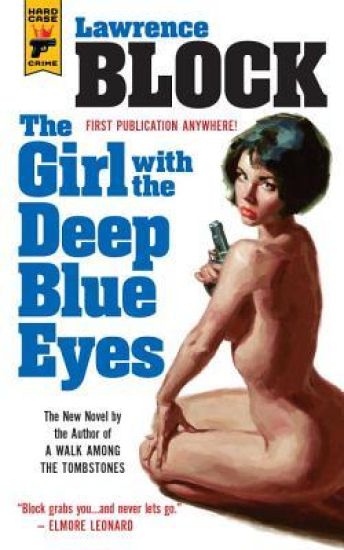
Cashed out from the NYPD after 24 years, Doak Miller operates as a private eye in steamy small-town Florida, doing jobs for the local police. Like posing as a hit man and wearing a wire to incriminate a local wife who's looking to get rid of her husband. But when he sees the wife, when he looks into her deep blue eyes... He falls - and falls hard. Soon he's working with her, against his employer, plotting a devious plan that could get her free from her husband and put millions in her bank account. But can they do it without landing in jail? And once he's kindled his taste for killing...will he be able to stop at one?
So Willing

So Willing

Donald E. Westlake; Lawrence Block

Createspace Independent Publishing Platform
2016
nidottu
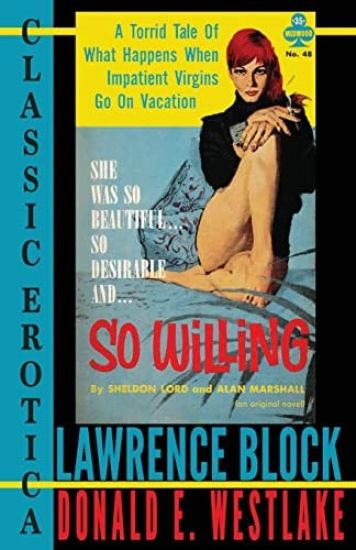
When Don Westlake and I were starting out as writers, we both served an apprenticeship writing erotic novels for Harry Shorten at Midwood Books and Bill Hamling at Nightstand. (I was Sheldon Lord for Midwood and Andrew Shaw for Nightstand, while Don was Alan Marshall for both publishers. Note though that the presence of either name upon a book is no guarantee that one of us wrote it. Both of us made arrangements whereby lesser writers would submit works under our names-and I know it's hard to believe that any writers were less than we were back then, but it's true.)Well. We'd become friends in the summer of 1959, while we were living a few blocks away from each other in midtown Manhattan. I was at the Hotel Rio, on West 47th between Sixth and Seventh Avenues, and Don was a block south and several blocks west of me. Then I moved back to my parents' house in Buffalo, and Don and his wife and kid moved to Canarsie, and we wrote letters back and forth. And at one point we decided it might be fun to do a novel together. Not by thinking it out and talking through it and, you know, collaborating in a serious artistic manner. Our method was simpler. One of us would write a chapter, and then the other would write a chapter to come after it, and back and forth, like that, until we had a book. It worked, and by God it was fun. The first of our efforts was A GIRL CALLED HONEY, and it started when I wrote a chapter and sent it to Don. And so on, and we stopped when we had a book and sent it to Henry Morrison who sent it to Harry Shorten. We put both our names on the book, our pen names that is to say, and that's how Harry published it: by Sheldon Lord and Alan Marshall. And he included our dedication: "To Don Westlake and Larry Block, who introduced us." It was so much fun that we did it again. This time Don wrote the first chapter, and I wrote the second. Was I still in Buffalo, and did we still send the chapters through the mail? Damned if I can remember. I think I may have been in New York by then, living with my first wife on West 69th Street. But maybe not, and what does it matter? We finished the book, we sent it in, Midwood published it, and we shared the advance, which was probably $600 for A GIRL CALLED HONEY, but may have escalated to $750 by the time we did SO WILLING. So each of us wound up with either $300 or $375 for our trouble, and that's not a lot of money nowadays, and it wasn't a lot of money in 1960 either, but neither was it a lot of trouble. Damn, those were good days. We did a third novel in collaboration, SIN HELLCAT, and I think it may have been the best of the three-but we didn't get to put a joint byline on it. Well, we did-but someone at Nightstand felt free to change it, dropping Alan Marshall from the "by Alan Marshall and Andrew Shaw" byline we'd supplied. Much the same thing happened to CIRCLE OF SINNERS, my collaboration for Nightstand with Hal Dresner; "By Andrew Shaw and Don Holliday" is what we tagged it, and this time it was Andrew Shaw who got bumped. Never mind. Here's SO WILLING-and if reading it brings you a small fraction of the fun we had writing it, you'll be back right away to scoop up A GIRL CALLED HONEY and SIN HELLCAT.
Sin Hellcat

Sin Hellcat

Donald E. Westlake; Lawrence Block

Createspace Independent Publishing Platform
2016
nidottu
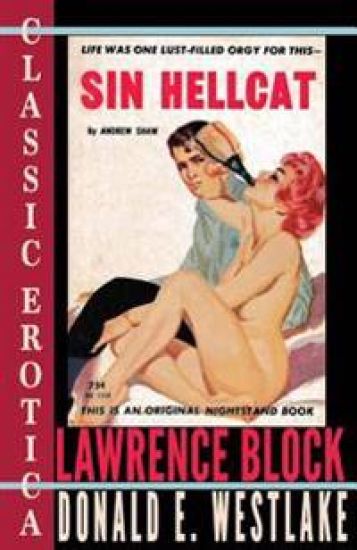
This is the third novel Donald E. Westlake and I did in collaboration, SIN HELLCAT, and I think it may have been the best of the three-but we didn't get to put a joint byline on it. Well, we did-but someone at Nightstand felt free to change it, dropping Alan Marshall from the "by Alan Marshall and Andrew Shaw" byline we'd supplied. Much the same thing happened to CIRCLE OF SINNERS, my collaboration for Nightstand with Hal Dresner; "By Andrew Shaw and Don Holliday" is what we tagged it, and this time it was Andrew Shaw who got bumped. Well, it's corrected now. SIN HELLCAT, like its fellows, has both names on the cover. And our names, not the ones we donned for our work in the world of paperback erotica. When the two of us were starting out as writers, we both served an apprenticeship writing erotic novels for Harry Shorten at Midwood Books and Bill Hamling at Nightstand. (I was Sheldon Lord for Midwood and Andrew Shaw for Nightstand, while Don was Alan Marshall for both publishers. Note though that the presence of either name upon a book is no guarantee that one of us wrote it. Both of us made arrangements whereby lesser writers would submit works under our names-and I know it's hard to believe that any writers were less than we were back then, but it's true.)Well. We'd become friends in the summer of 1959, while we were living a few blocks away from each other in midtown Manhattan. I was at the Hotel Rio, on West 47th between Sixth and Seventh Avenues, and Don was a block south and several blocks west of me. Then I moved back to my parents' house in Buffalo, and Don and his wife and kid moved to Canarsie, and we wrote letters back and forth. And at one point we decided it might be fun to do a novel together. Not by thinking it out and talking through it and, you know, collaborating in a serious artistic manner. Our method was simpler. One of us would write a chapter, and then the other would write a chapter to come after it, and back and forth, like that, until we had a book. It worked, and by God it was fun. The first of our efforts was A GIRL CALLED HONEY, and it started when I wrote a chapter and sent it to Don. And so on, and we stopped when we had a book and sent it to Henry Morrison who sent it to Harry Shorten. We put both our names on the book, our pen names that is to say, and that's how Harry published it: by Sheldon Lord and Alan Marshall. And he included our dedication: "To Don Westlake and Larry Block, who introduced us." It was so much fun that we did it again. This time Don wrote the first chapter, and I wrote the second. Was I still in Buffalo, and did we still send the chapters through the mail? Damned if I can remember. I think I may have been in New York by then, living with my first wife on West 69th Street. But maybe not, and what does it matter? We finished the book, we sent it in, Midwood published it, and we shared the advance, which was probably $600 for A GIRL CALLED HONEY, but may have escalated to $750 by the time we did SO WILLING. So each of us wound up with either $300 or $375 for our trouble, and that's not a lot of money nowadays, and it wasn't a lot of money in 1960 either, but neither was it a lot of trouble. Damn, those were good days. Never mind. Here's SIN HELLCAT-and if reading it brings you a small fraction of the fun we had writing it, you'll be back right away to scoop up A GIRL CALLED HONEY and SO WILLING.
A Girl Called Honey

A Girl Called Honey

Donald E. Westlake; Lawrence Block

Createspace Independent Publishing Platform
2016
nidottu
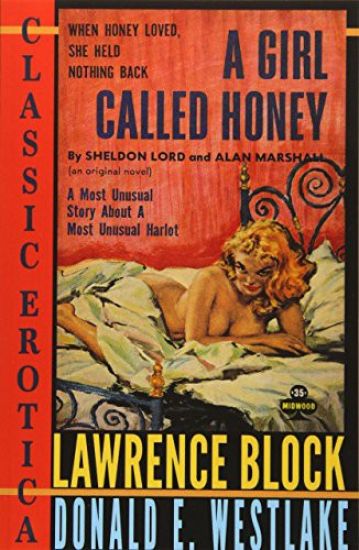
Here you go-the first collaborative effort for Sheldon Lord and Alan Marshall...with cover art by the great Paul Rader When Don Westlake and I were starting out as writers, we both served an apprenticeship writing erotic novels for Harry Shorten at Midwood Books and Bill Hamling at Nightstand. (I was Sheldon Lord for Midwood and Andrew Shaw for Nightstand, while Don was Alan Marshall for both publishers. Note though that the presence of either name upon a book is no guarantee that one of us wrote it. Both of us made arrangements whereby lesser writers would submit works under our names-and I know it's hard to believe that any writers were less than we were back then, but it's true.)Well. We'd become friends in the summer of 1959, while we were living a few blocks away from each other in midtown Manhattan. I was at the Hotel Rio, on West 47th between Sixth and Seventh Avenues, and Don was a block south and several blocks west of me. Then I moved back to my parents' house in Buffalo, and Don and his wife and kid moved to Canarsie, and we wrote letters back and forth. And at one point we decided it might be fun to do a novel together. Not by thinking it out and talking through it and, you know, collaborating in a serious artistic manner. Our method was simpler. One of us would write a chapter, and then the other would write a chapter to come after it, and back and forth, like that, until we had a book. It worked, and by God it was fun. The first of our efforts was A GIRL CALLED HONEY, and it started when I wrote a chapter and sent it to Don. And so on, and we left each other cliffhangers and threw each other's characters off those cliffs, and we stopped when we had a book, and sent it to Henry Morrison who sent it to Harry Shorten. We put both our names on the book, our pen names that is to say, and that's how Harry published it: by Sheldon Lord and Alan Marshall. And he included our dedication: "To Don Westlake and Larry Block, who introduced us." It was so much fun that we did it again. This time Don wrote the first chapter, and I wrote the second. Was I still in Buffalo, and did we still send the chapters through the mail? Damned if I can remember. I think I may have been in New York by then, living with my first wife on West 69th Street. But maybe not, and what does it matter? We finished the book, we sent it in, Midwood published it, and we shared the advance, which was probably $600 for A GIRL CALLED HONEY, but may have escalated to $750 by the time we did SO WILLING. So each of us wound up with either $300 or $375 for our trouble, and that's not a lot of money nowadays, and it wasn't a lot of money in 1960 either, but neither was it a lot of trouble. Damn, those were good days. We did a third novel in collaboration, SIN HELLCAT, and I think it may have been the best of the three-but we didn't get to put a joint byline on it. Well, we did-but someone at Nightstand felt free to change it, dropping Alan Marshall from the "by Alan Marshall and Andrew Shaw" byline we'd supplied. Much the same thing happened to CIRCLE OF SINNERS, my collaboration for Nightstand with Hal Dresner; "By Andrew Shaw and Don Holliday" is what we tagged it, and this time it was Andrew Shaw who got bumped. Never mind. Here's the book that started it all, A GIRL CALLED HONEY-and if reading the saga of Honor Mercy Bane brings you a small fraction of the fun we had writing it, you'll be back right away to scoop up SO WILLING and SIN HELLCAT.
Four Lives at the Crossroads

Four Lives at the Crossroads

Lawrence Block

Createspace Independent Publishing Platform
2016
pokkari
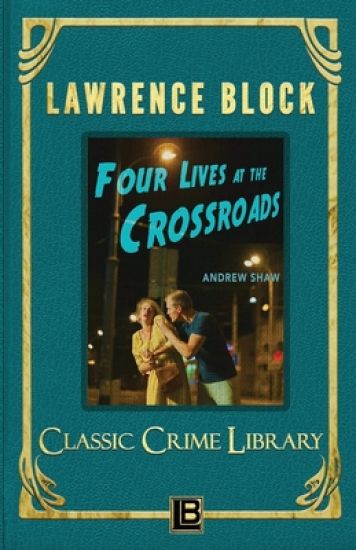
FOUR LIVES AT THE CROSSROADS is the latest addition to the Classic Crime Library...after a short stay in the Collection of Classic EroticaBack in the late 1950s and early 60s, when I was finding myself as a writer and producing a great quantity of books under pen names, some of the books I wrote were as much crime fiction as they were erotica. Indeed, several of those titles by Andrew Shaw and Sheldon Lord have since been republished under my own name by Hard Case Crime and Subterranean Press-and subsequently astonished me by garnering respectful reviews. BORDERLINE, LUCKY AT CARDS, and A DIET OF TREACLE are examples, and so to a degree is my forthcoming Hard Case title, SINNER MAN. A little light editing made them acceptable crime fiction for a contemporary body of readers. FOUR LIVES AT THE CROSSROADS almost made the cut. After Charles Ardai at Hard Case considered it and ultimately decided against it, I decided to shoehorn it into the Collection of Classic Erotica, but reader reactions have since persuaded me that it's really more a crime novel. A dark, savage tale of an armed robbery gone wrong, It's a better fit in the Classic Crime Library. I did some light editing anyway, much of which consisted of reversing the helpful contributions of some unnamed editor at Nightstand Books. So here's FOUR LIVES AT THE CROSSROADS, available for the first time since its initial appearance in 1962. I can but hope you'll enjoy it
Campus Tramp

Campus Tramp

Lawrence Block

Createspace Independent Publishing Platform
2016
nidottu
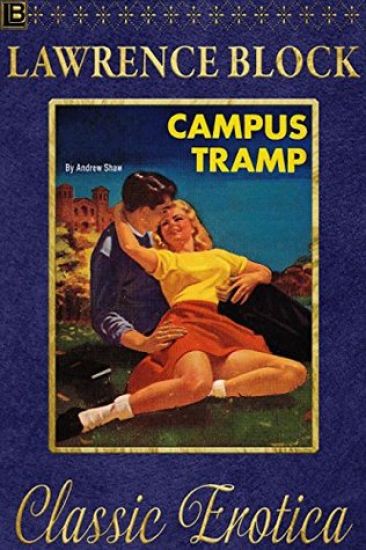
There's a song they used to sing at Antioch College, and it went something like this: "She was just a little freshmanVictim of Admission's whimThen she met an upperclassman-we won't name him-And she had a child by him." Now he's off in New York CityRescued by the co-op planWhile she walks the streets of Yellow Springs, Ohio, Looking for another man." Ah, they don't write 'em like that anymore, and it's not hard to see why. And the sad story recounted in the song is not entirely unlike that of Linda Shepard, titular (so to speak) heroine of CAMPUS TRAMP. The story of the book may be more interesting than the story told in the book. I wrote it in July of 1959, at the Hotel Rio on West 47th Street in New York. I'd just arrived from, yes, Yellow Springs, having spent a year writing books for Harry Shorten, editing the college newspaper, and giving short shrift to my academic studies. (This was my third year at Antioch. I was there for two years, took a year off to work at a literary agency, and then came back, only to discover that, having seen Paree, you couldn't keep me down on the farm. I tried to drop out during the first semester, got manipulated into staying by my parents, and somehow finished the year. Now I was in New York, where I was to spend the summer writing, before returning for what was supposed to be my last year of school.)Well. My agent came up with an assignment. William Hamling, publisher of science fiction and Rogue Magazine, had decided to initiate a line of erotic novels similar to what I'd been writing for Midwood. Could I write one? I could and did, and thought it might be amusing to use Antioch as a setting, and to choose the characters' surnames from the buildings and dormitory units on the Antioch campus. I picked the title CAMPUS TRAMP and sent it off, and they liked it well enough in Hamlingville (that would be Evanston, Illinois, IIRC) to ask for more. Not long after I'd finished the book, I got a letter from Yellow Springs. The Student Personnel Committee, having taken a long look at my academic performance, advised me of their decision that I might be happier elsewhere. I thought this was very perceptive of them, that I would indeed be happier almost anywhere else, and the passive-aggressive lout I was at the time found this an ideal resolution to a situation I seemed incapable of resolving on my own. Their letter had left the door slightly ajar, if not wide open; I sensed I could talk my way back in, but why? Then CAMPUS TRAMP came out, and a copy or two made it all the way to Yellow Springs, and a legend sprang up. I'd written the book as payback, it was said, a way to revenge myself upon the school that had expelled me. Now when I'd written CAMPUS TRAMP I'd still thought I was to return in the fall. And I was if anything profoundly grateful to the school for having cut the umbilical cord and sent me out into the world. No end of people knew better, even as they were sure they knew who the models were for the various characters-but that happens all the time. But never mind. One recalls the newspaperman's line from THE MAN WHO SHOT LIBERTY VALANCE: "When the legend becomes fact, print the legend "Foir years I wondered who painted the cover, and recently learned it was one Harold W. McCauley. If he himself wasn't familiar with the college, he must have had coaching; that's a remarkably accurate representation of Antioch's Main Building, towers and all. Copies of the book commanded high prices at Antioch Senior Sales over the years, I've been assured, and Christian Feuerstein used to perform inspired readings of the text at what I can but assume were memorable occasions. I just wish someone had thought to hire her to do the audioboo
Kept

Kept

Lawrence Block

Createspace Independent Publishing Platform
2016
nidottu
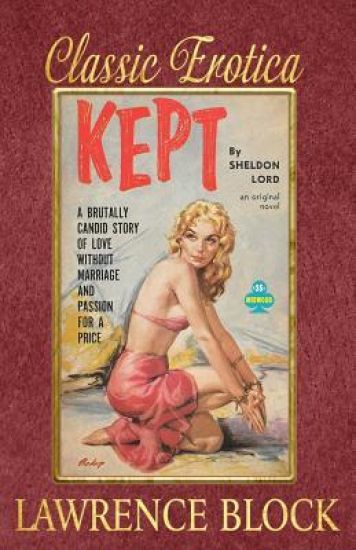
So you're unemployed, fresh off a construction crew in Albany, and standing on a Thruway ramp trying to thumb a ride, and a babe in a Cadillac convertible stops for you. Hey, these things happen. They never happened to me, but never mind. For you it's different. You're Mark Taggert and you've got the good sense to get in the car, and it changes your life. The girl's Elaine Rice, and she's gorgeous and sexy, and you wind up in her Park Avenue apartment, and you go to bed, and the chemistry is right, and there's only one problem. She's rich. Too rich for you to be comfortable living with her. You're totally lacking in ambition and quite happy drifting, going from town to town and menial job to menial job. It's a life and it's a living and that's enough for you. But if you're going to share Elaine's life, you have to make something of yourself. So you check out the want ads, and you let her buy you a wardrobe, and she fabricates a r sum for you, and you land a job. And you turn out to be remarkably good at it, but she's still got too much money, and you move out. And, you know, stuff happens... Pretty interesting set-up, innit? KEPT was the penultimate book Sheldon Lord wrote for Midwood-CANDY, #2 in the Collection of Classic Erotica, was the last-and it's a shame I stopped there. I understand why I did; I was starting to write crime novels, and didn't want to devote a disproportionate amount of my time to erotica, and Bill Hamling's line, Nightstand Books, was paying me significantly more per book than Harry Shorten at Midwood. Hello, Bill. G'bye, Harry. A pity, though, because Nightstand's artists never came close to the cover art Paul Rader was turning out for Midwood, and his cover for KEPT may be the best of the bunch.
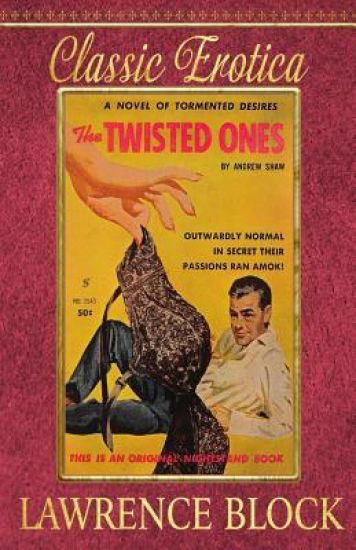
The Twisted Ones

The Twisted Ones

Lawrence Block

Createspace Independent Publishing Platform
2016
nidottu
You might be surprised to learn that back in 1961 Nightstand Books published an inquiry into the heartbreak of scoliosis, but-oh, hang on a minute. You say the title refers to characters who are not spinally but psychosexually bent? Oh. Well, never mind. Dave and Nancy Grantland look for all the world like happy couple leading a comfortable suburban lifestyle. And Lucy King, the regular babysitter for the Gavilans next door, looks for all the world like a normal teenager. But Dave's lost interest in sex with his wife, as he increasingly becomes obsessed with the desire for a much younger partner. Not a Lolita, exactly, but someone a few years under the age of consent. And Nancy's recalling her college days as what we've since learned to call a LUG. (That's Lesbian Until Graduation. But you knew that, right?)And Lucy's ready for sexual experience, but with whom? Someone more knowledgable than her oafish boyfriend? Dave finds a caf in the West 20s where a man named Hassan can supply anything he wants. Nancy finds a job working for a woman named Bobbie, who can supply anything she wants. Lucy finds a man who'll teach her what she wants to learn-and what she doesn't. Can you see where this is going? Well, along the way you'll get to look over Dave's shoulder as he watches a pornographic movie, courtesy of Hassan. I'm not sure which book was the first in which I employed this device, but the editors at Nightstand thought it was a great way to spice up the books, and I was encouraged to include such scenarios in future books. Well, you know, you didn't have to tell me twice... A Google search advises me that in 1959, two years before this book appeared, Gold Medal published Marijane Meaker's suspense novel, The Twisted Ones, under her pen name of Vin Packer. My guess is that it's a better book than mine, but who's to say you won't enjoy them both?
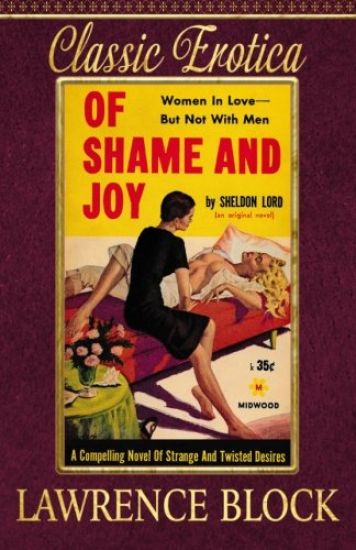
Of Shame and Joy

Of Shame and Joy

Lawrence Block

Createspace Independent Publishing Platform
2016
nidottu
O Rose thou art sick. The invisible worm, That flies in the nightIn the howling storm: Has found out thy bedOf crimson joy: And his dark secret loveDoes thy life destroy. Those eight lines constitute the complete text of "The Sick Rose," published by William Blake in SONGS OF EXPERIENCE in 1794. I took to Blake early on, and thought OF CRIMSON JOY would make a dandy title. I accordingly fastened it on this novel when I sent the manuscript to Harry Shorten at Midwood. Someone there changed the title to OF SHAME AND JOY, and while I was a tad annoyed at the time, I have to say they made the right call. OF SHAME AND JOY's not only a better title, it's a damn good one. I remember where and when I wrote the book, although I can't say I recall much of the writing, or indeed of the book itself. It would have been in the late summer or fall of 1959. I'd gone to New York in July, settling in at the Hotel Rio on West 47th Street, planning to stay there until it was time to return to Antioch College for my final year. What I soon learned was that I'd already had my final year at Antioch, at least as far as the school was concerned. I'd written CAMPUS TRAMP, my first book as Andrew Shaw just before they informed me of this decision, and then I went to work on something else, and a bad morning led me to pack a bag and move back to my parents' home at 422 Starin Avenue in Buffalo.("A bad morning." Is that unnecessarily cryptic? Think of the opening scene in AFTER THE FIRST DEATH, but without the dead hooker on the floor. That's the kind of morning it was, and it led me to conclude that New York Wasn't Working Out, and that maybe I'd do better back in Buffalo.)And, back in Buffalo, I set up my typewriter on the little maple desk on which I'd written STRANGE ARE THE WAYS OF LOVE and CARLA, and resumed writing books for Harry Shorten at Midwood, -and for Bill Hamling at Nightstand, who'd liked CAMPUS TRAMP enough to want more. For the next eight months or so I wrote books on that desk. My routine was an interesting one; I'd join my mother at the kitchen table for a cup of coffee around midnight, then write all night, then have breakfast with my dad around seven-and then go to bed. It worked for me, and I found things to do with the rest of my time; notably, I bought a partnership in a coffeehouse, The Jazz Center, and began keeping company with the woman whose ill fortune it would be to become my first wife. And how did OF SHAME AND JOY fit into all this? Well, the Provincetown setting came from a two-day trip while I was living at the Rio. This girl whom I knew vaguely was going there, and I decided to join her. I remember we took a Greyhound bus, and that her name either was or wasn't Suzy. (But then that's true of almost everyone, isn't it?) We went to P'town, and she had friends there, and I didn't, and I wandered around for an evening and slept on somebody's couch and went back to New York by myself in the morning. I never saw Suzy again, so for all I know she's still there, though it strikes me as doubtful. OF SHAME AND JOY has never been republished since its appearance as a Midwood Book, and I'm glad to be able to bring it out again-not least of all for the opportunity to use the wonderful Paul Rader cover. Isn't it gorge
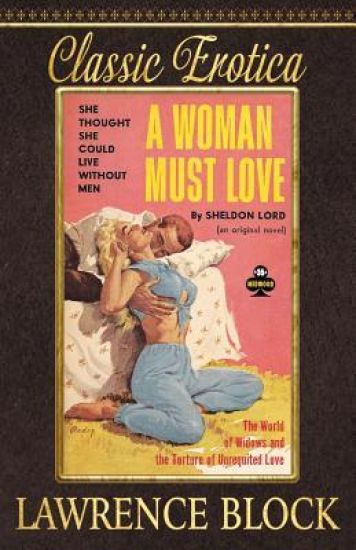
A Woman Must Love

A Woman Must Love

Lawrence Block

Createspace Independent Publishing Platform
2016
nidottu
A WOMAN MUST LOVE is #12 in the Collection of Classic Erotica, and it's never been reissued since Midwood brought it out in 1960. Consequently I've just read it for the first time since I wrote it some 57 years ago. I remember the circumstances of writing it. I was living in Buffalo, at 422 Starin Avenue, in the house where I grew up. Besides writing, I was co-proprietor of a coffee house and non-alcoholic nightclub called The Jazz Center. (We hosted some decent musicians. Trumpeter Sammy Noto, who'd quit Stan Kenton's band because he didn't like living on the road, led one combo that played our joint with some frequency. Another band was fronted by a dude known alternately as Tommy Green, Tommy Mundy, and Ahmed Khan; his specialty was bongos and bullshit, but he had some good musicians working for him. One night Percy Heath of the Modern Jazz Quartet came by late, sat in with our guys, and played a twenty-minute bass solo that I wish I could hear again. That part was nice, but we never took a dime out of the place, and after I sold my interest to my partner, an old Trotskyite named Frank St. George, he wound up making the musicians partners so he wouldn't have to pay them. After he was forced to close down, Frank went on to have a distinguished career as a Buffalo restauranteur.)See, that much I remember. And I remember my writing schedule at the time. I would be at the club, or out on the town with the unfortunate young woman destined to become the first Mrs. Block. Then I'd get home, and I'd have a cup of coffee with my night owl mother before she went to bed around midnight. Then I'd write until dawn, when I'd have breakfast with my early-rising father. And then I'd go to bed and sleep until it was time to get up and do it all over again. As for the novel itself, A WOMAN MUST LOVE, I can't say I remembered much. It's set in Buffalo, in the very neighborhood in which it was written, and I hadn't even recalled that about the book until I read it on my Kindle. I vaguely remembered that there was a book in which I'd given all the characters English and Irish counties as surnames, and this seems to be the book. Aside from those two elements, I felt like the old boy in the assisted-living center, meeting new people every day. I was surprised to be reading less the erotic romp the Midwood and Nightstand books tended to be than an out-and-out romance novel. Barbara, a young widow, has vowed to be true to her husband's memory (even though he'd wished otherwise). She's courted, and she has a couple of adventures, and there's a certain amount of coupling in the book of one sort or another, but the damn thing's a romance, and I have to wonder how I came to write it. It would have been about a year later that my own father died-suddenly, of an aortic aneurysm. In the years that followed I might well have gone through some sort of Hamlet/Oedipus crap when my mother resumed dating, though I can't recall much in the way of conflicted feelings. But the book was way earlier, and where the story came from I have no idea. Well, never mind. I hope you'll find things to enjoy in Barbara's story-not least of all Paul Rader's cover art. Long after I'd forgotten the words I wrote, I remembered those vivid pastels.