Kirjojen hintavertailu – 12 859 818 kirjaa ja 27 kauppaa

Kirjailija

Lawrence Block

Kirjat ja teokset yhdessä paikassa: 306 kirjaa, julkaisuja vuosilta 1994–2025, suosituimpiin kuuluu Have a NYC 3. Vertaile teosten hintoja ja tarkista saatavuus suomalaisista kirjakaupoista.

306 kirjaa

Kirjojen julkaisuvuodet: 1994–2025.

Ein Ticket für den Friedhof

Ein Ticket für den Friedhof

Lawrence Block

LB Productions
2019
pokkari
Ein Ticket f r den Friedhof ist der achte Roman mit Lawrence Blocks fesselndster Figur, Matthew Scudder. Eher klassischer Thriller als Kriminalroman, ist er vielleicht sogar sein bester. Von heftigen Schuldgef hlen geplagt, hat Scudder Frau und Kinder verlassen und den Polizeidienst quittiert, um in einem Hotel in New Yorks Hell s Kitchen ein einsames Dasein zu fristen und sich in Jimmy Armstrong s Saloon gleich um die Ecke vorwiegend von Bourbon und Kaffee zu ern hren. Inzwischen hat er zwar dem Alkohol abgeschworen, lebt aber immer noch in demselben spartanischen Hotelzimmer und verdient sich das wenige Geld, das er zum Leben braucht, indem er, wie er es selbst nennt, "Freunden hin und wieder einen Gefallen tut". Dann holt ihn eines Tages die Vergangenheit ein. Zw lf Jahre zuvor hat Matthew Scudder vor Gericht eine Falschaussage gemacht, um James Leo Motley hinter Gitter zu bringen. Inzwischen ist der brutale Gewaltverbrecher wieder auf freiem Fu und sinnt auf Rache. Scudders Freunde und ehemalige Geliebte - sogar vollkommen Fremde, die das Pech hatten, denselben Familiennamen zu tragen - bezahlen mit ihrem Leben. Denn der rachs chtige Psychopath ist fest entschlossen, nicht eher zu ruhen, als bis er seinen Erzfeind wieder in den Suff getrieben - und dann ins Grab gebracht hat. "Man kann dieses Buch einfach nicht mehr aus der Hand legen", schrieb die Washington Post Book World. "Anhaltende Spannung und ein atemberaubendes Ende." Der Boston Herald lobte Ein Ticket f r den Friedhof als "fesselnden Spannungsroman, der die Nerven des Lesers auf eine harte Belastungsprobe stellt". Ins selbe Horn st t die San Diego-Union Tribune: "Nervenzehrende, kaum zu ertragende Spannung. Lawrence Block ist einer von Amerikas besten Krimiautoren, und er war nie besser als in diesem Buch."

Die Nacht und die Musik

Die Nacht und die Musik

Lawrence Block

LB Productions
2019
pokkari
Lawrence Block konnte mit seinen 17 Matthew-Scudder-Romanen die Herzen von Lesern in der ganzen Welt gewinnen - und auch eine Vielzahl von Literaturpreisen, wie den Edgar Allan Poe Award (Edgar), den Shamus Award, den deutschen Marlowe-Preis und den japanischen Maltese Falcon Award. Und es ist vor allem Matt Scudder, der Block Auszeichnungen f r sein Lebenswerk eingebracht hat: Grand Master Award (Mystery Writers of America), The Eye (Private Eye Writers of America) und Cartier Diamond Dagger (UK Crime Writers Association). Aber Scudder war auch der Star mehrerer Kurzgeschichten, die hier alle vereint sind, von zwei Novellen aus den sp ten siebziger Jahren ( Aus dem Fenster« und Eine Kerze f r die Stadtstreicherin«) ber Im fr hen Licht des Tages« (Edgar Award) und Der barmherzige Engel des Todes« (Shamus Award) bis hin zu Ein letzter Abend im Grogan's«, einer bewegenden und elegischen Kurzgeschichte, die in dieser Sammlung zum ersten Mal ver ffentlich wird. Es waren die Kurzgeschichten, die die Reihe zu mehreren Zeitpunkten, als der Fluss der Romane unterbrochen war, am Leben hielten. Sie f hrten Scudder auf andere Pfade und zeigten uns unbekannte Gegenden seiner Welt. Einige dieser Geschichten erschienen in Magazinen wie Alfred Hitchcock, Ellery Queen und Playboy. Die titelgebende Vignette, Die Nacht und die Musik«, wurde f r das Programm eines Jazzfestivals in New York geschrieben; eine andere, Mick Ballou starrt den schwarzen Bildschirm an«, wurde bislang nur im limitierten Einblattdruck ver ffentlicht. Und die letzte Geschichte, in der sich Matt und Elaine mit Mick und Kristin Ballou an einem Tisch in einer geschlossenen Kneipe in Hell's Kitchen wiederfinden, erscheint in dieser Sammlung zum ersten Mal. Mehrere Geschichten blicken vom Zeitpunkt des Erz hlens zur ck in die Vergangenheit, wenn Scudder aus seinem fr heren Leben als Cop berichtet: zuerst als Streifenpolizist an der Seite des legend ren Vince Mahaffey, dann als NYPD Detective mit einem Doppelleben. In Auf der Suche nach David« befinden sich Matt und Elaine im Urlaub in Florenz, als sie einen Mann treffen, den Matt Jahrzehnte zuvor verhaftet hat; jetzt erf hrt Matt endlich das Motiv hinter einem brutalen Mord. Neben den elf Kurzgeschichten und Novellen enth lt Die Nacht und die Musik« eine Liste der siebzehn Scudder-Romane in chronologischer Reihenfolge sowie ein Nachwort des Autors, in dem dieser Auskunft ber den Ursprung und die Erstver ffentlichung der einzelnen Geschichten gibt. Vers t wird die Sammlung mit einer Einleitung von Brian Koppelman, der nicht nur ein bekannter Drehbuchautor und Regisseur ist ( Billions«, Solitary Man«, Ocean's 13«), sondern auch ein ausgewiesener Matt-Scudder-Fan.
Hunting Buffalo with Bent Nails

Hunting Buffalo with Bent Nails

Lawrence Block

LB Productions
2019
pokkari
While he is probably best known as a novelist and short-story writer, Lawrence Block has produced a rich trove of nonfiction over the course of a sixty-year career. His instructional books for writers are leaders in the field, and his self-described pedestrian memoir, Step By Step, has found a loyal audience in the running and racewalking community. Over the years, Block has written extensively for magazines and periodicals. Generally Speaking collects his philatelic columns from Linn's Stamp News, while his extensive observations of crime fiction, along with personal glimpses of some of its foremost practitioners, have won wide acclaim in book form as The Crime of Our Lives. Hunting Buffalo with Bent Nails is what he's got left over. The title piece, originally published in American Heritage, recounts the ongoing adventure Block and his wife undertook, crisscrossing the United States and parts of Canada in their quixotic and exotic quest to find every "village, hamlet, and wide place in the road named Buffalo." Other travel tales share space with a remembrance of his mother, odes to New York, a disquisition on pen names and book tours, and, well, no end of bent nails not worth straightening. Where else will you find "Raymond Chandler and the Brasher Doubloon," an assessment of that compelling writer from a numismatic standpoint? Where else can you read about Block's collection of old subway cars? From Charles Ardai Acclaimed worldwide for his extraordinary crime novels, Mystery Writers of America Grand Master Lawrence Block is also a beloved author of nonfiction. In this brand new collection - his first in 5 years - Block demonstrates why, illustrating how a master storyteller can hold an audience spellbound on any topic at all. Whether recounting his exotic travels ("After two weeks of long rides and low rations, we left our wretched Jeeps and mounted Bactrian camels, striking out across the sand in search of a lost city") or expressing his love for his adopted hometown ("I was ten and a half when I fell in love with New York"), whether penning an in-depth appreciation of the work of his friend and fellow Grand Master Donald E. Westlake or an account of his tour of a modeling-clay factory in Indiana -- or his brief stay in a Mexican jail -- Block proves himself once again to be one of our wittiest and most engaging raconteurs. Fans of his seven books on the craft of writing will appreciate his insights on the subject ("Writing is magic, and I say this not boastfully but in wonder. I'm not the magician, waving his wand, pulling a rabbit out of a hat. I'm not sure what I am. The wand, maybe. Or the rabbit, or even the hat."). And what reader could resist a guided tour of Manhattan's eccentricities? ("My favorite intersection is that of Waverly Place and Waverly Place. That street, the most resolutely pious in New York, insists upon crossing itself.")No one writes like Lawrence Block. If you only know him from his crime stories, you owe it to yourself to discover his many other sides. And if you do already know about his wide-ranging and colorful interests and his unforgettable way of sharing them, well, then -- you know just what a wonderful treat HUNTING BUFFALO WITH BENT NAILS has in store for you.
Hunting Buffalo with Bent Nails

Hunting Buffalo with Bent Nails

Lawrence Block

LB Productions
2019
sidottu
While he is probably best known as a novelist and short-story writer, Lawrence Block has produced a rich trove of nonfiction over the course of a sixty-year career. His instructional books for writers are leaders in the field, and his self-described pedestrian memoir, Step By Step, has found a loyal audience in the running and racewalking community. Over the years, Block has written extensively for magazines and periodicals. Generally Speaking collects his philatelic columns from Linn's Stamp News, while his extensive observations of crime fiction, along with personal glimpses of some of its foremost practitioners, have won wide acclaim in book form as The Crime of Our Lives. Hunting Buffalo with Bent Nails is what he's got left over. The title piece, originally published in American Heritage, recounts the ongoing adventure Block and his wife undertook, crisscrossing the United States and parts of Canada in their quixotic and exotic quest to find every "village, hamlet, and wide place in the road named Buffalo." Other travel tales share space with a remembrance of his mother, odes to New York, a disquisition on pen names and book tours, and, well, no end of bent nails not worth straightening. Where else will you find "Raymond Chandler and the Brasher Doubloon," an assessment of that compelling writer from a numismatic standpoint? Where else can you read about Block's collection of old subway cars? From Charles Ardai Acclaimed worldwide for his extraordinary crime novels, Mystery Writers of America Grand Master Lawrence Block is also a beloved author of nonfiction. In this brand new collection - his first in 5 years - Block demonstrates why, illustrating how a master storyteller can hold an audience spellbound on any topic at all. Whether recounting his exotic travels ("After two weeks of long rides and low rations, we left our wretched Jeeps and mounted Bactrian camels, striking out across the sand in search of a lost city") or expressing his love for his adopted hometown ("I was ten and a half when I fell in love with New York"), whether penning an in-depth appreciation of the work of his friend and fellow Grand Master Donald E. Westlake or an account of his tour of a modeling-clay factory in Indiana -- or his brief stay in a Mexican jail -- Block proves himself once again to be one of our wittiest and most engaging raconteurs. Fans of his seven books on the craft of writing will appreciate his insights on the subject ("Writing is magic, and I say this not boastfully but in wonder. I'm not the magician, waving his wand, pulling a rabbit out of a hat. I'm not sure what I am. The wand, maybe. Or the rabbit, or even the hat."). And what reader could resist a guided tour of Manhattan's eccentricities? ("My favorite intersection is that of Waverly Place and Waverly Place. That street, the most resolutely pious in New York, insists upon crossing itself.")No one writes like Lawrence Block. If you only know him from his crime stories, you owe it to yourself to discover his many other sides. And if you do already know about his wide-ranging and colorful interests and his unforgettable way of sharing them, well, then -- you know just what a wonderful treat HUNTING BUFFALO WITH BENT NAILS has in store for you.
Hunting Buffalo with Bent Nails

Hunting Buffalo with Bent Nails

Lawrence Block

Lawrence Block
2019
pokkari
While he is probably best known as a novelist and short-story writer, Lawrence Block has produced a rich trove of nonfiction over the course of a sixty-year career. His instructional books for writers are leaders in the field, and his self-described pedestrian memoir, Step By Step, has found a loyal audience in the running and racewalking community. Over the years, Block has written extensively for magazines and periodicals. Generally Speaking collects his philatelic columns from Linn's Stamp News, while his extensive observations of crime fiction, along with personal glimpses of some of its foremost practitioners, have won wide acclaim in book form as The Crime of Our Lives. Hunting Buffalo With Bent Nails is what he's got left over. The title piece, originally published in American Heritage, recounts the ongoing adventure Block and his wife undertook, criss-crossing the United States and parts of Canada in their quixotic and exotic quest to find every "village, hamlet, and wide place in the road named Buffalo." Other travel tales share space with a remembrance of his mother, odes to New York, a disquisition on pen names and book tours, and, well, no end of bent nails not worth straightening. Where else will you find "Raymond Chandler and the Brasher Doubloon," an assessment of that compelling writer from a numismatic standpoint? Where else can you read about Block's collection of old subway cars? Highly recommended.
From Sea to Stormy Sea

From Sea to Stormy Sea

Lawrence Block

Pegasus Books
2019
sidottu
Seventeen stories by seventeen brilliant writers, inspired by seventeen paintings. That was the formula for Lawrence Block’s two ground-breaking anthologies, In Sunlight or in Shadow and Alive in Shape and Color, and it’s on glorious display here once again in From Sea to Stormy Sea. This time the paintings are exclusively the work of American artists, and the roster includes Harvey Dunn, John Steuart Curry, Reginald Marsh, Thomas Hart Benton, Helen Frankenthaler, Winslow Homer, Rockwell Kent, Grant Wood, and Andy Warhol. Among the star-studded lineup of writers you’ll find Warren Moore, Jerome Charyn, Jane Hamilton, Christa Faust, John Sandford, Sara Paretsky, Charles Ardai, Barry Malzberg, and Janice Eidus. It’s an outstanding collection, with widely divergent stories united by theme and culture, and—no surprise—beautifully illustrated with full-color reproductions of the seventeen paintings. Including stories by: Sara Paretsky, Jan Burke, Warren Moore, Patricia Abbott, Christa Faust, Jerome Charyn, Barry Malzberg, Scott Frank, Brendan DuBois, Tom Franklin, Gary Phillips, Charles Ardai, Micah Nathan, Janice Eidus, John Sandford, Jane Hamilton, and Lawrence Block.
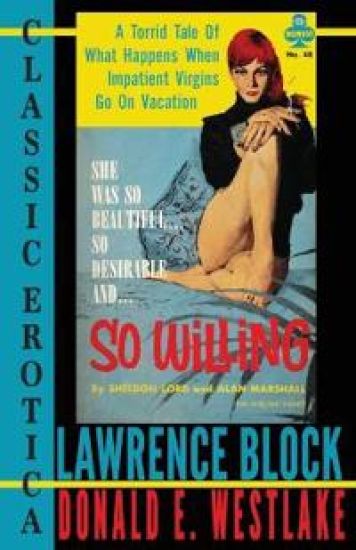
So Willing

So Willing

Lawrence Block

LB Productions
2019
pokkari
From the author: When Don Westlake and I were starting out as writers, we both served an apprenticeship writing erotic novels for Harry Shorten at Midwood Books and Bill Hamling at Nightstand. (I was Sheldon Lord for Midwood and Andrew Shaw for Nightstand, while Don was Alan Marshall for both publishers. Note though that the presence of either name upon a book is no guarantee that one of us wrote it. Both of us made arrangements whereby lesser writers would submit works under our names--and I know it's hard to believe that any writers were less than we were back then, but it's true.) Well. We'd become friends in the summer of 1959, while we were living a few blocks away from each other in midtown Manhattan. I was at the Hotel Rio, on West 47th between Sixth and Seventh Avenues, and Don was a block south and several blocks west of me. Then I moved back to my parents' house in Buffalo, and Don and his wife and kid moved to Canarsie, and we wrote letters back and forth. And at one point we decided it might be fun to do a novel together. Not by thinking it out and talking through it and, you know, collaborating in a serious artistic manner. Our method was simpler. One of us would write a chapter, and then the other would write a chapter to come after it, and back and forth, like that, until we had a book. It worked, and by God it was fun. The first of our efforts was A GIRL CALLED HONEY, and it started when I wrote a chapter and sent it to Don. And so on, and we stopped when we had a book and sent it to Henry Morrison who sent it to Harry Shorten. We put both our names on the book, our pen names that is to say, and that's how Harry published it: by Sheldon Lord and Alan Marshall. And he included our dedication: "To Don Westlake and Larry Block, who introduced us." It was so much fun that we did it again. This time Don wrote the first chapter, and I wrote the second. Was I still in Buffalo, and did we still send the chapters through the mail? Damned if I can remember. I think I may have been in New York by then, living with my first wife on West 69th Street. But maybe not, and what does it matter? We finished the book, we sent it in, Midwood published it, and we shared the advance, which was probably $600 for A GIRL CALLED HONEY, but may have escalated to $750 by the time we did SO WILLING. So each of us wound up with either $300 or $375 for our trouble, and that's not a lot of money nowadays, and it wasn't a lot of money in 1960 either, but neither was it a lot of trouble. Damn, those were good days. We did a third novel in collaboration, SIN HELLCAT, and I think it may have been the best of the three--but we didn't get to put a joint byline on it. Well, we did--but someone at Nightstand felt free to change it, dropping Alan Marshall from the "by Alan Marshall and Andrew Shaw" byline we'd supplied. Much the same thing happened to CIRCLE OF SINNERS, my collaboration for Nightstand with Hal Dresner; "By Andrew Shaw and Don Holliday" is what we tagged it, and this time it was Andrew Shaw who got bumped. Never mind. Here's SO WILLING--and if reading it brings you a small fraction of the fun we had writing it, you'll be back right away to scoop up A GIRL CALLED HONEY and SIN HELLCAT.
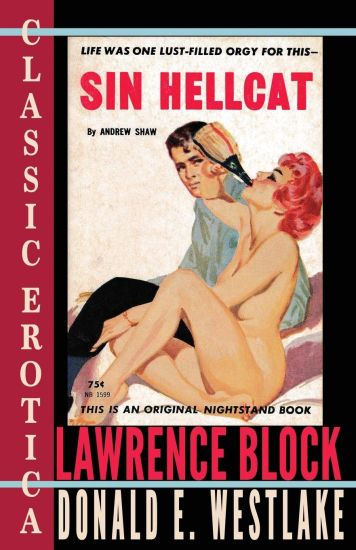
Sin Hellcat

Sin Hellcat

Lawrence Block

LB Productions
2019
pokkari
From the author: This is the third novel Donald E. Westlake and I did in collaboration, SIN HELLCAT, and I think it may have been the best of the three--but we didn't get to put a joint byline on it. Well, we did--but someone at Nightstand felt free to change it, dropping Alan Marshall from the "by Alan Marshall and Andrew Shaw" byline we'd supplied. Much the same thing happened to CIRCLE OF SINNERS, my collaboration for Nightstand with Hal Dresner; "By Andrew Shaw and Don Holliday" is what we tagged it, and this time it was Andrew Shaw who got bumped. Well, it's corrected now. SIN HELLCAT, like its fellows, has both names on the cover. And our names, not the ones we donned for our work in the world of paperback erotica. When the two of us were starting out as writers, we both served an apprenticeship writing erotic novels for Harry Shorten at Midwood Books and Bill Hamling at Nightstand. (I was Sheldon Lord for Midwood and Andrew Shaw for Nightstand, while Don was Alan Marshall for both publishers. Note though that the presence of either name upon a book is no guarantee that one of us wrote it. Both of us made arrangements whereby lesser writers would submit works under our names--and I know it's hard to believe that any writers were less than we were back then, but it's true.) Well. We'd become friends in the summer of 1959, while we were living a few blocks away from each other in midtown Manhattan. I was at the Hotel Rio, on West 47th between Sixth and Seventh Avenues, and Don was a block south and several blocks west of me. Then I moved back to my parents' house in Buffalo, and Don and his wife and kid moved to Canarsie, and we wrote letters back and forth. And at one point we decided it might be fun to do a novel together. Not by thinking it out and talking through it and, you know, collaborating in a serious artistic manner. Our method was simpler. One of us would write a chapter, and then the other would write a chapter to come after it, and back and forth, like that, until we had a book. It worked, and by God it was fun. The first of our efforts was A GIRL CALLED HONEY, and it started when I wrote a chapter and sent it to Don. And so on, and we stopped when we had a book and sent it to Henry Morrison who sent it to Harry Shorten. We put both our names on the book, our pen names that is to say, and that's how Harry published it: by Sheldon Lord and Alan Marshall. And he included our dedication: "To Don Westlake and Larry Block, who introduced us." It was so much fun that we did it again. This time Don wrote the first chapter, and I wrote the second. Was I still in Buffalo, and did we still send the chapters through the mail? Damned if I can remember. I think I may have been in New York by then, living with my first wife on West 69th Street. But maybe not, and what does it matter? We finished the book, we sent it in, Midwood published it, and we shared the advance, which was probably $600 for A GIRL CALLED HONEY, but may have escalated to $750 by the time we did SO WILLING. So each of us wound up with either $300 or $375 for our trouble, and that's not a lot of money nowadays, and it wasn't a lot of money in 1960 either, but neither was it a lot of trouble. Damn, those were good days. Never mind. Here's SIN HELLCAT--and if reading it brings you a small fraction of the fun we had writing it, you'll be back right away to scoop up A GIRL CALLED HONEY and SO WILLING.
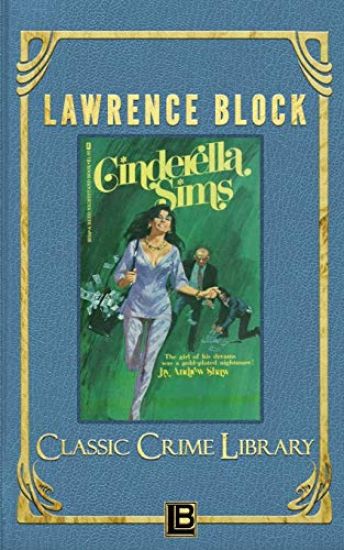
Cinderella Sims

Cinderella Sims

Lawrence Block

LB Productions
2019
pokkari
There's no glass slipper in this fairy tale - just a damsel in distress, a bag of cash, and a whole lot of dead bodies. Reporter Ted Lindsay is trying to forget his ex-wife, and New York City's tough streets are just what the doctor ordered. They're also filled with alluring women, but only one catches Ted's eye. Cinderella Sims is not only beautiful, she's on the run and she needs Ted's help. She's got a bag full of cash and some very angry people staking out her apartment. Before long Ted's forgotten his heartbreak and is launched into the dark streets of crime with Cindy at his side.
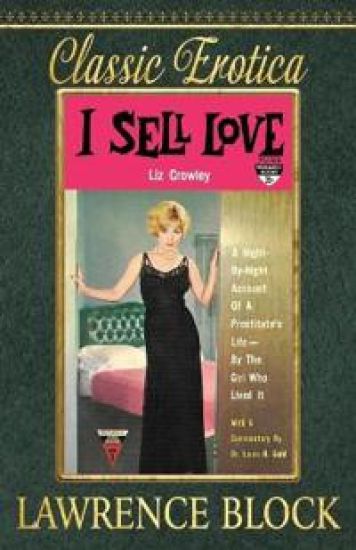
I Sell Love

I Sell Love

Lawrence Block

LB Productions
2019
pokkari
From the author: What's the autobiography of a prostitute doing in the Collection of Classic Erotica? I asked myself this very question while weighing its suitability for the collection. On the one hand, it's nonfiction, specifically memoir. On the other, it was entirely an invention, a fabrication, its putative narrator no less a creation of my own mind than, say, Linda Shepard in CAMPUS TRAMP. And then I let Wikipedia wisk me back almost 300 years: "The Fortunes and Misfortunes of the Famous Moll Flanders (commonly known simply as Moll Flanders) is a novel by Daniel Defoe, first published in 1722. It purports to be the true account of the life of the eponymous Moll, detailing her exploits from birth until old age. "By 1721, Defoe had become a recognized novelist, with the success of Robinson Crusoe in 1719. His political work was tapering off at this point, due to the fall of both Whig and Tory party leaders with whom he had been associated; Robert Walpole was beginning his rise, and Defoe was never fully at home with the Walpole group. Defoe's Whig views are nevertheless evident in the story of Moll, and the novel's full title gives some insight into this and the outline of the plot: "The Fortunes and Misfortunes of the Famous Moll Flanders, &c. Who was Born in Newgate, and during a Life of continu'd Variety for Threescore Years, besides her Childhood, was Twelve Year a Whore, five times a Wife (whereof once to her own Brother), Twelve Year a Thief, Eight Year a Transported Felon in Virginia, at last grew Rich, liv'd Honest, and died a Penitent. Written from her own Memorandums. "It is usually assumed that the novel is written by Daniel Defoe, as his name is commonly published as the author in modern printings of the novel, however the original printing did not have an author, as it was an apparent autobiography. 1] The attribution of Moll Flanders to Defoe was made by Francis Noble, a bookseller in 1770, after Defoe's death in 1731. 2] "The novel is based partially on the life of Moll King, a London criminal whom Defoe met while visiting Newgate Prison." I can but conclude that I SELL LOVE has at least as much claim to be regarded as a novel as does Defoe's groundbreaking work--if rather less in the way of literary merit. He, after all, seems to have had a model. And, while I may have rubbed elbows, among other things, with some hookers over the years, Liz Crowley, unlike Ms. Flanders, has no counterpart in reality. When the Goddess of Design and Production asked if I wanted to drop the afterword by one Dr. Louis H. Gold, I went and had a look at it. My initial assumption was that Charles Heckelmann, longtime editor of Monarch Books, had found some writer to dash off a few words under a medical pen name, all with the aim of legitimizing the text. But the miracle of Google confirms that Dr Gold, born in 1912, was indeed a practicing shrink in Hartford at the time. I presume he was a friend of Heckelmann's, but for all I know he was the man's psychiatrist. We always thought old Charlie ought to get his head examined.
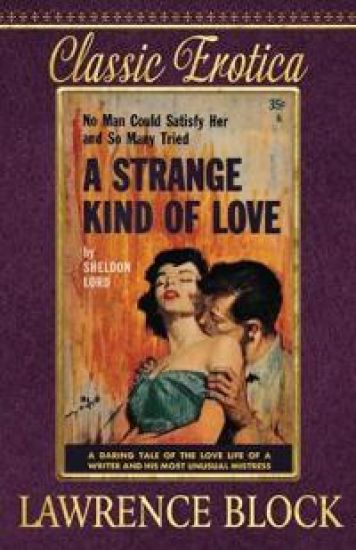
A Strange Kind of Love

A Strange Kind of Love

Lawrence Block

LB Productions
2019
pokkari
From the author: I'd no sooner finished CARLA, my first book for Midwood Tower, than Harry Shorten asked for another. I'd just returned to Antioch College, where after two years as an undistinguished student I'd dropped out for a year to hang on to a summer job at Scott Meredith's literary agency and bucket shop. It was wonderful training, but after a year there I decided I should go back to school, where I had a chance to assume the editorship of the school newspaper. So there I was in Yellow Springs, Ohio, taking a batch of English courses, and I had a publisher who wanted me to write a book. What'll it be, Larry--a paper on Tobias Smollett and the Great Chain of Being, or 50,000 words of soul-searching and sex for Harry Shorten? 50,000 words for which I'd be paid $600? No contest, really. The story concern a has-been writer trying to get back in the game, and all these years later I find it interesting that this young wannabe was already picturing himself on the way down and out. A fellow named Craig said some nice things in his review, which vanished when an earlier edition went off the boards, so I'll excerpt it here: "The protagonist Dan Larkin is an aspiring author, like Block himself, and it's downright eerie how many aspects of Dan's fictional life would end up paralleling the arc of Block's own life over the next 25 years: the progression from obscure pulp writer to eventual best-seller stardom, the women, the binge drinking, and the eventual spiral into alcoholism. . . "There are flashes of some really good writing. The narrator's voice resembles shades of Matt Scudde at times. It doesn't quite match up to the plot, which is mostly devoid of gritty realism and tension. There is a very funny chapter detailing a ten-day drinking binge that presages passages in After the First Death and When the Sacred Gin Mill Closes. There's a memorable scene of frank and unexpected violence during an encounter with an older woman. Above all, the author's young-eyed enthusiasm for the publishing industry and the life of being a professional writer shines through despite an affected veneer of world-weariness." My guess is that some of the writing stuff is interesting. Interesting, too, is the title--which was not my idea, in case you were wondering. I have no idea what title I hung on it, but Harry or one of his elves went for A STRANGE KIND OF LOVE. Meanwhile, my very first novel, a sensitive lesbian coming-of-age effort which I'd called SHADOWS, was in the process of being accepted over at Fawcett Books for their Crest imprint. (They were the first publisher to see it, and in fact had it in hand before I wrote the opening sentence of CARLA, but Harry could commission two books and publish them both in less time than Fawcett could read a manuscript and reach a decision.) And when they did say yes to it, and when I'd revised it to their satisfaction, they changed my pen name (from Rhoda Moore to Lesley Evans, for reasons no one ever explained).
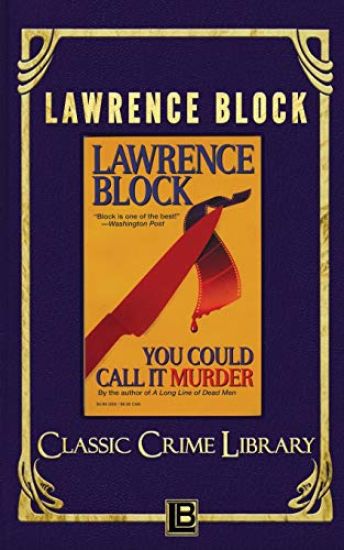
You Could Call It Murder

You Could Call It Murder

Lawrence Block

LB Productions
2019
pokkari
In 1961, Lawrence Block was living in New York and earning a living writing Midcentury Erotica and crime fiction. He'd just sold his first book under his own name, Grifter's Game, to Gold Medal Books. (They insisted on calling it Mona, but the original title's been restored by Hard Case Crime.) His agent got him an assignment to write a tie-in paperback novel for Belmont Books, linked to the TV series Markham, starring Ray Milland. The book turned out well, and the young writer's agent felt it was too good to be a Belmont tie-in. Knox Burger agreed, and Block changed the name of the hero from Roy Markham to Ed London, and Gold Medal published the book as Death Pulls a Doublecross. (Another unfortunate title; you'll find the book in the Classic Crime Library with the author's original title, Coward's Kiss.) But that left Block owing Belmont a book. You Could Call It Murder is what he wrote for them, and it turned out fairly nicely as well, but his agent sent it to Belmont all the same, where they published it as Markham: The Case of the Pornographic Photos. (By the time it came out--surprise surprise--the TV series was canceled.)
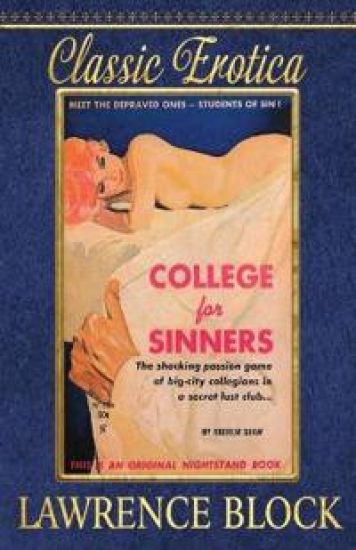
College for Sinners

College for Sinners

Lawrence Block

LB Productions
2019
pokkari
From the author: As far as I'm concerned, the most striking aspect of COLLEGE FOR SINNERS is that it seems to have been the occasion for some unwitting plagiarism on my part. The dramatist Moliere has a character who's astonished, and not half-chuffed, to discover that all his life he's been speaking prose. Well, I'm every bit as surprised by this revelation, if less delighted with myself for it. Here's the story: Not too long ago some idle surfing, possibly prompted by a Talkwalker alert, led me to a site on which a blogger took me to task for having plagiarized CAMPUS LOVE CLUB, by David Challon. The novel he names was published in 1959, a year before COLLEGE FOR SINNERS, and evidently told much the same story; it too was set at Columbia, called Metropolitan University in Challon's novel. And there's a horny young innocent like our David Forrester, and a suave upperclassman, and a club of undergraduate perverts in training. And, duh, one thing leads to another. Now in the ordinary course of things I'd have written this off as coincidence, and a fairly commonplace coincidence at that. But here's the thing--I happen to know that I actually did read CAMPUS LOVE CLUB. I remember the byline, David Challon, and remember having learned that the actual author was the prolific and talented Robert Silverberg. I recall reading it, and I recall thinking that it was good of its kind, and then from that day to this I don't believe I ever gave it another thought. The book I read was published by Bee-Line Books, and the fifty cents I paid for it was more than its author ever saw from the bastards; a bit of surfing shows that Bee-Line failed to pay Silverberg for it, and so a couple of years later he sold it to Midwood, where it was published under another of his pen names, Loren Beauchamp. In the interim COLLEGE FOR SINNERS was published by Nightstand Books under my pen name, Andrew Shaw. If I thought I was plagiarizing anyone, it was neither Mr. Challon nor Mr. Silverberg. (Mr. Beauchamp was not yet in the picture.) My conscious model for COLLEGE FOR SINNERS, to the limited extent that I had one, was an earlier book called HIGH SCHOOL SEX CLUB. . .by a chap who was calling himself Andrew Shaw. Indeed. Decades after all of this happened, Bob Silverberg and I finally met and became friends, and in fact presented a joint program at a Bay Area library in 2011, talking about our early days of laboring in the Midwood/Nightstand vineyard. (And a wonderful evening it turned out to be. Go to YouTube, search for "Lawrence Block Robert Silverberg Lust Lords"--and enjoy.) Did I steal anything from Bob's book? Not consciously, certainly. It was natural enough for me to pick Columbia as a setting, as I'd spent a semester taking courses at that institution's School of General Studies during my year at Scott Meredith. Beyond that, I never deliberately followed any plotline, my own or another's, when I was writing one of these books. I wrote a chapter, and whatever happened in it led me to the next chapter, and so on. Which, now that I think about it, is pretty much the way I've led my life. Is that enough about COLLEGE FOR SINNERS? I think it had better be. . .
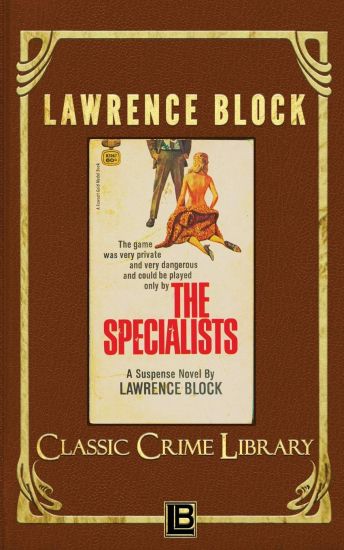
The Specialists

The Specialists

Lawrence Block

LB Productions
2019
pokkari
"The colonel was right. You had to draw a line through mankind, a wavy line but a line, and on one side you had Good and on the other side you had Evil. There was good and bad in everyone, sure, and every shitheel was some mother's son, and it was all well and good to know this, but when push came to shove, it was just words; there was Good and Evil with no shades of gray and Judgment Day came seven time a week." Meet the Specialists, five good men, Manso and Murdock and Simmons and Giordano and Dehn. They scattered when they took off their green berets and returned to civilian life, but now and then their colonel picks up the phone and gets in touch--and they get together to do as they did in Vietnam. Colonel Roger Elliott Cross left a leg in Vietnam. His men came home physically intact, but each bears scars nonetheless. But when they come together, teamed up to right wrongs, they are a powerful force for good. And, by doing good, they also manage to do well. Because when five specialists take on a Mafia-owned bank, why shouldn't they turn profit on the deal? If you saw The A-Team on television, this may seem familiar to you. When Lawrence Block saw the A-Team, it seems uncannily familiar to him, and he had the feeling the show's producers had read his 1968 novel. But he decided, wisely or not, that life is too short for litigation. Now, years later, the TV show has vanished and the book lives on. Isn't that as it should be?
A Woman Must Love

A Woman Must Love

Lawrence Block

LB Productions
2019
pokkari
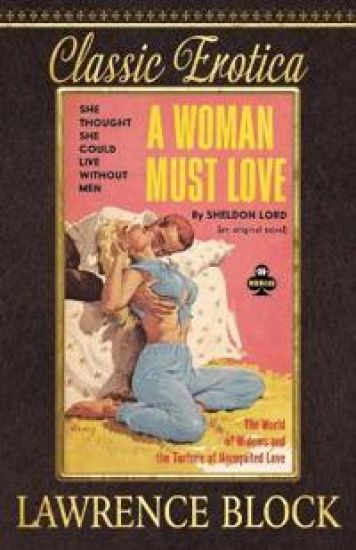
From the author: A WOMAN MUST LOVE is #12 in the Collection of Classic Erotica, and it's never been reissued since Midwood brought it out in 1960. Consequently I've just read it for the first time since I wrote it some 57 years ago. I remember the circumstances of writing it. I was living in Buffalo, at 422 Starin Avenue, in the house where I grew up. Besides writing, I was co-proprietor of a coffee house and non-alcoholic nightclub called The Jazz Center. (We hosted some decent musicians. Trumpeter Sammy Noto, who'd quit Stan Kenton's band because he didn't like living on the road, led one combo that played our joint with some frequency. Another band was fronted by a dude known alternately as Tommy Green, Tommy Mundy, and Ahmed Khan; his specialty was bongos and bullshit, but he had some good musicians working for him. One night Percy Heath of the Modern Jazz Quartet came by late, sat in with our guys, and played a twenty-minute bass solo that I wish I could hear again. That part was nice, but we never took a dime out of the place, and after I sold my interest to my partner, an old Trotskyite named Frank St. George, he wound up making the musicians partners so he wouldn't have to pay them. After he was forced to close down, Frank went on to have a distinguished career as a Buffalo restauranteur.) See, that much I remember. And I remember my writing schedule at the time. I would be at the club, or out on the town with the unfortunate young woman destined to become the first Mrs. Block. Then I'd get home, and I'd have a cup of coffee with my night owl mother before she went to bed around midnight. Then I'd write until dawn, when I'd have breakfast with my early-rising father. And then I'd go to bed and sleep until it was time to get up and do it all over again. As for the novel itself, A WOMAN MUST LOVE, I can't say I remembered much. It's set in Buffalo, in the very neighborhood in which it was written, and I hadn't even recalled that about the book until I read it on my Kindle. I vaguely remembered that there was a book in which I'd given all the characters English and Irish counties as surnames, and this seems to be the book. Aside from those two elements, I felt like the old boy in the assisted-living center, meeting new people every day. I was surprised to be reading less the erotic romp the Midwood and Nightstand books tended to be than an out-and-out romance novel. Barbara, a young widow, has vowed to be true to her husband's memory (even though he'd wished otherwise). She's courted, and she has a couple of adventures, and there's a certain amount of coupling in the book of one sort or another, but the damn thing's a romance, and I have to wonder how I came to write it. It would have been about a year later that my own father died--suddenly, of an aortic aneurysm. In the years that followed I might well have gone through some sort of Hamlet/Oedipus crap when my mother resumed dating, though I can't recall much in the way of conflicted feelings. But the book was way earlier, and where the story came from I have no idea. Well, never mind. I hope you'll find things to enjoy in Barbara's story--not least of all Paul Rader's cover art. Long after I'd forgotten the words I wrote, I remembered those vivid pastels.
Of Shame and Joy

Of Shame and Joy

Lawrence Block

LB Productions
2019
pokkari
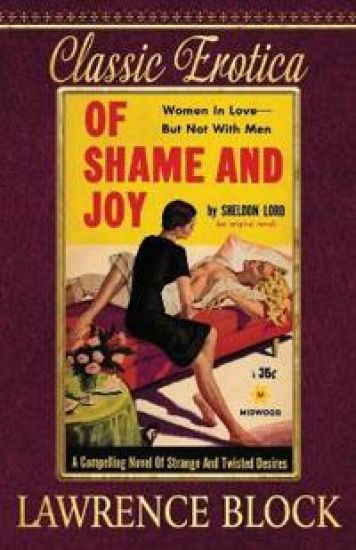
From the author: O Rose thou art sick. / The invisible worm, /That flies in the night / In the howling storm: /Has found out thy bed / Of crimson joy: /And his dark secret love / Does thy life destroy. Those eight lines constitute the complete text of "The Sick Rose," published by William Blake in Songs of Experience in 1794. I took to Blake early on, and thought Of Crimson Joy would make a dandy title. I accordingly fastened it on this novel when I sent the manuscript to Harry Shorten at Midwood. Someone there changed the title to Of Shame and Joy, and while I was a tad annoyed at the time, I have to say they made the right call. Of Shame and Joy's not only a better title, it's a damn good one. I remember where and when I wrote the book, although I can't say I recall much of the writing, or indeed of the book itself. It would have been in the late summer or fall of 1959. I'd gone to New York in July, settling in at the Hotel Rio on West 47th Street, planning to stay there until it was time to return to Antioch College for my final year. What I soon learned was that I'd already had my final year at Antioch, at least as far as the school was concerned. I'd written Campus Tramp, my first book as Andrew Shaw, just before they informed me of this decision, and then I went to work on something else, and a bad morning led me to pack a bag and move back to my parents' home at 422 Starin Avenue in Buffalo. ("A bad morning." Is that unnecessarily cryptic? Think of the opening scene in After the First Death, but without the dead hooker on the floor. That's the kind of morning it was, and it led me to conclude that New York Wasn't Working Out, and that maybe I'd do better back in Buffalo.)And, back in Buffalo, I set up my typewriter on the little maple desk on which I'd written Strange are the Ways of Love and Carla, and resumed writing books for Harry Shorten at Midwood, --and for Bill Hamling at Nightstand, who'd liked Campus Tramp enough to want more. For the next eight months or so I wrote books on that desk. My routine was an interesting one; I'd join my mother at the kitchen table for a cup of coffee around midnight, then write all night, then have breakfast with my dad around seven--and then go to bed. It worked for me, and I found things to do with the rest of my time; notably, I bought a partnership in a coffeehouse, The Jazz Center, and began keeping company with the woman whose ill fortune it would be to become my first wife. And how did OF SHAME AND JOY fit into all this? Well, the Provincetown setting came from a two-day trip while I was living at the Rio. This girl whom I knew vaguely was going there, and I decided to join her. I remember we took a Greyhound bus, and that her name either was or wasn't Suzy. (But then that's true of almost everyone, isn't it?) We went to P'town, and she had friends there, and I didn't, and I wandered around for an evening and slept on somebody's couch and went back to New York by myself in the morning. I never saw Suzy again, so for all I know she's still there, though it strikes me as doubtful. Of Shame and Joy has never been republished since its appearance as a Midwood Book, and I'm glad to be able to bring it out again--not least of all for the opportunity to use the wonderful Paul Rader cover. Isn't it gorgeous?
Passport to Peril

Passport to Peril

Lawrence Block

LB Productions
2019
pokkari
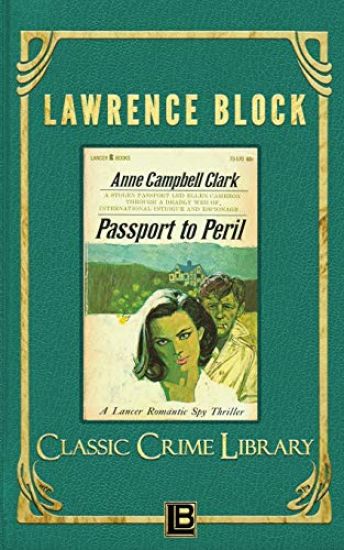
A thriller loaded with international intrigue from mystery master Lawrence Block. Struggling folksinger Ellen Cameron can't believe her luck. Not only is the State Department sponsoring her trip to West Berlin, but her agent has arranged for her to tour Ireland. It's just the break she needs. And better yet, she's meeting the friendliest and most interesting people on her trip, from a kind priest on the plane to a handsome American studying abroad. But things - and people - aren't always what they seem, and her European adventure could turn out to be the type of international affair she never imagined. LB says: "This book was originally published by Lancer Books under the pen name Anne Campbell Clarke, a pseudonym I never used before or since. I'd been engaged to write a romantic espionage novel in the tradition of Helen MacInnes, and chose Ireland as a setting, being familiar with the countryside and with the folk music. I had a good time writing it, but of course that's no guarantee you'll have a good time reading it. But I certainly hope you do."
Strange Embrace

Strange Embrace

Lawrence Block

LB Productions
2019
pokkari
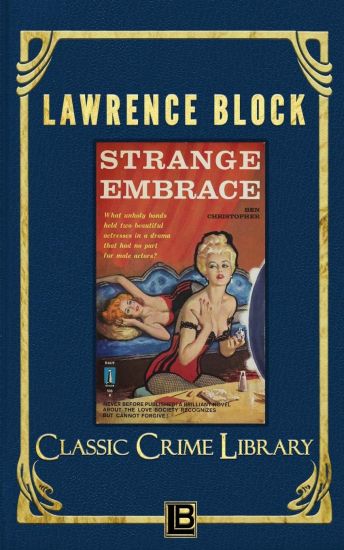
I was in New York, newly married, living at 110 West 69th Street. I was writing short stories for crime fiction magazines, erotic novels for Midwood and Nightstand, and fielding assignments that my agent steered in my direction. Two of these were from paperback publishers who had acquired the book rights to a TV drama and wanted to hire someone to write a book. First up for me was a show called Markham, which starred Ray Milland. Belmont was to be the publisher, and I had to write the damn book twice. My first effort turned out to be too good to waste its fragrance on Belmont's desert air, and my agent had me change the title and the names of the characters and sold the thing to Gold Medal. So I had to write it again, and I did, and they liked it okay and published it. Next up was Beacon Books, with "Johnny Midnight" as both the book's inspiration and its title. I wrote it, but by the time Beacon was preparing it for publication, the series had been canceled. The publisher saw no reason to pay a licensing fee for a moribund show, and accordingly changed names: Johnny Midnight became Johnny Lane, and his trusty servant morphed from Uki to Ito. And Lawrence Block became Ben Christopher for the occasion. I don't know what kept me from using my own name, the book was crime fiction rather than the erotica that seemed to call for a pen name, but I do remember that my great friend Donald E. Westlake had recently done some sort of tie-in novel and hung the name Ben Christopher on it, telling me it would be his pen name for tie-ins he was anxious to forget. I horned in on the name, and if Don found this irksome he kept it to himself. Someone at Beacon picked the title. STRANGE EMBRACE. Well, there's a lesbian element in the book, and I guess they wanted to play it up, and "strange" was a useful code word toward that end. I could call it something else now that I'm republishing it as part of my Classic Crime Library, but it's had enough transformations over the years. Ray Milland I should add, had no better luck than Edmund O'Brien; his show Markham was canceled after a single season. Belmont evidently didn't get the news in time to act on it, and they dutifully published the book as Markham: The Case of the Pornographic Photos. When I okayed a reissue years later by another publisher I changed the title to You Could Call It Murder--and it's available now with that title, in paperback or ebook, as Classic Crime Library #12. (And the book it was written to replace, which Gold Medal called Death Pulls a Doublecross, is now #13 in the Classic Crime Library with my original title restored: Coward's Kiss.)
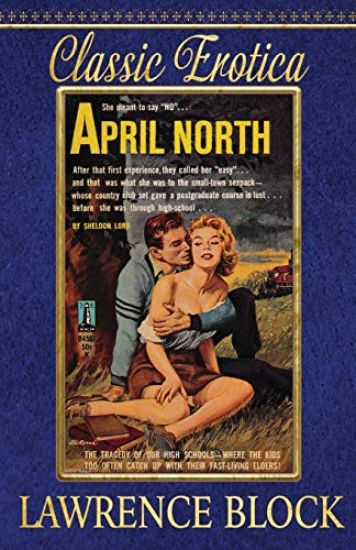
April North

April North

Lawrence Block

LB Productions
2019
pokkari
THOSE BOYS AND THEIR CARS... Danny Duncan drives his father's Oldsmobile. It's a nice respectable family sedan, and April North is every bit as respectable as the car. Until he manages to get her into the back seat. Now she's no longer a good girl, but only Danny know it, and he can keep a secret, can't he? Well, no. He tells half the town of Antrim, Ohio--the male half, and they all come sniffing around, led by Bill Piersall, driving a homemade hot rod cobbled together from spare parts and held together with spit and baling wire. She gives Bill what he wants, but he turns out to be harder to shake than a summer cold, until a Mercedes 300 SL screeches to a stop, with Craig Jeffers at the wheel. He has money and class and sophistication, and just about everything but a functioning moral compass. And, you know, things happen... From the author... April North, April North. A friend of mine thought enough of Mae West to write a book with a heroine he called June East, and I gave the compass and the calendar a further spin. Thus April North, and the name does have a certain lilt to it, doesn't it? Beacon Books thought so, evidently; this was Sheldon Lord's first book for them, and they liked the title enough to keep it, and the reading public liked the book enough to spark a second and third printing. None of this did much for the author, who got a flat fee of $600 for the book. Or maybe it was $750. It's hard to remember, after all these years...
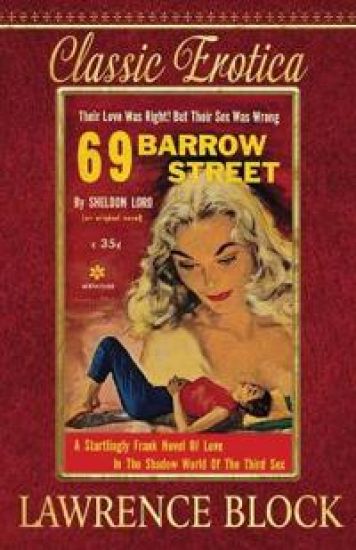
69 Barrow Street

69 Barrow Street

Lawrence Block

LB Productions
2019
pokkari
From the author: While my first visit to New York was with my father in 1948, it wasn't until the summer of 1956 that I actually lived in the city. I'd completed my first year at Antioch College and was to spend August through October in the mailroom at Pines Publications on East 40th Street. (They had a paperback line--Popular Library--and a string of magazines, ranging from surviving pulps like Ranch Romances to movie magazines and a Readers Digest imitation.) I'd arranged to room with two other Antiochians, Paul Grillo and Fred Anliot, and we spent the first week on the top floor at 147 W 14th, the second on the ground floor at 108 W 12th (that building's gone now), and then found a first-floor one-bedroom apartment at 54 Barrow Street, where we stayed through October before passing the place on to another Antioch contingent. It was a wonderful apartment in a perfect location, and for a while it was where the folksinger crowd assembled on Sunday evenings after the singing in Washington Square shut down for the night. (Then the crowd outgrew the space, and moved to somebody's loft on Spring Street.) It was in the kitchen at 54 Barrow Street that I wrote the first story I ever sold, published in Manhunt as You Can't Lose. A year later I was back in New York; I'd found an editorial job at a literary agency and liked it it enough to drop out of school to keep it. I shared an apartment at the Hotel Alexandria on West 103rd Street with Bob Aronson until the Army took him, at which time the hotel let me move to a single room a few floors below. While I lived on 103rd, I spent most of my time in the Village. By the fall of 1958 I was back at Antioch, more focused on writing than classwork. I'd begun selling magazine stories whileI was at the literary agency, and began writing novels once I'd left, and Harry Shorten was eager to publish them at his new venture, Midwood Tower Books. My third book for Harry, following CARLA and A STRANGE KIND OF LIVE, was 69 BARROW STREET. I'd had the idea of a novel set at a multiple dwelling--in this case, a Village brownstone--with the characters interacting and living their lives. One model for it would have been 79 PARK AVENUE, an early work of Harold Robbins, when A STONE FOR DANNY FISHER let the world take him seriously as a writer of American realistic fiction. (Then he wrote THE CARPETBAGGERS, and that was the end of that.) I decided--nudge nudge, wink wink--that 69 BARROW STREET would be an appropriately suggestive title. Jesus, 54 Barrow Street. Fred Alliot and Bob Aronson, both of whom I'd run into now and then over the years, are gone now. Paul Grillo and I lost touch with each other fifty-plus years ago... Years and years later, I found out that 69 PARK AVENUE had been Harold Robbins' original title. His publishers made him change it. My publishers had no such compunctions, and 69 BARROW STREET it was and shall remain. And now it's back in print, and graced once again by Paul Rader's magnificent cover art.