Kirjojen hintavertailu – 12 903 725 kirjaa ja 27 kauppaa

Kirjailija

Lawrence Keppie

Kirjat ja teokset yhdessä paikassa: 11 kirjaa, julkaisuja vuosilta 1975–2025, suosituimpiin kuuluu The Antonine Wall. Vertaile teosten hintoja ja tarkista saatavuus suomalaisista kirjakaupoista.

11 kirjaa

Kirjojen julkaisuvuodet: 1975–2025.

The Legacy of Rome

The Legacy of Rome

Lawrence Keppie

Origin
2025
nidottu
As an outpost of empire, Scotland played a significant, if unusual, role in the Roman world. The south and east were occupied intermittently from AD 79 to the early third century, while the north and west remained outside Roman control, though certainly not beyond its influence. The conquest was therefore incomplete in Scotland, and military occupation was not followed up by a period of peaceful development; no towns were built, and surviving remains are of camps and forts for the most part. Despite this, the Romans left an important imprint on Scotland. Much documentary evidence sheds light on the native population and archaeological research has led to detailed understanding of the range and distribution of the forts and other sites, and aerial photography has made possible a number of discoveries, filled gaps in our knowledge and opened up new avenues of enquiry. In this revised edition of his highly praised book, originally published as Scotland's Roman Remains, Lawrence Keppie sets out the various stages of Roman occupation in their historical context and shows how literary and archaeological evidence can be used to build up a picture of the Roman period. It incorporates a large amount of new material based on recent discoveries and research, making it one of the best guides to Roman Scotland available.
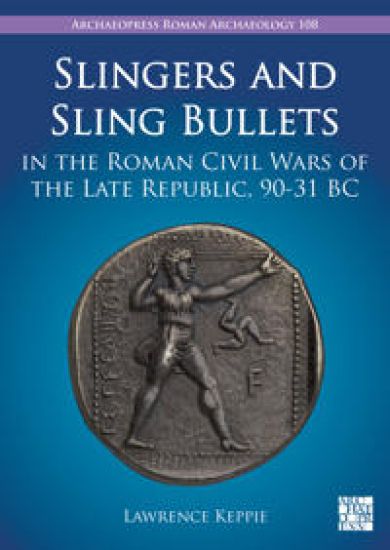
Slingers and Sling Bullets in the Roman Civil Wars of the Late Republic, 90-31 BC
Slingers were an element in the Roman army over many centuries. Their activities are frequently reported in literary accounts of battles and sieges during the civil wars of the Late Republic. Sling bullets, in stone, clay and lead, have been found at many scenes of conflict. Lead bullets often bear brief inscriptions addressed to the recipients, naming military units, their commanders and centurions; others carry sexual insults. This is an ever-expanding body of ancient evidence. Yet some books on the Roman army scarcely mention slingers. This monograph seeks to redress the balance and draws attention to their role and effectiveness. It covers the period between the Social War of 90-89 BC and the close of the civil wars at the battle of Actium in 31 BC, encompassing the campaigns of Julius Caesar in Gaul between 58 and 50 BC, including his expeditions to Britain, the wars between Caesar and Pompey the Great (and his sons) in 49-45 BC, and between Caesar’s heirs and successors in 44-31 BC, including Mark Antony and the future emperor Augustus.
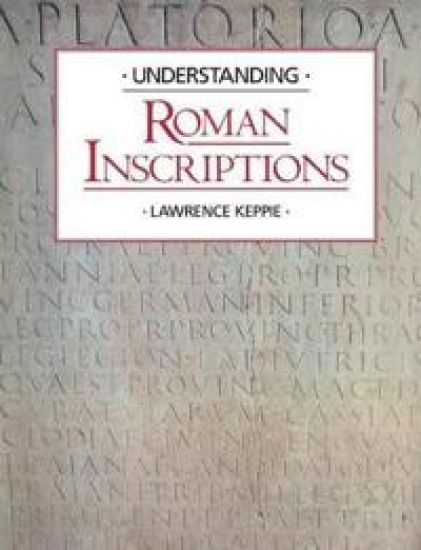
Understanding Roman Inscriptions

Understanding Roman Inscriptions

Lawrence Keppie

Routledge
2016
sidottu
Lawrence Keppie's book offers the non-specialist a comprehensive and enjoyable guide to undestanding the texts of Roman inscriptions, as well as explaining the numerous different contexts in which they were produced. Every area of Roman life is covered, including: * the emperor * temples and altars to the gods * imperial administration * gravestones and tomb monuments * local government and society * the army and the frontiers * Christianity * trade, commerce and the economy * the later Roman Empire. For each inscription cited, the book provides the original Latin, an English translation and a commentary on the piece's significance. Illustrated with more than 80 photos and drawings, this is the ideal introduction to the most important source for the history and organisation of the Roman Empire.
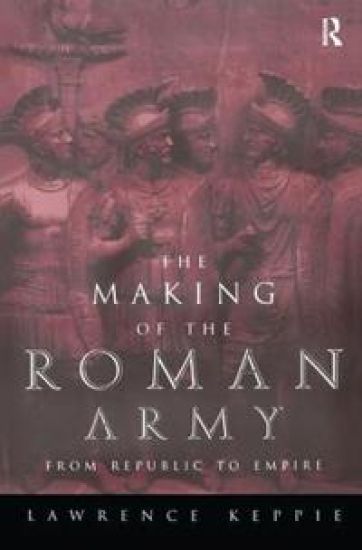
The Making of the Roman Army

The Making of the Roman Army

Lawrence Keppie

Routledge
2015
sidottu
In this new edition, with a new preface and an updated bibliography, the author provides a comprehensive and well-documented survey of the evolution and growth of the remarkable military enterprise of the Roman army. Lawrence Keppie overcomes the traditional dichotomy between the historical view of the Republic and the archaeological approach to the Empire by examining archaeological evidence from the earlier years. The arguments of The Making of the Roman Army are clearly illustrated with specially prepared maps and diagrams and photographs of Republican monuments and coins.
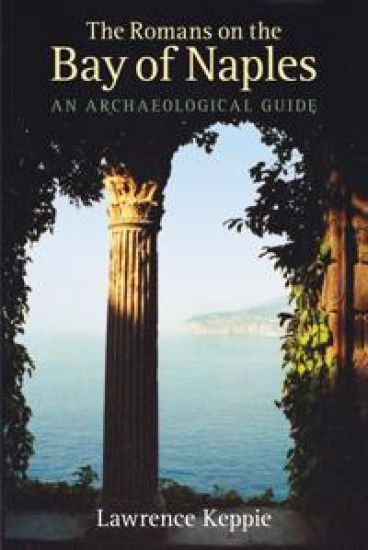
The Romans on the Bay of Naples

The Romans on the Bay of Naples

Lawrence Keppie

The History Press Ltd
2009
nidottu
Roman towns and villas on the Bay of Naples are among the best know to the modern public, largely because some, including Pompeii and Herculaneum, were buried under ash, pumice and mud, when nearby Vesuvius erupted in AD 79, preserving them for our benefit. Before modern development the Romans would have seen these places in a system of towns and countryside. Our knowledge of this area is continually being added to by new discoveries, excavation and research. This book offers an up-to-date description of the remains, how they were used in Roman times and a guide to visiting them. It covers not only the better known sites of Pompeii and Herculaneum, but also the other Roman remains in the area which were much more important, including Puteoli (modern Pozzuoli) and Naples itself. This book will appeal to enthusiasts, tourists and students alike.
William Hunter and the Hunterian Museum in Glasgow, 1807-2007

William Hunter and the Hunterian Museum in Glasgow, 1807-2007

Lawrence Keppie

Edinburgh University Press
2007
nidottu
This book describes the life and achievements of the eighteenth-century Scottish physician William Hunter and outlines the history of the Museum named after him. William Hunter built up a wide-ranging private collection at his home in London, encompassing not only anatomical and pathological specimens related to his medical work, but also books and manuscripts, coins and medals, natural history specimens and artworks. On his death in 1783 he bequeathed the collection to the University of Glasgow where he had long ago been a student, and money to construct a Museum which opened in 1807. The book utilises a wide range of source material, much of it previously unpublished, to tell the story of the Museum's development, the many subsequent additions to its holdings and, more recently, the construction of a new Hunterian Art Gallery which houses not only Hunter's own collection but also numerous works be James McNeill Whistler and Charles Rennie Mackintosh. The Museum is celebrating its bicentenary in 2007. There is a foreward contributed by Sir Kenneth Calman, Chancellor of the University of Glasgow, and formerly Government Chief Medical Officer and Vice-Chancellor of the University of Durham
The Making of the Roman Army

The Making of the Roman Army

Lawrence Keppie

Routledge
1998
nidottu
In this new edition, with a new preface and an updated bibliography, the author provides a comprehensive and well-documented survey of the evolution and growth of the remarkable military enterprise of the Roman army. Lawrence Keppie overcomes the traditional dichotomy between the historical view of the Republic and the archaeological approach to the Empire by examining archaeological evidence from the earlier years. The arguments of The Making of the Roman Army are clearly illustrated with specially prepared maps and diagrams and photographs of Republican monuments and coins.
Understanding Roman Inscriptions

Understanding Roman Inscriptions

Lawrence Keppie

Routledge
1991
nidottu
Lawrence Keppie's book offers the non-specialist a comprehensive and enjoyable guide to undestanding the texts of Roman inscriptions, as well as explaining the numerous different contexts in which they were produced. Every area of Roman life is covered, including: * the emperor * temples and altars to the gods * imperial administration * gravestones and tomb monuments * local government and society * the army and the frontiers * Christianity * trade, commerce and the economy * the later Roman Empire. For each inscription cited, the book provides the original Latin, an English translation and a commentary on the piece's significance. Illustrated with more than 80 photos and drawings, this is the ideal introduction to the most important source for the history and organisation of the Roman Empire.