Kirjojen hintavertailu – 12 903 724 kirjaa ja 27 kauppaa

Kirjailija

Lawrence M Principe

Kirjat ja teokset yhdessä paikassa: 13 kirjaa, julkaisuja vuosilta 2001–2026, suosituimpiin kuuluu The Book of the Light of the Great Magistery of John of Rupescissa (Liber lucis magisterii magni). Vertaile teosten hintoja ja tarkista saatavuus suomalaisista kirjakaupoista.

Nimi esiintyy myös muodoissa: Lawrence M. Principe

13 kirjaa

Kirjojen julkaisuvuodet: 2001–2026.

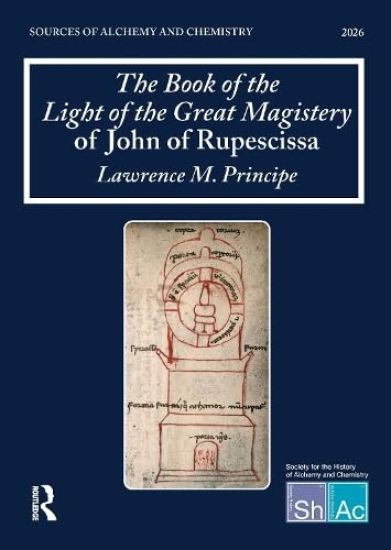
The Book of the Light of the Great Magistery of John of Rupescissa (Liber lucis magisterii magni)
Convinced that the antichrist was “at our gates,” the Franciscan friar, alchemist, and prophet John of Rupescissa (ca. 1310-1366) wrote the Book of Light of the Great Magistery to help his future brethren restore a devastated Christendom. Written in 1354, this text provides a detailed process for making the philosophers’ stone, the substance able to transmute base metals easily into gold and silver. With this manufactured gold and silver, the true Franciscans, the “poor men of the Gospel,” could rebuild the Church and help usher in an era of peace and prosperity. This volume presents the first critical edition, modern English translation, and focussed study of John’s Book of Light. Based on over one hundred surviving manuscripts, many recently discovered, this critical edition restores substantial original text that was omitted from the printed editions and corrects longstanding textual errors. In the accompanying study, Principe explores John’s sources and ideas, especially his striking theories of matter and material change, and follows the transmission, reception, vernacularization, and multiple modifications of John’s text as readers engaged with it over the next three centuries. Modern laboratory reworkings, fully illustrated and explained, go hand-in-hand with the textual analyses, providing a vivid picture of the friar’s practices and observational skills and deeper understanding of his text. John of Rupescissa stands revealed as an innovative theorist and observant practitioner; he was not an “armchair” alchemist whose knowledge came only from textual sources. The clear evidence of his practice presented here provokes in turn a close reevaluation of the conditions of his nearly twenty-year confinement at a papal prison in Avignon where he learned and practiced much of his alchemy before writing the Book of Light. Historians of science and technology, medievalists, book historians, manuscript scholars, and many others will find new and important information in this third volume of the series Sources of Alchemy and Chemistry.
The Book of the Light of the Great Magistery of John of Rupescissa (Liber lucis magisterii magni)
Convinced that the antichrist was “at our gates,” the Franciscan friar, alchemist, and prophet John of Rupescissa (ca. 1310-1366) wrote the Book of Light of the Great Magistery to help his future brethren restore a devastated Christendom. Written in 1354, this text provides a detailed process for making the philosophers’ stone, the substance able to transmute base metals easily into gold and silver. With this manufactured gold and silver, the true Franciscans, the “poor men of the Gospel,” could rebuild the Church and help usher in an era of peace and prosperity. This volume presents the first critical edition, modern English translation, and focussed study of John’s Book of Light. Based on over one hundred surviving manuscripts, many recently discovered, this critical edition restores substantial original text that was omitted from the printed editions and corrects longstanding textual errors. In the accompanying study, Principe explores John’s sources and ideas, especially his striking theories of matter and material change, and follows the transmission, reception, vernacularization, and multiple modifications of John’s text as readers engaged with it over the next three centuries. Modern laboratory reworkings, fully illustrated and explained, go hand-in-hand with the textual analyses, providing a vivid picture of the friar’s practices and observational skills and deeper understanding of his text. John of Rupescissa stands revealed as an innovative theorist and observant practitioner; he was not an “armchair” alchemist whose knowledge came only from textual sources. The clear evidence of his practice presented here provokes in turn a close reevaluation of the conditions of his nearly twenty-year confinement at a papal prison in Avignon where he learned and practiced much of his alchemy before writing the Book of Light. Historians of science and technology, medievalists, book historians, manuscript scholars, and many others will find new and important information in this third volume of the series Sources of Alchemy and Chemistry.
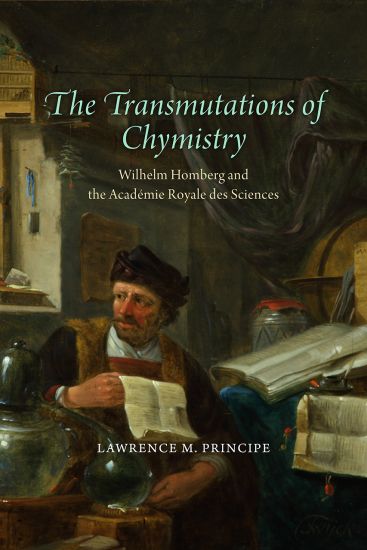
The Transmutations of Chymistry

The Transmutations of Chymistry

Lawrence M Principe

University of Chicago Press
2020
sidottu
This book reevaluates the changes to chemistry that took place from 1660 to 1730 through a close study of the chymist Wilhelm Homberg (1653-1715) and the changing fortunes of his discipline at the Academie Royale des Sciences, France's official scientific body. By charting Homberg's remarkable life from Java to France's royal court, and his endeavor to create a comprehensive theory of chymistry (including alchemical transmutation), Lawrence M. Principe reveals the period's significance and reassesses its place in the broader sweep of the history of science. Principe, the leading authority on the subject, recounts how Homberg's radical vision promoted chymistry as the most powerful and reliable means of understanding the natural world. Homberg's work at the Academie and in collaboration with the future regent, Philippe II d'Orleans, as revealed by a wealth of newly uncovered documents, provides surprising new insights onto the broader changes chymistry underwent during and immediately after Homberg. A human, disciplinary, and institutional biography, The Transmutations of Chymistry significantly revises what was previously known about the contours of chymistry and scientific institutions in the early eighteenth century.
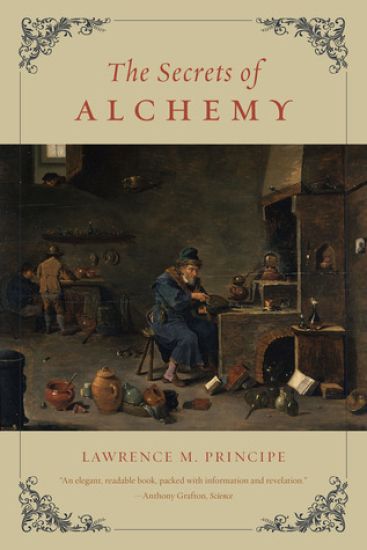
The Secrets of Alchemy

The Secrets of Alchemy

Lawrence M. Principe

University of Chicago Press
2015
nidottu

Halvin toimitettuna 28,40 €

In The Secrets of Alchemy, Lawrence M. Principe, one of the world's leading authorities on the subject, brings alchemy out of the shadows and restores it to its important place in human history and culture. By surveying what alchemy was and how it began, developed, and overlapped with a range of ideas and pursuits, Principe illuminates the practice. He vividly depicts the place of alchemy during its heyday in early modern Europe, and then explores how alchemy has fit into wider views of the cosmos and humanity, touching on its enduring place in literature, fine art, theater, and religion as well as its recent acceptance as a serious subject of study for historians of science. In addition, he introduces the reader to some of the most fascinating alchemists, such as Zosimos and Basil Valentine, whose lives dot alchemy's long reign from the third century down to the present day. Through his exploration of alchemists and their times, Principe pieces together closely guarded clues from obscure and fragmented texts to reveal alchemy's secrets, and - most exciting for budding alchemists - uses them to recreate many of the most famous recipes in his lab, including those for the "glass of antimony" and "philosophers' tree." This unique approach brings the reader closer to the actual work of alchemy than any other book.
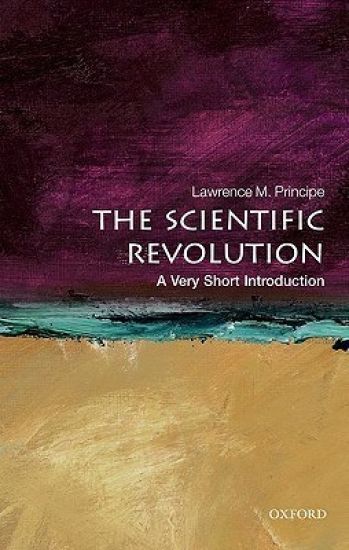
The Scientific Revolution

The Scientific Revolution

Lawrence M. Principe

Oxford University Press
2011
nidottu

Halvin toimitettuna 18,90 €

The sixteenth and seventeenth centuries witnessed such fervent investigations of the natural world that the period has been called the 'Scientific Revolution.' New ideas and discoveries not only redefined what human beings believed, knew, and could do, but also forced them to redefine themselves with respect to the strange new worlds revealed by ships and scalpels, telescopes and microscopes, experimentation and contemplation. Driven by religious devotion, by practical need, by the promise of fame and profit, or by the simple desire to know, a broad range of thinkers and workers explored and reconceptualized the world around them. Explanatory systems were made, discarded, and remade by some of the best-known names in the entire history of science - Copernicus, Galileo, Newton - and by many others less recognized but no less important. In this Very Short Introduction Lawrence M. Principe explores the exciting developments in the sciences of the stars (astronomy, astrology, and cosmology), the sciences of earth (geography, geology, hydraulics, pneumatics), the sciences of matter and motion (alchemy, chemistry, kinematics, physics), the sciences of life (medicine, anatomy, biology, zoology), and much more. The story is told from the perspective of the historical characters themselves, emphasizing their background, context, reasoning, and motivations, and dispelling well-worn myths about the history of science. ABOUT THE SERIES: The Very Short Introductions series from Oxford University Press contains hundreds of titles in almost every subject area. These pocket-sized books are the perfect way to get ahead in a new subject quickly. Our expert authors combine facts, analysis, perspective, new ideas, and enthusiasm to make interesting and challenging topics highly readable.
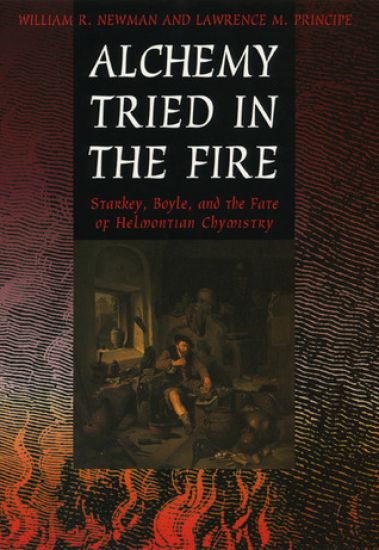
Alchemy Tried in the Fire

Alchemy Tried in the Fire

William R. Newman; Lawrence M. Principe

University of Chicago Press
2005
nidottu
Using the previously misunderstood interactions between Robert Boyle, widely known as "the father of chemistry," and George Starkey, an alchemist and the most prominent American scientific writer before Benjamin Franklin, as their guide, William R. Newman and Lawrence M. Principle reveal the hitherto hidden operations of Starkey's laboratory and argue that many of the principles and practices characteristic of modern chemistry derive from alchemy. By analyzing Starkey's extraordinary laboratory notebooks, the authors show how this American "chymist" translated the wildly figurative writings of traditional alchemy into quantitative, carefully reasoned laboratory practice - and then encoded his own work in allegorical, secretive treatises under the name of Eirenaeus Philalethes. A common emphasis on quantification, material production, and analysis/synthesis, the authors argue, illustrates a continuity of goals and practices from late medieval alchemy down to and beyond the Chemical Revolution.
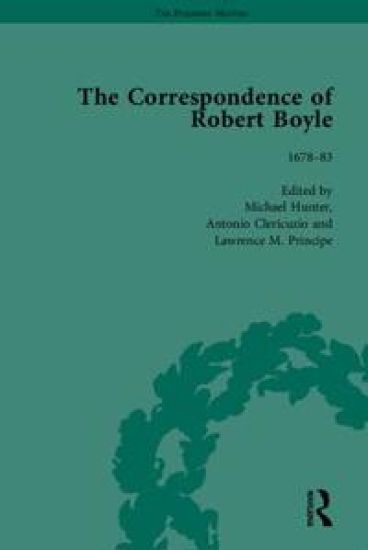
The Correspondence of Robert Boyle, 1636-1691

The Correspondence of Robert Boyle, 1636-1691

Lawrence M Principe

Pickering Chatto (Publishers) Ltd
2001
muu
Robert Boyle (1627-1691) was one of the most influential scientific and theological thinkers of his time. This is the first edition of his correspondence, transcribed from the original manuscripts. It is fully annotated, with an introduction and general index and is a set of 6 volumes covering the period of 1636 to 1691
The Correspondence of Robert Boyle, 1636-1691 Vol 3

The Correspondence of Robert Boyle, 1636-1691 Vol 3

Michael Hunter; Antonio Clericuzio; Lawrence M Principe

Routledge
2001
sidottu
Robert Boyle (1627-1691) was one of the most influential scientific and theological thinkers of his time. This is the first edition of his correspondence, transcribed from the original manuscripts. It is fully annotated, with an introduction and general index. The four volumes cover the time periods of Volume 1: 1936-91, Volume 2: 1662-5, Volume 3: 1666-7 and finally Volume 4 1668 to 77.
The Correspondence of Robert Boyle, 1636-1691 Vol 6

The Correspondence of Robert Boyle, 1636-1691 Vol 6

Michael Hunter; Antonio Clericuzio; Lawrence M Principe

Routledge
2001
sidottu
Robert Boyle (1627-1691) was one of the most influential scientific and theological thinkers of his time. This is the first edition of his correspondence, transcribed from the original manuscripts. It is fully annotated, with an introduction and general index. Volume 6 covers the period of 1684–91.
The Correspondence of Robert Boyle, 1636-1691 Vol 4

The Correspondence of Robert Boyle, 1636-1691 Vol 4

Michael Hunter; Antonio Clericuzio; Lawrence M Principe

Routledge
2001
sidottu
Robert Boyle (1627-1691) was one of the most influential scientific and theological thinkers of his time. This is the first edition of his correspondence, transcribed from the original manuscripts. It is fully annotated, with an introduction and general index. The four volumes cover the time periods of Volume 1: 1936-91, Volume 2: 1662-5, Volume 3: 1666-7 and finally Volume 4 1668 to 77.
The Correspondence of Robert Boyle, 1636-1691 Vol 2

The Correspondence of Robert Boyle, 1636-1691 Vol 2

Michael Hunter; Antonio Clericuzio; Lawrence M Principe

Routledge
2001
sidottu
Robert Boyle (1627-1691) was one of the most influential scientific and theological thinkers of his time. This is the first edition of his correspondence, transcribed from the original manuscripts. It is fully annotated, with an introduction and general index. The four volumes cover the time periods of Volume 1: 1936-91, Volume 2: 1662-5, Volume 3: 1666-7 and finally Volume 4 1668 to 77.
The Correspondence of Robert Boyle, 1636–61 Vol 1

The Correspondence of Robert Boyle, 1636–61 Vol 1

Michael Hunter; Antonio Clericuzio; Lawrence M Principe

Routledge
2001
sidottu
Robert Boyle (1627-1691) was one of the most influential scientific and theological thinkers of his time. This is the first edition of his correspondence, transcribed from the original manuscripts. It is fully annotated, with an introduction and general index. The four volumes cover the time periods of Volume 1: 1936-91, Volume 2: 1662-5, Volume 3: 1666-7 and finally Volume 4 1668 to 77.