Kirjojen hintavertailu – 12 903 725 kirjaa ja 27 kauppaa
Kirjailija
Lawrence O. Gostin
Kirjat ja teokset yhdessä paikassa: 10 kirjaa, julkaisuja vuosilta 1996–2025, suosituimpiin kuuluu The Rights of People Who are HIV Positive. Vertaile teosten hintoja ja tarkista saatavuus suomalaisista kirjakaupoista.
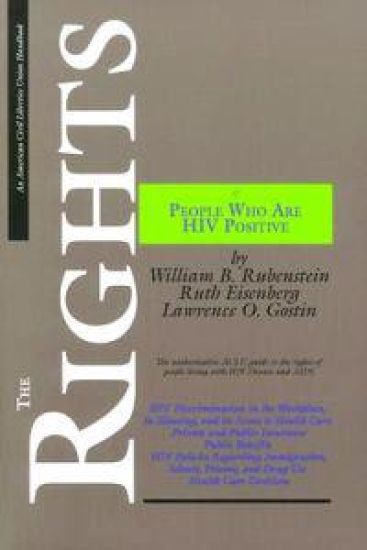
This work focuses on the day-to-day legal questions most likely to arise for people living with HIV and AIDS. It offers valuable advice and help to sufferers, their partners, families and friends. It also acts as a general technical advice to advocates and lawyers.
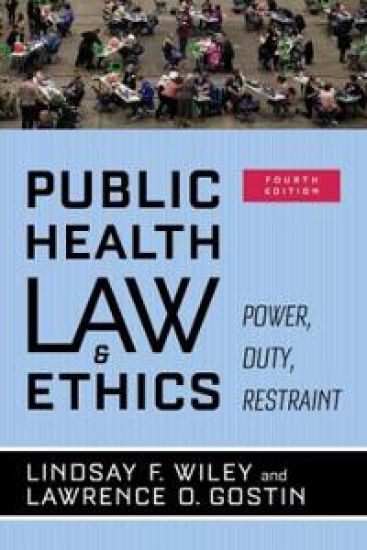
Public Health Law and Ethics defines these fields for a new generation. This bold and updated edition probes how the Covid-19 pandemic has fundamentally changed the legal landscape for public health practice. Through incisive analysis of public health legislation, judicial opinions, and scholarly research, this accessible primer articulates the scope and limits of governmental powers and duties to protect the public's health, builds a case for why social justice must be prioritized as a core value of public health ethics, examines the role of the courts in striking down democratically enacted laws, and covers today’s most pressing health issues, such as chronic diseases, opioid overdoses, gun violence, disability rights, sexual and reproductive autonomy, and racial and gender equity. The book creates a framework for ensuring public health interventions are based on sound scientific evidence and consistent with ethical values, revealing complex answers to the essential question of what community members owe one another when it comes to health.
With lessons learned from COVID-19, a world-leading expert on pandemic preparedness proposes a pragmatic plan urgently needed for the future of global health security. The COVID-19 pandemic revealed how unprepared the world was for such an event, as even the most sophisticated public health systems failed to cope. We must have far more investment and preparation, along with better detection, warning, and coordination within and across national boundaries. In an age of global pandemics, no country can achieve public health on its own. Health security planning is paramount. Lawrence O. Gostin has spent three decades designing resilient health systems and governance that take account of our interconnected world, as a close advisor to the Centers for Disease Control and Prevention (CDC), the World Health Organization (WHO), and many public health agencies globally. Global Health Security addresses the borderless dangers societies now face, including infectious diseases and bioterrorism, and examines the political, environmental, and socioeconomic factors exacerbating these threats. Weak governance, ineffective health systems, and lack of preparedness are key sources of risk, and all of them came to the fore during the COVID-19 crisis, even—sometimes especially—in wealthy countries like the United States. But the solution is not just to improve national health policy, which can only react after the threat is realized at home. Gostin further proposes robust international institutions, tools for effective cross-border risk communication and action, and research programs targeting the global dimension of public health. Creating these systems will require not only sustained financial investment but also shared values of cooperation, collective responsibility, and equity. Gostin has witnessed the triumph of these values in national and international forums and has a clear plan to tackle the challenges ahead. Global Health Security therefore offers pragmatic solutions that address the failures of the recent past, while looking toward what we know is coming. Nothing could be more important to the future health of nations.
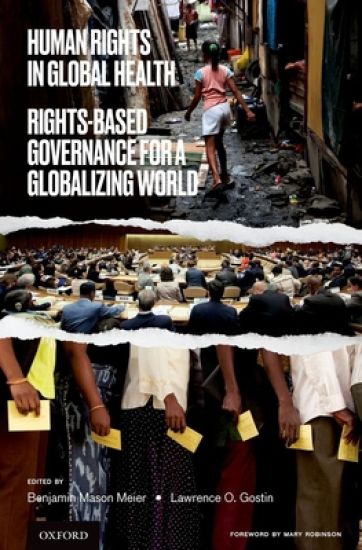
Institutions matter for the advancement of human rights in global health. Given the dramatic development of human rights under international law and the parallel proliferation of global institutions for public health, there arises an imperative to understand the implementation of human rights through global health governance. This volume examines the evolving relationship between human rights, global governance, and public health, studying an expansive set of health challenges through a multi-sectoral array of global organizations. To analyze the structural determinants of rights-based governance, the organizations in this volume include those international bureaucracies that implement human rights in ways that influence public health in a globalizing world. This volume brings together leading health and human rights scholars and practitioners from academia, non-governmental organizations, and the United Nations system. They explore the foundations of human rights as a normative framework for global health governance, the mandate of the World Health Organization to pursue a human rights-based approach to health, the role of inter-governmental organizations across a range of health-related human rights, the influence of rights-based economic governance on public health, and the focus on global health among institutions of human rights governance. Contributing chapters each map the distinct human rights efforts within a specific institution of global governance for health. Through the comparative institutional analysis in this volume, the contributing authors examine institutional dynamics to operationalize human rights in organizational policies, programs, and practices and assess institutional factors that facilitate or inhibit human rights mainstreaming for global health advancement.
Institutions matter for the advancement of human rights in global health. Given the dramatic development of human rights under international law and the parallel proliferation of global institutions for public health, there arises an imperative to understand the implementation of human rights through global health governance. This volume examines the evolving relationship between human rights, global governance, and public health, studying an expansive set of health challenges through a multi-sectoral array of global organizations. To analyze the structural determinants of rights-based governance, the organizations in this volume include those international bureaucracies that implement human rights in ways that influence public health in a globalizing world. This volume brings together leading health and human rights scholars and practitioners from academia, non-governmental organizations, and the United Nations system. They explore the foundations of human rights as a normative framework for global health governance, the mandate of the World Health Organization to pursue a human rights-based approach to health, the role of inter-governmental organizations across a range of health-related human rights, the influence of rights-based economic governance on public health, and the focus on global health among institutions of human rights governance. Contributing chapters each map the distinct human rights efforts within a specific institution of global governance for health. Through the comparative institutional analysis in this volume, the contributing authors examine institutional dynamics to operationalize human rights in organizational policies, programs, and practices and assess institutional factors that facilitate or inhibit human rights mainstreaming for global health advancement.
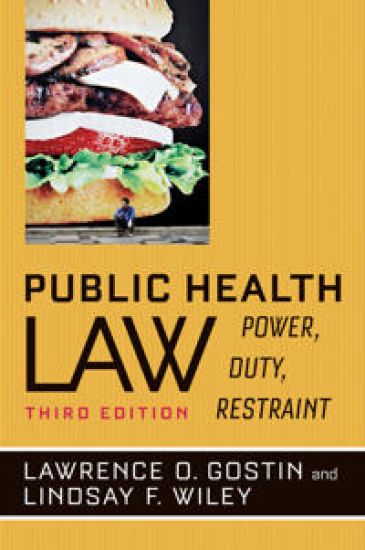
Lawrence O. Gostin's seminal Public Health Law is widely acclaimed as the definitive statement on public health law at the turn of the twenty-first century. In this bold third edition, Gostin is joined by Lindsay F. Wiley to analyze major health threats of our time such as chronic diseases, emerging infectious diseases, antimicrobial resistance, bioterrorism, natural disasters, opiod overdose, and gun violence. The authors draw on constitutional law, administrative law, local government law, and tort law to develop their conception of law as a tool for protecting the public's health. The book creates an intellectual framework for modern public health law and supports that framework with illustrations of the scientific, political, and ethical issues involved. In proposing innovative solutions for the future of the public's health, Gostin and Wiley's essential study provides a blueprint for public and political debates to come. New issues covered in this edition: corporate personhood rights raised in response to regulations of tobacco, food and beverages, alcohol, firearms, prescription drugs, and marijuana; local government authority to protect the public's health; deregulation and harm reduction as modes of public health law intervention; taxation, spending, and alteration of the socioeconomic environment as modes of public health law intervention; access to health care as a strategy for protecting the public's health; taxation, spending, licensing, zoning, and shared-use strategies for chronic disease prevention; the public health law perspective on violence and injury prevention; and health justice as a framework for reducing health disparities and protecting the public's health.
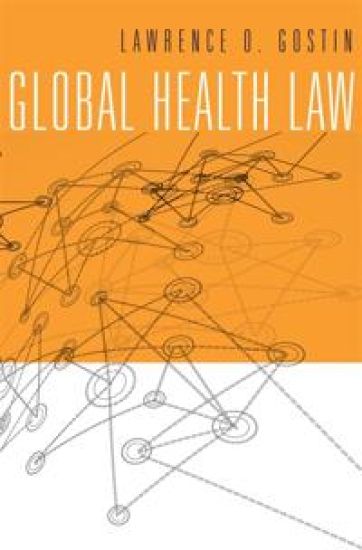
The international community has made great progress in improving global health. But staggering health inequalities between rich and poor still remain, raising fundamental questions of social justice. In a book that systematically defines the burgeoning field of global health law, Lawrence Gostin drives home the need for effective global governance for health and offers a blueprint for reform, based on the principle that the opportunity to live a healthy life is a basic human right. Gostin shows how critical it is for institutions and international agreements to focus not only on illness but also on the essential conditions that enable people to stay healthy throughout their lifespan: nutrition, clean water, mosquito control, and tobacco reduction. Policies that shape agriculture, trade, and the environment have long-term impacts on health, and Gostin proposes major reforms of global health institutions and governments to ensure better coordination, more transparency, and accountability. He illustrates the power of global health law with case studies on AIDS, influenza, tobacco, and health worker migration. Today's pressing health needs worldwide are a problem not only for the medical profession but also for all concerned citizens. Designed with the beginning student, advanced researcher, and informed public in mind, Global Health Law will be a foundational resource for teaching, advocacy, and public discourse in global health.
Biosecurity comprehensively analyzes the dramatic transformations that are reshaping how the international community addresses biological weapons and infectious diseases. The book examines the renewed threat from biological weapons, and explores the new world of biological weapons governance. Gostin and Fidler argue that the arms control approach in the Biological Weapons Convention no longer dominates. Other strategies have emerged to challenge the arms control approach, and the book identifies four important policy trends—the criminalization of biological weapons, regulation of the biological sciences, management of the biodefense imperative, and preparation for biological weapons attack. The book also explores the challenges to public health resulting from new security threats. The authors look at the linkages between security and public health policy, both at the national and international level. For instance, Gostin and Fidler scrutinize the difficulty of developing policies that improve defenses against both biological weapons and the threat of infectious diseases from new viral strains. The new worlds of biological weapons and public health governance raise the importance of crafting policy responses informed by the rule of law. Thinking about the rule of law underscores the importance of finding globalized forms of biosecurity governance. The book explores patterns in recent governance initiatives and advocates building a "global biosecurity concert" as a way to address the threats biological weapons and infectious diseases present in the early 21st century.
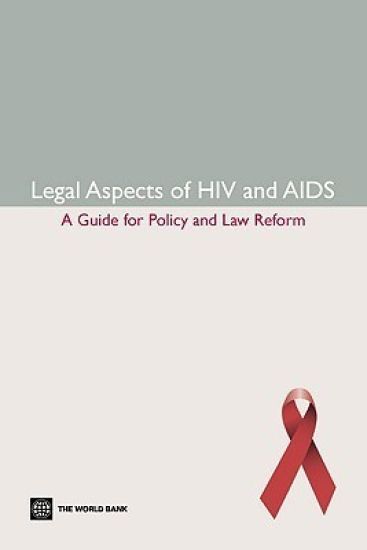
This book covers 64 wide-ranging topics related to HIV and AIDS, in a concise format that is easy to use for lawyers and people without legal training. It should be an invaluable resource for lawyers, policy makers and other practitioners with an interest in countries' responses to HIV. The book explains how laws and regulations can either underpin or undermine good public health programs and responsible personal behaviors. Each topic provides a concise summary of the key legal and policy issues, provides relevant ""practice examples"" (often citing from actual laws and regulations) and offers a selective list of references for each topic that may be consulted for more detailed information.
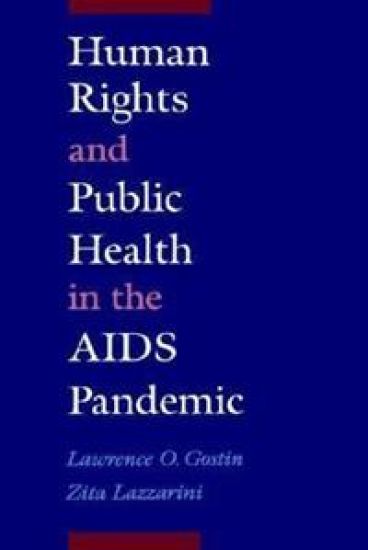
Historically, the fields of public health and human rights have remained largely separate. The AIDS pandemic, however, made it clear that a complex relationship exists between the two fields. Women and children have proven to be extremely vulnerable to infection with HIV due to their inability to protect themselves in intimate relationships, their sexual exploitation, and their lack of economic and educational alternatives. On the other hand, coercive government policies aimed at controlling the AIDS pandemic often infringe on the rights of individuals known or suspected of having AIDS, and decrease the effectiveness of public health measures. Protecting and promoting human rights is becoming one of the key means of preserving the health of individuals and populations. A penetrating analysis of the close relationship between public health and human rights, this book makes a compelling case for synergy between the two fields. Using the AIDS pandemic as a lens, the authors demonstrate that human health cannot be maintained without respect for the dignity and rights of persons, and that human rights cannot be deemed adequate and comprehensive without ensuring the health of individuals and populations. In the course of their analysis, Gostin and Lazzarini tackle some of the most vexing issues of our time, including the universality of human rights and the counter-claims of cultural relativity. Taking a cue from environmental impact assessments, they propose a human rights impact assessment for examining health policies. Such a tool will be invaluable for evaluating real-world public health problems and is bound to become essential for teaching human rights in schools of public health, medicine, government, and law. The volume critically examines such issues as HIV testing, screening, partner notification, isolation, quarantine, and criminalization of persons with HIV/AIDS, all within the framework of international human rights law. The authors evaluate the public health effects of a wide range of AIDS policies in developed as well as developing countries. The role of women in society receives special emphasis. Finally, the book presents three case histories that are important in the HIV/AIDS pandemic: discrimination and the transmission of HIV and tuberculosis in an occupational health care setting; breast feeding in the least developed countries; and confidentiality and the right of sexual partners to know of potential exposure to HIV. The cases challenge readers with some of the complex questions facing policy-makers, scientists, and public health professionals, and exemplify a method for analysing these problems from a human rights perspective. Gostin and Lazzarini have written a book that will be a valuable addition to the libraries of public health teachers and practitioners, legal scholars, bioethicists, policy makers, and public rights activists.