Kirjojen hintavertailu – 12 903 725 kirjaa ja 27 kauppaa

Kirjailija

Lawrence Sherman

Kirjat ja teokset yhdessä paikassa: 4 kirjaa, julkaisuja vuosilta 2000–2024, suosituimpiin kuuluu Every Brain Needs Music. Vertaile teosten hintoja ja tarkista saatavuus suomalaisista kirjakaupoista.

4 kirjaa

Kirjojen julkaisuvuodet: 2000–2024.

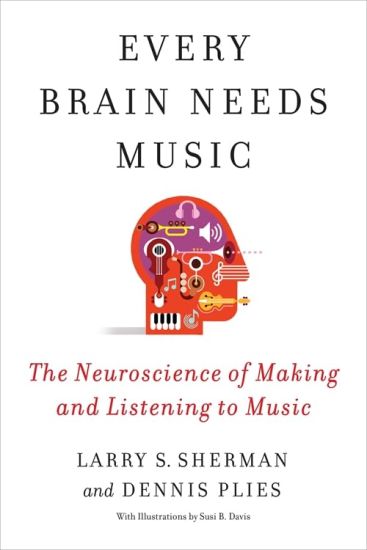
Every Brain Needs Music

Every Brain Needs Music

Lawrence Sherman; Dennis Plies

Columbia University Press
2024
pokkari
Whenever a person engages with music—when a piano student practices a scale, a jazz saxophonist riffs on a melody, a teenager sobs to a sad song, or a wedding guest gets down on the dance floor—countless neurons are firing. Playing an instrument requires all of the resources of the nervous system, including cognitive, sensory, and motor functions. Composition and improvisation are remarkable demonstrations of the brain’s capacity for creativity. Something as seemingly simple as listening to a tune involves mental faculties most of us don’t even realize we have. Larry S. Sherman, a neuroscientist and lifelong musician, and Dennis Plies, a professional musician and teacher, collaborate to show how our brains and music work in harmony. They consider music in all the ways we encounter it—teaching, learning, practicing, listening, composing, improvising, and performing—in terms of neuroscience as well as music pedagogy, showing how the brain functions and even changes in the process. Every Brain Needs Music draws on leading behavioral, cellular, and molecular neuroscience research as well as surveys of more than a hundred musical people. It provides new perspectives on learning to play, teaching, how to practice and perform, the ways we react to music, and why the brain benefits from musical experiences. Written for both musical and nonmusical people, including newcomers to brain science, this book is a lively and easy-to-read exploration of the neuroscience of music and its significance in our lives.
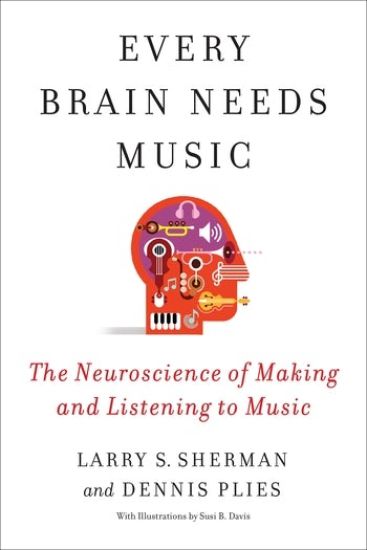
Every Brain Needs Music

Every Brain Needs Music

Lawrence Sherman; Dennis Plies

Columbia University Press
2023
sidottu

Halvin toimitettuna 33,80 €

Whenever a person engages with music—when a piano student practices a scale, a jazz saxophonist riffs on a melody, a teenager sobs to a sad song, or a wedding guest gets down on the dance floor—countless neurons are firing. Playing an instrument requires all of the resources of the nervous system, including cognitive, sensory, and motor functions. Composition and improvisation are remarkable demonstrations of the brain’s capacity for creativity. Something as seemingly simple as listening to a tune involves mental faculties most of us don’t even realize we have. Larry S. Sherman, a neuroscientist and lifelong musician, and Dennis Plies, a professional musician and teacher, collaborate to show how our brains and music work in harmony. They consider music in all the ways we encounter it—teaching, learning, practicing, listening, composing, improvising, and performing—in terms of neuroscience as well as music pedagogy, showing how the brain functions and even changes in the process. Every Brain Needs Music draws on leading behavioral, cellular, and molecular neuroscience research as well as surveys of more than a hundred musical people. It provides new perspectives on learning to play, teaching, how to practice and perform, the ways we react to music, and why the brain benefits from musical experiences. Written for both musical and nonmusical people, including newcomers to brain science, this book is a lively and easy-to-read exploration of the neuroscience of music and its significance in our lives.
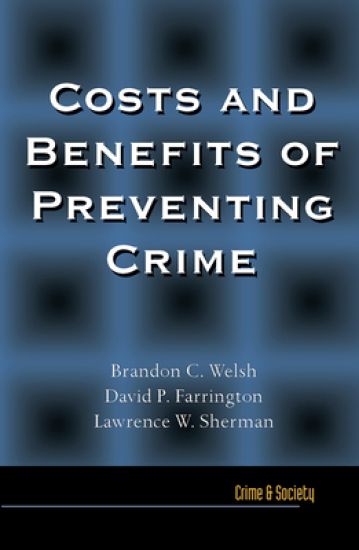
Costs and Benefits of Preventing Crime

Costs and Benefits of Preventing Crime

Brandon Welsh; David P. Farrington; Lawrence Sherman

Routledge
2019
sidottu
What are the cost savings from preventing a typical burglary, robbery, assault, or even a criminal career? Who benefits from these savings? How often do the benefits from preventing crime or criminal behavior exceed the resources spent on preventing or controlling crime? Is it more cost-effective to invest in early childhood programs or juvenile boot camps to reduce criminal offending? These are some of the important questions that face policymakers in crime and justice today. Answering them is no easy task. Nevertheless, it is important to provide answers in order to ensure that the dollars devoted to crime reduction are spent as efficiently as possible. The principle aim of Costs and Benefits of Preventing Crime is to report on and assess the present state of knowledge on the monetary costs and benefits of crime prevention programs. Remarkably, this crucial topic has rarely been studied up to the present time. This book examines key methodological issues, reports on the most up-to-date research findings, discusses international policy perspectives, and presents an agenda for future research and policy development on the economic analysis of crime prevention. Throughout, it addresses the important question of how governments should be allocating scarce resources to make crime prevention policy and practice more effective and to produce the greatest economic benefits to society. The book brings together research and perspectives from across North America, Europe, and Australia.
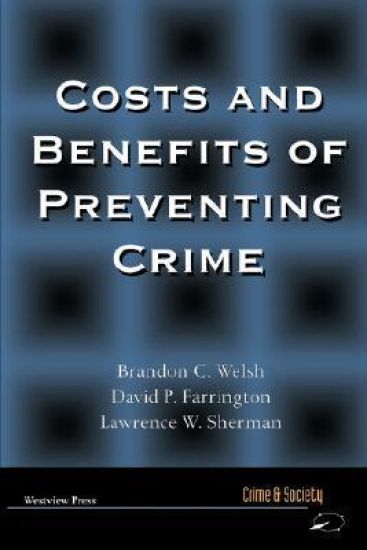
Costs and Benefits of Preventing Crime

Costs and Benefits of Preventing Crime

Brandon Welsh; David Farrington; Lawrence Sherman

Westview Press Inc
2000
pokkari
What are the cost savings from preventing a typical burglary, robbery, assault, or even a criminal career? Who benefits from these savings? How often do the benefits from preventing crime or criminal behaviour exceed the resources spent on preventing or controlling crime? Is it more cost-effective to invest in early childhood programs or juvenile boot camps to reduce criminal offending? These are some of the important questions that face policymakers in crime and justice today. Answering them is no easy task. Nevertheless, it is important to provide answers in order to ensure that the dollars devoted to crime reduction are spent as efficiently as possible. The principle aim of Costs and Benefits of Preventing Crime is to report on and assess the present state of knowledge on the monetary costs and benefits of crime prevention programs. Remarkably, this crucial topic has rarely been studied up to the present time. This book examines key methodological issues, reports on the most up-to-date research findings, discusses international policy perspectives, and presents an agenda for future research and policy development on the economic analysis of crime prevention. Throughout, it addresses the important question of how governments should be allocating scarce resources to make crime prevention policy and practice more effective and to produce the greatest economic benefits to society. The book brings together research and perspectives from across North America, Europe, and Australia.