Kirjojen hintavertailu – 12 903 725 kirjaa ja 27 kauppaa

Kirjailija

Lawrence Weschler

Kirjat ja teokset yhdessä paikassa: 29 kirjaa, julkaisuja vuosilta 1996–2023, suosituimpiin kuuluu Robert Irwin Getty Garden - Revised Edition. Vertaile teosten hintoja ja tarkista saatavuus suomalaisista kirjakaupoista.

29 kirjaa

Kirjojen julkaisuvuodet: 1996–2023.

True to Life

True to Life

Lawrence Weschler

University of California Press
2009
pokkari

Halvin toimitettuna 41,40 €

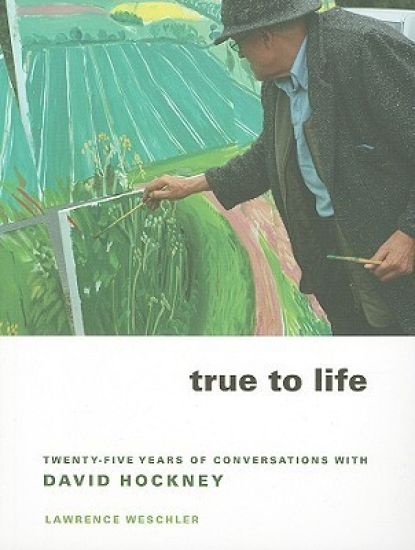
Soon after the book's publication in 1982, artist David Hockney read Lawrence Weschler's "Seeing Is Forgetting the Name of the Thing One Sees: A Life of Contemporary Artist" Robert Irwin and invited Weschler to his studio to discuss it, initiating a series of engrossing dialogs, gathered here for the first time. Weschler chronicles Hockney's protean production and speculations, including his scenic designs for opera, his homemade xerographic prints, his exploration of physics in relation to Chinese landscape painting, his investigations into optical devices, his taking up of watercolor - and then his spectacular return to oil painting, around 2005, with a series of landscapes of the East Yorkshire countryside of his youth. These conversations provide an astonishing record of what has been Hockney's grand endeavor, nothing less than an exploration of 'the structure of seeing' itself.
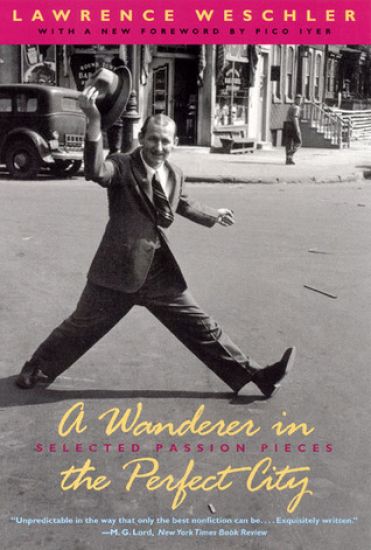
A Wanderer in the Perfect City

A Wanderer in the Perfect City

Lawrence Weschler; Pico Iyer

University of Chicago Press
2006
nidottu
"There is something both marvelous and hilarious," writes Lawrence Weschler, "in watching the humdrum suddenly take flight. This is, in part, a collection of such launchings." Indeed, the eight essays collected in "A Wanderer in the Perfect City" do soar into the realm of passion as Weschler profiles people who "were just moseying down the street one day, minding their own business, when suddenly and almost spontaneously, they caught fire, they became obsessed, they became intensely focused and intensely alive." With keen observations and graceful prose, Weschler carries us along as a teacher of rudimentary English from India decides that his destiny is to promote the paintings of an obscure American abstract expressionist; a gifted poker player invents a more exciting version of chess; an avant-garde Russian emigre conductor speaks Latin, exclusively, to his infant daughter; and Art Spiegelman composes Maus. But simple summaries can't do these stories justice: like music, they derive their character from digressions and details, cadence and tone. And like the upwelling of passion Weschler's characters feel, they are better experienced than explained.
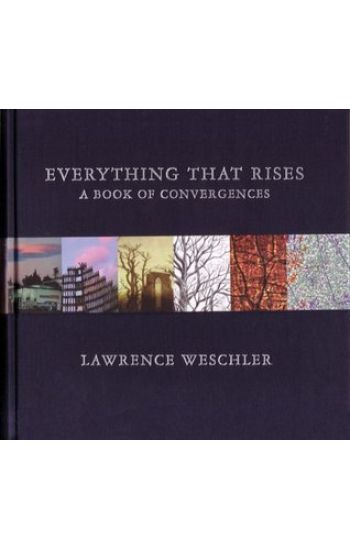
Everything That Rises

Everything That Rises

Lawrence Weschler

McSweeney's Publishing
2006
sidottu
From a cuneiform tablet to a Chicago prison, from the depths of the cosmos to the text on our T-shirts, art historian and journalist Lawrence Weschler finds strange connections wherever he looks. The farther one travels (through geography, through art, through science, through time), the more everything seems to converge -- at least, it does through Weschler's giddy, brilliant eyes. Weschler combines his keen insights into art (both contemporary and Renaissance), his years of experience as a chronicler of the fall of Communism, and his triumphs and failures as the father of a teenage girl into a series of essays that are sure to illuminate, educate, and astound.
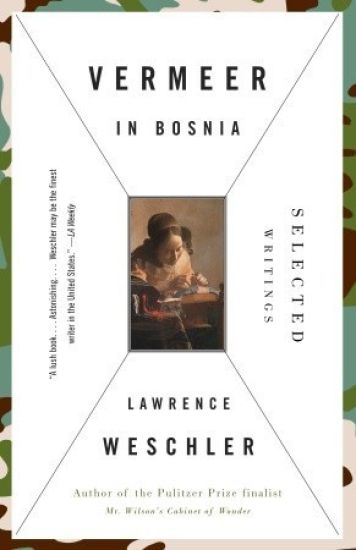
Vermeer in Bosnia: Selected Writings

Vermeer in Bosnia: Selected Writings

Lawrence Weschler

VINTAGE
2005
nidottu
There are writers who specialize in the strange and others whose genius is to find the strangeness in the familiar, the unexpected meanings in stories we thought we knew. Of that second category, Lawrence Weschler is the master. Witness the pieces in this splendidly disorienting collection, spanning twenty years of his career and the full range of his concerns-which is to say, practically everything. Only Lawrence Weschler could reveal the connections between the twentieth century's Yugoslav wars and the equally violent Holland in which Vermeer created his luminously serene paintings. In his profile of Roman Polanski, Weschler traces the filmmaker's symbolic negotiations with his nightmarish childhood during the Holocaust. Here, too, are meditations on artists Ed Kienholz and David Hockney, on the author's grandfather and daughter, and on the light and earthquakes of his native Los Angeles. Haunting, elegant, and intoxicating, Vermeer in Bosnia awakens awe and wonder at the world around us.
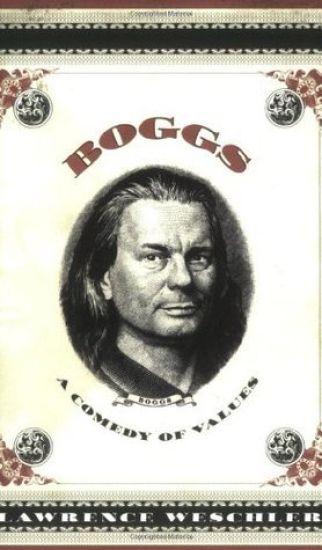
Boggs

Boggs

Lawrence Weschler

University of Chicago Press
2000
nidottu
In this text, Lawrence Weschler chronicles the antics of J. S. G. Boggs, a young artist with a certain panache, a certain flair, an artist whose consuming passion is money, or perhaps, more precisely, value. What Boggs likes to do is to draw money - actual paper notes in the denominations of standard currencies from all over the world - and then to go out and try to spend those drawings. Instead of selling his money drawings outright to interested collectors, Boggs looks for merchants who will accept his drawings in lieu of cash payment for their wares or services as part of elaborately choreographed transactions, complete with receipts and even proper change - an artistic practice which regularly lands him in trouble with treasury around the world. This volume teases out these transactions and their sometimes dramatic legal consequences, following Boggs on a larkish, though at the same time disconcertingly profound, econo-philosophic chase. For in a madcap Socratic fashion, Boggs is raising all sorts of truly fundamental questions - what is it that we value in art, or, for that matter, in money? Indeed, how do we place a value on anything at all? And in particular, why do we, why should we, how can we place such trust in anything as confoundingly insubstantial as paper money? In passing, Weschler frames a concise, highly entertaining history of money itself - from cowrie shells through hedge funds.
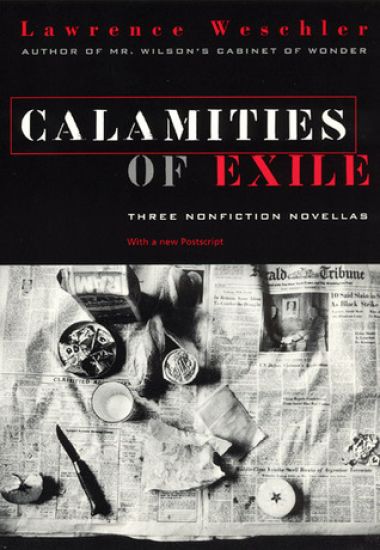
Calamities of Exile

Calamities of Exile

Lawrence Weschler

University of Chicago Press
1999
nidottu
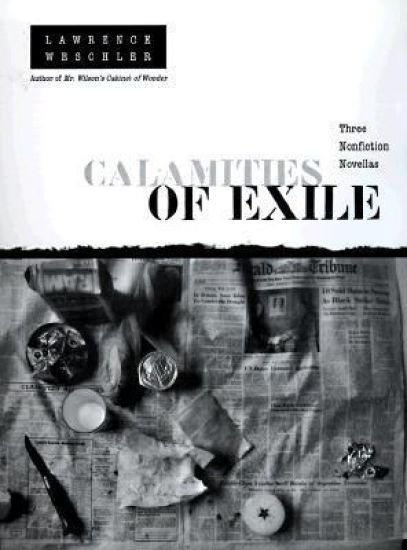
From the author of Mr. Wilson's Cabinet of Wonder, Calamities of Exile combines three gripping narratives that afford a sort of double CAT scan into the natures of both modern totalitarianism and timeless exile." Beautiful but harrowing chronicles of three exiles that probe the moral and personal risks of their encounters with totalitarianism. . . . Piercing and timely."—Kirkus Reviews, starred review"Weschler . . . combines a novelist's gift for drama with the objectivity and research skills of a journalist. . . . The result is three gripping profiles of very human but also extraordinary men."—Publishers Weekly"[Weschler's] thorough accounting of the men's covert operations, assumed identities and strained relationships with fathers, wives, and colleagues creates a disturbing triptych of the perils of totalitarianism."—Lance Gould, New York Times Book Review"Weschler tells these three tragic tales with an admirable combination of psychological penetration, intellectual thrust, concision and compassion."—Francis King, Spectator"Endlessly absorbing. . . . Breathtaking."—Jeri Laber, Los Angeles Times Book Review
A Miracle, A Universe

A Miracle, A Universe

Lawrence Weschler

University of Chicago Press
1998
nidottu
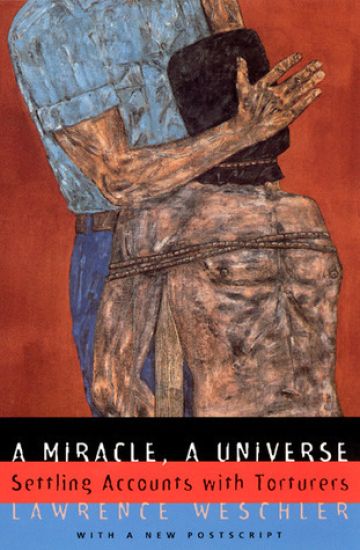
During the past fifteen years, one of the most vexing issues facing fledgling transitional democracies around the world--from South Africa to Eastern Europe, from Cambodia to Bosnia--has been what to do about the still-toxic security apparatuses left over from the previous regime. In this now-classic and profoundly influential study, the New Yorker's Lawrence Weschler probes these dilemmas across two gripping narratives (set in Brazil and Uruguay, among the first places to face such concerns), true-life thrillers in which torture victims, faced with the paralysis of the new regime, themselves band together to settle accounts with their former tormentors. "Disturbing and often enthralling."--New York Times Book Review "Extraordinarily moving... Weschler writes brilliantly."--Newsday "Implausible, intricate and dazzling."--Times Literary Supplement "As Weschler's interviewees told their tales, I paced agitatedly, choked back tears... Weschler narrates these two episodes with skill and tact... An inspiring book."--George Scialabba, Los Angeles Weekly
Mr Wilson's Cabinet of Wonder

Mr Wilson's Cabinet of Wonder

Lawrence Weschler

Vintage Books
1997
nidottu
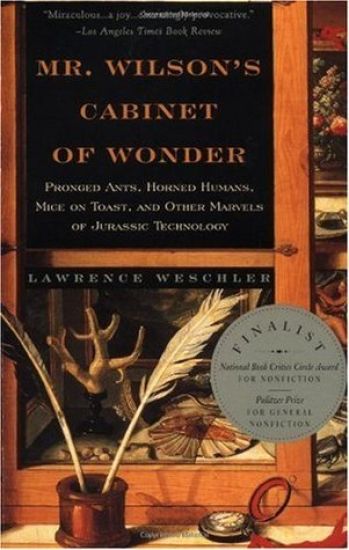
Pronged ants, horned humans, a landscape carved on a fruit pit--some of the displays in David Wilson's Museum of Jurassic Technology are hoaxes. But which ones? As he guides readers through an intellectual hall of mirrors, Lawrence Weschler revisits the 16th-century "wonder cabinets" that were the first museums and compels readers to examine the imaginative origins of both art and science. Illustrations.
Calamities of Exile

Calamities of Exile

Lawrence Weschler

University of Chicago Press
1996
sidottu
From the author of Mr. Wilson's Cabinet of Wonder, Calamities of Exile combines three gripping narratives that afford a sort of double CAT scan into the natures of both modern totalitarianism and timeless exile. "Beautiful but harrowing chronicles of three exiles that probe the moral and personal risks of their encounters with totalitarianism... Piercing and timely."--Kirkus Reviews, starred review "Weschler ...combines a novelist's gift for drama with the objectivity and research skills of a journalist... The result is three gripping profiles of very human but also extraordinary men."--Publishers Weekly "[Weschler's] thorough accounting of the men's covert operations, assumed identities and strained relationships with fathers, wives, and colleagues creates a disturbing triptych of the perils of totalitarianism."--Lance Gould, New York Times Book Review "Weschler tells these three tragic tales with an admirable combination of psychological penetration, intellectual thrust, concision and compassion."--Francis King, Spectator "Endlessly absorbing... Breathtaking."--Jeri Laber, Los Angeles Times Book Review