Kirjojen hintavertailu – 12 903 725 kirjaa ja 27 kauppaa

Kirjailija

Lawrence Zwier

Kirjat ja teokset yhdessä paikassa: 7 kirjaa, julkaisuja vuosilta 2002–2015, suosituimpiin kuuluu Mastering Academic Reading. Vertaile teosten hintoja ja tarkista saatavuus suomalaisista kirjakaupoista.

7 kirjaa

Kirjojen julkaisuvuodet: 2002–2015.

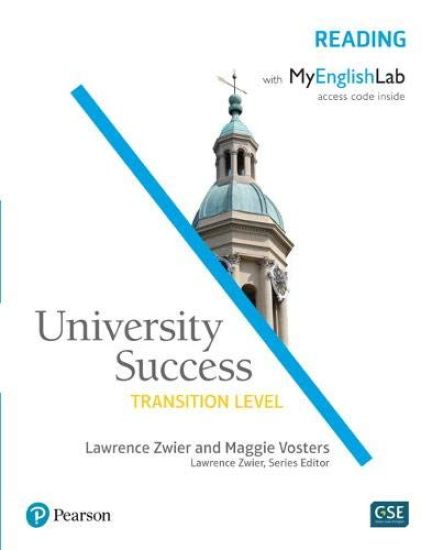
University Success Reading, Transition Level, with MyEnglishLab

University Success Reading, Transition Level, with MyEnglishLab

Lawrence Zwier; Maggie Vosters

Pearson Education (US)
2015
muu
University Success Reading is designed for English language learners preparing for mainstream academic environments. A flexible three-part approach includes intensive and systematic skill development tied to learning outcomes along with authentic essays written by top professors from Stanford University. The Reading strand provides real-life learning experiences that prepare students to become fluent, automatic, and competent readers who can achieve academic autonomy. Highlights - Each part is a self-contained module allowing teachers to focus on the highest-value skills and content. Topics are aligned around science, technology, engineering, arts, and mathematics (STEAM) content. -- Parts 1 and 2 include challenging readings that allow students to engage with the content as they build essential reading and critical thinking skills. -- Part 3 provides a truly authentic experience with an extended essay that enables students to apply and expand the skills acquired in Parts 1 and 2. - Additional online readings, skill and vocabulary practices, collaboration activities, and assessments. - Strategies for academic success and soft skills delivered via online videos. - NEW! You can now create unique custom University Success content packs with Pearson Collections
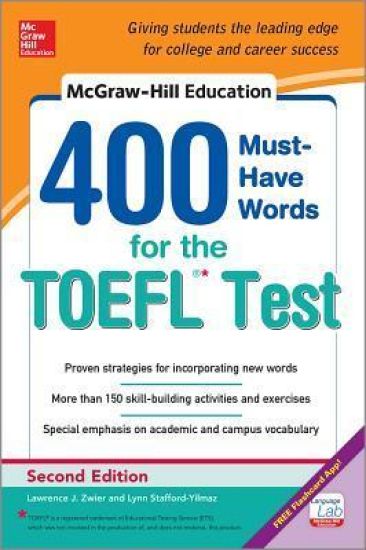
McGraw-Hill Education 400 Must-Have Words for the TOEFL

McGraw-Hill Education 400 Must-Have Words for the TOEFL

Lynn Stafford-Yilmaz; Lawrence Zwier

McGraw-Hill Professional
2014
nidottu
Publisher's Note: Products purchased from Third Party sellers are not guaranteed by the publisher for quality, authenticity, or access to any online entitlements included with the product. We want to help you score high on the TOEFLWe've put all of our proven expertise into McGraw-Hill: 400 Must-Have Words for the TOEFL, 2nd Edition, to make sure you're fully prepared for this difficult exam. With this updated and expanded guide,you'll get essential skill-building techniques and strategies created by leading ESL educators. You'll also get 410 commonly tested words, more than 150 activities and exercises, and a free Language Lab app to help you study. With McGraw-Hill: 400 Must-Have Words for the TOEFL, we'll guide you step by step through the essential vocabulary--and give you the tools you need to improve your score on the TOEFL. This edition includes:More than 400 important words for the TOEFL, with the addition of a new chapterExample sentences, usage tips, and commonly used parts of speech related to the wordA TOEFL-style reading with exercises for each chapterA free Language Lab app with flashcards to aid vocabulary memorization
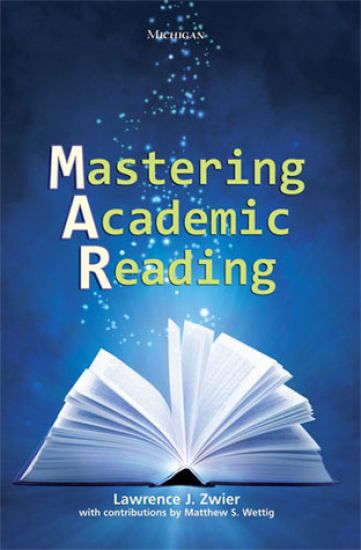
Mastering Academic Reading

Mastering Academic Reading

Lawrence Zwier

The University of Michigan Press
2010
nidottu
Mastering Academic Reading is meant to challenge advanced academically oriented students of English. The units and the readings within them are long. The comprehension and expansion exercises after them are demanding. The hoped-for outcome is that students trained using this textbook will be able to better hold their own in university classes where the reading volume across disciplines and vocabulary demands are high. Almost every reading is taken, in minimally adapted form, from a book or academic / professional journal. Two introductory passages have been composed expressly for this book in order to provide narrowly focused background material. Beyond these pieces, readers are in the hands of “real-world” authors and their difficult, lexically diffuse, and allusion-filled creations. Journal articles and book excerpts predominate, but Mastering Academic Reading also offers a book review and a government pamphlet as well. Since one aspect of reading practice builds on others, the units are laid out in tiers, not in sections. Each unit has been organized into three tiers. In general, there is one reading per tier, although the first tier in Unit 3 contains two passages (both necessary to provide conceptual background for the other two tiers). Each reading is 3,500-5,000 words. The book focuses on the three primary goals of academic reading: reading to learn; reading to integrate, write, and critique texts; and reading for basic comprehension.
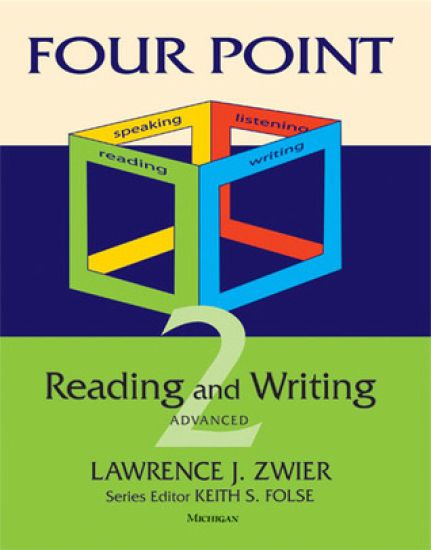
Four Point Reading and Writing 2

Four Point Reading and Writing 2

Lawrence Zwier

The University of Michigan Press
2009
nidottu
The Four Point series is designed for English language learners whose primary goal is to succeed in an academic setting. The series covers the four academic skills of reading, writing, listening, and speaking while providing reinforcement and systematic recycling of key vocabulary and further exposure to grammar issues. In order to participate in academic settings, ELLs need focused activities to develop and then maintain their use of vocabulary and grammar. Each book in the series focuses heavily on vocabulary in particular, highlighting between 125-150 key vocabulary items including individual words, compound words, phrasal verbs, short phrases, idioms, metaphors, collocations, and longer set lexical phrases. Each unit in Reading-Writing 2, Advanced, includes two reading passages on the same topic within a field of academic study: Language, Sociology, Physiology, Geology, Economics, and Environmental Science. The exercises accompanying the readings are meant to strengthen a range of reading and writing skills like comprehending details, developing vocabulary, paraphrasing, summarizing, and synthesizing information. Students will read longer, more difficult readings on interesting academic topics that represent an array of classroom interests, and they will write both short and long assignments that can be organized around more traditional writing templates. By addressing the breadth and depth of reading and writing tasks required in academic settings instead of only reading for pleasure or writing for research projects, this volume truly prepares ELLs for the type of reading they will find in their course books and for the writing assignments they will receive in class. Interactive vocabulary activities are provided on the book's companion website.
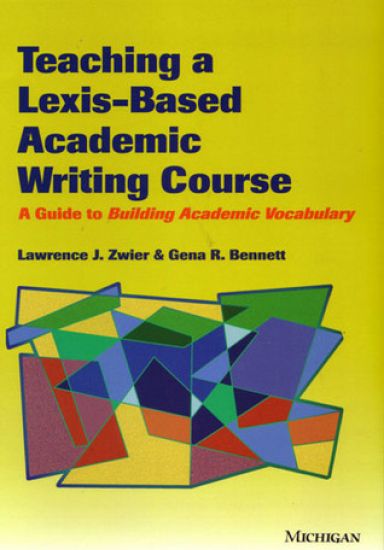
Teaching a Lexis-Based Academic Writing Course

Teaching a Lexis-Based Academic Writing Course

Lawrence Zwier; Gena Bennett

The University of Michigan Press
2006
nidottu
Teaching a Lexis-Based Academic Writing Course is a companion to Building an Academic Vocabulary,which was written for students who need to develop college-level vocabulary skills. Building Academic Vocabulary (0-472-08589-1) helps students develop lexical precision as they work in such often-exercised modes as cause-effect, general description, description of processes, and comparison/contrast. Teaching a Lexis-Based Academic Writing Course will help instructors use Building an Academic Vocabulary more effectively, but it can also be used as a companion to any writing text and by instructors who want their writing course to have more of a focus on vocabulary. Each chapter includes additional practice exercise and five additional quizzes on collocations and common phrases, related forms, and additional vocabulary. This resource provides instructors with a valuable tool for helping students develop precision and fluency in their academic writing.
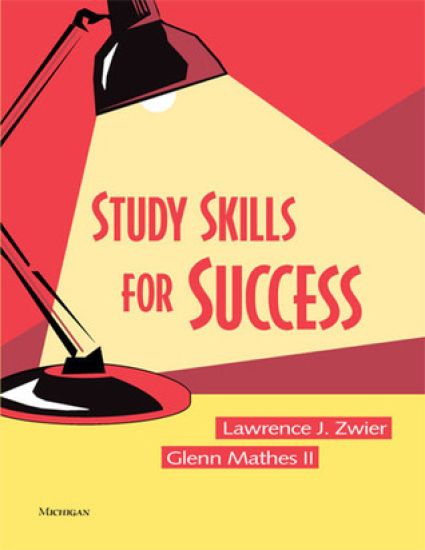
Study Skills for Success

Study Skills for Success

Lawrence Zwier; Glenn Mathes

The University of Michigan Press
2005
nidottu
Study Skills for Success presents basic study strategies and academic skills that students need to excel in their last years of high school or in college. This textbook was written for students whose schoolwork has not given them enough practice in applying these basic study skills so they can perform well in academic settings. Major topics covered in the book include:* Organizing Information (alphabetizing, outlining, reading timelines, taking notes)* Reading and Interpreting Illustrated Information (maps, graphs, charts, tables)* Skills for Better Reading (skimming and scanning, vocabulary strategies, determining the main idea)* Research Strategies (avoiding plagiarism, using the Internet)A list of the many skills taught is provided in the front of the book. Study Skills for Success emphasizes skill building through practice, as the lessons on each topic contain a plethora of tips and several exercises. A review lesson caps the end of each section of the textbook, and the final lesson of the book reviews the major skills taught. Appendixes include various abbreviations and conversion tables.
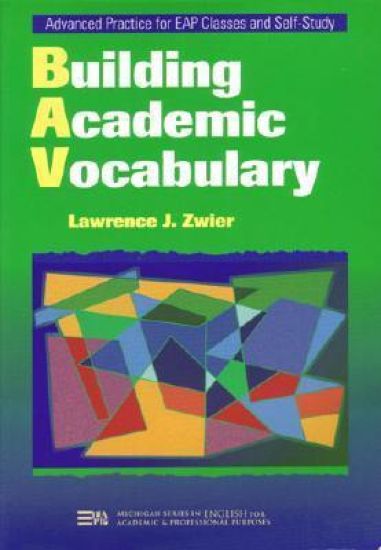
Building Academic Vocabulary

Building Academic Vocabulary

Lawrence Zwier

The University of Michigan Press
2002
nidottu
Building Academic Vocabulary was written because English for Academic Purposes (EAP) students often complain that they don't have the vocabularies they need for college courses. Building Academic Vocabulary will help students develop lexical precision as they work in such often exercised modes as cause-effect, general description, description of processes, or comparison/contrast. Each unit focuses on 10-15 key vocabulary items within a certain essential meaning area. Each unit also highlights--and lightly exercises--20-25 additional vocabulary items that provide a broader and more diverse second level of learning. The nine meaning areas addressed were carefully selected for their usefulness in the writing and speaking most common in EAP classes. Similarly, the comments about usage and syntactic restrictions in the text have been referenced to two widely used corpora. Building Academic Vocabulary is usable as either a self-study tool for advanced students (or professionals eager to refine their English) or as a course book. It makes an excellent supplement to a course or text that focuses on rhetorical modes, either reading or writing.