
Kirjojen hintavertailu – 12 903 727 kirjaa ja 27 kauppaa

Kirjailija

Léa-Catherine Szacka

Kirjat ja teokset yhdessä paikassa: 3 kirjaa, julkaisuja vuosilta 2019–2025, suosituimpiin kuuluu Biennials/Triennials – Conversations on the Geography of Itinerant Display. Vertaile teosten hintoja ja tarkista saatavuus suomalaisista kirjakaupoista.

Nimi esiintyy myös muodoissa: Léa–catherine Szacka

3 kirjaa

Kirjojen julkaisuvuodet: 2019–2025.

Paolo Portoghesi

Paolo Portoghesi

Silvia Micheli; Léa-Catherine Szacka

BLOOMSBURY PUBLISHING PLC
2025
nidottu

Halvin toimitettuna 48,90 €

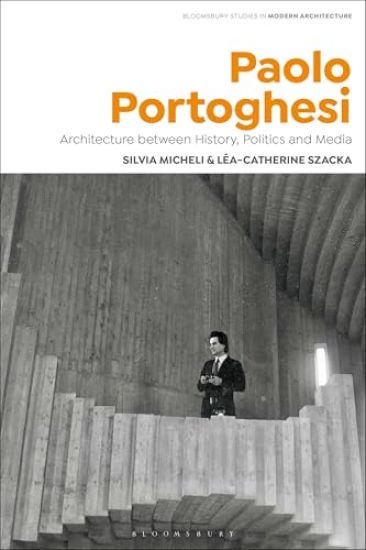
Through the work of the Italian architect, theorist and historian Paolo Portoghesi (1931-2023), this book offers a new perspective on postmodern architecture, showing the agency of other spheres of knowledge – history, politics and media – in the making of postmodern architectural discourse. It explores how Portoghesi’s personal “postmodern project” was based on the triangulation of a renewed interest in historical architectural language, unprecedented use of media and intertwined links between architecture and politics. Organized in a sequence of critical chapters supported by the analysis of Portoghesi’s most significant architectural projects – including Casa Baldi (1959), The Mosque in Rome (1975–95) and his Strada Novissima exhibition (1980) – and publications, the book unfolds around the three main themes of history, politics and media. Published as part of the Bloomsbury Studies in Modern Architecture series, which brings to light the work of significant yet overlooked modernist architects, the study features previously-unpublished archival material, interviews by the authors and articles from professional and mainstream press to present Portoghesi in his multifaceted role of mediator, politician, historian and designer.
Paolo Portoghesi

Paolo Portoghesi

Silvia Micheli; Léa-Catherine Szacka

BLOOMSBURY PUBLISHING PLC
2023
sidottu
Through the work of the Italian architect, theorist and historian Paolo Portoghesi (1931-2023), this book offers a new perspective on postmodern architecture, showing the agency of other spheres of knowledge – history, politics and media – in the making of postmodern architectural discourse. It explores how Portoghesi’s personal “postmodern project” was based on the triangulation of a renewed interest in historical architectural language, unprecedented use of media and intertwined links between architecture and politics. Organized in a sequence of critical chapters supported by the analysis of Portoghesi’s most significant architectural projects – including Casa Baldi (1959), The Mosque in Rome (1975–95) and his Strada Novissima exhibition (1980) – and publications, the book unfolds around the three main themes of history, politics and media. Published as part of the Bloomsbury Studies in Modern Architecture series, which brings to light the work of significant yet overlooked modernist architects, the study features previously-unpublished archival material, interviews by the authors and articles from professional and mainstream press to present Portoghesi in his multifaceted role of mediator, politician, historian and designer.
Biennials/Triennials – Conversations on the Geography of Itinerant Display

Biennials/Triennials – Conversations on the Geography of Itinerant Display

Léa–catherine Szacka

Columbia Books on Architecture and the City
2019
nidottu
In the forty years since the first iteration of Venice Architecture Biennale, the field of architecture has seen a remarkable change in the role played by exhibition-making. While architecture and display have long been intertwined practices, a rapid proliferation of large-scale perennial exhibitions—particularly in the twenty-first century—has resulted in the biennial / triennial becoming an integral part of our discipline, a new geography of itinerant display that has profoundly altered the contours of architectural thought. Between format, space, and content, what are the various agencies and effects of these events? Biennials / Triennials asks these questions and others of a range of curatorial agents—including After Belonging Agency, Beatriz Colomina and Mark Wigley, Sarah Herda, Adrian Lahoud, Ippolito Pestellini, and Andre Tavares—and visits crucial sites of recent exhibitions that reveal what is at stake in the newfound ubiquity of the architectural –ennial.