Kirjojen hintavertailu – 12 903 725 kirjaa ja 27 kauppaa

Kirjailija

Lee Higgins

Kirjat ja teokset yhdessä paikassa: 6 kirjaa, julkaisuja vuosilta 2010–2025, suosituimpiin kuuluu Thinking Community Music. Vertaile teosten hintoja ja tarkista saatavuus suomalaisista kirjakaupoista.

6 kirjaa

Kirjojen julkaisuvuodet: 2010–2025.

Thinking Community Music

Thinking Community Music

Lee Higgins

OXFORD UNIVERSITY PRESS INC
2025
sidottu
Thinking Community Music explores critical questions concerning community music practice and theory with emphasis on intervention, hospitality, pedagogy, social justice, inclusion, cultural democracy, music, research, and future possibilities. The book encourages questioning, reflection, and dialogue. Shaped as provocations and presented as eight stand-alone essays, each 'think piece' comprises of critical questions, concrete illustrations of practice, theoretical explorations, and reflective discussion. Flanked by a historical map and a closing statement, the book provides a springboard for conceptual interrogation about participatory music-making. Supported by the lineage of poststructural philosophy, ideas emulating from Derrida and Deleuze frames conceptual interrogation about community music practices and the broader parameters of social-cultural music-making and music teaching and learning. As a vital part of the music ecology, community music is a distinctive field and a critical lens to view other musical practices and the various political and cultural policies that frame them.
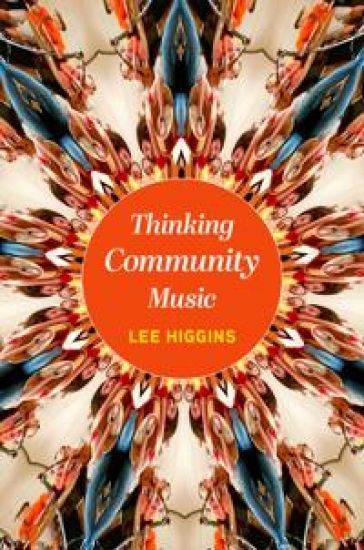
Thinking Community Music

Thinking Community Music

Lee Higgins

OXFORD UNIVERSITY PRESS INC
2025
nidottu
Thinking Community Music explores critical questions concerning community music practice and theory with emphasis on intervention, hospitality, pedagogy, social justice, inclusion, cultural democracy, music, research, and future possibilities. The book encourages questioning, reflection, and dialogue. Shaped as provocations and presented as eight stand-alone essays, each 'think piece' comprises of critical questions, concrete illustrations of practice, theoretical explorations, and reflective discussion. Flanked by a historical map and a closing statement, the book provides a springboard for conceptual interrogation about participatory music-making. Supported by the lineage of poststructural philosophy, ideas emulating from Derrida and Deleuze frames conceptual interrogation about community music practices and the broader parameters of social-cultural music-making and music teaching and learning. As a vital part of the music ecology, community music is a distinctive field and a critical lens to view other musical practices and the various political and cultural policies that frame them.
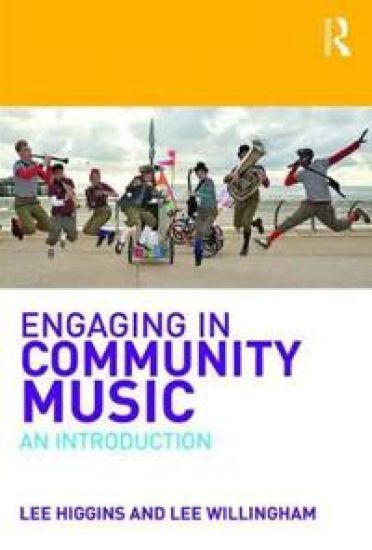
Engaging in Community Music

Engaging in Community Music

Lee Higgins; Lee Willingham

Routledge
2017
sidottu
Engaging in Community Music: An Introduction focuses on the processes involved in designing, initiating, executing and evaluating community music practices. Designed for both undergraduate and graduate students, in community music programmes and related fields of study alike, this co-authored textbook provides explanations, case examples and ‘how-to’ activities supported by a rich research base. The authors have also interviewed key practitioners in this distinctive field, encouraging interviewees to reflect on aspects of their work in order to illuminate best practices within their specialisations and thereby establishing a comprehensive narrative of case study illustrations. Features: a thorough exploration and description of the emerging field of community music; succinctly and accessibly written, in a way in which students can relate; interviews with 26 practitioners in the US, UK, Australia, Europe, Canada, Scandinavia and South Africa, where non-formal education settings with a music leader, or facilitator, have experienced success; case studies from many cultural groups of all ages and abilities; research on life-long learning, music in prisons, music and ritual, community music therapy, popular musics, leisure and recreation, business and marketing strategies, online communities – all components of community music.
Engaging in Community Music

Engaging in Community Music

Lee Higgins; Lee Willingham

Routledge
2017
nidottu
Engaging in Community Music: An Introduction focuses on the processes involved in designing, initiating, executing and evaluating community music practices. Designed for both undergraduate and graduate students, in community music programmes and related fields of study alike, this co-authored textbook provides explanations, case examples and ‘how-to’ activities supported by a rich research base. The authors have also interviewed key practitioners in this distinctive field, encouraging interviewees to reflect on aspects of their work in order to illuminate best practices within their specialisations and thereby establishing a comprehensive narrative of case study illustrations. Features: a thorough exploration and description of the emerging field of community music; succinctly and accessibly written, in a way in which students can relate; interviews with 26 practitioners in the US, UK, Australia, Europe, Canada, Scandinavia and South Africa, where non-formal education settings with a music leader, or facilitator, have experienced success; case studies from many cultural groups of all ages and abilities; research on life-long learning, music in prisons, music and ritual, community music therapy, popular musics, leisure and recreation, business and marketing strategies, online communities – all components of community music.
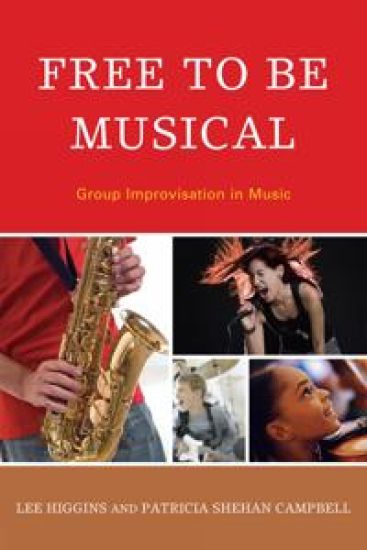
Free to Be Musical

Free to Be Musical

Lee Higgins; Patricia Shehan Campbell; Gary McPherson

Rowman Littlefield Education
2010
nidottu
Free to Be Musical: Group Improvisation in Music is for those who lead musical experiences in the lives of children, youth, and adults. Offering a set of experiences to inspire creative musical expression, this book will prove useful for music education majors, practicing music teachers, community musicians, and music therapists alike. The experiences (or 'events') are designed to reduce the musical barriers that Western societies pass on to children by the time they reach the 'age of reason,' when the natural childhood penchant to sing, dance, and play musically gives way to perfect performances of standard repertoire preserved in Western staff notation. The authors present ways to encourage music that is expressive and inventive, spontaneous yet thoughtful, communal and collaborative, and unlimited in its potential to bring fulfillment to those who make it. You'll find opportunities to release the musical imagination in ways that are free and expansive, playful and instructive, personal and interpersonal. Higgins and Campbell have created a context that validates the experiments and explorations of all people who are potential makers of all styles of music. Their musical events embrace the belief that music-making is 'a trail of no mistakes,' a celebration of the many and varied musical pathways that both teacher and student can take.
Free to Be Musical

Free to Be Musical

Lee Higgins; Patricia Shehan Campbell; Gary McPherson

Rowman Littlefield Education
2010
sidottu
Free to Be Musical: Group Improvisation in Music is for those who lead musical experiences in the lives of children, youth, and adults. Offering a set of experiences to inspire creative musical expression, this book will prove useful for music education majors, practicing music teachers, community musicians, and music therapists alike. The experiences (or "events") are designed to reduce the musical barriers that Western societies pass on to children by the time they reach the "age of reason," when the natural childhood penchant to sing, dance, and play musically gives way to perfect performances of standard repertoire preserved in Western staff notation. The authors present ways to encourage music that is expressive and inventive, spontaneous yet thoughtful, communal and collaborative, and unlimited in its potential to bring fulfillment to those who make it. You'll find opportunities to release the musical imagination in ways that are free and expansive, playful and instructive, personal and interpersonal. Higgins and Campbell have created a context that validates the experiments and explorations of all people who are potential makers of all styles of music. Their musical events embrace the belief that music-making is "a trail of no mistakes," a celebration of the many and varied musical pathways that both teacher and student can take.