Kirjojen hintavertailu – 12 859 829 kirjaa ja 27 kauppaa
Kirjailija
Lei Guo
Kirjat ja teokset yhdessä paikassa: 13 kirjaa, julkaisuja vuosilta 1991–2025, suosituimpiin kuuluu Anti-Disturbance Intrusion- and Fault-Tolerant Control of Multi-Agent Systems. Vertaile teosten hintoja ja tarkista saatavuus suomalaisista kirjakaupoista.
This book focuses on anti-disturbance intrusion- and fault-tolerant consensus control for MASs. The main feature of this book is the successful introduction of event-triggered distributed adaptive feedback control methodology, observer technology, and sliding mode technology to solve the problem of anti-disturbance, intrusion-tolerant, and fault-tolerant control of MAS. Meanwhile, pinning control strategies are proposed to realize the cluster consensus control of MAS. In addition, based on the Nussbaum function, the fault-tolerant control problems of different types of MASs subjected to time-varying unknown nonidentical direction (TVUND) faults are investigated. This book provides a coherent approach and contains valuable reference materials for researchers who wish to explore the area of MAS. Researchers, graduate students, and engineers in the fields of electrical engineering, control engineering, applied mathematics, computer science, and others will benefit from this book.
This book explores the intelligent autonomous control problems for spacecraft with multiple constraints, such as pointing/path constraints, linear/angular velocity constraints, performance constraints, etc. It provides an almost self-contained presentation of dynamics modeling, controller design and analysis, as well as simulation studies. The book aims to offer a valuable guide for researchers and aerospace engineers to address the theoretical and technical difficulties in different applications, ranging from spacecraft attitude reorientation and tracking to spacecraft proximity operations, and is mainly intended for technical and engineering staff engaged in spacecraft dyanmics and control areas.
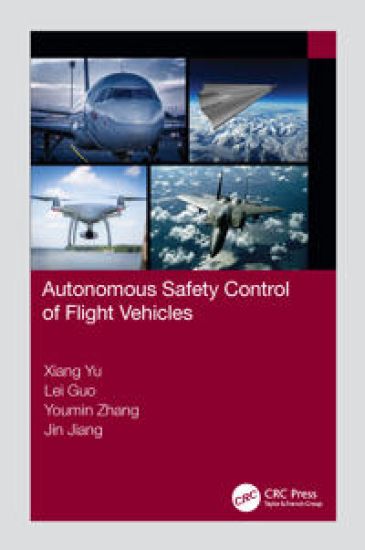
Aerospace vehicles are by their very nature a crucial environment for safety-critical systems. By virtue of an effective safety control system, the aerospace vehicle can maintain high performance despite the risk of component malfunction and multiple disturbances, thereby enhancing aircraft safety and the probability of success for a mission. Autonomous Safety Control of Flight Vehicles presents a systematic methodology for improving the safety of aerospace vehicles in the face of the following occurrences: a loss of control effectiveness of actuators and control surface impairments; the disturbance of observer-based control against multiple disturbances; actuator faults and model uncertainties in hypersonic gliding vehicles; and faults arising from actuator faults and sensor faults. Several fundamental issues related to safety are explicitly analyzed according to aerospace engineering system characteristics; while focusing on these safety issues, the safety control design problems of aircraft are studied and elaborated on in detail using systematic design methods. The research results illustrate the superiority of the safety control approaches put forward. The expected reader group for this book includes undergraduate and graduate students but also industry practitioners and researchers. About the Authors:Xiang Yu is a Professor with the School of Automation Science and Electrical Engineering, Beihang University, Beijing, China. His research interests include safety control of aerospace engineering systems, guidance, navigation, and control of unmanned aerial vehicles. Lei Guo, appointed as "Chang Jiang Scholar Chair Professor", is a Professor with the School of Automation Science and Electrical Engineering, Beihang University, Beijing, China. His research interests include anti-disturbance control and filtering, stochastic control, and fault detection with their applications to aerospace systems. Youmin Zhang is a Professor in the Department of Mechanical, Industrial and Aerospace Engineering, Concordia University, Montreal, Québec, Canada. His research interests include fault diagnosis and fault-tolerant control, and cooperative guidance, navigation, and control (GNC) of unmanned aerial/space/ground/surface vehicles. Jin Jiang is a Professor in the Department of Electrical & Computer Engineering, Western University, London, Ontario, Canada. His research interests include fault-tolerant control of safety-critical systems, advanced control of power plants containing non-traditional energy resources, and instrumentation and control for nuclear power plants.
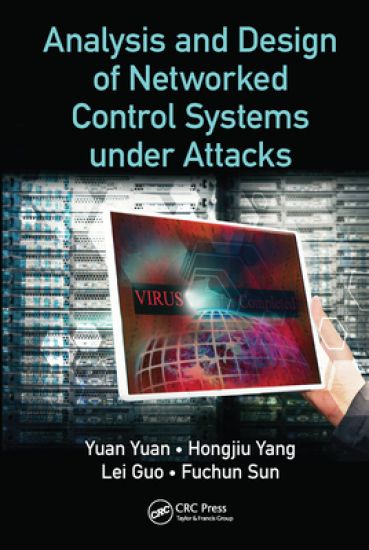
This book adopts a systematic view of the control systems in cyber-physical systems including the security control of the optimal control system, security control of the non-cooperative game system, quantify the impact of the Denial-of-Service attacks on the optimal control system, and the adaptive security control of the networked control systems. Because the cyber-physical system is a hybrid system, it adopts cross layer approach to handle the security control of the CPS. It presents a number of attack models according to the attack scenario and defense facilities, and a number of cross-layer co-design methodologies to secure the control of CPS.
The main focus of this monograph will be on the Enhanced Anti-Disturbance Control and filtering theory and their applications. In fact, the classical anti-disturbance control theory only considered one "equivalent" disturbance which is merged by different unknown sources. However, it is noted that along with the development of information obtaining and processing technologies, one can get more information or knowledge about various types of disturbances.
Identifying the input-output relationship of a system or discovering the evolutionary law of a signal on the basis of observation data, and applying the constructed mathematical model to predicting, controlling or extracting other useful information constitute a problem that has been drawing a lot of attention from engineering and gaining more and more importance in econo metrics, biology, environmental science and other related areas. Over the last 30-odd years, research on this problem has rapidly developed in various areas under different terms, such as time series analysis, signal processing and system identification. Since the randomness almost always exists in real systems and in observation data, and since the random process is sometimes used to model the uncertainty in systems, it is reasonable to consider the object as a stochastic system. In some applications identification can be carried out off line, but in other cases this is impossible, for example, when the structure or the parameter of the system depends on the sample, or when the system is time-varying. In these cases we have to identify the system on line and to adjust the control in accordance with the model which is supposed to be approaching the true system during the process of identification. This is why there has been an increasing interest in identification and adaptive control for stochastic systems from both theorists and practitioners.
A recent development in SDC-related problems is the establishment of intelligent SDC models and the intensive use of LMI-based convex optimization methods. Within this theoretical framework, control parameter determination can be designed and stability and robustness of closed-loop systems can be analyzed. This book describes the new framework of SDC system design and provides a comprehensive description of the modelling of controller design tools and their real-time implementation. It starts with a review of current research on SDC and moves on to some basic techniques for modelling and controller design of SDC systems. This is followed by a description of controller design for fixed-control-structure SDC systems, PDF control for general input- and output-represented systems, filtering designs, and fault detection and diagnosis (FDD) for SDC systems. Many new LMI techniques being developed for SDC systems are shown to have independent theoretical significance for robust control andFDD problems.
Identifying the input-output relationship of a system or discovering the evolutionary law of a signal on the basis of observation data, and applying the constructed mathematical model to predicting, controlling or extracting other useful information constitute a problem that has been drawing a lot of attention from engineering and gaining more and more importance in econo metrics, biology, environmental science and other related areas. Over the last 30-odd years, research on this problem has rapidly developed in various areas under different terms, such as time series analysis, signal processing and system identification. Since the randomness almost always exists in real systems and in observation data, and since the random process is sometimes used to model the uncertainty in systems, it is reasonable to consider the object as a stochastic system. In some applications identification can be carried out off line, but in other cases this is impossible, for example, when the structure or the parameter of the system depends on the sample, or when the system is time-varying. In these cases we have to identify the system on line and to adjust the control in accordance with the model which is supposed to be approaching the true system during the process of identification. This is why there has been an increasing interest in identification and adaptive control for stochastic systems from both theorists and practitioners.