
Kirjojen hintavertailu – 12 859 827 kirjaa ja 27 kauppaa

Kirjailija

Lei Zhi Chen

Kirjat ja teokset yhdessä paikassa: 2 kirjaa, julkaisuja vuosilta 2006–2010, suosituimpiin kuuluu Modelling and Optimization of Biotechnological Processes. Vertaile teosten hintoja ja tarkista saatavuus suomalaisista kirjakaupoista.

2 kirjaa

Kirjojen julkaisuvuodet: 2006–2010.

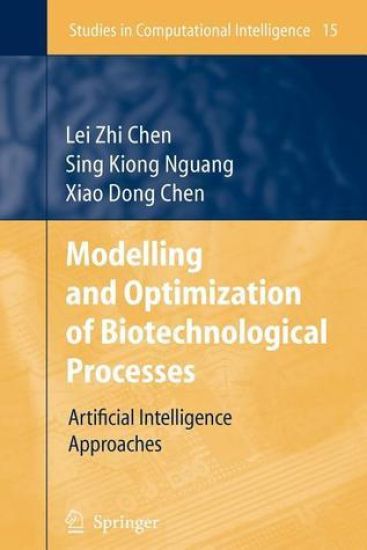
Modelling and Optimization of Biotechnological Processes

Modelling and Optimization of Biotechnological Processes

Lei Zhi Chen; Sing Kiong Nguang; Xiao Dong Chen

Springer-Verlag Berlin and Heidelberg GmbH Co. K
2010
nidottu
Mostindustrialbiotechnologicalprocessesareoperatedempirically. Oneofthe major di?culties of applying advanced control theories is the highly nonlinear nature of the processes. This book examines approaches based on arti?cial intelligencemethods,inparticular,geneticalgorithmsandneuralnetworks,for monitoring, modelling and optimization of fed-batch fermentation processes. The main aim of a process control is to maximize the ?nal product with minimum development and production costs. This book is interdisciplinary in nature, combining topics from biotechn- ogy, arti?cial intelligence, system identi?cation, process monitoring, process modelling and optimal control. Both simulation and experimental validation are performed in this study to demonstrate the suitability and feasibility of proposed methodologies. An online biomass sensor is constructed using a - current neural network for predicting the biomass concentration online with only three measurements (dissolved oxygen, volume and feed rate). Results show that the proposed sensor is comparable or even superior to other sensors proposed in the literature that use more than three measurements. Biote- nological processes are modelled by cascading two recurrent neural networks. It is found that neural models are able to describe the processes with high accuracy. Optimization of the ?nal product is achieved using modi?ed genetic algorithms to determine optimal feed rate pro?les. Experimental results of the corresponding production yields demonstrate that genetic algorithms are powerful tools for optimization of highly nonlinear systems. Moreover, a c- bination of recurrentneural networks and genetic algorithms provides a useful and cost-e?ective methodology for optimizing biotechnological processes.
Modelling and Optimization of Biotechnological Processes

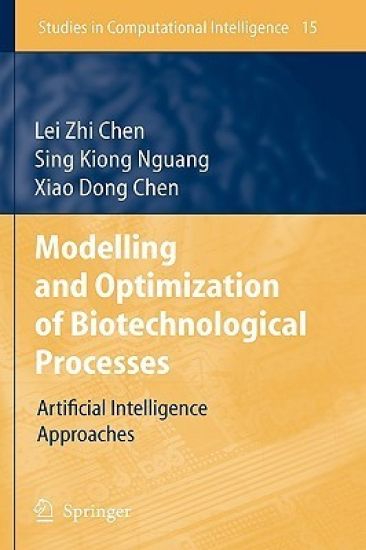
Modelling and Optimization of Biotechnological Processes

Lei Zhi Chen; Sing Kiong Nguang; Xiao Dong Chen

Springer-Verlag Berlin and Heidelberg GmbH Co. K
2006
sidottu
Mostindustrialbiotechnologicalprocessesareoperatedempirically. Oneofthe major di?culties of applying advanced control theories is the highly nonlinear nature of the processes. This book examines approaches based on arti?cial intelligencemethods,inparticular,geneticalgorithmsandneuralnetworks,for monitoring, modelling and optimization of fed-batch fermentation processes. The main aim of a process control is to maximize the ?nal product with minimum development and production costs. This book is interdisciplinary in nature, combining topics from biotechn- ogy, arti?cial intelligence, system identi?cation, process monitoring, process modelling and optimal control. Both simulation and experimental validation are performed in this study to demonstrate the suitability and feasibility of proposed methodologies. An online biomass sensor is constructed using a - current neural network for predicting the biomass concentration online with only three measurements (dissolved oxygen, volume and feed rate). Results show that the proposed sensor is comparable or even superior to other sensors proposed in the literature that use more than three measurements. Biote- nological processes are modelled by cascading two recurrent neural networks. It is found that neural models are able to describe the processes with high accuracy. Optimization of the ?nal product is achieved using modi?ed genetic algorithms to determine optimal feed rate pro?les. Experimental results of the corresponding production yields demonstrate that genetic algorithms are powerful tools for optimization of highly nonlinear systems. Moreover, a c- bination of recurrentneural networks and genetic algorithms provides a useful and cost-e?ective methodology for optimizing biotechnological processes.