Kirjojen hintavertailu – 12 903 725 kirjaa ja 27 kauppaa

Kirjailija

Leiv Lunde

Kirjat ja teokset yhdessä paikassa: 4 kirjaa, julkaisuja vuosilta 1999–2017, suosituimpiin kuuluu Dinosaurs or Dynamos. Vertaile teosten hintoja ja tarkista saatavuus suomalaisista kirjakaupoista.

4 kirjaa

Kirjojen julkaisuvuodet: 1999–2017.

Dinosaurs or Dynamos

Dinosaurs or Dynamos

Helge Ole Bergesen; Leiv Lunde

Routledge
2017
sidottu
Explores how much and what the World Bank and the United Nations can really be expected to achieve. The text begins with a detailed account of the evolution of the two organizations as multilateral development institutions and then focuses on the functions that the World Bank and the UN carry out, and the governing structures that underlie their activities. The authors then go on to question what need there is for these two multilateral institutions in the next century and which tasks they can undertake in promoting world development. Both the United Nations (UN) and the World Bank have repeatedly proclaimed their solemn ambitions to improve the lot of humankind. Dinosaurs or Dynamos? explores how much, and what, they can really be expected to do. Both have extended their functions far beyond their original mandates, while their decision-making structures have remained basically unaltered despite recent adaptations on the part of the World Bank. Such expansions have created serious strains on both organizations. The UN has ambitions to perform tasks, such as the search for 'good governance' and 'sustainable development', for which it is ill equipped. The World Bank has taken on normative functions - 'the premier development institution' - that are incompatible with its traditional structures. The authors ask, what need is there for these two multilateral development institutions in the next century? Which tasks in promoting world development can they undertake that others cannot? To whom are these institutions politically accountable, who sets their agendas and are they credible given financial constraints? Dinosaurs or Dynamos? is an essential guide for those working within the international community, non-governmental organizations, governments and students of development, economics, politics and international relations.
Hva Norge kan være i verden

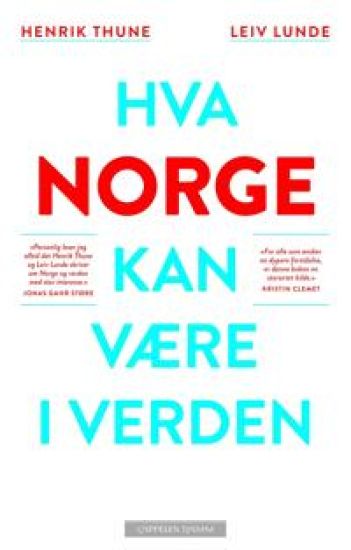
Hva Norge kan være i verden

Leiv Lunde; Henrik Thune

Cappelen Damm
2013
sidottu
Europas økonomiske korthus faller sammen. Den arabiske våren frøs til vinter. Det nordamerikanske imperiet er i ferd med å vakle og Kina reiser seg i øst. Samtidig har Norge gått fra å være et lite land i verden til et land i en liten verden. Det er en tid vi trenger gode svar – og enda bedre spørsmål. Derfor har forskerne og forfatterne og Henrik Thune og Leiv Lunde skrevet en kort og presis debattbok som stiller spørsmålene politikerne ikke tør å stille. Det finnes neppe et tidspunkt i moderne norsk historie da det norske samfunnet har vært mer avhengig og innfiltret i verden utenfor Norge, enn hva tilfellet er i dag. Da kunne man forvente at Norges forhold til omverden tok en stor plass i det norske partipolitiske og offentlige ordskiftet. Men dette er ikke tilfellet. Partipolitikk, valgkamp, nyhetsmediene og offentligheten, blir altfor ofte trangsynte og selvrefererende. Diskusjonen om hva Norge bør prioritere, og satse på internasjonalt, er i stor grad en arena for de få, og slik preget av lite debatt, høy grad av enighet og mangel på åpenhet. Hva Norge kan være i verden er et innspill i valgkampen i 2013. En tilgjengelig, skarp og direkte bok om de utenrikspolitiske valgene som vil forme det norske samfunnets utvikling i årene som kommer – skrevet av dem som har sett hvordan politikken lages.
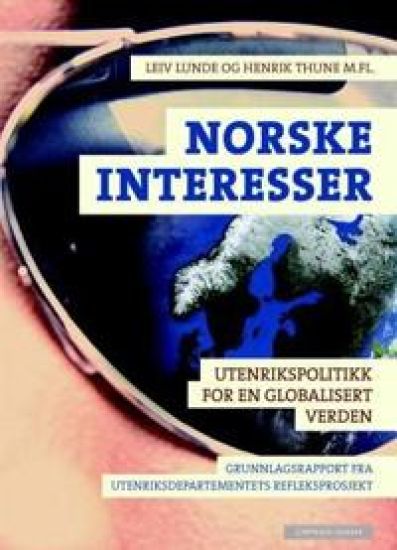
Norske interesser

Norske interesser

Leiv Lunde; Ole Jacob Sending; Leo Grünfeld; Eiler Fleischer; Henrik Thune

Cappelen Damm
2008
nidottu
I dagens globaliserte verden angår utenrikspolitikk oss alle. Av den grunn igangsatte utenriksminister Jonas Gahr Støre UD-prosjektet "Refleks -- norske interesser i en globalisert verden". Hensikten er å stimulere til bred og åpen debatt om Norges rolle i verdenssamfunnet. Rapporten Norske interesser springer ut av Refleksprosjektets arbeid. Det er den første helhetlige drøftingen av globalisering og dens utfordringer for norske interesser siden Berlinmurens fall i 1989 endret på rammene for norsk utenrikspolitikk. I sentrum av rapporten står spørsmålene: - Hva er norske interesser? - Hva er sammenhengen mellom krigen i Afghanistan, norsk sikkerhet og NATOs fremtid? - Hva betyr politisk stabilitet i Asia og Midt-Østen for Norges økonomiske fremtid? - Kan oljelandet Norge forene økonomiske interesser og hensynet til klimaproblemene? "Vi må våge å drøfte våre egne interesser i verden. Vi må gjøre oss klokere med hensyn til hvordan det norske samfunnets ulike mål og behov utfordres av globalisering, og best kan ivaretas. Vi må utfordre oss selv. Vi må våge å teste om utenrikspolitikkens etablerte svar fortsatt er gyldige", skriver Jonas Gahr Støre innledningsvis. Norske interesser er et viktig og aktuelt bidrag til den politiske debatten, og utfordrer vårt bilde av oss selv som land og våre interesser i forholdet til verden for øvrig.
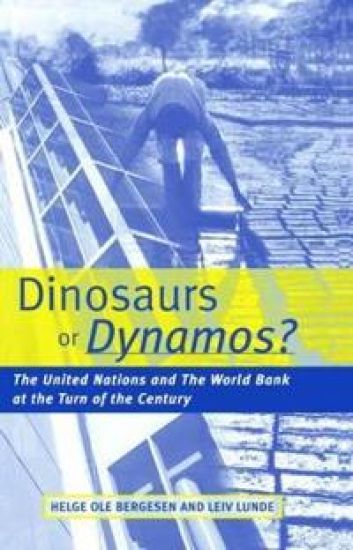
Dinosaurs or Dynamos

Dinosaurs or Dynamos

Helge Ole Bergesen; Leiv Lunde

Earthscan Ltd
1999
nidottu
Explores how much and what the World Bank and the United Nations can really be expected to achieve. The text begins with a detailed account of the evolution of the two organizations as multilateral development institutions and then focuses on the functions that the World Bank and the UN carry out, and the governing structures that underlie their activities. The authors then go on to question what need there is for these two multilateral institutions in the next century and which tasks they can undertake in promoting world development. Both the United Nations (UN) and the World Bank have repeatedly proclaimed their solemn ambitions to improve the lot of humankind. Dinosaurs or Dynamos? explores how much, and what, they can really be expected to do. Both have extended their functions far beyond their original mandates, while their decision-making structures have remained basically unaltered despite recent adaptations on the part of the World Bank. Such expansions have created serious strains on both organizations. The UN has ambitions to perform tasks, such as the search for 'good governance' and 'sustainable development', for which it is ill equipped. The World Bank has taken on normative functions - 'the premier development institution' - that are incompatible with its traditional structures. The authors ask, what need is there for these two multilateral development institutions in the next century? Which tasks in promoting world development can they undertake that others cannot? To whom are these institutions politically accountable, who sets their agendas and are they credible given financial constraints? Dinosaurs or Dynamos? is an essential guide for those working within the international community, non-governmental organizations, governments and students of development, economics, politics and international relations.