Kirjojen hintavertailu – 12 859 828 kirjaa ja 27 kauppaa
Kirjailija
Leland B. Yeager
Kirjat ja teokset yhdessä paikassa: 8 kirjaa, julkaisuja vuosilta 1997–2026, suosituimpiin kuuluu Kapital, Zinsen und Warten. Vertaile teosten hintoja ja tarkista saatavuus suomalaisista kirjakaupoista.
Hanke in die ökonomische Theorie des Abwartens ein und kontextualisieren dessen Relevanz für die moderne Geldpolitik. Kapital, Zinsen und Abwarten fordert Ökonomen heraus, die Kapitaltheorie neu zu überdenken.
Prominent economists including Nassau Senior, Eugene von Bӧhm-Bawerk, Gustav Cassel, Irving Fisher, Walter Eucken, and Robert Dorfman have recognized or toyed with the idea of waiting as a factor of production, but this concept has not yet been explored in its entirety until now. In this book, Leland B. Yeager and Steve H. Hanke dive into the economic theory behind waiting and contextualize its relevance to modern-day monetary policy. Capital, Interest, and Waiting challenges economists to reconsider capital theory. The arguments presented within the book embrace extant literature on capital theory, including the numerous controversies, puzzles, and debates crowding the subject. These debates range from the Cambridge controversies triggered by Joan Robinson's work to the famous "reswitching" problem to a broader array of important problems in capital theory that were laid out by Walter Eucken, among others. Leland B. Yeager and Steve H. Hanke present, discuss, and resolve these many complexities of capital theory. Chapters break new ground again and again by demonstrating how waiting is a factor of production and interest is its price. Those who read this book will challenge long-held beliefs relevant to monetary economics and reconsider their approach to capital theory.
Prominent economists including Nassau Senior, Eugene von B?hm-Bawerk, Gustav Cassel, Irving Fisher, Walter Eucken, and Robert Dorfman have recognized or toyed with the idea of waiting as a factor of production, but this concept has not yet been explored in its entirety until now. In this book, Leland B. Yeager and Steve H. Hanke dive into the economic theory behind waiting and contextualize its relevance to modern-day monetary policy. Capital, Interest, and Waiting challenges economists to reconsider capital theory. The arguments presented within the book embrace extant literature on capital theory, including the numerous controversies, puzzles, and debates crowding the subject. These debates range from the Cambridge controversies triggered by Joan Robinson’s work to the famous “reswitching” problem to a broader array of important problems in capital theory that were laid out by Walter Eucken, among others. Leland B. Yeager and Steve H. Hanke present, discuss, and resolve these many complexities of capital theory. Chapters break new ground again and again by demonstrating how waiting is a factor of production and interest is its price. Those who read this book will challenge long-held beliefs relevant to monetary economics and reconsider their approach to capital theory.
LARGE PRINT EDITION More at LargePrintLiberty.com Professor Leland B. Yeager (University of Virginia and Auburn University) is one of the giants of the generation of economists after Ludwig von Mises. He was Mises's student and translator - and has made a lifetime of contributions to policy, theory, method, ethics, and aesthetics from the point of view of a champion of freedom and a deep respect for the Austrian tradition. This vast but affordable collection is a tribute to the range of his brilliance and erudition, and a reminder that his contributions are enormous. Many of the essays found herein are nearly lost or unavailable. Yeager selected them with an eye toward the essays that most pertain to the Austrian tradition and the moral imperative of the free society. The title essay is one of the more controversial articles to ever appear in economic literature. It began as a response to the criticism that if Misesian economics were so great, it would be the market leader within the profession. Yeager responds with a general theory of market dominance and its relationship to issues of truth and beauty. He argues that we cannot use the market as the final test to determine aesthetics or the value of truth claims. These must come from outside market analytics. The essay offers a profound clarification of the role of economics and markets. And it is an archetype of the type of thinking that Yeager has published through his long career. He is an iconoclast, a truly independent thinker with a bold way of approaching core issues. Even where one disagrees, he helps advance careful thinking and rigorous analysis. The essays are unfailingly interesting, and note that one of them is actually in the language called Interlingua (Yeager briefly served as president of the Interlingua Society). It is probably the first and only English-language book on economics to include such an interesting item. His many students through the years have hoped for a volume with his most interesting, provocative, and thrilling essays - and it is here at last. This book will more firmly entrench his reputation as a giant within the Austrian oeuvre.
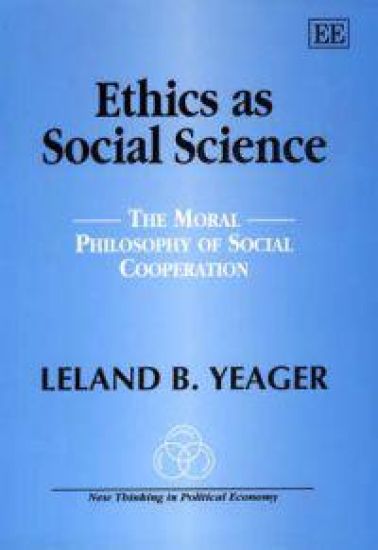
With this important book, esteemed economist Leland B. Yeager grounds moral and political philosophy in the requirements of a well-functioning society, one whose members reap the gains from peaceful cooperation while pursuing their own diverse goals. This book explores the reasons an individual may have for helping to uphold such a society rather than seeking a free ride on the moral behavior of others. A work in the tradition of Hume, Smith, Mill, von Mises, Hayek and Hazlitt, it expounds a rules or indirect version of utilitarianism. It reviews criticisms of utilitarianism in detail, as well as alternative grounds of ethics including contractarianism, rights-based doctrines, and appeals to specific intuitions. Yeager brings the insights of economics to bear on a field usually dominated by philosophers and theologians. Ethics comes across as a subject amply open to the findings of economics and the other social and natural sciences. Economists, philosophers and other students and scholars of the social sciences will welcome this book. It will also appeal to any reader interested in exploring the ideas of ethics.
With this important book, esteemed economist Leland B. Yeager grounds moral and political philosophy in the requirements of a well-functioning society, one whose members reap the gains from peaceful cooperation while pursuing their own diverse goals. This book explores the reasons an individual may have for helping to uphold such a society rather than seeking a free ride on the moral behavior of others. A work in the tradition of Hume, Smith, Mill, von Mises, Hayek and Hazlitt, it expounds a rules or indirect version of utilitarianism. It reviews criticisms of utilitarianism in detail, as well as alternative grounds of ethics including contractarianism, rights-based doctrines, and appeals to specific intuitions. Yeager brings the insights of economics to bear on a field usually dominated by philosophers and theologians. Ethics comes across as a subject amply open to the findings of economics and the other social and natural sciences. Economists, philosophers and other students and scholars of the social sciences will welcome this book. It will also appeal to any reader interested in exploring the ideas of ethics.
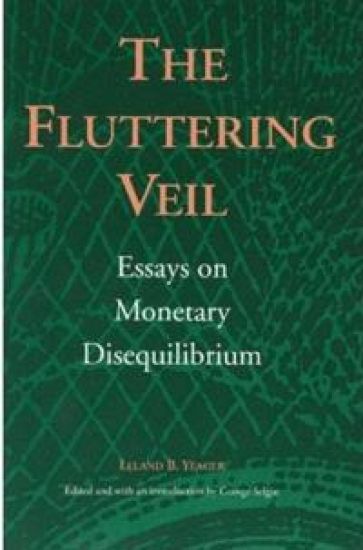
Money's unique and essential role in a free market and monetary disequilibrium as the root cause of the business cycle are principles central to the work of economist Leland Yeager. For three decades he has extolled the pre-eminent importance of money as a source of economic fluctuations whose influence goes well beyond mere changes in interest rates or the price level. Yeager's work discloses the disruptive consequences of 'monetary disequilibrium', or an imbalance of money supply and money demand. Consequently, he argues that well-designed monetary arrangements and policies are important to the success of any free-market economic system. Similarly, he insists that defects in the existing monetary arrangements in 'capitalist' countries are manifestly not inherent in capitalism but are 'alterable consequences' of the misguided or even mischievous interventions of government. The eighteen essays address four general topics: Monetary Disequilibrium and Its Consequences; Monetary Misconceptions; Keynesianism and Other Diversions; and Avoiding Monetary Disequilibrium. In his introduction, Professor George Selgin explains why "our understanding of the monetary foundations of a free society owes a great deal to the writings of Leland Yeager."
Money's unique and essential role in a free market and monetary disequilibrium as the root cause of the business cycle are principles central to the work of economist Leland Yeager. For three decades he has extolled the pre-eminent importance of money as a source of economic fluctuations whose influence goes well beyond mere changes in interest rates or the price level. Yeager's work discloses the disruptive consequences of 'monetary disequilibrium', or an imbalance of money supply and money demand. Consequently, he argues that well-designed monetary arrangements and policies are important to the success of any free-market economic system. Similarly, he insists that defects in the existing monetary arrangements in 'capitalist' countries are manifestly not inherent in capitalism but are 'alterable consequences' of the misguided or even mischievous interventions of government. The eighteen essays address four general topics: Monetary Disequilibrium and Its Consequences; Monetary Misconceptions; Keynesianism and Other Diversions; and Avoiding Monetary Disequilibrium. In his introduction, Professor George Selgin explains why "our understanding of the monetary foundations of a free society owes a great deal to the writings of Leland Yeager."