Kirjojen hintavertailu – 12 859 826 kirjaa ja 27 kauppaa

Kirjailija

Lena Cowen Orlin

Kirjat ja teokset yhdessä paikassa: 8 kirjaa, julkaisuja vuosilta 2007–2027, suosituimpiin kuuluu Book Culture in Shakespeare's Stratford. Vertaile teosten hintoja ja tarkista saatavuus suomalaisista kirjakaupoista.

8 kirjaa

Kirjojen julkaisuvuodet: 2007–2027.

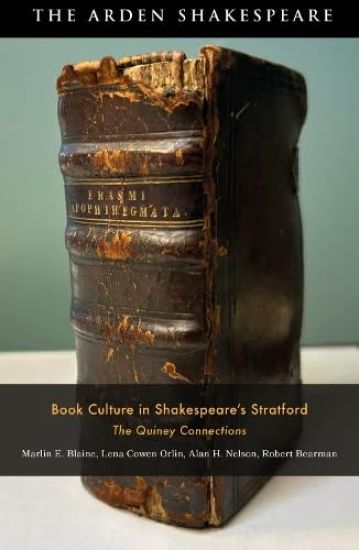
Book Culture in Shakespeare’s Stratford

Book Culture in Shakespeare’s Stratford

Marlin E. Blaine; Lena Cowen Orlin; Robert Bearman; Alan H. Nelson

BLOOMSBURY PUBLISHING PLC
2025
sidottu
The recent discovery of two Latin books that once belonged to the Quiney family of Stratford-upon-Avon expands our understanding of Shakespeare’s grammar school education and of the social, material, and learned networks that operated in his hometown. One of these books, the Apophthegmata of Erasmus, belonged to Shakespeare’s friend and neighbour, Richard Quiney, while the other, a commentary on Aristotelian logic, was owned by a different Richard Quiney, who was Shakespeare’s grandson. Building from a simple account of these findings, Book Culture in Shakespeare’s Stratford: The Quiney Connections sheds new light on the use of Latin in the market town that produced the world’s most famous playwright. The story it tells weaves together analysis of letters, sermons, wills, public monuments and other printed books owned by local residents. Complementing these cultural explorations, biographical studies of Quiney family members and influential clergymen and teachers in Stratford evoke the impact of this learned culture on the lived experience of individual people. This study breaks new ground in our understanding of the rich educational environment that would enliven the plays and poems of William Shakespeare.
The Private Life of William Shakespeare

The Private Life of William Shakespeare

Lena Cowen Orlin

Oxford University Press
2024
nidottu
The Private Life of William Shakespeare tells the story of Shakespeare as a family man in Stratford-upon-Avon. Cowen Orlin offers close readings of key archival documents associated with Shakespeare and develops a contextual understanding of the genres from which these documents emerge, reconsidering clusters of evidence that have been held to prove some persistent biographical fables. Cowen Orlin argues, too, that the histories of some of Shakespeare's neighbours illuminate aspects of his own life. This new biography explores Shakespeare's private life in Stratford-upon-Avon, from his personal aspirations and self-determination, to his relations with his family members and neighbours. We learn that his early wedding freed him from craft training to pursue a literary career, and that his wife's work enabled him to make the first of the property purchases that grounded his life as a gentleman. Throughout, we encounter a Shakespeare who consciously and purposefully designed his life ^—^ a Shakespeare who, having witnessed the business failures of his merchant father, determined not to follow the same path.
The Private Life of William Shakespeare

The Private Life of William Shakespeare

Lena Cowen Orlin

Oxford University Press
2021
sidottu

Halvin toimitettuna 51,00 €

A new biography of William Shakespeare that explores his private life in Stratford-upon-Avon, his personal aspirations, his self-determination, and his relations with the members of his family and his neighbours. The Private Life of William Shakespeare tells the story of Shakespeare in Stratford as a family man. The book offers close readings of key documents associated with Shakespeare and develops a contextual understanding of the genres from which these documents emerge. It reconsiders clusters of evidence that have been held to prove some persistent biographical fables. It also shows how the histories of some of Shakespeare's neighbours illuminate aspects of his own life. Throughout, we encounter a Shakespeare who consciously and with purpose designed his life. Having witnessed the business failures of his merchant father, he determined not to follow his father's model. His early wedding freed him from craft training to pursue a literary career. His wife's work, and probably the assistance of his parents and brothers, enabled him to make the first of the property purchases that grounded his life as a gentleman. With his will, he provided for both his daughters in ways that were suitable to their circumstances; Anne Shakespeare was already protected by dower rights in the houses and lands he had acquired. His funerary monument suggests that the man of 'small Latin and less Greek' in fact had some experience of an Oxford education. Evidences are that he commissioned the monument himself.
Locating Privacy in Tudor London

Locating Privacy in Tudor London

Lena Cowen Orlin

Oxford University Press
2010
nidottu
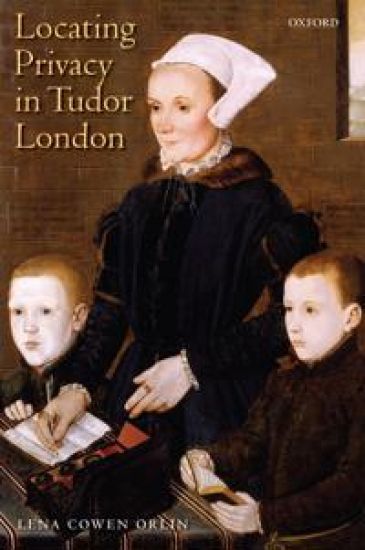
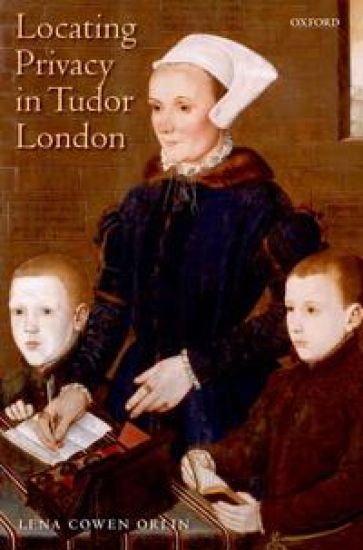
Locating Privacy in Tudor London asks new questions about where private life was lived in the early modern period, about where evidence of it has been preserved, and about how progressive and coherent its history can be said to have been. The Renaissance and the Reformation are generally taken to have produced significant advances in individuality, subjectivity, and interiority, especially among the elite, but this study of middling-sort culture shows privacy to have been an object of suspicion, of competing priorities, and of compulsory betrayals. The institutional archives of civic governance, livery companies, parish churches, and ecclesiastical courts reveal the degree to which society organized itself around principles of preventing privacy, as a condition of order. Also represented in the discussion are such material artefacts as domestic buildings and household furnishings, which were routinely experienced as collective and monitory agents rather than spheres of exclusivity and self-expression. In 'everyday' life, it is argued, economic motivations were of more urgent concern than the political paradigms that have usually informed our understanding of the Renaissance. Locating Privacy pursues the case study of Alice Barnham (1523-1604), a previously unknown merchant-class woman, subject of one of the earliest family group paintings from England. Her story is touched by many of the changes-in social structure, religion, the built environment, the spread of literacy, and the history of privacy-that define the sixteenth century. The book is of interest to literary, social, cultural, and architectural historians, to historians of the Reformation and of London, and to historians of gender and women's studies.

The Renaissance

The Renaissance

Lena Cowen Orlin

Red Globe Press
2009
sidottu
This collection of rare and classic documents provides student with rich source material and context for studying the literature of Shakespeare's age. The documents are supported by substantial editorial matter, including an authoritative introduction which outlines key historical events, movements, and literary and cultural issues of the time.
The Renaissance

The Renaissance

Lena Cowen Orlin

Red Globe Press
2009
nidottu
This collection of rare and classic documents provides student with rich source material and context for studying the literature of Shakespeare's age. The documents are supported by substantial editorial matter, including an authoritative introduction which outlines key historical events, movements, and literary and cultural issues of the time.
Locating Privacy in Tudor London

Locating Privacy in Tudor London

Lena Cowen Orlin

Oxford University Press
2007
sidottu
Locating Privacy in Tudor London asks new questions about where private life was lived in the early modern period, about where evidence of it has been preserved, and about how progressive and coherent its history can be said to have been. The Renaissance and the Reformation are generally taken to have produced significant advances in individuality, subjectivity, and interiority, especially among the elite, but this study of middling-sort culture shows privacy to have been an object of suspicion, of competing priorities, and of compulsory betrayals. The institutional archives of civic governance, livery companies, parish churches, and ecclesiastical courts reveal the degree to which society organized itself around principles of preventing privacy, as a condition of order. Also represented in the discussion are such material artefacts as domestic buildings and household furnishings, which were routinely experienced as collective and monitory agents rather than spheres of exclusivity and self-expression. In 'everyday' life, it is argued, economic motivations were of more urgent concern than the political paradigms that have usually informed our understanding of the Renaissance. Locating Privacy pursues the case study of Alice Barnham (1523-1604), a previously unknown merchant-class woman, subject of one of the earliest family group paintings from England. Her story is touched by many of the changes-in social structure, religion, the built environment, the spread of literacy, and the history of privacy-that define the sixteenth century. The book is of interest to literary, social, cultural, and architectural historians, to historians of the Reformation and of London, and to historians of gender and women's studies.