Kirjojen hintavertailu – 12 903 725 kirjaa ja 27 kauppaa

Kirjailija

Lenore E.A. Walker

Kirjat ja teokset yhdessä paikassa: 4 kirjaa, julkaisuja vuosilta 2010–2019, suosituimpiin kuuluu Best Practices for the Mentally Ill in the Criminal Justice System. Vertaile teosten hintoja ja tarkista saatavuus suomalaisista kirjakaupoista.

Nimi esiintyy myös muodoissa: Lenore E. A. Walker

4 kirjaa

Kirjojen julkaisuvuodet: 2010–2019.

Best Practices for the Mentally Ill in the Criminal Justice System

Best Practices for the Mentally Ill in the Criminal Justice System

Lenore E.A. Walker; James M. Pann; David L. Shapiro; Vincent B. Van Hasselt

Springer International Publishing AG
2015
nidottu
This timely brief resource introduces a new evidence-based model for treatment of mentally ill individuals in jails, with emphasis on community-based options. Forensic mental health experts review police alternatives to arresting mentally ill persons in confrontations, the efficacy of problem-solving courts, and continuity of care between jail and community. The book's best-practices approach extends to frequently related issues such as addiction, domestic violence, juvenile considerations, and trauma and describes successful programs coordinating judicial and clinical systems. These guidelines for decriminalizing non-violent behaviors and making appropriate services available to those with mental problems should also help address issues affecting the justice system, such as overcrowding. Included in the coverage: The Best Practices Model. Best practices in law enforcement crisis interventions with the mentally ill. Problem-solving courts and therapeutic jurisprudence. Competency restoration programs. A review of best practices for the treatment of persons with mental illness in jail. Conclusions, recommendations, and helpful appendices. With its practical vision for systemic improvement, Best Practices Model for Intervention with the Mentally Ill in the Criminal Justice System is progressive reading for practitioners in the mental health field, especially practitioners working with inmates, as well as for stakeholders in the law enforcement and justice systems.
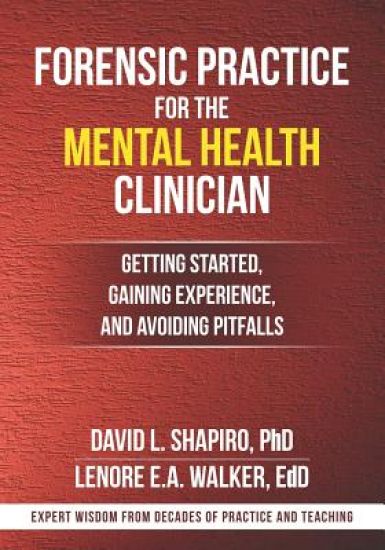
Forensic Practice for the Mental Health Clinician: Getting Started, Gaining Experience, and Avoiding Pitfalls

Forensic Practice for the Mental Health Clinician: Getting Started, Gaining Experience, and Avoiding Pitfalls

Lenore E. a. Walker; David L. Shapiro

TPI Press. the Practice Institute, LLC
2019
nidottu
Mental health professionals have much to contribute to court-related decisions. Forensic work is interesting and rewarding, but it can also be challenging and stressful, even for experienced clinicians. "Forensic Practice for the Mental Health Clinician: Getting Started, Gaining Experience, and Avoiding Pitfalls" walks you through the steps required to navigate most aspects of forensic practice. Each chapter focuses on a different type of assessment and role, including pertinent background, case references, and elements that need to be addressed. Filled with practical information (and checklist summaries) to help keep you on track, Shapiro and Walker's book provides the necessary tools to prepare you for the work ahead.
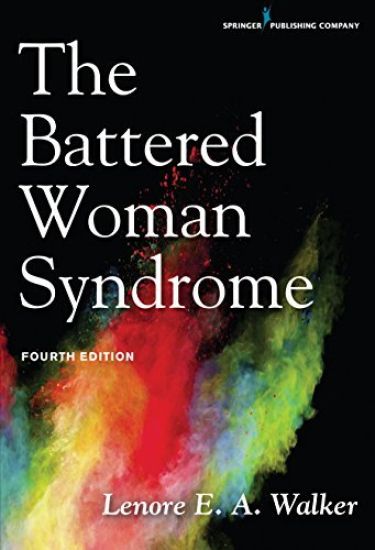
The Battered Woman Syndrome

The Battered Woman Syndrome

Lenore E. A. Walker

Springer Publishing Co Inc
2016
nidottu
With its focus on the connection between health and mental health symptoms, this seminal, groundbreaking work continues to forge new directions in the field of domestic violence. Describing a condition that is the basis for the battered woman defense--cited in cases of physically and psychologically abused women who have killed their abusers--it continues to be used as a defense to explain premeditated assault or murder. Completely updated, the fourth edition reflects the significant changes in the field since the book was last published, incorporating Affordable Care Act (ACA) guidelines on health care and domestic violence and data from the Adverse Childhood Experiences Study. It examines new research regarding battered women and cross-cultural and cross-national issues, and includes several new chapters addressing issues ranging from murder--suicide in domestic violence cases to proposed legislation and congressional resolutions. The fourth edition provides new findings worldwide that reinforce the cycle theory of violence. It reflects new research on traumatic responses, and addresses trauma-informed and trauma-specific psychotherapy, interventions with youth in juvenile detention centers, information from government task forces regarding children exposed to violence and juvenile justice, and new findings regarding the application of psychology to the legal system. Entirely new to the fourth edition is a section about reforming family court and divorce presumptions. This is crucial reading for nearly all health and mental health workers who may be called upon to ask clients about experiences of domestic violence and must respond knowledgeably and effectively. New to the Fourth Edition: Fully revised and updated Incorporates ACA guidelines on health care and domestic violence Includes data from the Adverse Childhood Experiences Study Addresses findings regarding battered women and cross-cultural and cross-national issues New chapter on murder--suicide in domestic violence cases New chapter on trauma treatment for victims of intimate partner violence (IPV) New chapter on human trafficking and sexual exploitation of children New chapter on false confessions of battered women
Introduction to Forensic Psychology

Introduction to Forensic Psychology

Lenore E.A. Walker; David Shapiro

Springer-Verlag New York Inc.
2010
nidottu
of witnesses and on confessions, and the prevention of crime. In 1900, Alfred Binet, the French psychologist who developed the first standard­ ized intelligence test, the Stanford-Binet, testified in court about the use of psychological tests with delinquents and criminals. These tests were later used in large scale for screening potential police as well as criminals and by World War II in the 1940's, were used in many different ways to classify and design treatment for soldiers. In fact, the use of scientific psychometric tests has continued to be one of the strong assets the psychologist can bring to the law. In 1911, a Belgium psychologist, Varendonck testified that child witnesses did not have the mental capacity of adults and their testimony should not be admitted in courts. That same year, a German psychologist, Carl Marbe testified about proximate cause in a civil lawsuit. He described the psychological experiments used to determine that alcohol can have a negative impact on a person's reaction time and subsequent behavior. In the United States the introduction of expert witness testimony took a similar route. In 1921 a case called, State v. Driver recognized that a psy­ chologist could be an expert on juvenile delinquency, but the court rejected that psychologist's testimony, anyhow. One of the first cases that set the standards of admitting all experts, including psychologists, called the Frye standard was decided in 1923.