Kirjojen hintavertailu – 12 859 829 kirjaa ja 27 kauppaa
Kirjailija
Leo G. Rebholz
Kirjat ja teokset yhdessä paikassa: 4 kirjaa, julkaisuja vuosilta 2012–2025, suosituimpiin kuuluu Numerical Analysis. Vertaile teosten hintoja ja tarkista saatavuus suomalaisista kirjakaupoista.
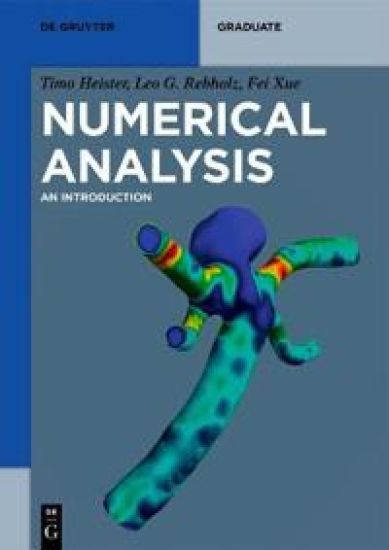
Numerical analysis deals with the development and analysis of algorithms for scientific computing, and is in itself a very important part of mathematics, which has become more and more prevalent across the mathematical spectrum. This book is an introduction to numerical methods for solving linear and nonlinear systems of equations as well as ordinary and partial differential equations, and for approximating curves, functions, and integrals.
Research on the Anderson Acceleration (AA) has exploded in the last 15 years. This book brings together these recent fundamental results applied to nonlinear solvers for PDEs, which are ubiquitous across mathematics, science, engineering, and economics as predictive models for a vast quantity of important phenomena. Coverage includes:AA convergence theory for both contractive and non-contractive operators, filtering techniques for AA, showing how the convergence theory can be fit to various application problems, andAA’s effect on sublinear convergence, andhow AA can be best combined with Newton’s method. The authors provide proofs of the main theorems and results of many of the test examples. Code for the test examples is provided in an online repository. AudienceAnderson Acceleration for Numerical PDE is intended for mathematicians, scientists, and engineers who solve nonlinear problems when Newton’s method either fails or is inefficient. Graduate students in applied mathematics and computational science will also find the book useful. It has sufficient theory and coding for use in a second-year graduate course.
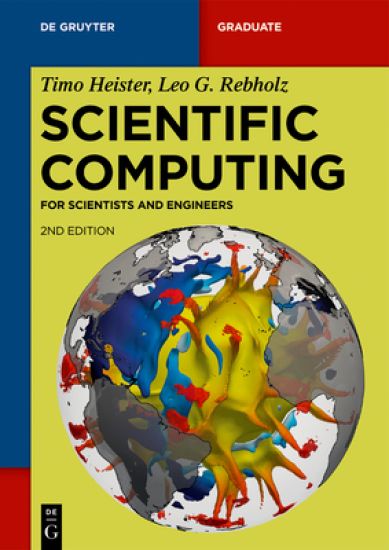
Scientific Computing for Scientists and Engineers is designed to teach undergraduate students relevant numerical methods and required fundamentals in scientific computing. Most problems in science and engineering require the solution of mathematical problems, most of which can only be done on a computer. Accurately approximating those problems requires solving differential equations and linear systems with millions of unknowns, and smart algorithms can be used on computers to reduce calculation times from years to minutes or even seconds. This book explains: How can we approximate these important mathematical processes? How accurate are our approximations? How efficient are our approximations? Scientific Computing for Scientists and Engineers covers: An introduction to a wide range of numerical methods for linear systems, eigenvalue problems, differential equations, numerical integration, and nonlinear problems; Scientific computing fundamentals like floating point representation of numbers and convergence; Analysis of accuracy and efficiency; Simple programming examples in MATLAB to illustrate the algorithms and to solve real life problems; Exercises to reinforce all topics.
This volume presents a mathematical development of a recent approach to the modeling and simulation of turbulent flows based on methods for the approximate solution of inverse problems. The resulting Approximate Deconvolution Models or ADMs have some advantages over more commonly used turbulence models – as well as some disadvantages. Our goal in this book is to provide a clear and complete mathematical development of ADMs, while pointing out the difficulties that remain. In order to do so, we present the analytical theory of ADMs, along with its connections, motivations and complements in the phenomenology of and algorithms for ADMs.