Kirjojen hintavertailu – 12 903 725 kirjaa ja 27 kauppaa

Kirjailija

Leo Granberg

Kirjat ja teokset yhdessä paikassa: 7 kirjaa, julkaisuja vuosilta 2001–2021, suosituimpiin kuuluu Evaluating the European Approach to Rural Development Grass-roots Experiences of the LEADER Programme. Vertaile teosten hintoja ja tarkista saatavuus suomalaisista kirjakaupoista.

7 kirjaa

Kirjojen julkaisuvuodet: 2001–2021.

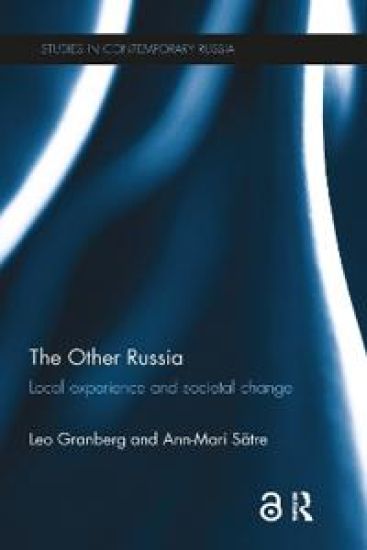
The Other Russia

The Other Russia

Leo Granberg; Ann-Mari Sätre

Taylor Francis Ltd
2021
nidottu
Most recent research seeks to explain contemporary changes in Russia by analysing the decisions of Russian leaders, oligarchs and politicians based in Moscow. This book examines another Russia, one of ordinary people changing their environment and taking opportunities to provoke societal changes in small towns and the countryside. Russia is a resource-rich society and the country’s strategy and institutional structure are built on the most valuable of these resources: oil and gas. Analysing the implications of this situation at the local level, this book offers chapters on resource use, local authorities, enterprises, poverty and types of individual, as well as a final chapter which places local societies within the framework of the Russian politicised economy. Based on extensive empirical data gathered through more than 400 semi-structured interviews with entrepreneurs, teachers, social workers and those working for the local authorities, this book sheds light on the role of local activity in the development of Russian society and is essential reading for students and scholars interested in Russia and its politics.

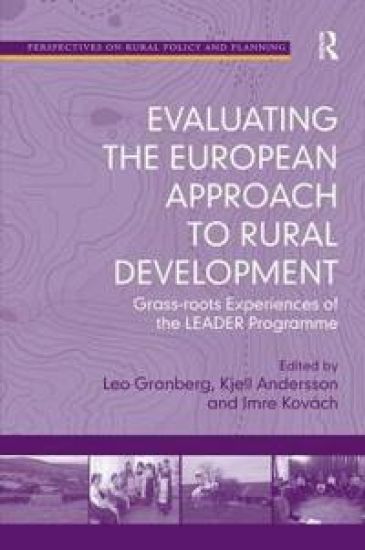
Evaluating the European Approach to Rural Development

Evaluating the European Approach to Rural Development

Leo Granberg; Kjell Andersson

Routledge
2018
nidottu
The LEADER programme, initiated in 1991, aims to improve the development potential of rural areas in the European Union by drawing on local initiatives and skills. Highlighting this unique policy approach, this book presents up-to-date research results on LEADER’s achievements and restrictions at the local level in a comparative way in order to discuss its merits and problems. What makes LEADER important is not only that it has a major role in rural development efforts, but also that it has a pioneering role in the new type of governance, participatory democracy. Asking whether LEADER strengthens local democracy or not, this book also looks at how it affects the power balance among stakeholders, between national and local actors and between genders. It questions whether LEADER projects are genuinely grass-root level activities, reflecting local needs and ideals; and if the approach brings local know-how back onto the development agenda in innovations and development activities. Finally, the authors examine the success of dissemination of knowledge within the LEADER programme to other regions.
Europe's Green Ring

Europe's Green Ring

Leo Granberg; Imre Kovách

Routledge
2017
nidottu
Around the fringe of Europe lies a green ring of countries which have followed different pathways into modernity from the industrial core of the continent and have, until recently, been characterized by a strong agrarian presence in their politics, economy and culture. This book brings together case studies from both the post-socialist countries and EU member states which make up the green ring to compare experiences of rural and agricultural groups. It provides a fascinating opportunity to identify similarities and contrasts in the ways in which these countries have managed their rural areas when faced with the challenges set by industrialization, political integration and globalization. The book focuses on agrarian transformation as de- (and sometimes re-) peasantization - referring to the changing economic, social, cultural and political positions of farmers and food production workers. It also problematizes the standard rural models and opens up discussion of the problems these models pose for the farmers of the green ring countries.
The Other Russia

The Other Russia

Leo Granberg; Ann-Mari Sätre

Routledge
2016
sidottu
Most recent research seeks to explain contemporary changes in Russia by analysing the decisions of Russian leaders, oligarchs and politicians based in Moscow. This book examines another Russia, one of ordinary people changing their environment and taking opportunities to provoke societal changes in small towns and the countryside. Russia is a resource-rich society and the country’s strategy and institutional structure are built on the most valuable of these resources: oil and gas. Analysing the implications of this situation at the local level, this book offers chapters on resource use, local authorities, enterprises, poverty and types of individual, as well as a final chapter which places local societies within the framework of the Russian politicised economy. Based on extensive empirical data gathered through more than 400 semi-structured interviews with entrepreneurs, teachers, social workers and those working for the local authorities, this book sheds light on the role of local activity in the development of Russian society and is essential reading for students and scholars interested in Russia and its politics.
Evaluating the European Approach to Rural Development

Evaluating the European Approach to Rural Development

Leo Granberg; Kjell Andersson

Routledge
2015
sidottu
The LEADER programme, initiated in 1991, aims to improve the development potential of rural areas in the European Union by drawing on local initiatives and skills. Highlighting this unique policy approach, this book presents up-to-date research results on LEADER’s achievements and restrictions at the local level in a comparative way in order to discuss its merits and problems. What makes LEADER important is not only that it has a major role in rural development efforts, but also that it has a pioneering role in the new type of governance, participatory democracy. Asking whether LEADER strengthens local democracy or not, this book also looks at how it affects the power balance among stakeholders, between national and local actors and between genders. It questions whether LEADER projects are genuinely grass-root level activities, reflecting local needs and ideals; and if the approach brings local know-how back onto the development agenda in innovations and development activities. Finally, the authors examine the success of dissemination of knowledge within the LEADER programme to other regions.
Europe's Green Ring

Europe's Green Ring

Leo Granberg; Imre Kovách

Ashgate Publishing Limited
2001
sidottu
Around the fringe of Europe lies a green ring of countries which have followed different pathways into modernity from the industrial core of the continent and have, until recently, been characterized by a strong agrarian presence in their politics, economy and culture. This book brings together case studies from both the post-socialist countries and EU member states which make up the green ring to compare experiences of rural and agricultural groups. It provides a fascinating opportunity to identify similarities and contrasts in the ways in which these countries have managed their rural areas when faced with the challenges set by industrialization, political integration and globalization. The book focuses on agrarian transformation as de- (and sometimes re-) peasantization - referring to the changing economic, social, cultural and political positions of farmers and food production workers. It also problematizes the standard rural models and opens up discussion of the problems these models pose for the farmers of the green ring countries.