
Kirjailija
Leo Nikolayevich Tolstoy
Kirjat ja teokset yhdessä paikassa: 292 kirjaa, julkaisuja vuosilta 1869–2027, suosituimpiin kuuluu Leo Tolstoi. Vertaile teosten hintoja ja tarkista saatavuus suomalaisista kirjakaupoista.
292 kirjaa
Kirjojen julkaisuvuodet: 1869–2027.
The story begins with the childhood and exceptional and accomplished youth of Prince Stepan Kasatsky. The young man is destined for great things. He discovers on the eve of his wedding that his fianc e Countess Mary Korotkova has had an affair with his beloved Tsar Nicholas I. The blow to his pride is massive, and he retreats to the arms of Russian Orthodoxy and becomes a monk. Many years of humility and doubt follow. He is ordered to become a hermit. Despite his being removed from the world, he is still remembered for having so remarkably transformed his life. One winter night, a group of merry-makers decide to visit him, and one of them, a divorced woman named Makovkina, spends the night in his cell, with the intention to seduce him. Father Sergius discovers he is still weak and in order to protect himself, cuts off his own finger. Makovkina is stunned by this act, and leaves the next morning, having vowed to change her life. A year later she has joined a convent. Father Sergius' reputation for holiness grows. He becomes known as a healer, and pilgrims come from far and wide. Yet Father Sergius is profoundly aware of his inability to attain a true faith. He is still tortured by boredom, pride, and lust. He fails a new test, when the young daughter of a merchant successfully beds him. The morning after, he leaves the monastery and seeks out his cousin Pashenka (Praskovya Mikhaylovna), whom he, with a group of other boys, had tormented many years ago. He finds her, now in all the conventional senses a failure in life, yet imbued with a sense of service towards her family. His path is now clearer. He begins to wander, until eight months later he is arrested in the company of a blind beggar who makes him feel closer to God. He is sent to Siberia, where he now works as the hired man of a well-to-do peasant, teaching the gentleman's young children and working in the gardens.
The Death Of Ivan Ilych
Leo Nikolayevich Tolstoy
Createspace Independent Publishing Platform
2016
nidottu
Halvin toimitettuna 12,00 €
The Death of Ivan Ilyich, first published in 1886, is a novella by Leo Tolstoy, one of the masterpieces of his late fiction, written shortly after his religious conversion of the late 1870s. "Usually classed among the best examples of the novella", The Death of Ivan Ilyich tells the story of the sufferings and death of a high-court judge from a terminal illness in 19th-century Russia.
The Kingdom of God is Within You
Leo Nikolayevich Tolstoy
Aziloth Books
2016
pokkari
Halvin toimitettuna 22,00 €
The Kreutzer Sonata and Other Stories
Leo Nikolayevich Tolstoy
Createspace Independent Publishing Platform
2016
nidottu
Redemption: and Two Other Plays
Leo Nikolayevich Tolstoy
Createspace Independent Publishing Platform
2016
nidottu
"Bethink Yourselves!"
Leo Nikolayevich Tolstoy
Createspace Independent Publishing Platform
2015
nidottu
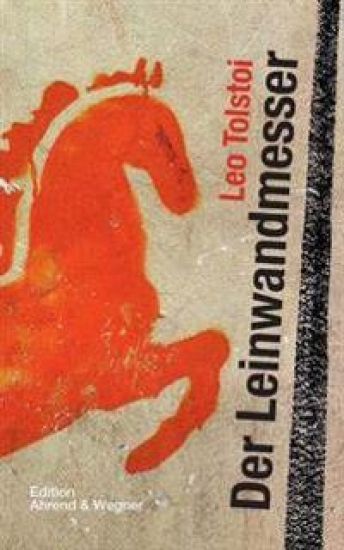
Das titelgebende Pferd wird wegen seines langen, weit ausschreitenden Ganges Leinwandmesser genannt. Als alter, scheckiger Wallach erz hlt es in seinem letzten Gest t in f nf aufeinanderfolgenden N chten seinen j ngeren Artgenossen seine Lebensgeschichte. Es war einst wegen seiner Kraft im ganzen Land ber hmt und ging in jungen Jahren in den Besitz eines Husarenoffiziers ber. Dieser draufg ngerische Lebemann reitet Leinwandmesser in einer Nacht, in der er einer untreuen Geliebten hinterherjagt, derma en zugrunde, dass dieses von neuen Besitzern fortan haupts chlich als Lasttier genutzt wird. Gegen Ende der Erz hlung kommt der Offizier, inzwischen verfettet, hochverschuldet und von einstigen Geliebten endg ltig verlassen, zum Besitzer des letzten Gest ts von Leinwandmesser. Er erinnert sich an seinen scheckigen Wallach und schwelgt in glorreichen Zeiten, was dem Leser den inzwischen eingetretenen Verfall nur umso mehr verdeutlicht. Tolstoi beschreibt zum Schluss das Sterben Leinwandmessers ebenso wie das Hinsiechen seines einstigen Herrn und setzt menschlichen und tierischen Niedergang in Beziehung zueinander.
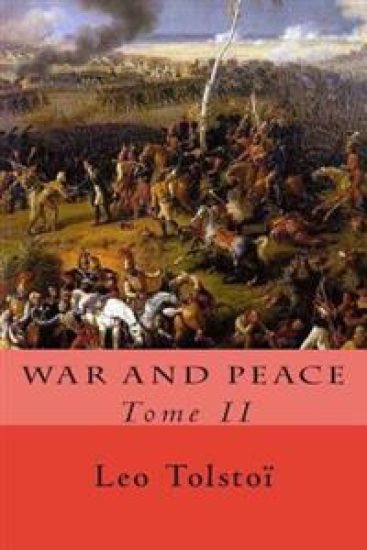
War and Peace: Tome II
Leo Nikolayevich Tolstoy
Createspace Independent Publishing Platform
2014
nidottu
War and Peace (Pre-reform Russian: is a novel by the Russian author Leo Tolstoy, first published in 1869. The work is epic in scale and is regarded as one of the most important works of world literature. It is considered as Tolstoy's finest literary achievement, along with his other major prose work, Anna Karenina (1873-1877). War and Peace delineates in graphic detail events surrounding the French invasion of Russia, and the impact of the Napoleonic era on Tsarist society, as seen through the eyes of five Russian aristocratic families. Portions of an earlier version of the novel, then known as The Year 1805, were serialized in the magazine The Russian Messenger between 1865 and 1867. The novel was first published in its entirety in 1869. Newsweek in 2009 ranked it first in its list of the Top 100 Books. In 2003, the novel was listed at number 20 on the BBC's survey The Big Read. Tolstoy himself, somewhat enigmatically, said of War and Peace that it was "not a novel, even less is it a poem, and still less a historical chronicle". Large sections of the work, especially in the later chapters, are philosophical discussion rather than narrative. He went on to elaborate that the best Russian literature does not conform to standard norms and hence hesitated to call War and Peace a novel. (Instead, Tolstoy regarded Anna Karenina as his first true novel.) War and Peace is well known as being one of the longest novels ever written, though not the longest. It is actually the seventh longest novel ever written in a Latin or Cyrillic based alphabet and is subdivided into four books or volumes, each with sub parts containing many chapters. citation needed] Tolstoy came up with the title, and some of his themes, from an 1861 work of Pierre-Joseph Proudhon: La Guerre et la Paix ('War and Peace' in French). Tolstoy had served in the Crimean War and written a series of short stories and novellas featuring scenes of war. He began writing War and Peace in the year that he finally married and settled down at his country estate. The first half of the book was written under the name "1805". During the writing of the second half, he read widely and acknowledged Schopenhauer as one of his main inspirations. However, Tolstoy developed his own views of history and the role of the individual within it. The first draft of War and Peace was completed in 1863. In 1865, the periodical Russkiy Vestnik published the first part of this early version under the title 1805. In the following year, it published more of the same early version. Tolstoy was dissatisfied with this version, although he allowed several parts of it to be published with a different ending in 1867, still under the same title "1805". He heavily rewrote the entire novel between 1866 and 1869. Tolstoy's wife, Sophia Tolstaya, copied as many as seven separate complete manuscripts by hand before Tolstoy considered it again ready for publication. The version that was published in Russkiy Vestnik had a very different ending from the version eventually published under the title War and Peace in 1869.
The End of the Age, on the Approaching Revolution: Preceded by the Crisis in Russia (1906)
Leo Nikolayevich Tolstoy
Literary Licensing, LLC
2014
nidottu
The Diaries of Leo Tolstoy: Youth, 1847 to 1852 (1917)
Leo Nikolayevich Tolstoy
Literary Licensing, LLC
2014
nidottu
The Complete Works of Count Tolstoy V15: The Four Gospels Harmonized and Translated
Leo Nikolayevich Tolstoy
Literary Licensing, LLC
2014
nidottu
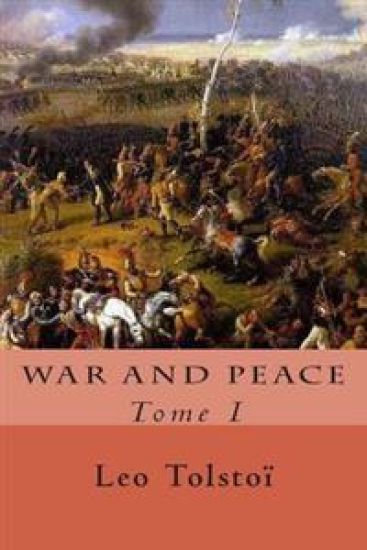
War and Peace: Tome I
Leo Nikolayevich Tolstoy
Createspace Independent Publishing Platform
2014
nidottu
War and Peace (Pre-reform Russian: is a novel by the Russian author Leo Tolstoy, first published in 1869. The work is epic in scale and is regarded as one of the most important works of world literature. It is considered as Tolstoy's finest literary achievement, along with his other major prose work, Anna Karenina (1873-1877). War and Peace delineates in graphic detail events surrounding the French invasion of Russia, and the impact of the Napoleonic era on Tsarist society, as seen through the eyes of five Russian aristocratic families. Portions of an earlier version of the novel, then known as The Year 1805, were serialized in the magazine The Russian Messenger between 1865 and 1867. The novel was first published in its entirety in 1869. Newsweek in 2009 ranked it first in its list of the Top 100 Books. In 2003, the novel was listed at number 20 on the BBC's survey The Big Read. Tolstoy himself, somewhat enigmatically, said of War and Peace that it was "not a novel, even less is it a poem, and still less a historical chronicle". Large sections of the work, especially in the later chapters, are philosophical discussion rather than narrative. He went on to elaborate that the best Russian literature does not conform to standard norms and hence hesitated to call War and Peace a novel. (Instead, Tolstoy regarded Anna Karenina as his first true novel.) War and Peace is well known as being one of the longest novels ever written, though not the longest. It is actually the seventh longest novel ever written in a Latin or Cyrillic based alphabet and is subdivided into four books or volumes, each with sub parts containing many chapters. citation needed] Tolstoy came up with the title, and some of his themes, from an 1861 work of Pierre-Joseph Proudhon: La Guerre et la Paix ('War and Peace' in French). Tolstoy had served in the Crimean War and written a series of short stories and novellas featuring scenes of war. He began writing War and Peace in the year that he finally married and settled down at his country estate. The first half of the book was written under the name "1805". During the writing of the second half, he read widely and acknowledged Schopenhauer as one of his main inspirations. However, Tolstoy developed his own views of history and the role of the individual within it. The first draft of War and Peace was completed in 1863. In 1865, the periodical Russkiy Vestnik published the first part of this early version under the title 1805. In the following year, it published more of the same early version. Tolstoy was dissatisfied with this version, although he allowed several parts of it to be published with a different ending in 1867, still under the same title "1805". He heavily rewrote the entire novel between 1866 and 1869. Tolstoy's wife, Sophia Tolstaya, copied as many as seven separate complete manuscripts by hand before Tolstoy considered it again ready for publication. The version that was published in Russkiy Vestnik had a very different ending from the version eventually published under the title War and Peace in 1869.