Kirjojen hintavertailu – 12 859 829 kirjaa ja 27 kauppaa

Kirjailija

Leo-paul Dana

Kirjat ja teokset yhdessä paikassa: 17 kirjaa, julkaisuja vuosilta 2001–2026, suosituimpiin kuuluu Entrepreneurship in Uncertainty. Vertaile teosten hintoja ja tarkista saatavuus suomalaisista kirjakaupoista.

Nimi esiintyy myös muodoissa: Léo-Paul Dana, Leo Paul Dana

17 kirjaa

Kirjojen julkaisuvuodet: 2001–2026.

Entrepreneurship in Uncertainty

Entrepreneurship in Uncertainty

Vimal Babu; Léo-Paul Dana

De Gruyter
2026
isokokoinen pokkari
This textbook directly addresses uncertainty, giving students the skills they need to succeed in enterprises. It also helps prospective entrepreneurs and owners of businesses recognize and exploit opportunities, establish unique business models, make measured choices and manage risks. The textbook's practical approach connects theory and practice, setting it apart from competitors. With the book's real-world case studies, engaging exercises, and practical insights, students can apply the ideas they learn. Today's business environment requires critical thinking, problem-solving, creative thinking, negotiation, resilience, and adaptability, which may be learned by doing. This book emphasises long-term success. Sustainable businesses need ethical business practices, responsibility for society, and the capacity to meet ecological obligations. By integrating sustainability into the business process, the textbook prepares students for socially and environmentally responsible entrepreneurship. Classrooms in entrepreneurial courses will benefit from the textbook's comprehensive coverage, practical nuances, and long-term emphasis on sustainability. Its widespread use may shape the next generation of entrepreneurs and small business owners by giving them the knowledge, confidence, and novel perspectives to thrive in an increasingly unpredictable and uncertain environment, overcome obstacles, and build successful enterprises that make a difference from the ground up.

Reflections on Immigrant Entrepreneurship

Reflections on Immigrant Entrepreneurship

Roberto P. Q. Falcão; Eduardo P. Cruz; Léo-Paul DANA

Springer International Publishing AG
2025
sidottu
This book explores the nuanced dynamics that shape immigrant entrepreneurship. It examines how time, context, and gender influence entrepreneurial behaviours of diasporas in emerging contexts, offering a fresh perspective on the motivations, strategies, and challenges faced by immigrant entrepreneurs. Through a multidisciplinary approach, the authors examine the intersection of cultural adaptation, economic aspirations, and social networks, and their evolution over time. By focusing on gender and behaviours unique to diaspora groups, this book provides an in-depth understanding of the impact of identity and heritage on business practices and the transformative role of immigrant entrepreneurs in their host countries. Featuring real-world case studies, this book is an essential resource for scholars, researchers, academics, practitioners, and policymakers interested in the changing landscape of immigrant entrepreneurship in today’s interconnected world.
Sustainable Family Business

Sustainable Family Business

Ramo Palalic; Claire Seaman; Veland Ramadani; Léo-Paul Dana; Gadaf Rexhepi

Springer International Publishing AG
2024
sidottu
This book introduces a 'triple-bottom-line' approach to the concept and practice of family business sustainability. It is geared towards a broad audience covering social, economic, and environmental issues, to focus on implementation of sustainable practices. Having this in mind, this book provides possible ways of successfully managing family businesses in a sustainable manner, which should also lead to long-term business longevity. The social perspectives addressed by this book discuss the social responsibility of the family business, using a two-way approach contributing to the development of society. The economic outlook is introduced by aiming at a sustainable competitive advantage with an economic impact, and how a family business should adapt to changes and be proactive to gain economic sustainability. The environmental dimension is focused on actions against global warming and global agreements aimed at businesses to change their policies to prioritize the environment as part of their strategy. This book thus explores possibilities for family firms to add values along all chains in business activities and to contribute to introducing green environment products, or environmentally safe products. Each part of the book represents an important pillar of the family business unit that helps the firm to achieve and sustain its competitive advantage using the triple-bottom-line approach. Besides the objectives and the content, each chapter provides one short story applicable to a chapter's content and a case study for each chapter or topic. As learning tools besides case studies, the book provides key summaries, terminology, group assignments, and projects.
Entrepreneurs and Capitalism since Luther

Entrepreneurs and Capitalism since Luther

Ivan Light; Léo-Paul Dana

BLOOMSBURY PUBLISHING PLC
2021
nidottu
In Entrepreneurs and Capitalism since Luther: Rediscovering the Moral Economy, Ivan Light and Léo-Paul Dana study the history of business, capitalism, and entrepreneurship to examine the values of social and cultural capital. Six chapters evaluate case studies that illustrate contrasting relationships between social networks, vocational culture, and entrepreneurship. Light and Dana argue that, in capitalism’s early stages, cultural capital is scarcer than social capital and therefore more crucial for business owners. Conversely, when capitalism is well established, social capital is scarcer than cultural capital and becomes more crucial. Light and Dana then trace moral legitimations of capitalism from the Reformation to the Enlightenment, the Gilded Age, and finally to Joseph Schumpeter whose concept of “creative destruction” freed elite entrepreneurs from moral restraints that encumber small business owners. After examining the availability of social and cultural capital in the contemporary United States, Light and Dana show that business owners’ social capital enforces conventional morality in markets, facilitating commerce and legitimating small businesses the old-fashioned way. As their networks become more isolated, elite entrepreneurs must claim and ultimately deliver successful results to earn public toleration of immoral or predatory conduct.
Entrepreneurs and Capitalism since Luther

Entrepreneurs and Capitalism since Luther

Ivan Light; Léo-Paul Dana

Rowman Littlefield
2020
sidottu
In Entrepreneurs and Capitalism since Luther: Rediscovering the Moral Economy, Ivan Light and Léo-Paul Dana study the history of business, capitalism, and entrepreneurship to examine the values of social and cultural capital. Six chapters evaluate case studies that illustrate contrasting relationships between social networks, vocational culture, and entrepreneurship. Light and Dana argue that, in capitalism’s early stages, cultural capital is scarcer than social capital and therefore more crucial for business owners. Conversely, when capitalism is well established, social capital is scarcer than cultural capital and becomes more crucial. Light and Dana then trace moral legitimations of capitalism from the Reformation to the Enlightenment, the Gilded Age, and finally to Joseph Schumpeter whose concept of “creative destruction” freed elite entrepreneurs from moral restraints that encumber small business owners. After examining the availability of social and cultural capital in the contemporary United States, Light and Dana show that business owners’ social capital enforces conventional morality in markets, facilitating commerce and legitimating small businesses the old-fashioned way. As their networks become more isolated, elite entrepreneurs must claim and ultimately deliver successful results to earn public toleration of immoral or predatory conduct.
Qualitative Methodologies And Data Collection Methods: Toward Increased Rigour In Management Research

Qualitative Methodologies And Data Collection Methods: Toward Increased Rigour In Management Research

Edward Groenland; Leo-paul Dana

World Scientific Publishing Co Pte Ltd
2019
sidottu
'The book is very simplistically written and, I consider that undergraduate students would find maximum chapters easy to comprehend and apply. I strongly recommend Qualitative Methodologies and Data Collection Methods: Toward Increased Rigour in Management Research for general and qualitative methodology courses and for practitioners and researchers searching for direction in planning or gaining a superior comprehension of qualitative research. It is an excellent book that gives brief and accommodating portrayals of major ascribes of qualitative research and priceless examples for planning and conducting research studies and various data collection methods in qualitative exploration.'Technological Forecasting & Social Change Globalisation opens new frontiers of research that require advanced research methods. While quantitative methods are ideal in some situations, qualitative methods are more appropriate for responding to 'how' questions in new contexts. They aim to understand and provide a holistic picture via interaction — a unique advantage over quantitative methods. This textbook for graduate students introduces qualitative research and covers major qualitative methodologies and data collection methods. The choice of methodologies in this book is based on their actual applicability in management research. This approach provides a hands-on emphasis while maintaining both scientific rigour and rooting, and a high practicality level with respect to problem analysis, the collection of data, and the way this data should be analysed. Students and researchers will benefit from features including explanations of the advantages and disadvantages of methodological choices, and elaborated examples of good articles. The reader will acquire an overview of current methodologies, which will facilitate the choice process with respect to research approaches, and is also encouraged to bring personal research skills to a higher level.
Entrepreneurship In Western Europe: A Contextual Perspective
Entrepreneurship in Western Europe: A Contextual Perspective looks to explain how different local cultural and historical contexts can yield radically different entrepreneurial scenarios in a heterogenous Europe. Over 20 countries are examined providing a comprehensive history of the evolution of entrepreneurship across western Europe. The book concludes with a look at the future implications of current policies on entrepreneurship and of symbiosis in western Europe. Richly illustrated, this book is perfect for undergraduate students or anyone with an interest in the business practices, economics or public policy of Europe.
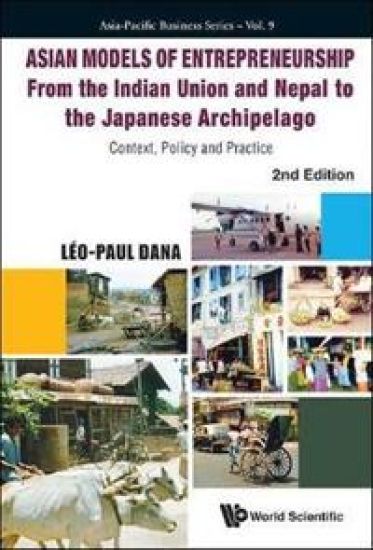
Asian Models Of Entrepreneurship - From The Indian Union And Nepal To The Japanese Archipelago: Context, Policy And Practice (2nd Edition)
In this book, Leo-Paul Dana makes it clear that much can be learnt about the nature of entrepreneurial activity when we delve into the unique characteristics of different nations of South Asia, South-east Asia and East Asia. Through in-depth analyses and comprehensive reviews of many Asian countries, the profound differences both among and within countries of the region become vividly apparent. Dana juxtaposes the explosion in entrepreneurial growth within China against the struggles to build an entrepreneurial community in Japan, or the enlightened public policy leadership in Singapore against the crisis-driven developments in Korea. The range of factors identified within each of the 15 countries examined by Dana is not an example of random influences on the entrepreneurial process, because they can be construed in more systematic and logical ways. Thus, the book uncovers the Chinese model of gradual transition, the Royal Cambodian model, and the Doi-Moi model, among many others. The reader is challenged to grasp these different models, and identify their commonalities and differences.
Asian Models Of Entrepreneurship -- From The Indian Union And The Kingdom Of Nepal To The Japanese Archipelago: Context, Policy And Practice
In this landmark book, Leo Dana makes it clear that entrepreneurship is a global phenomenon, but much can be learned about the nature of entrepreneurial activity when we delve into the unique characteristics of different regions of the world. The profound differences both among and within the countries of Asia become vividly apparent in the pages of this book. Dana juxtaposes the explosion in entrepreneurial growth within China against the struggles to build an entrepreneurial community in Japan, or the enlightened public policy leadership in Singapore against the crisis-driven developments in Korea. The range of factors identified within each of the 15 countries examined by Dana are not random influences on the entrepreneurial process, they can be construed in more systematic and logical ways. Thus, the book uncovers the Chinese model of gradual transition, the Royal Cambodian model, the Doi-Moi model, and others. The reader is challenged to grasp these different models, and identify their commonalities and differences.
Entrepreneurship And Smes In The Euro-zone: Towards A Theory Of Symbiotic Entrepreneurship
The European Charter for Small Enterprises recognises that small firms are the backbone of the European economy. Yet books on the topic are few. An author requires courage to cover such a large set of different views, perceptions and realities about entrepreneurship, even within the limited area of the Euro-zone. Léo-Paul Dana, with a track record in researching and writing about entrepreneurship, puts together an ambitious comparison of 12 European countries: an introduction with geographic, demographic, and historical overviews, a focus on the economy, entrepreneurship and small business sector and a view on the future. It serves as a valuable overview of self-employment in the Euro-zone, as well as a guide to entrepreneurship.
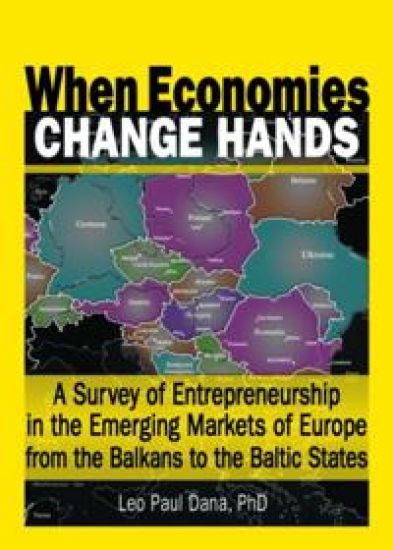
When Economies Change Hands

When Economies Change Hands

Leo Paul Dana

Routledge Member of the Taylor and Francis Group
2005
sidottu
Gain a comprehensive understanding of the development of entrepreneurship across Eastern Europe Throughout Eastern Europe, post-Communist countries transitioning to market-based economies are obtaining a variety of results due to diverse policy approaches. When Economies Change Hands evaluates the nature of entrepreneurship in this region, the consequences of central planning, the reasons for internal subsistence activity, and the emergence of the sex trade in Eastern Europe. The wealth of information in this resource is clearly presented and includes thought-provoking policy prescriptions for the future. It is challenging to predict the direction emerging markets will take, particularly when dealing with the wide-ranging social and economic situations taking place in post-Communist Eastern Europe. When Economies Change Hands can help. This reference volume for policymakers, educators, investors, and researchers provides a much-needed and timely survey of the transitioning markets of post-Communist Europe. It examines the historical, sociocultural, and economic impacts of market transition. The text includes a discussion of the creation and distribution of wealth in the countries of Eastern Europe that will leave you better informed about the dynamics of transitioning economies and the growth of entrepreneurship across Eastern Europe. In addition, the book demonstrates the problems and advantages of both slow reform and rapid reform models in a thorough and easy-to-read manner. When Economies Change Hands includes vivid photos of notable entrepreneurs and a sophisticated trail of references for academics that complements the useful and meaningful information you will find in the text. When Economies Change Hands examines how various policies affect the economies of transitioning countries by incorporating and discussing: detailed definitions and comparisons of formal and parallel economies an in-depth study of entrepreneurship in the Republic of Albania, the Eastern Bloc of Comecon, The Baltic States, and the Commonwealth of Independent States pluralism in the former Yugoslav Republics analyses of governmental programs and policy prescriptions for the future and much more! As the market economies of Eastern Europe develop and expand, the value of this meticulous yet accessible text will continue to increase. Whether you are a policymaker, an educator, an investor, or a researcher, When Economies Change Hands is a resource that you’ll return to again and again as you work to understand and predict the future of post-Communist economies in Eastern Europe.
When Economies Change Hands

When Economies Change Hands

Leo Paul Dana

Routledge Member of the Taylor and Francis Group
2005
nidottu
Gain a comprehensive understanding of the development of entrepreneurship across Eastern Europe Throughout Eastern Europe, post-Communist countries transitioning to market-based economies are obtaining a variety of results due to diverse policy approaches. When Economies Change Hands evaluates the nature of entrepreneurship in this region, the consequences of central planning, the reasons for internal subsistence activity, and the emergence of the sex trade in Eastern Europe. The wealth of information in this resource is clearly presented and includes thought-provoking policy prescriptions for the future. It is challenging to predict the direction emerging markets will take, particularly when dealing with the wide-ranging social and economic situations taking place in post-Communist Eastern Europe. When Economies Change Hands can help. This reference volume for policymakers, educators, investors, and researchers provides a much-needed and timely survey of the transitioning markets of post-Communist Europe. It examines the historical, sociocultural, and economic impacts of market transition. The text includes a discussion of the creation and distribution of wealth in the countries of Eastern Europe that will leave you better informed about the dynamics of transitioning economies and the growth of entrepreneurship across Eastern Europe. In addition, the book demonstrates the problems and advantages of both slow reform and rapid reform models in a thorough and easy-to-read manner. When Economies Change Hands includes vivid photos of notable entrepreneurs and a sophisticated trail of references for academics that complements the useful and meaningful information you will find in the text. When Economies Change Hands examines how various policies affect the economies of transitioning countries by incorporating and discussing: detailed definitions and comparisons of formal and parallel economies an in-depth study of entrepreneurship in the Republic of Albania, the Eastern Bloc of Comecon, The Baltic States, and the Commonwealth of Independent States pluralism in the former Yugoslav Republics analyses of governmental programs and policy prescriptions for the future and much more! As the market economies of Eastern Europe develop and expand, the value of this meticulous yet accessible text will continue to increase. Whether you are a policymaker, an educator, an investor, or a researcher, When Economies Change Hands is a resource that you’ll return to again and again as you work to understand and predict the future of post-Communist economies in Eastern Europe.
Global Marketing Co-Operation and Networks

Global Marketing Co-Operation and Networks

Leo Paul Dana

Routledge Member of the Taylor and Francis Group
2001
nidottu
Learn how to compete in international markets! The nature of business has changed, and Global Marketing Co-Operation and Networks explains how and why former competitors are now joining forces. Exploring co-operation, networks, and internationalization, this collection provides you with an indispensable framework for grasping the ongoing changes in global business. In addition, it includes a new, broad-based theory of international entrepreneurship that will help you master the intricacies of global marketing. Global Marketing Co-Operation and Networks features both empirical research and conceptual studies. It provides you with important research findings about the impact of internationalization on entrepreneurs, smaller firms, and multinational giants. This valuable book contains up-to-date information from top researchers in entrepreneurship from Canada, the United States, the United Kingdom, Australia, New Zealand, and Singapore. Global Marketing Co-Operation and Networks gives insight into the often confusing world of international business, explaining such difficult issues as:building networks to link smaller firms that have specialized knowledge and multinational firms that have marketing prowess establishing an international market presence with the help of supply and distribution networks that are already in place using group dynamics to establish successful networking choosing the best time to internationalize taking advantage of government-funded overseas trade missions to develop international marketsGlobal Marketing Co-Operation and Networks is an essential resource for executives and entrepreneurs hoping to break into international business, as well as students and researchers interested in international economics, globalization, networking, and marketing strategies.
Global Marketing Co-Operation and Networks

Global Marketing Co-Operation and Networks

Leo Paul Dana

Routledge Member of the Taylor and Francis Group
2001
sidottu
Learn how to compete in international markets! The nature of business has changed, and Global Marketing Co-Operation and Networks explains how and why former competitors are now joining forces. Exploring co-operation, networks, and internationalization, this collection provides you with an indispensable framework for grasping the ongoing changes in global business. In addition, it includes a new, broad-based theory of international entrepreneurship that will help you master the intricacies of global marketing. Global Marketing Co-Operation and Networks features both empirical research and conceptual studies. It provides you with important research findings about the impact of internationalization on entrepreneurs, smaller firms, and multinational giants. This valuable book contains up-to-date information from top researchers in entrepreneurship from Canada, the United States, the United Kingdom, Australia, New Zealand, and Singapore. Global Marketing Co-Operation and Networks gives insight into the often confusing world of international business, explaining such difficult issues as:building networks to link smaller firms that have specialized knowledge and multinational firms that have marketing prowess establishing an international market presence with the help of supply and distribution networks that are already in place using group dynamics to establish successful networking choosing the best time to internationalize taking advantage of government-funded overseas trade missions to develop international marketsGlobal Marketing Co-Operation and Networks is an essential resource for executives and entrepreneurs hoping to break into international business, as well as students and researchers interested in international economics, globalization, networking, and marketing strategies.