Kirjojen hintavertailu – 12 859 824 kirjaa ja 27 kauppaa

Kirjailija

Leo Suryadinata

Kirjat ja teokset yhdessä paikassa: 12 kirjaa, julkaisuja vuosilta 1989–2025, suosituimpiin kuuluu Rising China, Chinese Culture and Its Transformation in Southeast Asia. Vertaile teosten hintoja ja tarkista saatavuus suomalaisista kirjakaupoista.

12 kirjaa

Kirjojen julkaisuvuodet: 1989–2025.

Rising China, Chinese Culture and Its Transformation in Southeast Asia
The study of China's culture in Southeast Asia is particularly significant as some observers misconceive Chinese culture in Southeast Asia as purely "Chinese", as if it had not been influenced by local conditions, including nationalism. In reality, Chinese culture in Southeast Asia is imbued with distinct differences that set itself apart from that in mainland China. Nevertheless, the question remains whether the rise of China has made the further transformation of local Chinese culture difficult, if not impossible. This book aims to examine the following: the current status of Chinese religions, language, literature, music and performing arts in Southeast Asia, their local characteristics, their position in both local Chinese and non-Chinese local society, and their problems and prospects. Seventeen scholars have been invited to present papers to deal with the above themes and with one exception, their revised papers are eventually included in this book. This is the most up-to-date publication that addresses the topic of Chinese culture and its transformation in Southeast Asia.
Rising China and New Chinese Migrants in Southeast Asia
New Chinese migration is a recent development that has just entered an initial phase. An overarching theme and conclusion across the sixteen chapters in this volume is that China's policy towards Chinese migrants has changed from period to period, and it is still too early for us to determine if Beijing will continue to pursue the policy of luoye guigen (return to original roots) or will revert to one of luodi shenggen (sink into local roots).
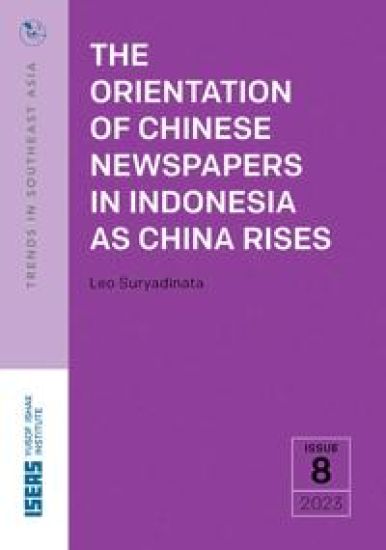
The Orientation of Chinese Newspapers in Indonesia as China Rises
This paper examines the impact of globalizati on and a rising China, among other factors, on the political orientati on of Chinese-language newspapers in Indonesia. Chinese newspapers in Indonesia have had a long trajectory, moving from a China-oriented focus to an Indonesia-oriented one over the course of Indonesian history. Their content has grown beyond the local to become regional in its outlook. The recent rise of China has been having a profound impact on Chinese newspapers in Indonesia. Many of their arti cles are pro-China while attempting to maintain the delicate balance and being Indonesia-oriented at the same time. With the community of Chinese-speaking Indonesian Chinese shrinking due to age, the Chinese-language dailies face challenges in circulati on. The older generation that frequents them possesses signifi cantly strong economic power, however, and while new migrants from China and ethnic Chinese from other Southeast Asian countries also read these dailies, their numbers are relatively small.
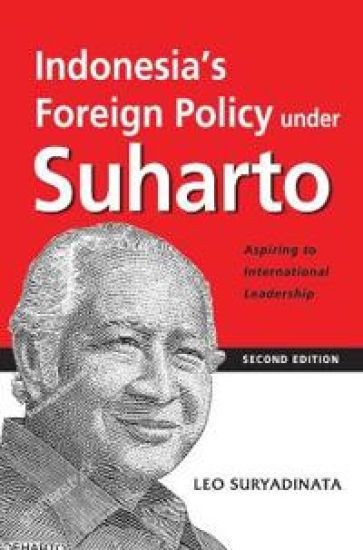
Indonesia's Foreign Policy Under Suharto
This book, first published in 1996, examines Indonesia's foreign policy under Suharto. It not only details Indonesia's foreign policy behaviour vis-à-vis Indonesia's neighbours and major powers, but also places it in the context of foreign policy analysis. Today, the book remains as the only full-length study on Indonesia's foreign policy under Suharto. It is now reprinted with a new postscript which discusses the post-Suharto era from B. J. Habibie to Joko Widodo. Indonesia under Suharto had attempted to become a regional power to lead Southeast Asian states and beyond. As the largest country and also the richest in terms of natural resources, Suharto's Indonesia was held in deference by the ASEAN states. However, due to its limited capabilities, its lack of military strength, advanced technology and economic strength, the political influence of Jakarta was in fact quite limited.
Peranakan Chinese Identities in the Globalizing Malay Archipelago
Peranakan Chinese communities and their "hybrid" culture have fascinated many observers. This book, comprising fourteen chapters, is mainly based on my papers written in the last two decades. They address Peranakan Chinese identities in the globalizing Malay Archipelago. Issues discussed in these chapters include Peranakan Chinese cultural, national and political identities in the Malay Archipelago, i.e., Indonesia, Malaysia and Singapore (IMS). Based on the coverage of the chapters, the book is divided into two parts. Part I is on the regional dimension, which contains nine chapters that discuss the three countries and beyond. Part II consists of five chapters which focus on one country, i.e., Indonesia. This book not only discusses the past and the present but also the future of the Peranakan Chinese.
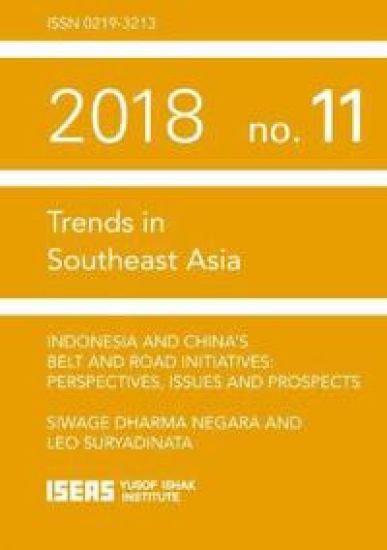
Indonesia and China’s Belt and Road Initiatives

Indonesia and China’s Belt and Road Initiatives

Siwage Dharma Negara; Leo Suryadinata

ISEAS
2018
nidottu
For Indonesia, which is keen to accelerate its infrastructure development, Belt and Road Initiative (BRI) is seen as an opportunity to tap into China’s huge financial resources and technological capability. There has however been no concrete BRI project agreed to between China and Indonesia so far. While China considers all projects, including infrastructure projects and economic interactions as part of BRI, Indonesia only considers those infrastructure projects initiated during the Xi Jinping period as BRI projects. Indonesia has offered several broad areas for cooperation under the BRI framework and carefully selected project locations to minimize political risk for the Joko Widodo government. But no agreements have been signed yet as China requires detailed project proposals from Indonesia, which it has apparently not received. What appears to hamper progress are four key issues: the perception of China’s economic domination, the ethnic Chinese issue, the Natuna issue, and the mainland Chinese workers issue.
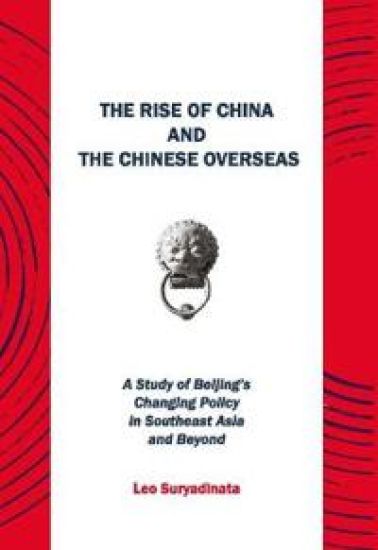
The Rise of China and the Chinese Overseas
With the rise of China and massive new migrations, China has adjusted its policy towards the Chinese overseas in Southeast Asia and beyond. This book deals with Beijing's policy which has been a response to the external events involving the Chinese overseas as well as the internal needs of China. It appears that a rising China considers the Chinese overseas as a source of socio-political and economic capital and would extend its protection to them whenever this is not in conflict with its core national interest. The impacts on and the responses of the relevant countries, especially those in Southeast Asia, are also examined.
Prominent Indonesian Chinese

Prominent Indonesian Chinese

Leo Suryadinata

Institute of Southeast Asian Studies
2015
nidottu
Indonesia is the largest country in Southeast Asia where there is a significant number of ethnic Chinese, many of whom have played an important role. This book presents biographical sketches of about 530 prominent Indonesian Chinese, including businessmen, community leaders, politicians, religious leaders, artists, sportsmen/sportswomen, writers, journalists, academics, physicians, educators, and scientists. First published in 1972, it was revised and developed into the present format in 1978, and has since been revised several times. This is the fourth and most up-to-date version.
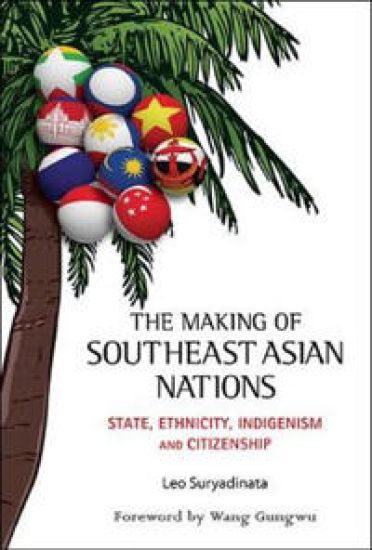
Making Of Southeast Asian Nations, The: State, Ethnicity, Indigenism And Citizenship
The idea of the ‘nation’ is a Western concept which has been applied to Southeast Asia. It is a project which has been in progress since the last century but is still incomplete. Various theoretical frameworks which are associated with nation and nation-building in the Southeast Asian region have been briefly dealt with. The book aims to examine the making of the nations in Southeast Asia using both historical and political science approaches. Concepts related to nation such as ethnicity, state, indigenism and citizenship have also been analysed in the Southeast Asian context. Specific examples of nation-building in five major Southeast Asian countries are presented. Problems and prospects of Southeast Asia's nation-building and citizenship building in the era of globalisation are also discussed.
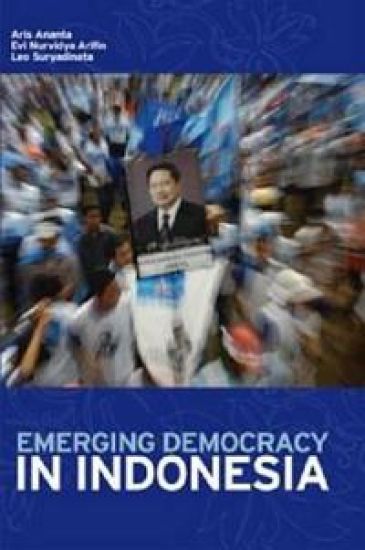
Emerging Democracy in Indonesia

Emerging Democracy in Indonesia

Aris Ananta; Evi Nurvidya Arifin; Leo Suryadinata

Institute of Southeast Asian Studies
2005
sidottu
In 2004, Indonesia had a second democratic election, which was also conducted in a peaceful and orderly manner. This book discusses Indonesia's transition towards democracy through the parliamentary and presidential elections, including an analysis of party activity in the provinces, in 2004.
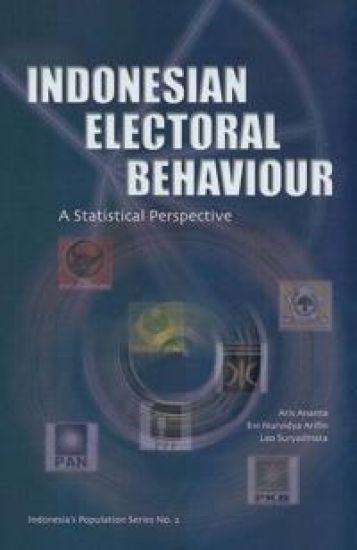
Indonesian Electoral Behaviour

Indonesian Electoral Behaviour

Aris Ananta; Evi Nurvidya Arifin; Leo Suryadinata

Institute of Southeast Asian Studies
2004
sidottu
In Indonesia's plural society, ethnicity and religion are considered as independent variables to explain electoral behaviour. Many writers use qualitative methods to relate political party performance in terms of ethnicity and religion. This book questions these assumptions by looking at data on the 1999 election and the 2000 population census.
Military Ascendancy and Political Culture

Military Ascendancy and Political Culture

Leo Suryadinata

Ohio University Press
1989
pokkari
Most of the earlier studies on the Indonesian political party, Golkar, tend to view the organization solely as an electoral machine used by the military to legitimize its power. However, this study is different in that it considers Golkar less an electoral machine and more as a political organization which inherited the political traditions of the nominal Muslim parties and the Javanese governing elite pre-1965, before the inauguration of Indonesia's New Order. Golkar, then, is seen in this book as nominal Islam with a military element that tends to differentiate it from previous political parties in the country. Leo Suryadinata traces the birth, struggle, and emergence of this party so closely identified with Indonesia's President Suharto. Yet, to claim that Suharto and the military dominate the party is to view Golkar superficially, for the party is also composed of factions of civil servants and the Minister of Security and Defense, as well as several other governmental agencies. A complex and well-detailed cultural history of Indonesia's most powerful political party, this case study should have wider implications for the study of military behavior in the Third World.