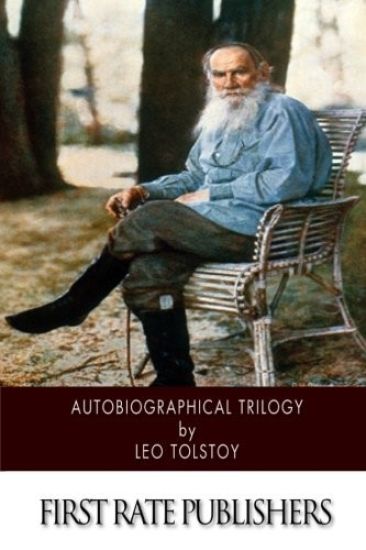
Kirjailija
Leo Tolstoy
Kirjat ja teokset yhdessä paikassa: 1 277 kirjaa, julkaisuja vuosilta 1859–2026, suosituimpiin kuuluu Classic Short Story Collection: Charles Dickens, Leo Tolstoy, Fyodor Dostoyevsky, Franz Kafka, Jack London, and Oscar Wilde. Vertaile teosten hintoja ja tarkista saatavuus suomalaisista kirjakaupoista.
1 277 kirjaa
Kirjojen julkaisuvuodet: 1859–2026.

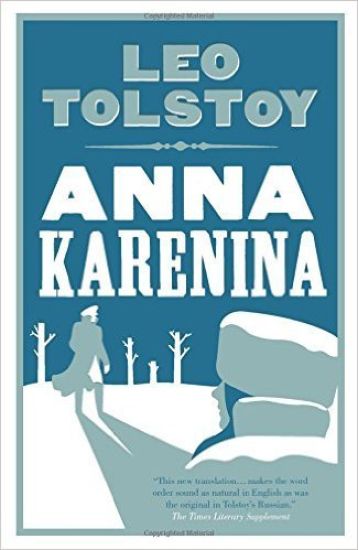
Leo Tolstoy’s most personal novel, Anna Karenina scrutinizes fundamental ethical and theological questions through the tragic story of its eponymous heroine. Anna is desperately pursuing a good, “moral” life, standing for honesty and sincerity. Passion drives her to adultery, and this flies in the face of the corrupt Russian bourgeoisie. Meanwhile, the aristocrat Konstantin Levin is struggling to reconcile reason with passion, espousing a Christian anarchism that Tolstoy himself believed in. Acclaimed by critics and readers alike, Anna Karenina presents a poignant blend of realism and lyricism that makes it one of the most perfect, enduring novels of all time.
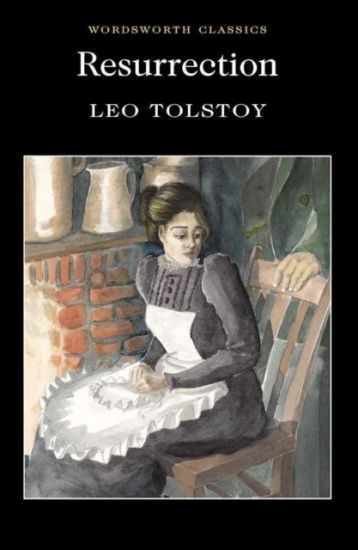
This powerful novel, Tolstoy’s third major masterpiece, after War and Peace and Anna Karenina, begins with a courtroom drama (the finest in Russian literature) all the more stunning for being based on a real-life event. Dmitri Nekhlyudov, called to jury service, is astonished to see in the dock, charged with murder, a young woman whom he once seduced, propelling her into prostitution. She is found guilty on a technicality, and he determines to overturn the verdict. This pitches him into a hellish labyrinth of Russian courts, prisons and bureaucracy, in which the author loses no opportunity for satire and bitter criticism of a state system (not confined to that country) of cruelty and injustice. This is Dickens for grown-ups, involving a hundred characters, Crime and Punishment brought forward half a century. With unforgettable set-pieces of sexual passion, conflict and social injustice, Resurrection proceeds from brothel to court-room, stinking cells to offices of state, luxury apartments to filthy life in Siberia. The ultimate crisis of moral responsibility embroils not only the famous author and his hero, but also you and me. Can we help resolve the eternal issues of law and imprisonment?
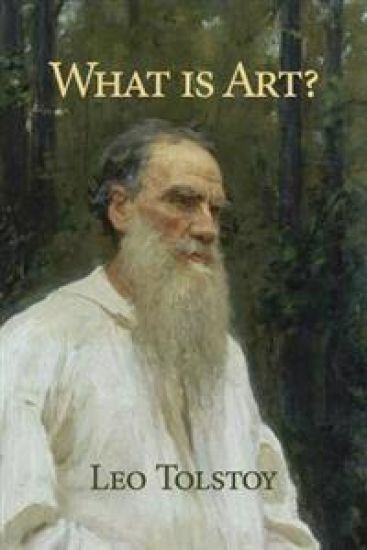
2014 paperback edition of Leo Tolstoy's controversial indictment of sthetic theory. Tolstoy contends that much of European art since the Renaissance is not "true" art but "counterfeit" art, marked by being mannered, imitative, sensationalist, and overly intellectual. Few of the most highly regarded masters in the canon of art history are spared Tolstoy's scathing criticisms - Michelangelo, Shakespeare, Bach, Beethoven, Wagner, Baudelaire, Zola, and many others, are derided as insincere, decadent, and obsessed with erotic mania. Even the concept of beauty is exposed as a manipulative, calculating, and perverse obsession of the upper class, largely produced at the expense of the laboring class. The cover is a portrait of Tolstoy painted by Ilya Repin.
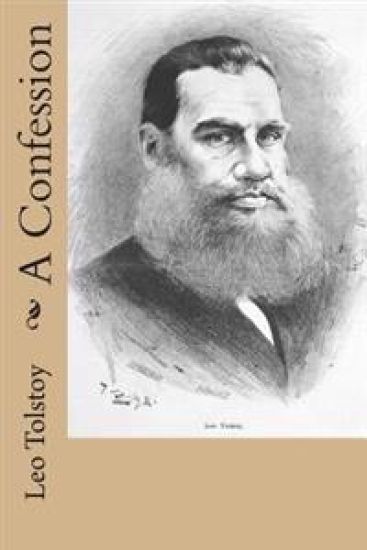
A Confession is a short work on the subject of melancholia, philosophy and religion by the acclaimed Russian novelist Leo Tolstoy. It was written in 1879 to 1880, when Tolstoy was of late-middle age. The book is a brief autobiographical story of the author's struggle with a mid-life existential crisis. It describes his search for the answer to the ultimate philosophical question: "If God does not exist, since death is inevitable, what is the meaning of life?." Without the answer to this, for him, life had become "impossible". The story begins with the Eastern fable of the dragon in the well. A man is chased by a beast into a well, at the bottom of which is a dragon. The man clings to a branch that is being gnawed on by two mice (one black, one white, representing night and day and the relentless march of time). The man is able to lick two drops of honey (representing Tolstoy's love of his family and his writing), but because death is inevitable, he no longer finds the honey sweet. Tolstoy goes on to describe four possible attitudes towards this dilemma. The first is ignorance. If one is oblivious to the fact that death is approaching, life becomes bearable. The problem with this for him personally is that he is not ignorant. Having become conscious of the reality of death, there is no going back. The second possibility is what Tolstoy describes as Epicureanism. Being fully aware that life is ephemeral, one can enjoy the time one has. Tolstoy's problem with this is essentially moral. He states that Epicureanism may work fine and well for the minority who can afford to live "the good life," but one would have to be morally empty to be able to ignore the fact that the vast majority of people do not have access to the wealth necessary to live this kind of life. Tolstoy next states that the most intellectually honest response to the situation would be suicide. In the face of the inevitability of death and assuming that God does not exist, why wait? Why pretend that this vale of tears means anything when one can just cut to the chase? For himself, however, Tolstoy admits he is too cowardly to follow through on the most logically consistent response. Finally, Tolstoy says that the fourth that he is taking is the one of just holding on, living despite the absurdity of it, because he is not willing or able to do anything else. So it seems utterly hopeless - at least without God. So Tolstoy turns to the question of God's existence. After despairing of his attempts to find answers in classic philosophical arguments for the existence of God (e.g. the Cosmological Argument, which reasons that God must exist based on the need to ascribe an original cause to the universe), Tolstoy turns to a more mystical, intuitive affirmation of God's presence. He states that as soon as he said "God is Life," life was once again suffused with meaning. This faith could be interpreted as a Kierkegaardian leap, or a disingenuous compromise, but Tolstoy actually seems to be describing a more Eastern approach to what God is. The identification of God with life suggests a more monistic (or panentheistic) metaphysics characteristic of Eastern religions, and this is why rational arguments ultimately fall short of establishing God's existence: by misidentifying God, philosophical arguments miss the point. Tolstoy's original title for this work indicates as much, and his own personal "conversion" is suggested by an epilogue that describes a dream he had some time after completing the body of the text, confirming that he had undergone a radical personal and spiritual transformation.

Fables for Children, Stories for Children, Natural Science Stories, Popular Education, Decembrists, Moral Tales
Leo Tolstoy
Createspace Independent Publishing Platform
2014
nidottu


Redemption, the Power of Darkness, Fruits of Culture
Leo Tolstoy
Createspace Independent Publishing Platform
2014
nidottu
What Is to Be Done?: Tak Shto Zhe Nam Delat'?
Leo Tolstoy
Jiahu Books
2014
nidottu
Halvin toimitettuna 17,90 €
The Kreutzer Sonata: Kreitzerova Sonata
Leo Tolstoy
Jiahu Books
2014
nidottu
Halvin toimitettuna 15,50 €

If A Claw is Caught the Bird is Lost
Leo Tolstoy
Createspace Independent Publishing Platform
2014
nidottu