Kirjojen hintavertailu – 12 859 818 kirjaa ja 27 kauppaa
Kirjailija
Leo Tolstoy
Kirjat ja teokset yhdessä paikassa: 1 277 kirjaa, julkaisuja vuosilta 1859–2026, suosituimpiin kuuluu Classic Short Story Collection: Charles Dickens, Leo Tolstoy, Fyodor Dostoyevsky, Franz Kafka, Jack London, and Oscar Wilde. Vertaile teosten hintoja ja tarkista saatavuus suomalaisista kirjakaupoista.
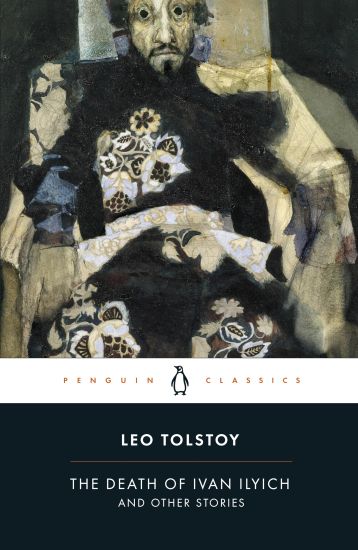
The Death of Ivan Ilyich and Other Stories is a collection of stories that emerged from a profound spiritual crisis, during which Leo Tolstoy believed that he had encountered death itself. This Penguin Classics edition is translated with an introduction by Anthony Briggs, David McDuff and Ronald Wilks. These seven compelling stories explore, in very different ways, Tolstoy's preoccupation with mortality. 'The Death of Ivan Ilyich' is a devastating account of a man fighting his inevitable end, and asks the existential question: why must a good person be taken before his time? In 'Polikushka', a light-fingered drunk's chance to prove himself has tragic repercussions, while 'Three Deaths' depicts the last moments of an aristocrat, a peasant and a tree, and 'The Forged Coupon' shows a seemingly minor offence that leads inexorably to ever more horrific crimes. And in three tales about soldiers, 'After the Ball', 'The Wood-felling' and 'The Raid', Tolstoy portrays the brutality that all too often accompanies military life. The translations by Anthony Briggs, David McDuff and Ronald Wilks capture Tolstoy's powerful, vivid prose. This edition also includes a new introduction by Anthony Briggs discussing Tolstoy's breakdown and the effect this had on his writing, as well as a chronology, further reading and notes. Leo Tolstoy (1828-1910) was born at Yasnaya Polyana, in central Russia. He led a life of wasteful idleness until 1851, when he travelled to the Caucasus and joined the army with his older brother, fighting in the Crimean war. After marrying Sofya Behrs in 1862, Tolstoy settled down, managing his estates and writing two of his best-known novels, War and Peace (1869) and Anna Karenina (1878). In 1884 Tolstoy experienced a spiritual crisis, becoming an extreme moralist, rejecting the state, the church and private property. His last novel, Resurrection (1900), was written to raise money for the Doukhobor sect of Christian spiritualists. If you enjoyed The Death of Ivan Ilyich, you might like Fyodor Dostoyevsky's Crime and Punishment, also available in Penguin Classics.

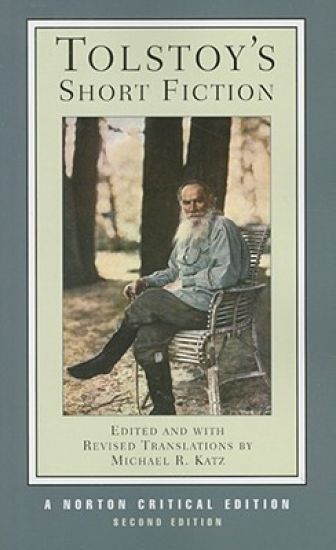
This Norton Critical Edition presents twelve of Tolstoy’s best-known stories, based on the Louise and Aylmer Maude translations (except “Alyosha Gorshok”), which have been revised by the editor for enhanced comprehension and annotated for student readers. The Second Edition newly includes “A Prisoner in the Caucasus,” “Father Sergius,” and “After the Ball,” in addition to Michael Katz’s new translation of “Alyosha Gorshok.” Together these stories represent the best of the author’s short fiction before War and Peace and after Anna Karenina. “Backgrounds and Sources” includes two Tolstoy memoirs, A History of Yesterday (1851) and The Memoirs of a Madman (1884), as well as entries—expanded in the Second Edition—from Tolstoy’s “Diary for 1855” and selected letters (1858–95) that shed light on the author’s creative process. “Criticism” collects twenty-three essays by Russian and western scholars, six of which are new to this Second Edition. Interpretations focus both on Tolstoy’s language and art and on specific themes and motifs in individual stories. Contributors include John M. Kopper, Gary Saul Morson, N. G. Chernyshevsky, Mikhail Bakhtin, Harsha Ram, John Bayley, Vladimir Nabokov, Ruth Rischin, Margaret Ziolkowski, and Donald Barthelme. A Chronology of Tolstoy’s life and work and an updated Selected Bibliography are also included.
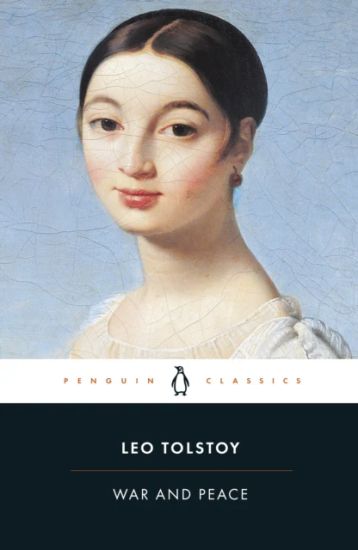
'A book that you don't just read, you live' Simon Schama Tolstoy's magnificent epic novel of love, conflict, fate and human life in all its imperfection and grandeurWar and Peace begins at a glittering society party in St Petersburg in 1805, where conversations are dominated by the prospect of war. Terror swiftly engulfs the country as Napoleon's army marches on Russia, and the lives of three young people are changed forever. The stories of quixotic Pierre, cynical Andrey and impetuous Natasha interweave with a huge cast, from aristocrats and peasants to soldiers and Napoleon himself. Translated with an Introduction and Notes by Anthony Briggs with an Afterword by Orlando Figes