Kirjojen hintavertailu – 12 903 724 kirjaa ja 27 kauppaa

Kirjailija

Leo Webley

Kirjat ja teokset yhdessä paikassa: 5 kirjaa, julkaisuja vuosilta 2008–2024, suosituimpiin kuuluu Castle Hill and its Landscape. Vertaile teosten hintoja ja tarkista saatavuus suomalaisista kirjakaupoista.

5 kirjaa

Kirjojen julkaisuvuodet: 2008–2024.

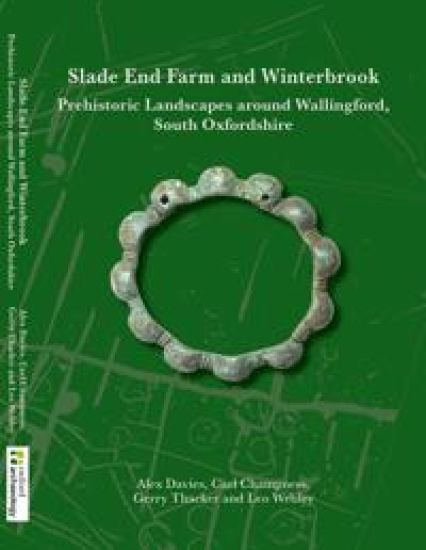
Slade End Farm and Winterbrook

Slade End Farm and Winterbrook

Alex Davies; Carl Champness; Gerry Thacker; Leo Webley

OXFORD UNIVERSITY SCHOOL OF ARCHAEOLOGY
2024
nidottu
This volume reports on two excavations carried out by Oxford Archaeology on the outskirts of Wallingford, at Slade End Farm and Winterbrook. The two sites provide windows into the same gravel terrace landscape and together shed significant new light on the prehistory of the south Oxfordshire Thames Valley. Slade End Farm was repeatedly visited for settlement in the early Neolithic. Numerous clusters of pits were found that contained pottery, flintwork and other finds. A pair of inhumation burials was also discovered. Sparser settlement subsequently occurred at the two sites during the middle and late Neolithic and the Beaker period. Landscape organisation dramatically changed in the middle Bronze Age, when ditched field systems or enclosure complexes were laid out at both sites. A waterhole containing a log ladder was also found. Environmental evidence suggests a landscape of largely open grassland used for grazing. While no buildings were found, concentrations of finds in some enclosures suggest that they were foci for domestic activity. Several burials were also found at each site. Both sites were reoccupied for settlement during the early and middle Iron Age. Roundhouses were built, and a series of boundaries and enclosures laid out. A double pit alignment dug in the early Iron Age at Slade End Farm separated the occupied area from the lower, wetter ground to the south. One of the pits from this alignment contained an inhumation burial. A complete, decorated copper alloy bracelet that had been placed in a posthole is a rare survival. At Winterbrook, part of a settlement dating to the 11th to 12th centuries was also uncovered, providing the first good archaeological evidence for a rural community in the immediate hinterland of the medieval town of Wallingford.
The Later Prehistory of North-West Europe

The Later Prehistory of North-West Europe

Richard Bradley; Colin Haselgrove; Marc Vander Linden; Leo Webley

Oxford University Press
2015
sidottu
The Later Prehistory of North-West Europe provides a unique, up-to-date, and easily accessible synthesis of the later prehistoric archaeology of north-west Europe, transcending political and language barriers that can hinder understanding. By surveying changes in social forms, landscape organization, monument types, and ritual practices over six millennia, the volume reassesses the prehistory of north-west Europe from the late Mesolithic to the end of the pre-Roman Iron Age. It explores how far common patterns of social development are apparent across north-west Europe, and whether there were periods when local differences were emphasized instead. In relation to this, it also examines changes through time in the main axes of contact between the various regions of continental Europe, Britain, and Ireland. Key to the volume's broad scope is its focus on the vast mass of new evidence provided by recent development-led excavations. The authors collate data that has been gathered on thousands of sites across Britain, Ireland, northern France, the Low Countries, western Germany, and Denmark, using sources including unpublished 'grey literature' reports. The results challenge many aspects of previous narratives of later prehistory, allowing the volume to present a distinctively fresh perspective.
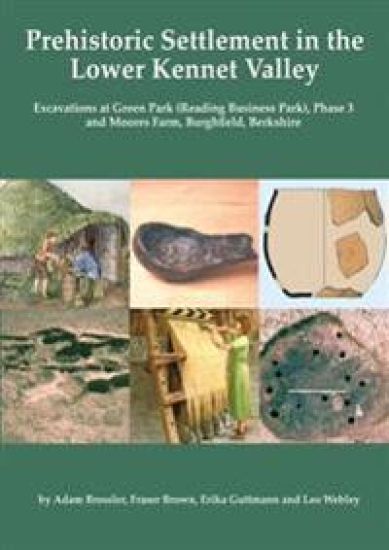
Prehistoric Settlement in the Lower Kennet Valley

Prehistoric Settlement in the Lower Kennet Valley

Adam Brossler; Fraser Brown; Erika Guttman; Leo Webley

Oxford University School of Archaeology
2013
nidottu
This volume presents the results of two excavations on the gravel terraces of the Lower Kennet Valley, at Green Park (Reading Business Park) Phase 3 and Moores Farm, Burghfield, Berkshire. The Green Park excavations uncovered a field system and occupation features dating to the middle to late Bronze Age. Five waterholes or wells were distributed across the field system, the waterlogged fills of which preserved wooden revetment structures and valuable environmental evidence. The pottery from the waterholes makes a significant contribution to our understanding of the middle to late Bronze Age transition in the region. Later activity included middle to late Iron Age boundaries, a late Iron Age cremation burial, a Romano-British field system and post-medieval trackways. The Moores Farm excavations revealed occupation from the Mesolithic, Neolithic, middle Bronze Age and early Iron Age. The middle Bronze Age settlement included pits, ovens and possible post structures, and was again situated within a contemporaneous field system dotted with waterholes. As well as discussing these two sites, the volume provides an overview of all of the work to date in the Green Park Farm/Reading Business Park area, exploring the development of this important prehistoric landscape.
Castle Hill and its Landscape

Castle Hill and its Landscape

Hugo Lamdin-Whymark; Kate Cramp; Leo Webley; Tim Allen

Oxford Archaeology
2010
Nidottu
This volume describes the results of archaeological investigations carried out between 2003 and 2006 on behalf of the Northmoor Trust in the parishes of Little Wittenham and Long Wittenham, Oxfordshire. The work included examination of cropmarks, large-scale geophysical surveys, fieldwalking and excavations. Geophysical survey was concentrated in and around the scheduled hillfort at Castle Hill, Little Wittenham (Oxfordshire SAM No. 208), and revealed a smaller enclosure within the hillfort dated by excavation to the late Bronze Age. The survey also suggested that otherwise archaeological features within the hillfort were relatively sparse. A section across the hillfort ditch and rampart did not produce a clear construction date, though in the interior both early and middle Iron Age pits were found, some containing human burials or bones. The hillfort ditch appears to have been cleaned out throughout the Iron Age, the spoil probably used to enhance the outer bank. The hillfort was also used in the late Roman period (4th century AD), when very large rectangular pits were dug, and midden material was piled up behind and over the Iron Age rampart. People were also buried in the interior at this time. Saxon finds were very few, but a medieval pit and a quarry indicate occupation in the 12th/13th centuries AD. Coring of peat deposits beside the Thames north of Castle Hill provided evidence of the environmental succession from the early Iron Age onwards. On the plateau below the hillfort cropmarks and geophysical survey revealed a dense settlement stretching west, to Hill Farm and beyond. This included a late Bronze Age and early Iron Age midden some 50 m across, a middle Iron Age curving boundary ditch down the middle with smaller sub-rectangular enclosures either side, and early and middle Iron Age penannular enclosures, four-post structures and pits. Settlement seems to have shifted southwards and westwards in the middle Iron Age, and late Iron Age or early Roman ditches were also found near to Hill Farm. The Roman settlement was mainly 2nd–3rd century AD, and probably consisted of four enclosures, one of which contained a masonry building (now largely destroyed) with a tiled roof, decorated with mosaic tesserae and painted wall plaster. This enclosure was approached by a ditched trackway, with a second larger enclosure alongside. A third enclosure was partly revealed north of Hill Farm, and a fourth enclosure (not investigated) lay alongside Roman field boundaries west of Hill Farm. Despite earlier finds at Hill Farm, no Saxon evidence was found in these excavations. The project has revealed a unique combination of late Bronze Age hilltop enclosure, external settlement and an adjacent midden. In the early Iron Age the hilltop enclosure was replaced by the hillfort, where feasting occurred, while the adjacent settlement around the midden grew to be one of the largest in the region. The midden was abandoned in the middle Iron Age, and a long boundary ditch may have divided this ancestral area off from settlement to the south and west. There was also more middle Iron Age activity within the hillfort, including a number of human burials. In the Roman period the settlement probably included a small villa, while the hillfort itself was probably reoccupied in the later 4th century AD. Intriguingly both Roman cremations and inhumations were buried around and within the hillfort, suggesting a continuity of burial location spanning 1000 years. Geophysical survey and evaluation trenches were also dug across a cropmark complex at Neptune Wood east of Long Wittenham, revealing an early Iron Age enclosure ditch, a Roman trackway and associated fields, and a pair of large middle Saxon pits or waterholes.