Kirjojen hintavertailu – 12 903 724 kirjaa ja 27 kauppaa

Kirjailija

Leon Tikly

Kirjat ja teokset yhdessä paikassa: 5 kirjaa, julkaisuja vuosilta 2019–2026, suosituimpiin kuuluu Transforming Education for Sustainable Futures. Vertaile teosten hintoja ja tarkista saatavuus suomalaisista kirjakaupoista.

5 kirjaa

Kirjojen julkaisuvuodet: 2019–2026.

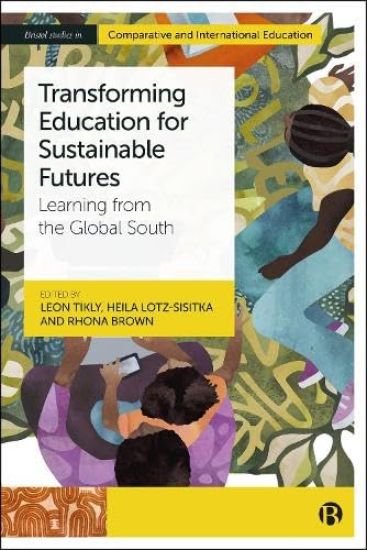
Transforming Education for Sustainable Futures

Transforming Education for Sustainable Futures

Amal Ali; Poonam Batra; Amir Bazaz; Ash Brockwell; Rhona Brown; Beena Choksi; Joan DeJaeghere; Keri Facer; Freya Gasgoyne; Eric Herring; Dan Imaniriho; Latif Ismael; Sanele kaNtshingana; Heila Lotz-Sisitka; Vainola Makan; Simon McGrath; Rafael Mitchell; Sujata Noronha; Sue Parnell; Leon Tikly; Michael Tusiime; Colleen Vogel; Arjen Wals

Bristol University Press
2026
nidottu
Available open access digitally under CC-BY-NC-ND licence. This book examines how education can drive change for marginalized communities across the Global South. Drawing on evidence from 67 projects in India, Rwanda, Somaliland/Somalia and South Africa, the book shows how education can expand youth livelihoods, strengthen sustainable cities and advance climate action. Yet for education to fulfil this role, it must be reimagined—tackling entrenched inequalities of class, caste, clan, gender, race, rurality and indigeneity. Arguing for more democratic, public and inclusive forms of education, the book calls for research that prioritises collaboration and equity over top-down models, offering a bold new agenda for transformative practice.
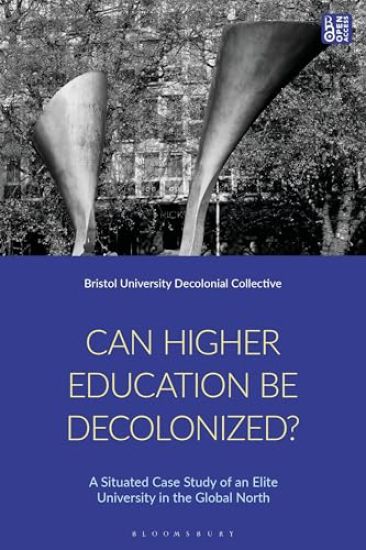
Can Higher Education be Decolonised?

Can Higher Education be Decolonised?

Steve Eichhorn; Leon Tikly; Madhu Krishnan

BLOOMSBURY PUBLISHING PLC
2025
sidottu
This open access book critically reflects on what it has meant to embark on a process of decolonising higher education at a Global North institution – namely the University of Bristol - and the real-world possibilities for realising change from this vantage point. The book brings together a diverse team of writers representing academic staff, students and professional services staff engaged in decolonising activities at the University of Bristol. The chapters have been co-created and this process itself has generated a series of critical conversations that have highlighted tensions and contradictions involved in attempting to decolonise within the university. Through this process, the team have critiqued the concepts of “our university” and “our curriculum” and they argue that understanding these tensions and contradictions is crucial if we are to understand decolonisation as an active process. Each chapter offers examples of practice from the university, the city of Bristol and elsewhere, and implications are drawn that are of relevance for activists around the world who are engaged in decolonising their institutions. The ebook editions of this book are available open access under a CC BY 4.0 licence on bloomsburycollections.com. Open access was funded by The University of Bristol.
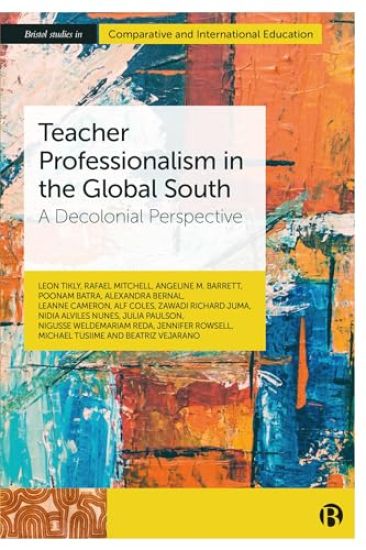
Teacher Professionalism in the Global South

Teacher Professionalism in the Global South

Leon Tikly; Rafael Mitchell; Angeline Barrett; Poonam Batra; Alexandra Bernal; Leanne Cameron; Alf Coles; Zawadi Juma; Nidia Aviles Nunez; Julia Paulson; Nigusse Weldemariam Reda; Jennifer Rowsell; Michael Tusiime; Beatriz Vejarano

Bristol University Press
2024
sidottu
This book provides a decolonial critique of dominant global agendas concerning teacher professionalism and proposes a new understanding based on UNESCO-funded research with teachers based in Colombia, Ethiopia (Tigray), India, Rwanda and Tanzania. Outlining from a teacher’s perspective how teacher professionalism may be conceptualized, this book critiques dominant global narratives and conceptions based on deficit discourses. The authors argue that a decolonial lens can help to contextualize the perspectives, experiences and material conditions of teachers in the global South, and the value of such a framework for informing global debates and decision-making in education.
Education for Sustainable Development in the Postcolonial World
Education for Sustainable Development (ESD) lies at the heart of global, regional and national policy agendas, with the goal of achieving socially and environmentally just development through the provision of inclusive, equitable quality education for all. Realising this potential on the African continent, however, calls for radical transformation of policy and practice. Developing a transformative agenda requires taking account of the ‘learning crisis’ in schools, the inequitable access to a good quality education, the historical role of education and training in supporting unsustainable development, and the enormous challenges involved in complex system change. In the African continent, sustainable development entails eradicating poverty and inequality, supporting economically sustainable livelihoods within planetary boundaries, and averting environmental catastrophe, as well as dealing with health pandemics and security threats. In addressing these challenges, the book: explores the meaning of ESD for Africa in the context of the ‘postcolonial condition’ critically discusses the Sustainable Development Goals (SDGs) as well as regional development agendas draws on a wealth of research evidence and examples from across the continent engages with contemporary debates about the skills, competencies and capabilities required for sustainable development, including decolonising the curriculum and transforming teaching and learning relationships sets out a transformative agenda for policy-makers, practitioners, NGOs, social movements and other stakeholders based on principles of social and environmental justice. Education for Sustainable Development in the Postcolonial World is an essential read for anyone with an interest in education and socially and environmentally just development in Africa.
Education for Sustainable Development in the Postcolonial World

Education for Sustainable Development in the Postcolonial World

Leon Tikly

Routledge
2019
nidottu

Halvin toimitettuna 52,20 €

Education for Sustainable Development (ESD) lies at the heart of global, regional and national policy agendas, with the goal of achieving socially and environmentally just development through the provision of inclusive, equitable quality education for all. Realising this potential on the African continent, however, calls for radical transformation of policy and practice. Developing a transformative agenda requires taking account of the ‘learning crisis’ in schools, the inequitable access to a good quality education, the historical role of education and training in supporting unsustainable development, and the enormous challenges involved in complex system change. In the African continent, sustainable development entails eradicating poverty and inequality, supporting economically sustainable livelihoods within planetary boundaries, and averting environmental catastrophe, as well as dealing with health pandemics and security threats. In addressing these challenges, the book: explores the meaning of ESD for Africa in the context of the ‘postcolonial condition’ critically discusses the Sustainable Development Goals (SDGs) as well as regional development agendas draws on a wealth of research evidence and examples from across the continent engages with contemporary debates about the skills, competencies and capabilities required for sustainable development, including decolonising the curriculum and transforming teaching and learning relationships sets out a transformative agenda for policy-makers, practitioners, NGOs, social movements and other stakeholders based on principles of social and environmental justice. Education for Sustainable Development in the Postcolonial World is an essential read for anyone with an interest in education and socially and environmentally just development in Africa.