Kirjojen hintavertailu – 12 903 733 kirjaa ja 27 kauppaa

Kirjailija

Leonard Beeghley

Kirjat ja teokset yhdessä paikassa: 9 kirjaa, julkaisuja vuosilta 1996–2019, suosituimpiin kuuluu Let's Eat Grandma?: A Workbook for Learning the Marvels of Punctuation and Improving Your Writing Skills. Vertaile teosten hintoja ja tarkista saatavuus suomalaisista kirjakaupoista.

9 kirjaa

Kirjojen julkaisuvuodet: 1996–2019.

What Does Your Wife Do?

What Does Your Wife Do?

Leonard Beeghley

Routledge
2019
sidottu
In the past, a woman would routinely be asked what her husband did for a living. Increasingly, a man is likely to be asked what his wife does for a living. It's a small switch, but it signifies a revolution in gender roles and family life. Leonard Beeghley uses historical and international data to explain the dramatic changes in the way women and m
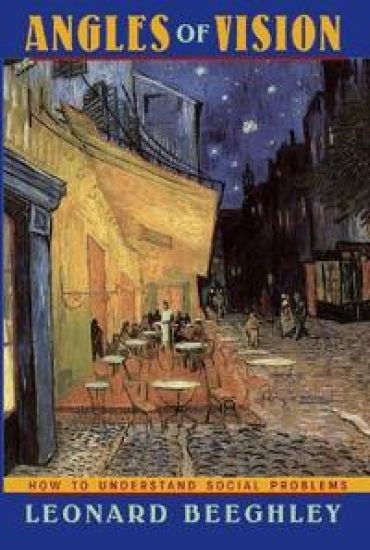
Angles Of Vision

Angles Of Vision

Leonard Beeghley

Routledge
2019
sidottu
Angles of Vision is a compact text that provides students with basic information about social problems and teaches them a strategy for understanding these issues. Students learn how to distinguish between individual and structural analyses and the importance of placing issues in a historical and international context to gain a clearer understanding. In so doing, students come to appreciate that sociology is a hypothesis-testing discipline. The author uses metaphors, vignettes, and humor to convey the fundamental concepts, key findings, and methods by which sociologists understand social problems. Each chapter is organized to facilitate students understanding. First the issue is presented. The reasons why it is considered a social problem are explained along with a brief history. Second, historical and international data on the issue are sketched, ordinarily in simple tables or figures. The historical data go back as far as plausible, usually a century or more. The international data usually compare the U. S. with Western European nations, such as the U. K., France, and others. Third, the consequences of the issue are discussed. Fourth, the way individuals affect and are affected by the problem is outlined. Fifth, the relationship between social structure and the problem is explained. Finally, the implications of the problem are reviewed. Jargon-free writing style and use of humor and anecdotes clearly illustrate concepts and hold student's interest. Historical and international data provide students with a broader and more empirical basis with which to examine social problems. Looks at social problems from different ?angles of vision? such as individual or structural. Emphasizes the importance of hypothesis testing. Angles of Vision is a compact text that provides students with a strategy for understanding social problems. Ten readable chapters cover: abortion, gender inequality, racial and ethnic inequality, poverty, drugs, homicide, aging, health. Chapters begin with a brief outline of what is to follow, and end with a short list of further reading. Each chapter succinctly addresses the dimensions of the problem, its consequences, its effect on individuals, its effect on the social structure, and its implications. Key studies, comprehensive historical and comparative data, fundamental concepts, and key methods are explained using metaphors, vignettes, and humor that will draw your students in, while giving them a firm grounding in social problems.

Let's Eat Grandma?: A Workbook for Learning the Marvels of Punctuation and Improving Your Writing Skills
Learn to use punctuation tools, not follow rules. A tool-based approach to punctuation allows you to control the rhythm and meaning of sentences and paragraphs. Understand that punctuation decisions are made in the context of both sentences and paragraphs. Enjoy learning via engaging stories and humor. Engaged readers retain more information. Improve your writing skills as you discover how to compose sentences and paragraphs that are clear, concise, and effective. Effective writing does not depend on following rules. It reflects judgment, which you will learn with practice. Increase motivation as your skills progress. The marvels of punctuation give you a kind of superpower: the ability to teach, persuade, or entertain readers. Le
Structure of Social Stratification in the United States
This text examines the structure of stratification in the United States, focusing on the way one's class location influences his or her life opportunities. Beeghley uses three themes to illustrate social stratification: How power influences the distribution of resources in the United States; how social structure influences rates of events; and how social psychological factors influence how individuals act on, and react to, the situations in which they find themselves.
The Emergence of Sociological Theory

The Emergence of Sociological Theory

Jonathan H. Turner; Leonard Beeghley; Charles H. Powers

SAGE Publications Inc
2012
nidottu
This scholarly text covers the first one hundred years of sociological theorizing, from 1830 to 1930, focusing primarily on Comte, Spencer, Marx, Weber, Simmel, Durkheim, and Mead. The authors provide an in-depth examination of these early sociological theorists with biographical background, analysis of key works, major influences, and critical insights. They answer the question, "What do these ideas tell us about the basic forces that shape the social world?" Posing this question for each theorist adds a unique perspective to the text and distinguishes it from other sociological theory books. In addition, it also includes material on the enduring models and principles of the theorists' work that continue to inform sociological theory today.
Homicide

Homicide

Leonard Beeghley

Rowman Littlefield
2003
sidottu
The American homicide rate remains dramatically higher than that in other Western nations. News of a murder has become a routine event. How do we explain such high levels of lethal violence in the world's leading democracy? Echoing Durkheim's Suicide, this book focuses on one important phenomenon to explain larger currents in American society. Leonard Beeghley examines the historical and cross-national dimensions of homicides and evaluates previous attempts to explain it. He finds the sources of America's murder rate in the greater availability of guns, the expansion of illegal drug markets, greater racial discrimination, more exposure to violence, and sharper economic inequalities. He deftly blends the evidence related to each of these factors into a well-reasoned sociological analysis of the nature of American society. Features Highlights how sociology can be used to explain problems and seek solutions Distinguishes between structural and social psychological levels of analysis Provides a constrasting perspective to Messner & Rosenfeld's widely assigned Crime and the American Dream Uses metaphors and analogies in order to make sociological ideas meaningful to students Employs an engaging writing style to place the analysis in the scholarly literature Offers clear explanations of Durkheim, Weber, Merton, and others, that show their usefulness for understanding modern life
Homicide

Homicide

Leonard Beeghley

Rowman Littlefield
2003
nidottu
The American homicide rate remains dramatically higher than that in other Western nations. News of a murder has become a routine event. How do we explain such high levels of lethal violence in the world's leading democracy? Echoing Durkheim's Suicide, this book focuses on one important phenomenon to explain larger currents in American society. Leonard Beeghley examines the historical and cross-national dimensions of homicides and evaluates previous attempts to explain it. He finds the sources of America's murder rate in the greater availability of guns, the expansion of illegal drug markets, greater racial discrimination, more exposure to violence, and sharper economic inequalities. He deftly blends the evidence related to each of these factors into a well-reasoned sociological analysis of the nature of American society. Features Highlights how sociology can be used to explain problems and seek solutions Distinguishes between structural and social psychological levels of analysis Provides a constrasting perspective to Messner & Rosenfeld's widely assigned Crime and the American Dream Uses metaphors and analogies in order to make sociological ideas meaningful to students Employs an engaging writing style to place the analysis in the scholarly literature Offers clear explanations of Durkheim, Weber, Merton, and others, that show their usefulness for understanding modern life
Angles Of Vision

Angles Of Vision

Leonard Beeghley

Westview Press Inc
1998
nidottu
Angles of Vision is a compact text that provides students with basic information about social problems and teaches them a strategy for understanding these issues. Students learn how to distinguish between individual and structural analyses and the importance of placing issues in a historical and international context to gain a clearer understanding. In so doing, students come to appreciate that sociology is a hypothesis-testing discipline. The author uses metaphors, vignettes, and humor to convey the fundamental concepts, key findings, and methods by which sociologists understand social problems. Each chapter is organized to facilitate students understanding. First the issue is presented. The reasons why it is considered a social problem are explained along with a brief history. Second, historical and international data on the issue are sketched, ordinarily in simple tables or figures. The historical data go back as far as plausible, usually a century or more. The international data usually compare the U. S. with Western European nations, such as the U. K., France, and others. Third, the consequences of the issue are discussed. Fourth, the way individuals affect and are affected by the problem is outlined. Fifth, the relationship between social structure and the problem is explained. Finally, the implications of the problem are reviewed. Jargon-free writing style and use of humor and anecdotes clearly illustrate concepts and hold student's interest. Historical and international data provide students with a broader and more empirical basis with which to examine social problems. Looks at social problems from different ?angles of vision? such as individual or structural. Emphasizes the importance of hypothesis testing. Angles of Vision is a compact text that provides students with a strategy for understanding social problems. Ten readable chapters cover: abortion, gender inequality, racial and ethnic inequality, poverty, drugs, homicide, aging, health. Chapters begin with a brief outline of what is to follow, and end with a short list of further reading. Each chapter succinctly addresses the dimensions of the problem, its consequences, its effect on individuals, its effect on the social structure, and its implications. Key studies, comprehensive historical and comparative data, fundamental concepts, and key methods are explained using metaphors, vignettes, and humor that will draw your students in, while giving them a firm grounding in social problems.

What Does Your Wife Do?

What Does Your Wife Do?

Leonard Beeghley

Westview Press Inc
1996
nidottu
In the past, a woman would routinely be asked what her husband did for a living. Increasingly, a man is likely to be asked what his wife does for a living. It's a small switch, but it signifies a revolution in gender roles and family life. Leonard Beeghley uses historical and international data to explain the dramatic changes in the way women and men organize their lives together. Beeghley looks at four issues?premarital sex, abortion, divorce, and employment and income?and discusses how gender roles and family life affect and are affected by changes in each. The key to his analysis is the distinction between individual and structural levels of explanation. At the individual level Beeghley shows how personal characteristics and experiences influence individuals' decisions. At the structural level he shows how changes in social organization?such as industrialization, urbanization, increasing participation of women in the labor force, decreasing fertility rate, and the rise of feminism?have altered the range of available choices. Speculating about the future, Beeghley discusses the way fundamental structural changes in American society are transforming gender relations and family life.