
Kirjailija
Leonid Andreyev
Kirjat ja teokset yhdessä paikassa: 189 kirjaa, julkaisuja vuosilta 2004–2026, suosituimpiin kuuluu The Dear Departing. Vertaile teosten hintoja ja tarkista saatavuus suomalaisista kirjakaupoista.
189 kirjaa
Kirjojen julkaisuvuodet: 2004–2026.
The Life of Man: A Play in Five Acts, has been acknowledged as a major work throughout human history, and we have taken precautions to assure its preservation by republishing this book in a modern manner for both present and future generations. This book has been completely retyped, revised, and reformatted. The text is readable and clear because these books are not created from scanned copies.
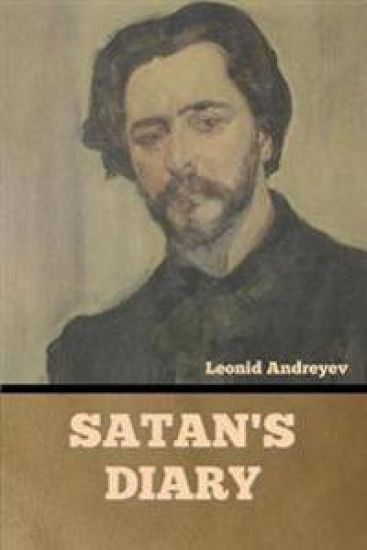
Leonid Nikolaievich Andreyev (21 August O. S. 9 August] 1871 - 12 September 1919) was a Russian playwright, novelist and short-story writer, who is considered to be a father of Expressionism in Russian literature. He is regarded as one of the most talented and prolific representatives of the Silver Age period. Andreyev's style combines elements of realist, naturalist, and symbolist schools in literature. Of his 25 plays, his 1915 play He Who Gets Slapped is regarded as his finest achievement. Often referred to as 'a Russian Edgar Allan Poe', Andreyev had an influence through translations on two of the great horror writers, H. P. Lovecraft and R. E. Howard. Copies of his The Seven Who Were Hanged and The Red Laugh were found in the library of horror writer H. P. Lovecraft at his death, as listed in the "Lovecraft's Library" catalogue by S. T. Joshi. Andreyev was also one of the seven "most powerful" writers of all time, in the opinion of Robert E. Howard. (wikipedia.org)
Leonid Nikolaievich Andreyev (21 August O. S. 9 August] 1871 - 12 September 1919) was a Russian playwright, novelist and short-story writer, who is considered to be a father of Expressionism in Russian literature. He is regarded as one of the most talented and prolific representatives of the Silver Age period. Andreyev's style combines elements of realist, naturalist, and symbolist schools in literature. Of his 25 plays, his 1915 play He Who Gets Slapped is regarded as his finest achievement. Often referred to as 'a Russian Edgar Allan Poe', Andreyev had an influence through translations on two of the great horror writers, H. P. Lovecraft and R. E. Howard. Copies of his The Seven Who Were Hanged and The Red Laugh were found in the library of horror writer H. P. Lovecraft at his death, as listed in the "Lovecraft's Library" catalogue by S. T. Joshi. Andreyev was also one of the seven "most powerful" writers of all time, in the opinion of Robert E. Howard. (wikipedia.org)
Leonid Nikolaievich Andreyev (21 August O. S. 9 August] 1871 - 12 September 1919) was a Russian playwright, novelist and short-story writer, who is considered to be a father of Expressionism in Russian literature. He is regarded as one of the most talented and prolific representatives of the Silver Age period. Andreyev's style combines elements of realist, naturalist, and symbolist schools in literature. Of his 25 plays, his 1915 play He Who Gets Slapped is regarded as his finest achievement. Often referred to as 'a Russian Edgar Allan Poe', Andreyev had an influence through translations on two of the great horror writers, H. P. Lovecraft and R. E. Howard. Copies of his The Seven Who Were Hanged and The Red Laugh were found in the library of horror writer H. P. Lovecraft at his death, as listed in the "Lovecraft's Library" catalogue by S. T. Joshi. Andreyev was also one of the seven "most powerful" writers of all time, in the opinion of Robert E. Howard. (wikipedia.org)
Leonid Nikolaievich Andreyev (21 August O. S. 9 August] 1871 - 12 September 1919) was a Russian playwright, novelist and short-story writer, who is considered to be a father of Expressionism in Russian literature. He is regarded as one of the most talented and prolific representatives of the Silver Age period. Andreyev's style combines elements of realist, naturalist, and symbolist schools in literature. Of his 25 plays, his 1915 play He Who Gets Slapped is regarded as his finest achievement. Often referred to as 'a Russian Edgar Allan Poe', Andreyev had an influence through translations on two of the great horror writers, H. P. Lovecraft and R. E. Howard. Copies of his The Seven Who Were Hanged and The Red Laugh were found in the library of horror writer H. P. Lovecraft at his death, as listed in the "Lovecraft's Library" catalogue by S. T. Joshi. Andreyev was also one of the seven "most powerful" writers of all time, in the opinion of Robert E. Howard. (wikipedia.org)
The book "" The Crushed Flower and Other Stories "" has been considered important throughout the human history, and so that this work is never forgotten we have made efforts in its preservation by republishing this book in a modern format for present and future generations. This whole book has been reformatted, retyped and designed. These books are not made of scanned copies and hence the text is clear and readable.
7 best short stories - Russian Authors
Leo Tolstoy; Leonid Andreyev; Maxim Gorky
Tacet Books
2021
pokkari
The Dark, has been considered by academicians and scholars of great significance and value to literature. This forms a part of the knowledge base for future generations. So that the book is never forgotten we have represented this book in a print format as the same form as it was originally first published. Hence any marks or annotations seen are left intentionally to preserve its true nature.
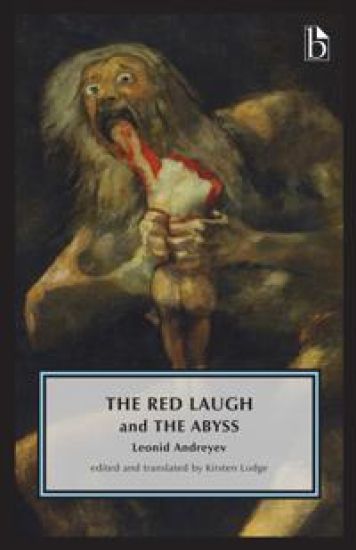
Leonid Andreyev's Expressionist novella The Red Laugh is an experimental, fragmentary depiction of war and its psychological effects, both on those who participate in the fighting and on those who hear of its atrocities from afar; it was inspired by the horrors of the 1904-05 Russo-Japanese War. Translated into English for the first time since 1905, it is here paired with a fresh translation of Andreyev's earlier story 'The Abyss,' which caused scandal when it first appeared in 1902. This edition provides an illuminating introduction by translator Kirsten Lodge establishing the importance of Andreyev to both the Russian and to the overall modernist canon, as well as a range of background materials that help set the novel in its historical, literary, and artistic contexts.




Reprint of the original, first published in 1914.

Reprint of the original, first published in 1914.
Reprint of the original, first published in 1914.
Reprint of the original, first published in 1914.