Kirjailija
Leopold Sacher-Masoch
Kirjat ja teokset yhdessä paikassa: 58 kirjaa, julkaisuja vuosilta 2004–2025, suosituimpiin kuuluu Das Paradies Am Dniester; Novelle. Vertaile teosten hintoja ja tarkista saatavuus suomalaisista kirjakaupoista.
Nimi esiintyy myös muodoissa: Leopold Sacher Masoch
58 kirjaa
Kirjojen julkaisuvuodet: 2004–2025.







Vsemirnuju izvestnost avstrijskomu pisatelju Leopoldu fon Zakher-Mazokhu prinesli proizvedenija, gde glavnoj temoj vystupaet vlast krasivoj i despotichnoj zhenschiny nad slabym muzhchinoj; pri etom muzhchina poluchaet naslazhdenie ot fizicheskogo i emotsionalnogo nasilija so storony zhenschiny (mazokhizm). V etot sbornik voshla samaja izvestnaja povest avtora - "Venera v mekhakh" (1870), napisannaja im posle tjazhelogo razryva so svoej vozljublennoj, Fanni fon Pistor; a takzhe rasskazy iz tsikla "Demonicheskie zhenschiny". "Venera v mekhakh" . V sadu v lunnuju noch Severin vstrechaet Veneru - ee zovut Vanda. Boginja predlagaet Severinu stat ee rabom. Budorazhaschaja istorija, polnaja chuvstvennykh emotsij, kotorye "rab" Severin ispytyvaet k svoej Gospozhe. V roli Gospozhi Vanda zastavljaet geroja podpisat dogovor, po kotoromu otnyne ego zhizn polnostju prinadlezhit ej. No poka ona nosit svoi mekha - Severin schastliv. Geroini tsikla rasskazov "Demonicheskie zhenschiny" Zakher-Mazokha vlastny i besposchadny, oni ne sderzhivajut sebja ni v ljubvi, ni v nenavisti, oni otnimajut chuzhikh vozljublennykh i bezzhalostno mstjat za nanesennye obidy, oni zhestoko istjazajut muzhchin, prevraschaja ikh v svoikh rabov, i neizmenno podvodjat ikh k tonkoj grani mezhdu bolju i naslazhdeniem. V nastojaschee izdanie takzhe voshli povesti "Lunnaja noch" i "Ljubov Platona".
"Aber du willst nur mein sein unterBedingungen, w hrend ich dir bedingungslos geh re -" Der zeitlose Klassiker der subtilen Erotik wird weltweit erfolgreich rezipiert. In etliche Sprachen bersetzt, thematisiert Leopold von Sacher-Masoch (1836-1895) Machtgef ge zwischen Mann und Frau, Herrschenden und Unterworfenen. Nicht ohne Grund leitet sich der Begriff des Masochismus vom Namen des Autors ab.

Venus in Furs (1870) is a novella by Austrian writer Leopold von Sacher-Masoch. Intended as an installment in his Legacy of Cain cycle, Venus in Furs has far surpassed the author’s other works in cementing his reputation. The work, which inspired Kraft-Ebing to define “masochism,” is notable for its exploration of female dominance and male sexual submission. The frame narrative begins with an unnamed man who develops a strong sexual desire after having a vivid dream. Disturbed, he tells a friend about the vision, in which he spoke to the goddess Venus while she was wearing luxuriant furs. In the memoir, which appears to have written by his friend, a man named Severin von Kusiemski describes his love affair with Wanda von Dunajew. Moved by a strong desire, Severin asks to be made Dunajew’s slave, and though she denies him at first, she soon grows to take advantage of her power of the man. As she grows progressively more violent in her treatment of Severin, she satisfies his desires while simultaneously learning more about her own. Severin, who describes himself as a suprasensualist travels with Dunajew to Florence, where he invents an identity as a Russian servant and acquiesces to a life of degradation and servitude. When Dunajew meets a domineering and attractive man, however, she begins to question her role as Severin’s master, desiring a submissive relationship of her own. Venus in Furs is a semi-autobiographical work describing Sacher-Masoch’s details through a thin veil of fictional devices, and remains influential for charting new territories in the representation of alternative sexualities. With a beautifully designed cover and professionally typeset manuscript, this edition of Leopold von Sacher-Masoch’s Venus in Furs is a classic of Austrian literature reimagined for modern readers.

Venus in Furs (1870) is a novella by Austrian writer Leopold von Sacher-Masoch. Intended as an installment in his Legacy of Cain cycle, Venus in Furs has far surpassed the author’s other works in cementing his reputation. The work, which inspired Kraft-Ebing to define “masochism,” is notable for its exploration of female dominance and male sexual submission. The frame narrative begins with an unnamed man who develops a strong sexual desire after having a vivid dream. Disturbed, he tells a friend about the vision, in which he spoke to the goddess Venus while she was wearing luxuriant furs. In the memoir, which appears to have written by his friend, a man named Severin von Kusiemski describes his love affair with Wanda von Dunajew. Moved by a strong desire, Severin asks to be made Dunajew’s slave, and though she denies him at first, she soon grows to take advantage of her power of the man. As she grows progressively more violent in her treatment of Severin, she satisfies his desires while simultaneously learning more about her own. Severin, who describes himself as a suprasensualist travels with Dunajew to Florence, where he invents an identity as a Russian servant and acquiesces to a life of degradation and servitude. When Dunajew meets a domineering and attractive man, however, she begins to question her role as Severin’s master, desiring a submissive relationship of her own. Venus in Furs is a semi-autobiographical work describing Sacher-Masoch’s details through a thin veil of fictional devices, and remains influential for charting new territories in the representation of alternative sexualities. With a beautifully designed cover and professionally typeset manuscript, this edition of Leopold von Sacher-Masoch’s Venus in Furs is a classic of Austrian literature reimagined for modern readers.


La m tica novela del autor que dio nombre al concepto de masoquismo y a sus pr cticas. Obra de referencia para quien desee ahondar en los abismos de la sensualidad humana, la novela La Venus de las pieles alberga toda la constelaci n de s mbolos que han pasado a definir el masoquismo: fetiches, l tigos, disfraces, humillaciones, castigos y, por supuesto, la inmutable presencia de una terrible frialdad. La frialdad que exhibe la implacable y hermosa Wanda hacia Severin, por completo esclavizado.
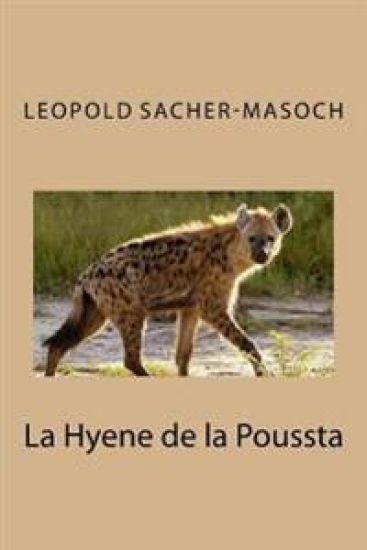
La Hyene de la Poussta
Leopold Sacher-Masoch
Createspace Independent Publishing Platform
2016
nidottu
Par une certaine belle journ e d'hiver, les grandes dames de qualit , confortablement envelopp es dans leurs fourrures de prix, se promenaient dans la Ringstrasse, alors que les pauvres ouvri res, peine v tues, tremblaient de froid au sortir de leurs mansardes en se rendant leur travail et en en revenant. Vers le soir, au moment o les talages des diff rentes boutiques du Graben, resplendissaient la lumi re du gaz, vint passer une belle jeune fille qui attira les regards des passants, lesquels l'envie lui lan aient des oeillades provocatrices. Cette jeune fille paraissait non seulement pauvre, mais encore en proie un violent chagrin. Elle semblait avoir conscience de son indigence, d plorer son sort et tre envahie d'un insurmontable d sir de luxe contrastant singuli rement avec les mis rables hardes dont elle tait couverte et qui, en aucune fa on, ne pouvaient la prot ger du froid. Grelottant de tous ses membres, les joues bl mes et transies, les l vres tir es, elle se tenait devant l' talage d'un marchand de confection, dont les merveilles lui faisaient battre le coeur de d sir, tout comme si elle e t t une dame de qualit .
- Un testament insens , un testament qui crie contre le ciel avait coutume de dire le notaire Batschkock chaque fois qu'il tait question des volont s derni res de la baronne Bromirska; jamais un tre sorti des mains de Dieu et dou d'une dose quelconque de bon sens ne fit d'absurdit semblable Il y a de quoi rire Prendre pour h ritier un quadrup de Il y a de quoi mourir de rire - Le notaire, par parenth se, ne laissait jamais chapper l'occasion de rire avec bruit. Cette affaire de testament m rite du reste d' tre racont e:
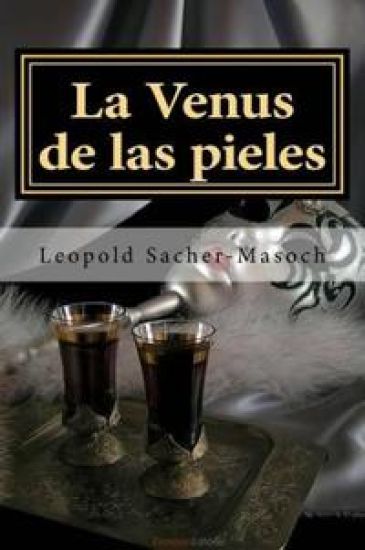
La m tica novela del autor que dio nombre al concepto de masoquismo y a sus pr cticas. Obra de referencia para quien desee ahondar en los abismos de la sensualidad humana, la novela La Venus de las pieles alberga toda la constelaci n de s mbolos que han pasado a definir el masoquismo: fetiches, l tigos, disfraces, humillaciones, castigos y, por supuesto, la inmutable presencia de una terrible frialdad. La frialdad que exhibe la implacable y hermosa Wanda hacia Severin, por completo esclavizado.