Kirjojen hintavertailu – 12 903 725 kirjaa ja 27 kauppaa

Kirjailija

Les Murray

Kirjat ja teokset yhdessä paikassa: 18 kirjaa, julkaisuja vuosilta 1998–2023, suosituimpiin kuuluu Poems the Size of Photographs. Vertaile teosten hintoja ja tarkista saatavuus suomalaisista kirjakaupoista.

18 kirjaa

Kirjojen julkaisuvuodet: 1998–2023.

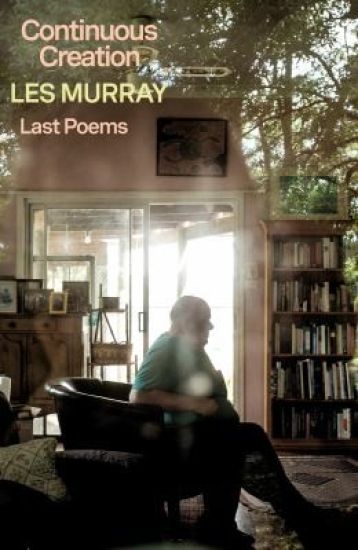
Continuous Creation: Last Poems

Continuous Creation: Last Poems

Les Murray

Farrar, Straus and Giroux
2023
nidottu
The final collection of poems by the great Australian poet Les Murray, Continuous Creation We bring nothing into this worldexcept our gradual abilityto create it, out of all that vanishesand all that will outlast us. In Continuous Creation, the final collection from Les Murray, the preeminent poet of modern Australia recalls moments from his youth and wryly observes the changing world, moving back and forth through time and history with characteristic curiosity and an ever-fresh commitment to capturing the rhythms of life in verse. This collection displays Murray's miraculous ability to reinvent language in order to plant his and our reality on the page, whether he writes about the Australian landscape ("Kangaroo sleeping / ahead on the road turns out / to be twigs and leaves") or unsold books sitting in department stores. Continuous Creation demonstrates, once more, that Murray was one of the great poets of the English language. As Joseph Brodsky said, he was, "quite simply, the one by whom the language lives."
Waiting for the Past: Poems

Waiting for the Past: Poems

Les Murray

Farrar, Straus and Giroux
2017
nidottu
A new collection of poems from Les Murray that renews and transforms the contemporary world through language In Waiting for the Past, Les Murray employs his molten sense of language to renew and transform our experience of the world. With quicksilver verse, he conjures his rural past, the life of the poor dairy boy in Australia, as he simultaneously feels the steady tug of aging, of time pulling him back to the present. Here, syntax, sense, and sound combine with such acrobatic grace that his poems render the familiar into the unknown, the unknown into the revelatory. Whether Murray is writing about a boy on a walkabout hiding from grief, a sounding whale "spilling salt rain," or leaves that "tread on the sky," the great Australian poet's sense of wonder, his ear for the everyday, his swiftness of thought, are everywhere in these pages. As Derek Walcott said of Murray's work, "There is no poetry in the English language now so rooted in its sacredness, so broad-leafed in its pleasures, and yet so intimate and conversational."
On Bunyah

On Bunyah

Les Murray

Carcanet Press Ltd
2017
nidottu
'Bunyah has been my refuge and home place all my life. This book concentrates on the smallest habitats of community, the scattered village and the lone house, where space makes the isolated dwelling into an illusory distant city ruled by its family and their laws.' This updated edition of On Bunyah tells a story of rural Australia in verse and photographs. From blood and fenceposts to broad beans and milk lorries, Les Murray evokes the life and landscape of his part of the country.
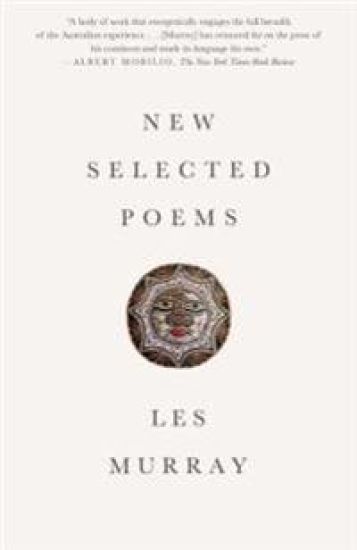
New Selected Poems

New Selected Poems

Les Murray

FSG Adult
2015
nidottu
A fresh selection of the finest poems--some previously uncollected--by one of our finest English-language poets Why write poetry? For the weird unemployment. For the painless headaches, that must be tapped to strikedown along your writing arm at the accumulated moment. For the adjustments after, aligning facets in a verbbefore the trance leaves you. For working always beyond your own intelligence. --from "The Instrument" New Selected Poems contains Les Murray's own gathering from the full range of his poetry--from the 1960s through Taller When Prone (2004) and including previously uncollected work. One of the finest poets writing today, Murray reinvents himself with each new collection. Whether writing about the indignities of childhood or the depths of depression, or evoking the rhythms of the natural world; whether writing in a sharply rendered Australian vernacular or a perfectly pitched King's English, his versatility and vitality are a constant. New Selected Poems is the poet's choice of his essential works: an indispensable collection for readers who already love his poetry, and an ideal introduction for those who are new to it.
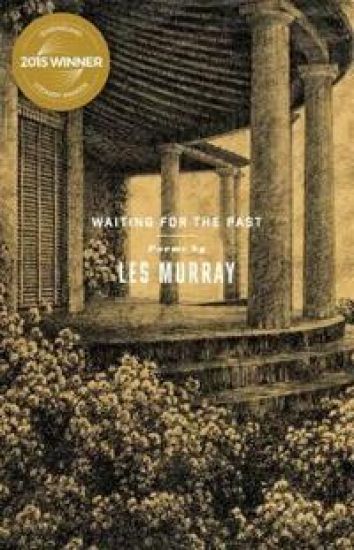
Waiting for the Past

Waiting for the Past

Les Murray

Black Inc.
2015
sidottu
Les Murray's new volume of poems - his first in five years - continues his use of molten language. From 'The Black Beaches' to 'Radiant Pleats, Mulgoa', from 'High Speed Trap Space' to '1960 Brought the Electric', this is verse that renews and transforms our sense of the world. 'No poet has ever travelled like this, whether in reality or simply in mind ... Seeing the shape or hearing the sound of one thing in another, he finds forms.' CLIVE JAMES
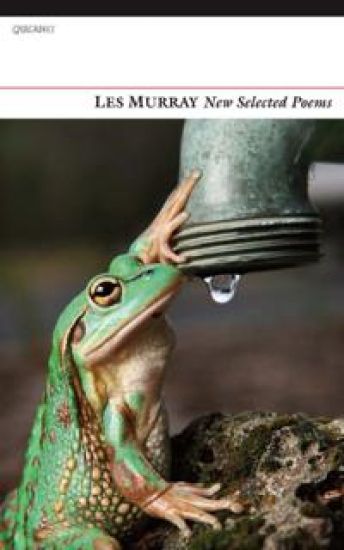
New Selected Poems

New Selected Poems

Les Murray

Carcanet Press Ltd
2012
nidottu
New Selected Poems contains Les Murray’s gathering from the full range of his poetry, from poems of the 1960s to work from Taller When Prone (2004) and new poems yet to appear in a collection. Les Murray is one of the finest poets writing today; endlessly inventive, his work celebrates the world and the power of the imagination. New Selected Poems is the poet’s choice of his essential works: an indispensable collection for readers who already love his poetry, and an ideal introduction for those new to it
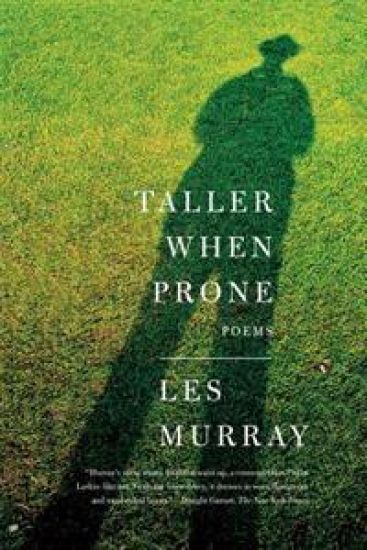
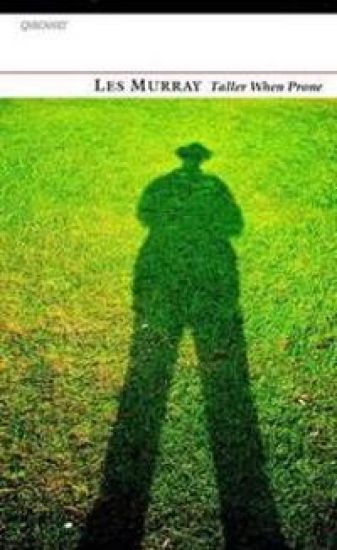
Taller When Prone

Taller When Prone

Les Murray

Farrar, Straus and Giroux
2012
nidottu
"Les Murray has earned his reputation not only as one of Australia's finest writers but as one of the most engaging poets writing in English today." --Kate Kellaway, The Observer (London) Taller When Prone is Les Murray's first volume of new poems since The Biplane Houses, published in 2007. These poems combine a mastery of form with a matchless ear for the Australian vernacular. Many evoke rural life in Australia and elsewhere--its rhythms and rituals, the natural world, the landscape and the people who have shaped it. There are traveler's tales, elegies, meditative fragments, and satirical sketches. Above all, there is Murray's astonishing versatility, on display here at its exhilarating best. "Equipped with a fierce moral vision and a sensuous musicality, Murray] writes subtly about postcolonialism, urban sprawl and poverty and, in his most intimate poems, reminds us of the power of literature to transubstantiate grievance into insight. (His admirers have argued he ought to be considered for a Nobel.) But he is equally capable of writing emotionally simplistic and strangely soured poems in which the enraged adolescent emerges all but unmediated. This mercurial doubleness can make his work hard to categorize or describe: this is a mind at once revolutionary and reactionary. Or maybe just a poet who's willing to show more id than most." --Meghan O'Rourke, The New York Times Book Review
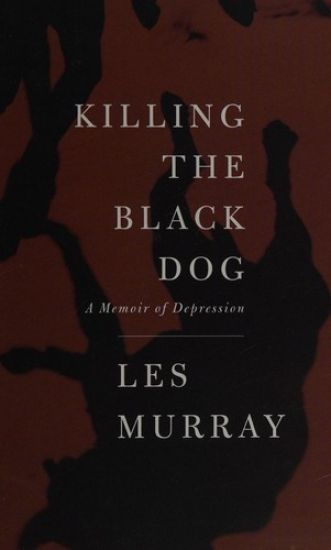
Killing the Black Dog: A Memoir of Depression

Killing the Black Dog: A Memoir of Depression

Les Murray

Farrar, Straus and Giroux
2011
nidottu
In 1988, shortly after moving from Sydney back to his birthplace in the rural New South Wales hamlet of Bunyah, Les Murray was struck with depression. In the months that followed, the "Black Dog" (as he calls it) ruled his life. He raged at his wife and children. He ducked a parking ticket on grounds of insanity, and begged a police officer to shoot him rather than arrest him. For days on end he lay in despair, a state in which, as he puts it precisely, "you feel beneath help." Killing the Black Dog is Murray's recollection of those awful days: brief, pointed, wise, and full of beauty in the way of his poetry. The prose text--delicately balanced between personal and informative--gives a glimpse of the imprint that depression can leave on a life. The accompanying poems show their roots in his crisis--a crisis from which, he reports toward the close of this poignant book, he has fully recovered. "My thinking is no longer jammed and sooty with resentment," he recalls. "I no longer wear only stretch-knit clothes and drawstring pants. I no longer come down with bouts of weeping or reasonless exhaustion. And I no longer seek rejection in a belief that only bitterly conceded praise is reliable." Killing the Black Dog is a crucial chapter in the life of an outstanding poet.
Taller When Prone

Taller When Prone

Les Murray

Carcanet Press Ltd
2010
nidottu
Taller When Prone has at its heart Les Murray's celebrations of the rural world in Australia and elsewhere, evoked with a deep understanding of landscapes, and the seasons, working lives and languages that have shaped them. Stories and songs, fragments of conversations, memories and satire comprise this varied, habitable world. In Murray's vigorous and sinuous language, 'song and story are pixels / in a mirrorball', reflecting back to us endless possibilities.
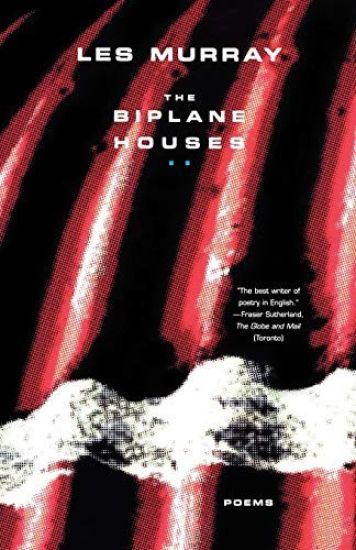
The Biplane Houses

The Biplane Houses

Les Murray

Farrar, Straus and Giroux
2008
nidottu
This is Les Murray's first new volume of poems since "Poems the Size of Photographs "in 2002. In it we find Murray at his nearmiraculous best. The collection named for a kind of house distinctive to Murray's native Australia exhibits both his unfailing grace as a writer and his ability to write in any voice, style, or genre: there are story poems, puns extended to poem length, history and myths in miniature, aphoristic fragments, and domestic portraits. As ever, Murray's evocation of the natural world is unparalleled in its inventiveness and virtuosity. "The Biplane Houses "is ardent, eloquent, enchanting poetry."
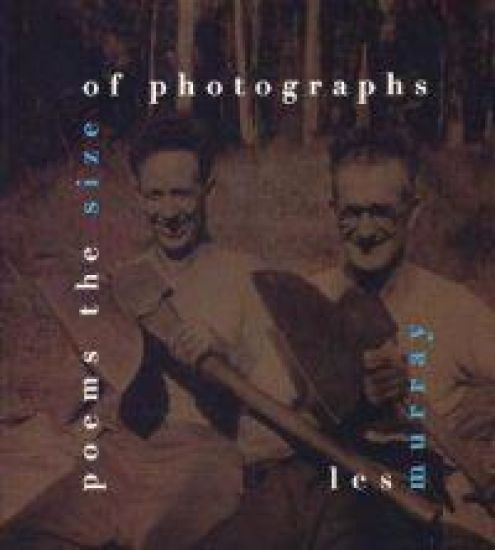
Poems the Size of Photographs

Poems the Size of Photographs

Les Murray

Farrar, Straus and Giroux
2004
nidottu
Brief, that place in the year when a blossoming pear tree with its sweet laundered scent reinhabits wooden roads that arch and diverge up into electronic snow city. --"Brief, That Place in the Year" In Poems The Size of Photographs, Les Murray deftly maneuvers through familiar themes--the local terrain of the Australian people, politics, and landscape, as well as the terrain that is harder to render tangible: history, myth, and symbol. As if trying to find the fissure through which to crack open his subject matter, Murray has sharpened his form to an ideogrammatic brevity. Each snapshot-like poem in this volume develops before the reader's very eyes, as the initially observed object or moment in time changes meaning and grows in complexity and resonance line by line.
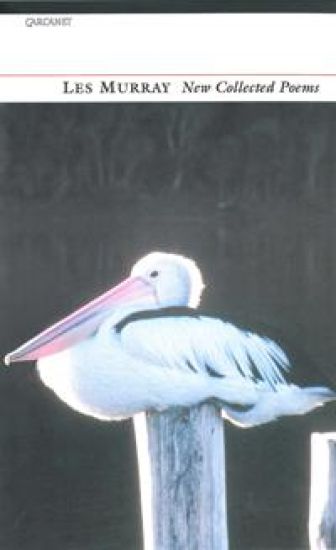
New Collected Poems

New Collected Poems

Les Murray

Carcanet Press Ltd
2003
nidottu
The lyric and satirical muses have kept busy with Les Murray. Subhuman Redneck Poems, awarded the 1996 T. S. Eliot Prize, Dog Fox Field (1991), Translations from the Natural World (1993) and Conscious and Verbal (1999) are added to his expanded and corrected volume, bringing the first 60 years of his life into memorable focus. 'It would be as myopic to regard Mr Murray as an Australian poet as to call Yeats an Irishman. He is, quite simply, the one by whom the language lives', Joseph Brodsky said. And Derek Walcott: 'There is no poetry in the English language so rooted in its sacredness, so broad-leafed in its pleasures, and yet so intimate and conversational.'
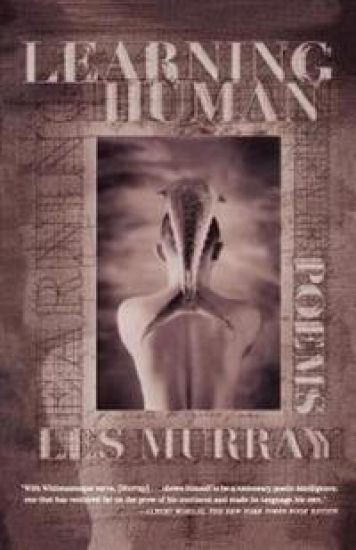
Learning Human: Selected Poems

Learning Human: Selected Poems

Les Murray

Farrar, Straus and Giroux
2001
nidottu
A bighearted selection from the inimitable Australian poet's diverse ten-book body of work Les Murray is one of the great poets of the English language, past, present, and future. Learning Human contains the poems he considers his best: 137 poems written since 1965, presented here in roughly chronological order, and including a dozen poems published for the first time in this book. Murray has distinguished between what he calls the "Narrowspeak" of ordinary affairs, of money and social position, of interest and calculation, and the "Wholespeak" of life in its fullness, of real religion, and of poetry. Poetry, he proposes, is the most human of activities, partaking of reason, the dream, and the dance all at once -- "the whole simultaneous gamut of reasoning, envisioning, feeling, and vibrating we go through when we are really taken up with some matter, and out of which we may act on it. We are not just thinking about whatever it may be, but savouring it and experiencing it and wrestling with it in the ghostly sympathy of our muscles. We are alive at full stretch towards it." He explains: "Poetry models the fullness of life, and also gives its objects presence. Like prayer, it pulls all the motions of our life and being into a concentrated true attentiveness to which God might speak." The poems gathered here give us a poet who is altogether alive and at full stretch toward experience. Learning Human, an ideal introduction to Les Murray's poetry, suggests the variety, the intensity, and the generosity of this great poet's work so far.
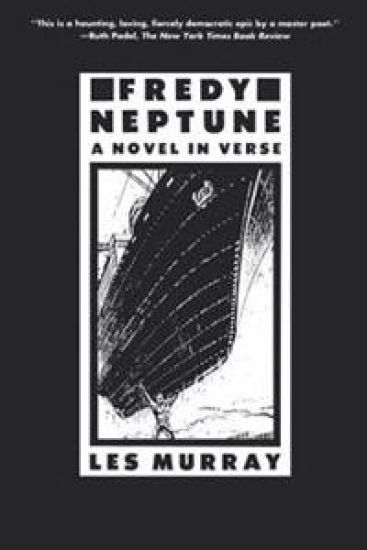
Fredy Neptune: A Novel in Verse

Fredy Neptune: A Novel in Verse

Les Murray

Farrar, Straus and Giroux
2000
nidottu
A riveting, beautiful novel in verse by Australia's greatest contemporary poet, winner of the 1996 T. S. Eliot Prize. I never learned the old top ropes, I was always in steam. Less capstan, less climbing, more re-stowing cargo. Which could be hard and slowas farming- but to say Why this is Valparaiso Or: I'm in Singapore and know my way abouttakes a long time to get stale.-from Book I, "The Middle Sea" When German-Australian sailor Friedrich "Fredy" Boettcher is shanghaied aboard a German Navy battleship at the outbreak of World War I, the sight of frenzied mobs burning Armenian women to death in Turkey causes him, through moral shock, to lose his sense of touch. This mysterious disability, which he knows he must hide, is both protection and curse, as he orbits the high horror and low humor of a catastrophic age. Told in a blue-collar English that regains freshness by eschewing the mind-set of literary language, Fredy's picaresque life-as, perhaps, the only Nordic Superman ever-is deep-dyed in layers of irony and attains a mind-inverting resolution.
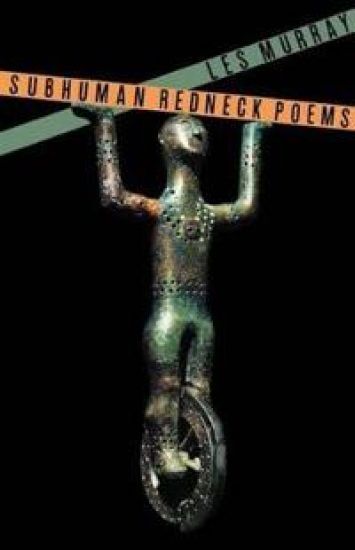
Subhuman Redneck Poems

Subhuman Redneck Poems

Les Murray

Farrar, Strauss Giroux-3pl
1998
pokkari
Winner of the 1996 T. S. Eliot Prize for the Best Book of Poetry in English Joseph Brodsky once said of Les Murray: "He is, quite simply, the one by whom the language lives." In these darkly funny and deeply observant "Subhuman Redneck Poems, farmers, fathers, poverty-stricken pioneers, and people blackened by the grist of sugar mills are exposed to the blazing midday sun of Murray's linguistic powers. Richly inventive, tenderly detailed, and fiercely honest, these poems both surprise and expose the human in all of us.