Kirjojen hintavertailu – 12 859 819 kirjaa ja 27 kauppaa

Kirjailija

Lesley Head

Kirjat ja teokset yhdessä paikassa: 8 kirjaa, julkaisuja vuosilta 2000–2025, suosituimpiin kuuluu Beyond Green. Vertaile teosten hintoja ja tarkista saatavuus suomalaisista kirjakaupoista.

8 kirjaa

Kirjojen julkaisuvuodet: 2000–2025.

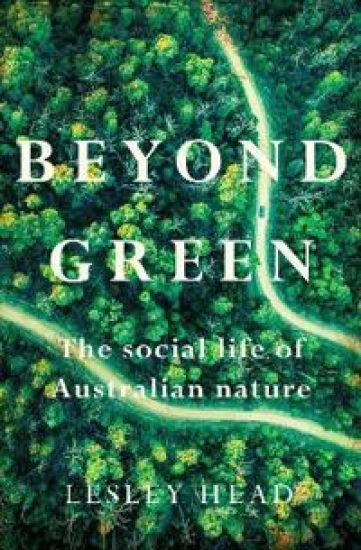
Beyond Green

Beyond Green

Lesley Head

MELBOURNE UNIVERSITY PRESS
2025
nidottu
How are we to think about nature and the environment? The idea of nature as it relates to culture, society and humans has always been in constant flux and highly contested. Lesley Head interrogates the ways the cultures of nature have operated in Australia across time, and how these ways of thinking and being limit our capacity to deal with the challenges of the climate change and biodiversity crises. Drawing on her life's work and lessons she has picked up along the way, Head suggests that it is up to us to attentively listen, the better to destabilise and subvert dominant narratives, and to imagine new possibilities. She believes we have the nous, resources and lessons from Indigenous, settler-descendant and immigrant cultures to reduce risk in the face of the unexpected and the unimaginable. In Beyond Green, the story of nature and people weaves research and personal experience through many different times and spaces, offering new ways of understanding. It is a richly creative engagement with the abundant possibilities and pleasure of nature as a place of regeneration that is as warned by the rawk of the crow as it is accompanied by the carolling of magpies.
Hope and Grief in the Anthropocene
The Anthropocene is a volatile and potentially catastrophic age demanding new ways of thinking about relations between humans and the nonhuman world. This book explores how responses to environmental challenges are hampered by a grief for a pristine and certain past, rather than considering the scale of the necessary socioeconomic change for a 'future' world. Conceptualisations of human-nature relations must recognise both human power and its embeddedness within material relations. Hope is a risky and complex process of possibility that carries painful emotions; it is something to be practised rather than felt. As centralised governmental solutions regarding climate change appear insufficient, intellectual and practical resources can be derived from everyday understandings and practices. Empirical examples from rural and urban contexts and with diverse research participants - indigenous communities, climate scientists, weed managers, suburban householders - help us to consider capacity, vulnerability and hope in new ways.
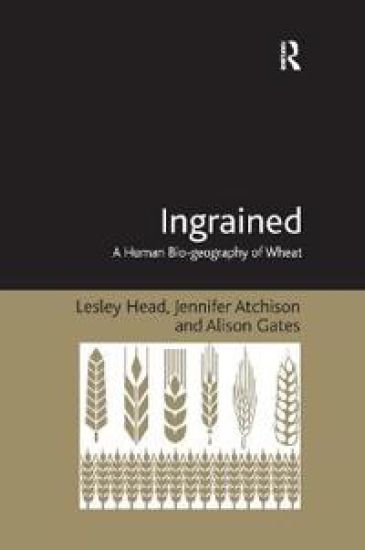
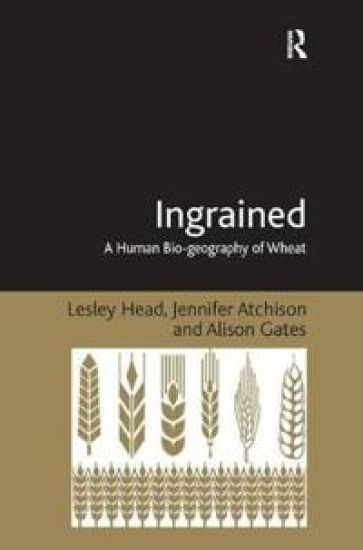
Ingrained

Ingrained

Lesley Head; Jennifer Atchison

Routledge
2016
nidottu
Plants are fundamental players in human lives, underpinning our food supply and contributing to the air we breathe, but they are easy to take for granted and have received insufficient attention in the social sciences. This book advances understanding of human-plant relations using the example of wheat. Theoretically, this book develops new insights by bringing together human geography, biogeography and archaeology to provide a long term perspective on human-wheat relations. Although the relational, more-than-human turn in the social sciences has seen a number of plant-related studies, these have not yet fully engaged with the question of what it means to be a plant. The book draws on diverse literatures to tackle this question, advancing thinking about how plants act in their worlds, and how we can better understand our shared worlds. Empirically, the book reports original ethnographic research on wheat production, processing and consumption in a context of globalisation, drought and climate change and traces the complex networks of wheat using a methodology of 'following' it and its people. The ethnobotanical study captures a number of moments in the life of Australian wheat; on the farm, at the supermarket, in the lives of coeliac sufferers, in laboratories and in industrial factories. This study demands new ways of thinking about wheat geographies, going beyond the rural landscape to urban and industrial frontiers, and being simultaneously local and global in perspective and connection.
Hope and Grief in the Anthropocene
The Anthropocene is a volatile and potentially catastrophic age demanding new ways of thinking about relations between humans and the nonhuman world. This book explores how responses to environmental challenges are hampered by a grief for a pristine and certain past, rather than considering the scale of the necessary socioeconomic change for a 'future' world. Conceptualisations of human-nature relations must recognise both human power and its embeddedness within material relations. Hope is a risky and complex process of possibility that carries painful emotions; it is something to be practised rather than felt. As centralised governmental solutions regarding climate change appear insufficient, intellectual and practical resources can be derived from everyday understandings and practices. Empirical examples from rural and urban contexts and with diverse research participants - indigenous communities, climate scientists, weed managers, suburban householders - help us to consider capacity, vulnerability and hope in new ways.
Household Sustainability

Household Sustainability

Chris Gibson; Carol Farbotko; Nicholas Gill; Lesley Head; Gordon Waitt

Edward Elgar Publishing Ltd
2014
nidottu
Contrary to the common rhetoric that being green is 'easy', household sustainability is rife with contradiction and uncertainty. Households attempting to respond to the challenge to become more sustainable in everyday life face dilemmas on a daily basis when trying to make sustainable decisions. Various aspects of life such as cars, computers, food, phones and even birth and death, may all provoke uncertainty regarding the most sustainable course of action. Drawing on international scientific and cultural research, as well as innovative ethnographies, this timely book probes these wide-ranging sustainability dilemmas, assessing the avenues open to households trying to improve their sustainability. The authors engage critically, and constructively, with the proposition that households are a key scale of action on climate change. They confront dilemmas of practice and circumstance, and cultural norms of lifestyle and consumerism that are linked to troublesome environmental problems - and question whether they can be easily unsettled. The work also illuminates the informal and often unheralded work by households - frequently the poorest - in reducing their environmental burden. This important book is critical to understanding both the barriers to household sustainability and the 'unsung' sustainability work carried out by householders. Containing a unique combination of science and cultural research, this fascinating book will appeal to researchers and students of environmental science, environmental studies, sustainability studies, climate change adaptation, geography, sociology, cultural studies, science and technology studies, as well as energy studies and housing research. Policy-makers in various levels of government working through sustainability problems, environmental educators, social planners and sustainability officers working for governments, will also find much to interest them in this unique book.
Household Sustainability

Household Sustainability

Chris Gibson; Carol Farbotko; Nicholas Gill; Lesley Head; Gordon Waitt

Edward Elgar Publishing Ltd
2013
sidottu
Contrary to the common rhetoric that being green is 'easy', household sustainability is rife with contradiction and uncertainty. Households attempting to respond to the challenge to become more sustainable in everyday life face dilemmas on a daily basis when trying to make sustainable decisions. Various aspects of life such as cars, computers, food, phones and even birth and death, may all provoke uncertainty regarding the most sustainable course of action. Drawing on international scientific and cultural research, as well as innovative ethnographies, this timely book probes these wide-ranging sustainability dilemmas, assessing the avenues open to households trying to improve their sustainability. The authors engage critically, and constructively, with the proposition that households are a key scale of action on climate change. They confront dilemmas of practice and circumstance, and cultural norms of lifestyle and consumerism that are linked to troublesome environmental problems - and question whether they can be easily unsettled. The work also illuminates the informal and often unheralded work by households - frequently the poorest - in reducing their environmental burden. This important book is critical to understanding both the barriers to household sustainability and the 'unsung' sustainability work carried out by householders. Containing a unique combination of science and cultural research, this fascinating book will appeal to researchers and students of environmental science, environmental studies, sustainability studies, climate change adaptation, geography, sociology, cultural studies, science and technology studies, as well as energy studies and housing research. Policy-makers in various levels of government working through sustainability problems, environmental educators, social planners and sustainability officers working for governments, will also find much to interest them in this unique book.
Ingrained

Ingrained

Lesley Head; Jennifer Atchison

Ashgate Publishing Limited
2012
sidottu
Plants are fundamental players in human lives, underpinning our food supply and contributing to the air we breathe, but they are easy to take for granted and have received insufficient attention in the social sciences. This book advances understanding of human-plant relations using the example of wheat. Theoretically, this book develops new insights by bringing together human geography, biogeography and archaeology to provide a long term perspective on human-wheat relations. Although the relational, more-than-human turn in the social sciences has seen a number of plant-related studies, these have not yet fully engaged with the question of what it means to be a plant. The book draws on diverse literatures to tackle this question, advancing thinking about how plants act in their worlds, and how we can better understand our shared worlds. Empirically, the book reports original ethnographic research on wheat production, processing and consumption in a context of globalisation, drought and climate change and traces the complex networks of wheat using a methodology of 'following' it and its people. The ethnobotanical study captures a number of moments in the life of Australian wheat; on the farm, at the supermarket, in the lives of coeliac sufferers, in laboratories and in industrial factories. This study demands new ways of thinking about wheat geographies, going beyond the rural landscape to urban and industrial frontiers, and being simultaneously local and global in perspective and connection.
Cultural Landscapes and Environmental Change
Cultural landscapes are usually understood within physical geography as those transformed by human action. As human influence on the earth increases, advances in palaeocological reconstruction have also allowed for new interpretations of the evidence for the earliest human impacts on the environment. It is essential that such evidence is examined in the context of modern trends in social sciences and humanities. This stimulating new book argues that convergence of the two approaches can provide a more holistic understanding of long-term physical and human processes. Split into two major sections, this book attempts to bridge the gap between the sciences and humanities. The first section, provides an analysis of the methodological tools employed in examining processes of environmental change. Empirical research in the fields of palaecology and Quaternary studies is combined with the latest theoretical views of nature and landscape occurring in cultural geography, archaeology and anthropology. The author examines the way in which environmental management decisions are made. The book then moves on to discuss the relevance of this perspective to contemporary issues through a wide variety of international case studies, including World Heritage protection, landscape preservation, indigenous people and cultural tourism.