Kirjojen hintavertailu – 12 903 725 kirjaa ja 27 kauppaa

Kirjailija

Lesley Wylie

Kirjat ja teokset yhdessä paikassa: 7 kirjaa, julkaisuja vuosilta 2009–2026, suosituimpiin kuuluu Colonial Tropes and Postcolonial Tricks. Vertaile teosten hintoja ja tarkista saatavuus suomalaisista kirjakaupoista.

7 kirjaa

Kirjojen julkaisuvuodet: 2009–2026.

Colonial Tropes and Postcolonial Tricks

Colonial Tropes and Postcolonial Tricks

Lesley Wylie

LIVERPOOL UNIVERSITY PRESS
2026
nidottu
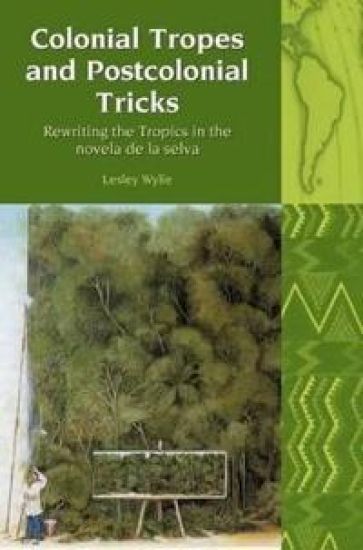
The vision of the South American rainforest as a wilderness of rank decay, poisonous insects, and bloodthirsty ‘savages’ in the Spanish American novela de la selva has often been interpreted as a belated imitation of European travel literature. This book offers a new reading of the genre by arguing that, far from being derivative, the novela de la selva re-imagined the tropics from a Latin American perspective, redefining tropical landscape aesthetics and ethnography through parodic rewritings of European perceptions of Amazonia in fictional and factual travel writing. With particular reference to the four emblematic novels of the genre – W. H. Hudson’s Green Mansions [1904], José Eustasio Rivera’s La vorágine [1924], Rómulo Gallegos’s Canaima [1935], and Alejo Carpentier’s Los pasos perdidos [1953] – the book explores how writers throughout post-independence Latin America turned to the jungle as a locus for the contestation of both national and literary identity, harnessing the superabundant tropical vegetation and native myths and customs to forge a descriptive vocabulary which emphatically departed from the reductive categories of European travel writing. Despite being one of the most significant examples of postcolonial literature to emerge from Latin America in the twentieth century, the novela de la selva has, to date, received little critical attention: this book returns a seminal genre of Latin American literature to the centre of contemporary debates about postcolonial identity, travel writing, and imperial landscape aesthetics.
The Poetics of Plants in Spanish American Literature

The Poetics of Plants in Spanish American Literature

Lesley Wylie

UNIVERSITY OF PITTSBURGH PRESS
2025
nidottu
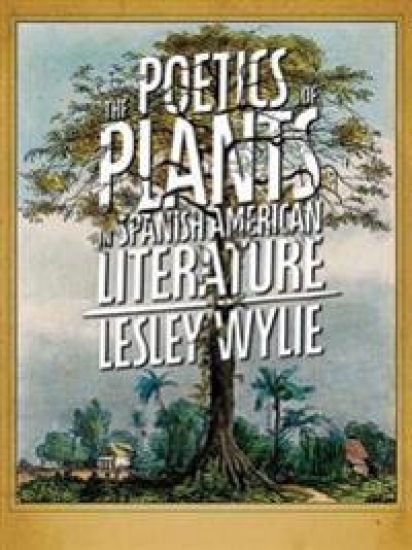
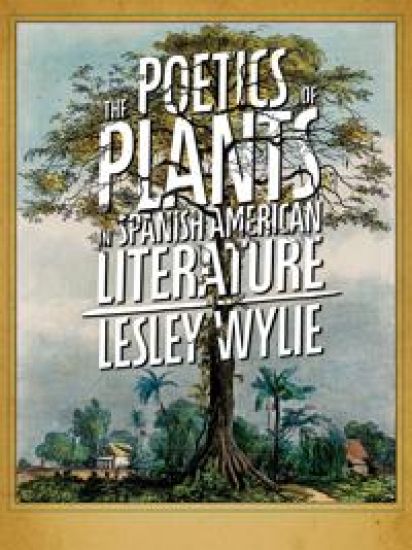
The Poetics of Plants in Spanish American Literature examines the defining role of plants in cultural expression across Latin America, particularly in literature. From the colonial georgic to Pablo Neruda’s Canto general, Lesley Wylie’s close study of botanical imagery demonstrates the fundamental role of the natural world and the relationship between people and plants in the region. Plants are also central to literary forms originating in the Americas, such as the New World Baroque, described by Alejo Carpentier as “nacido de árboles.” The book establishes how vegetal imaginaries are key to Spanish American attempts to renovate European forms and traditions as well as to the reconfiguration of the relationship between humans and nonhumans. Such a reconfiguration, which persistently draws on indigenous animist ontologies to blur the boundaries between people and plants, anticipates much contemporary ecological thinking about our responsibility towards nonhuman nature and shows how environmental thinking by way of plants has a long history in Latin American literature.
Changes in the Landscape

Changes in the Landscape

Jens Andermann; Ronald Briggs; Gisela Heffes; Aarti S. Madan; Vanesa Miseres; Lizabeth Paravisini-Gebert; Jorge Quintana Navarrete; Catalina Rodríguez; Emmanuel A Velayos Larrabure; Lesley Wylie

VANDERBILT UNIVERSITY PRESS
2025
nidottu
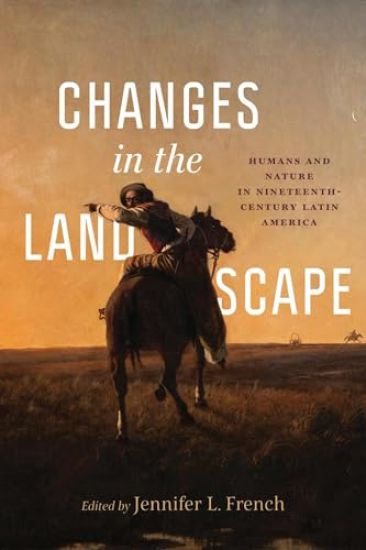
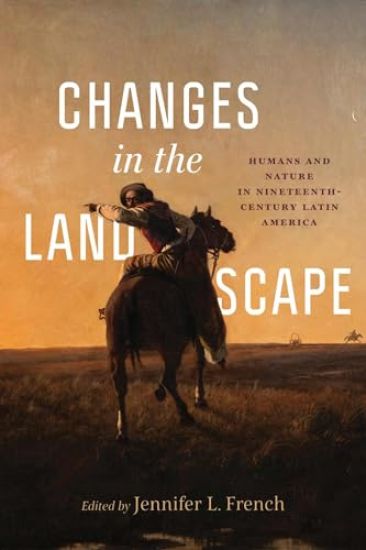
Changes in the Landscape is a collection of timely essays that bring the methodologies and commitments of ecocriticism to bear on the study of Latin American literature and cultural production. The book’s eleven chapters, written by some of the leading voices in the field, invite readers to consider how the relationship between humans and nonhuman nature was fundamentally transformed during a period when new modes of capitalist production were emerging in the region and around the world. Jennifer L. French’s introductory essay provides a historical and theoretical framework for the collection. Ranging from the immediate aftermath of the Spanish-American Wars of Independence (1810–1826) to the early twentieth century (1925), the volume’s essays cover a wide variety of genres and forms of cultural production, from JosÉ HernÁndez’s epic poem MartÍn Fierro to prose fiction, painting and photography, and the personal albums compiled by Spanish-American women. Individually and collectively, the essays engage with scientific writing as both a discourse of power and a source of potentially significant, even revelatory information about human and nonhuman nature. Changes in the Landscape enables readers to more fully understand the transition from colonial regimes to the ecocidal extractivism of the export boom (1870–1930) by drawing out and analyzing some of the cognitive resources and rhetorical strategies that were available to imagine, protest, or enact new norms and expectations regarding the relations between human and nonhuman life, be it the life of wildflowers, waterfalls, or Cuba’s CiÉnaga de Zapata.
Changes in the Landscape

Changes in the Landscape

Jens Andermann; Ronald Briggs; Gisela Heffes; Aarti S. Madan; Vanesa Miseres; Lizabeth Paravisini-Gebert; Jorge Quintana Navarrete; Catalina Rodríguez; Emmanuel A Velayos Larrabure; Lesley Wylie

VANDERBILT UNIVERSITY PRESS
2025
sidottu
Changes in the Landscape is a collection of timely essays that bring the methodologies and commitments of ecocriticism to bear on the study of Latin American literature and cultural production. The book’s eleven chapters, written by some of the leading voices in the field, invite readers to consider how the relationship between humans and nonhuman nature was fundamentally transformed during a period when new modes of capitalist production were emerging in the region and around the world. Jennifer L. French’s introductory essay provides a historical and theoretical framework for the collection. Ranging from the immediate aftermath of the Spanish-American Wars of Independence (1810–1826) to the early twentieth century (1925), the volume’s essays cover a wide variety of genres and forms of cultural production, from JosÉ HernÁndez’s epic poem MartÍn Fierro to prose fiction, painting and photography, and the personal albums compiled by Spanish-American women. Individually and collectively, the essays engage with scientific writing as both a discourse of power and a source of potentially significant, even revelatory information about human and nonhuman nature. Changes in the Landscape enables readers to more fully understand the transition from colonial regimes to the ecocidal extractivism of the export boom (1870–1930) by drawing out and analyzing some of the cognitive resources and rhetorical strategies that were available to imagine, protest, or enact new norms and expectations regarding the relations between human and nonhuman life, be it the life of wildflowers, waterfalls, or Cuba’s CiÉnaga de Zapata.
The Poetics of Plants in Latin American Literature

The Poetics of Plants in Latin American Literature

Lesley Wylie

University of Pittsburgh Press
2021
sidottu
The Poetics of Plants in Spanish American Literature examines the defining role of plants in cultural expression across Latin America, particularly in literature. From the colonial georgic to Pablo Neruda’s Canto general, Lesley Wylie’s close study of botanical imagery demonstrates the fundamental role of the natural world and the relationship between people and plants in the region. Plants are also central to literary forms originating in the Americas, such as the New World Baroque, described by Alejo Carpentier as “nacido de árboles.” The book establishes how vegetal imaginaries are key to Spanish American attempts to renovate European forms and traditions as well as to the reconfiguration of the relationship between humans and nonhumans. Such a reconfiguration, which persistently draws on indigenous animist ontologies to blur the boundaries between people and plants, anticipates much contemporary ecological thinking about our responsibility towards nonhuman nature and shows how environmental thinking by way of plants has a long history in Latin American literature.
Colombia’s Forgotten Frontier

Colombia’s Forgotten Frontier

Lesley Wylie

Liverpool University Press
2013
sidottu
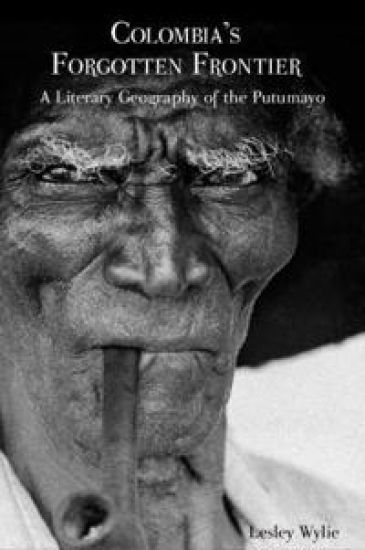
Coming to prominence during the tropical booms of the late nineteenth and early twentieth centuries, the Putumayo has long been a site of mass immigration and exile, of subjugation and insurgency, and of violence. By way of a study of literature of and on the Putumayo by Latin American as well as US and European writers, Colombia’s Forgotten Frontier explores the history and enduring significance of this Amazonian border zone, which has been visited both physically and imaginatively by figures such as Roger Casement, José Eustasio Rivera, and William Burroughs. Travel writing, testimony, diaries, letters, journalism, oral history, songs, photographs, and ‘pulp’ fiction are all considered alongside more conventional forms such as the novel. Whilst geographically peripheral, the Putumayo has played a central role in Colombia and beyond, both historically and, crucial to this study, culturally, producing a literature of extreme experience, marginality, and conflict.
Colonial Tropes and Postcolonial Tricks

Colonial Tropes and Postcolonial Tricks

Lesley Wylie

Liverpool University Press
2009
sidottu
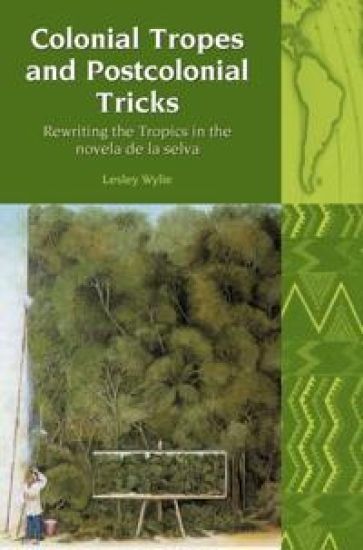
The vision of the South American rainforest as a wilderness of rank decay, poisonous insects, and bloodthirsty ‘savages’ in the Spanish American novela de la selva has often been interpreted as a belated imitation of European travel literature. This book offers a new reading of the genre by arguing that, far from being derivative, the novela de la selva re-imagined the tropics from a Latin American perspective, redefining tropical landscape aesthetics and ethnography through parodic rewritings of European perceptions of Amazonia in fictional and factual travel writing. With particular reference to the four emblematic novels of the genre – W. H. Hudson’s Green Mansions [1904], José Eustasio Rivera’s La vorágine [1924], Rómulo Gallegos’s Canaima [1935], and Alejo Carpentier’s Los pasos perdidos [1953] – the book explores how writers throughout post-independence Latin America turned to the jungle as a locus for the contestation of both national and literary identity, harnessing the superabundant tropical vegetation and native myths and customs to forge a descriptive vocabulary which emphatically departed from the reductive categories of European travel writing. Despite being one of the most significant examples of postcolonial literature to emerge from Latin America in the twentieth century, the novela de la selva has, to date, received little critical attention: this book returns a seminal genre of Latin American literature to the centre of contemporary debates about postcolonial identity, travel writing, and imperial landscape aesthetics.