Kirjojen hintavertailu – 12 903 725 kirjaa ja 27 kauppaa
Kirjailija
Leslie a. White
Kirjat ja teokset yhdessä paikassa: 12 kirjaa, julkaisuja vuosilta 2005–2022, suosituimpiin kuuluu The Pueblo of Santo Domingo, New Mexico: Memoirs of the American Anthropological Association, No. 43. Vertaile teosten hintoja ja tarkista saatavuus suomalaisista kirjakaupoista.
The book titled ""The Pueblo of Santo Domingo, New Mexico: Memoirs of the American Anthropological Association, No. 43"" is written by Leslie A. White. It is a comprehensive study of the Pueblo of Santo Domingo, which is located in New Mexico, USA. The book is a part of the Memoirs of the American Anthropological Association series. The author Leslie A. White has extensively researched the culture, history, and social structure of the Pueblo of Santo Domingo. The book provides a detailed account of the traditional way of life of the Pueblo people, their beliefs, customs, and rituals. It also discusses the impact of colonization, missionary activities, and modernization on the Pueblo community. The book is divided into several chapters, each of which focuses on a particular aspect of the Pueblo of Santo Domingo. The first chapter provides an overview of the history of the Pueblo people, their migration to the present location, and their relationship with neighboring tribes. The subsequent chapters delve deeper into the social structure, religion, art, and economy of the Pueblo community. The book is based on primary sources such as fieldwork, interviews, and archival material. The author has also used secondary sources to provide a comparative analysis of the Pueblo of Santo Domingo with other Native American tribes. Overall, ""The Pueblo of Santo Domingo, New Mexico: Memoirs of the American Anthropological Association, No. 43"" is a valuable resource for anyone interested in the history and culture of Native American tribes. It provides a comprehensive and insightful account of the Pueblo of Santo Domingo, which is one of the oldest continuously inhabited communities in North America. Supplement To American Anthropologist, V37, No. 2, Part 2. Additional Editors Are Cornelius Osgood, F. H. H. Roberts And Frank Speck. This scarce antiquarian book is a facsimile reprint of the old original and may contain some imperfections such as library marks and notations. Because we believe this work is culturally important, we have made it available as part of our commitment for protecting, preserving, and promoting the world's literature in affordable, high quality, modern editions, that are true to their original work.
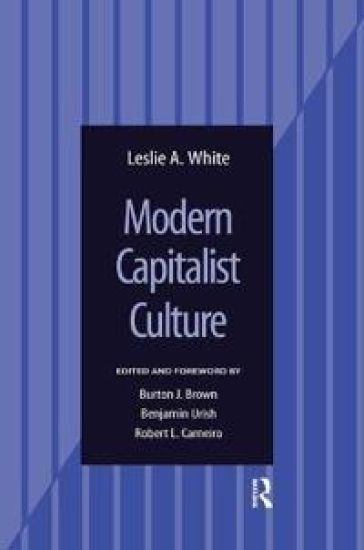
This lost classic by famous anthropological theorist Leslie A. White, published now for the first time, represents twenty-five years of his scholarship on the anthropology of modern capitalism. Drawing out his now classic formulations of social organization, cultural evolution, and the relationship between technology, ecology, and culture, this major theoretical work traces a vast expanse of history from the earliest forms of capitalism to the detailed inner workings of contemporary democratic institutions. A substantial foreword by Burton J. Brown, Benjamin Urish, and Robert Carneiro both situates this posthumous work within the history of anthropological theory and shows its importance to contemporary debates within the discipline.
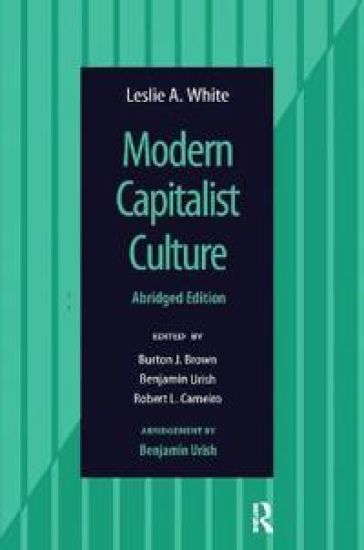
This lost classic by Leslie A. White represents twenty-five years of his scholarship on the anthropology of modern capitalism. Drawing out his now classic formulations of social organization, cultural evolution, and the relationship between technology, ecology, and culture, this major theoretical work traces a vast expanse of history from the earliest forms of capitalism to the detailed inner workings of contemporary democratic institutions. The abridged version of Modern Capitalist Culture delivers all of White‘s major arguments in a clear and concise manner. A substantial foreword by Burton J. Brown, Benjamin Urish, and Robert Carneiro both situates this posthumous work within the history of anthropological theory and shows its importance to contemporary debates within the discipline.
This lost classic by Leslie A. White represents twenty-five years of his scholarship on the anthropology of modern capitalism. Drawing out his now classic formulations of social organization, cultural evolution, and the relationship between technology, ecology, and culture, this major theoretical work traces a vast expanse of history from the earliest forms of capitalism to the detailed inner workings of contemporary democratic institutions. The abridged version of Modern Capitalist Culture delivers all of White’s major arguments in a clear and concise manner. A substantial foreword by Burton J. Brown, Benjamin Urish, and Robert Carneiro both situates this posthumous work within the history of anthropological theory and shows its importance to contemporary debates within the discipline.
This lost classic by famous anthropological theorist Leslie A. White, published now for the first time, represents twenty-five years of his scholarship on the anthropology of modern capitalism. Drawing out his now classic formulations of social organization, cultural evolution, and the relationship between technology, ecology, and culture, this major theoretical work traces a vast expanse of history from the earliest forms of capitalism to the detailed inner workings of contemporary democratic institutions. A substantial foreword by Burton J. Brown, Benjamin Urish, and Robert Carneiro both situates this posthumous work within the history of anthropological theory and shows its importance to contemporary debates within the discipline.
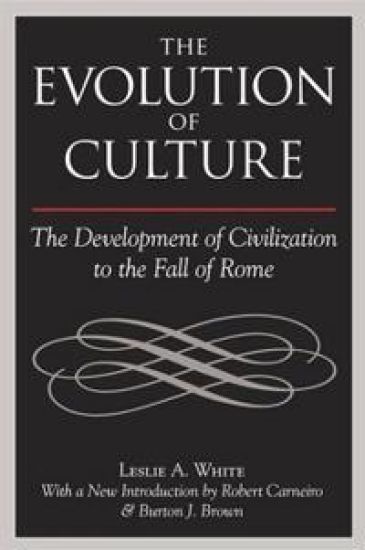
One of the major works of twentieth-century anthropological theory, written by one of the discipline’s most important, complex, and controversial figures, has not been in print for several years. Now Evolution of Culture is again available in paperback, allowing today’s generation of anthropologists new access to Leslie White’s crucial contribution to the theory of cultural evolution. A new, substantial introduction by Robert Carneiro and Burton J. Brown assess White’s historical importance and continuing influence in the discipline. White is credited with reintroducing evolution in a way that had a profound impact on our understanding of the relationship between technology, ecology, and culture in the development of civilizations. A materialist, he was particularly concerned with societies’ ability to harness energy as an indicator of progress, and his empirical analysis of this equation covers a vast historical span. Fearlessly tackling the most fundamental questions of culture and society during the cold war, White was frequently a lightning rod both inside and outside the academy. His book will provoke equally potent debates today, and is a key component of any course or reading list in anthropological or archaeological theory and cultural ecology.
Leslie White was one of the most important—and controversial—figures in American anthropology. This classic work, initially published in 1949, contains White’s definitive statement on what he termed 'culturology.' In his new prologue to this reprint of the second edition (originally published by Farrar, Straus and Giroux in 1969), Robert Carneiro outlines the key events in White’s life and career, especially his championing of cultural evolutionism and cultural materialism.